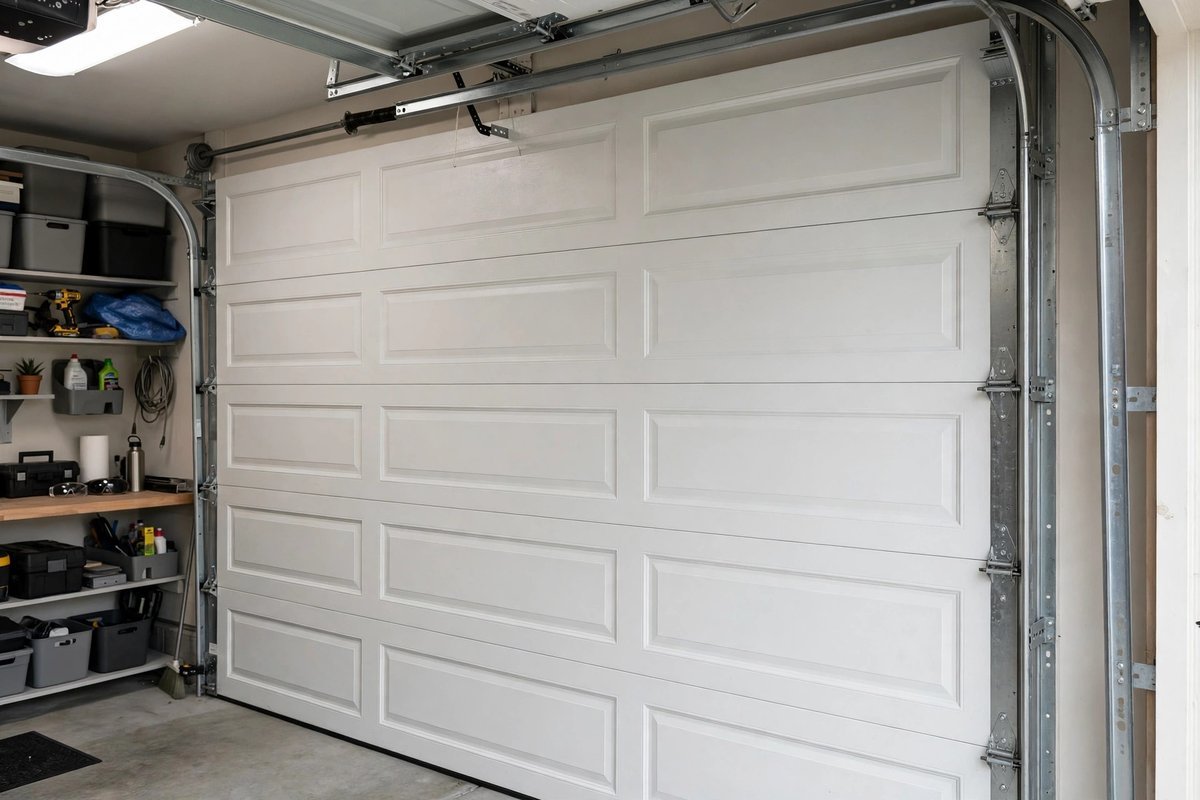
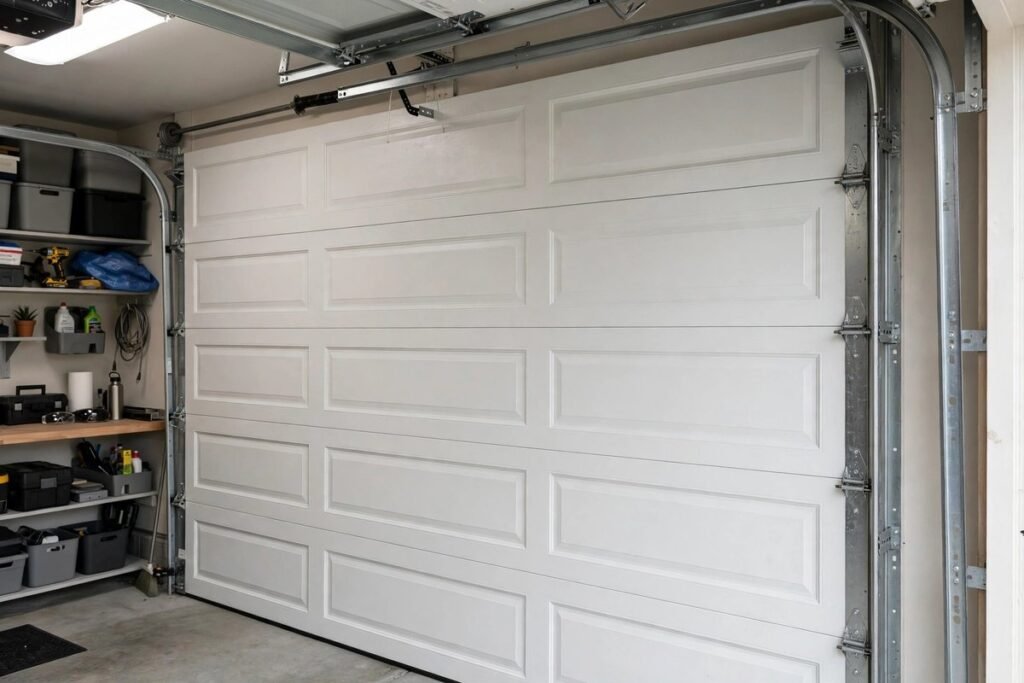
Garage door cables do the heavy lifting every time the door opens and closes, and when one frays or snaps, the door can drop suddenly or jam halfway. Garage door cable replacement means removing the worn or broken cable and fitting a new one of the same type and length, with the door’s springs adjusted to match. This guide explains the warning signs, what the job involves, what it costs, and when to call a professional.
Safety warning: a garage door is heavy and its springs store a lot of energy. If a cable has snapped or the door is stuck, do not try to force it open, and do not stand under it. The safest step is to stop using the door and call a professional. This guide explains the job so you can recognise it and talk to a repairer, not so you can do it yourself without experience.
Key takeaways:
- Garage door cables carry the door’s weight and wear out over time, especially at the ends and where they pass over pulleys.
- Fraying, slack, uneven movement and a door that drops or sticks are the main warning signs.
- Cable replacement involves releasing the spring tension, fitting a new cable and re-tensioning the system, which is a job for a professional in most cases.
- The cost varies by door type, cable type and your area, so get a quote rather than relying on a figure in a guide.
What are garage door cables?
A garage door is far heavier than it looks, and the cables are what make it possible to lift. Each cable runs from the bottom bracket of the door, up over a drum or pulley at the top, and connects to the spring system. When the door opens, the springs take most of the weight, and the cables transfer the force that lifts the door. When it closes, the cables control the descent so the door comes down smoothly rather than dropping.
There are two main types. Torsion cables work with a torsion spring mounted above the door, and they wind onto a drum as the door opens. Extension cables work with extension springs mounted along the tracks, and they run over pulleys. The type of cable your door uses depends on the spring system, and a replacement must match it exactly.
Cables are made from braided steel wire, and they wear out for two reasons: friction, where the cable passes over a pulley or a drum, and fatigue, from the repeated bending every time the door opens and closes. A typical cable lasts many years, but it will eventually fray, and a frayed cable is a warning that it needs replacing.
Warning signs that a cable needs replacing
The clearest warning sign is visible fraying: look for broken strands of wire sticking out from the cable, especially near the ends and where it passes over a pulley. A cable with frayed strands is weaker than it looks, and it can snap without further warning.
The door itself gives clues too. If one side of the door rises faster than the other, or the door looks crooked as it moves, one cable may be stretched or slipping. If the door drops suddenly when it closes, or it sticks halfway and will not move, a cable may have snapped or come off its drum. A slack cable, hanging loose beside the door, is another sign: it means the cable is no longer under tension, which usually means it has broken or slipped.
Unusual noises are a third clue. A loud bang, like a firecracker, often means a cable or a spring has broken. Grinding or scraping as the door moves can mean the cable is rubbing against something it should not touch. If you notice any of these signs, stop using the door and have it inspected.
What garage door cable replacement involves
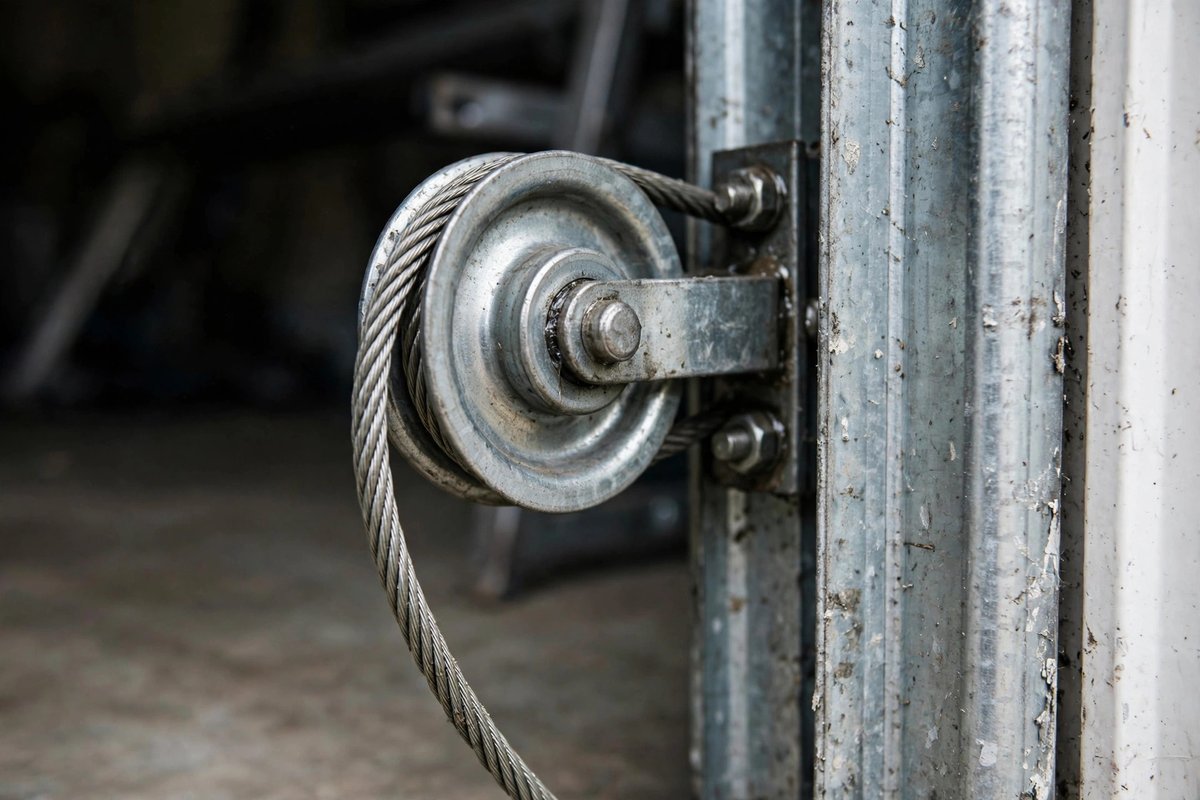
Replacing a garage door cable is a job with a clear sequence, and each step matters. The door is first secured in its closed position, usually with clamps on the tracks, so it cannot move while the work is done. The spring tension is then released, which is the most dangerous part of the job: the springs store a lot of energy, and releasing them incorrectly can cause serious injury. This is the main reason most guides, including this one, recommend a professional.
With the tension released, the old cable is removed from its drum or pulley and from the bottom bracket, and the new cable is fitted in its place. The new cable must be the same type, diameter and length as the old one, because a cable that is too long or too short will not wind correctly on the drum. The spring tension is then restored, and the door is tested: it should rise and fall smoothly, stay level, and hold its position halfway open without drifting.
The whole job usually takes a professional between one and two hours for a standard door, including the inspection and the testing. It is often done as part of a wider service, because a worn cable often means the springs, rollers and pulleys are worth checking at the same time. For more on keeping the door in good order, see our guide to garage door maintenance.
How much does garage door cable replacement cost?
The cost of garage door cable replacement varies widely, and it is not useful to give a single figure here. It depends on the type of door and spring system, whether one cable or both are replaced, whether the job is done as a call-out or as part of a service, and where you live. A pair of cables is usually replaced together, because if one has worn out, the other is likely to be close behind it.
What is worth knowing is that the cables themselves are not the expensive part of the job: most of the cost is the labour, and the safety of the work is the reason to pay for a professional. Get two or three quotes from local repairers, ask whether the price includes both cables, and check whether the quote covers a safety inspection of the springs and rollers as well. Prices quoted online vary a lot and may not reflect your area, so treat them as unconfirmed.
Can you replace a garage door cable yourself?
It is possible for an experienced DIYer to replace a garage door cable, but it is one of the riskier home repairs. The danger is the spring system: torsion springs in particular store enough energy to cause serious injury if they are released incorrectly, and the door itself is heavy enough to hurt you if it drops. Most manufacturers and repairers advise against doing it yourself.
If you do decide to attempt it, you need the right tools, the correct replacement cable, and a clear understanding of your door’s spring system. You also need a second person to help, because the door is heavy and the work involves holding it in position. If any part of the job is unclear, stop and call a professional. The saving from doing it yourself is small compared with the risk.
How to prevent cable wear
Cables wear out with use, but a few habits slow the wear down. Lubricate the pulleys, rollers and hinges a few times a year with a garage door lubricant, and keep the tracks clean so the door runs smoothly. Avoid opening and closing the door unnecessarily, and do not let children play with the door or hang from it.
Have the door serviced once a year, or at least have a professional look at it when you notice a change in how it sounds or moves. A service usually includes checking the cables, springs, rollers and safety features, and it catches wear before it becomes a failure. Our guide to garage door maintenance covers the full routine.
Your garage door cable checklist
Work through this list if you suspect a cable problem, and do not use the door if you are unsure.
- Look for fraying: check the cables near the ends and where they pass over pulleys.
- Watch the door move: it should rise and fall evenly, without tilting or sticking.
- Listen for changes: a loud bang, grinding or scraping all mean something is wrong.
- Do not force a stuck door: if the door will not move, leave it and call a professional.
- Do not stand under the door: a door with a broken cable can drop without warning.
- Replace cables in pairs: if one has worn out, the other is likely to be close behind.
- Book a yearly service: a professional check catches wear before it becomes a failure.
Frequently asked questions
How long do garage door cables last?
Most cables last many years, often a decade or more, depending on how often the door is used and how well it is maintained. Cables that are lubricated and inspected regularly last longer than ones that are ignored.
Can a garage door work with one broken cable?
It may move, but it will be uneven and unsafe. The door can tilt, jam or drop, and the remaining cable is under far more strain than it was designed for. Stop using the door and have both cables replaced.
How do I know if my cable is frayed?
Look for broken strands of wire sticking out from the cable, especially near the ends and where it passes over a pulley. Any fraying means the cable is weaker than it looks and should be replaced.
Should I replace both cables at once?
Yes. If one cable has worn out, the other has had the same use and is likely to be close behind it. Replacing both together is safer and usually cheaper than two separate call-outs.
Is garage door cable replacement covered by a warranty?
It depends on the door and the installer. Some doors carry a warranty on the hardware, and some installers guarantee their work for a period. Check the paperwork that came with your door, and ask the repairer what is covered before the work starts.
Sources
Repair guidance here reflects widely published advice from garage door manufacturers and repairers on cable wear, safety and maintenance.
The bottom line
A garage door cable is a small part that does a big job, and it wears out quietly until it fails. Fraying, slack, uneven movement and strange noises are all warnings worth acting on, and the safest response is to stop using the door and call a professional.
Safety disclaimer: this article is general information, not repair advice for your specific door. Garage door springs store a large amount of energy and can cause serious injury if handled incorrectly. Do not attempt cable or spring work unless you are trained and equipped for it. When in doubt, hire a qualified garage door professional.