Learning how to remove dog hair from clothes is a small skill that makes a daily difference, because dog hair finds its way onto almost everything a dog owner wears. A dark jumper, a smart jacket or a favourite pair of trousers can look tired before the day has even started, covered in pale hairs that seem to appear from nowhere.
So what is the quickest way to remove dog hair from clothes? Roll the garment with a lint roller, then follow with damp hands or a rubber glove for the hairs the roller misses, and finish in the wash with a tumble dryer on low heat to catch what is left. This guide covers the roller method, damp hands, washing and drying, different fabrics and the simple habits that keep hair off your clothes in the first place.
Key takeaways:
- Start dry: a lint roller or a rubber glove lifts most dog hair before washing.
- Work in one direction, top to bottom, so hair comes off instead of moving around the garment.
- Damp hands or a damp rubber glove pick up hairs that a roller leaves behind.
- Wash hairy clothes inside out and tumble dry on low, cleaning the lint filter first.
- Prevention beats cleaning: brush the dog, store clean clothes away from pet beds, and keep a roller by the door.
Why dog hair clings to clothes so stubbornly
Dog hair sticks to clothes because of static, texture and shape. Loose hairs carry a small static charge, and fabrics such as wool, fleece and knitwear have rough surfaces that trap them. The hairs are also fine and slightly barbed, so they weave themselves into the fibres rather than sitting on top, which is why a quick shake rarely works.
Some fabrics attract far more hair than others. Wool, velvet, corduroy, fleece and dark knits are the worst offenders, because their texture grips hair and their colour shows pale hairs clearly. Smooth fabrics such as leather, silk, linen and tightly woven cotton shed hair much more easily, and light colours hide pale hair better than dark ones.
The lint roller method, done properly
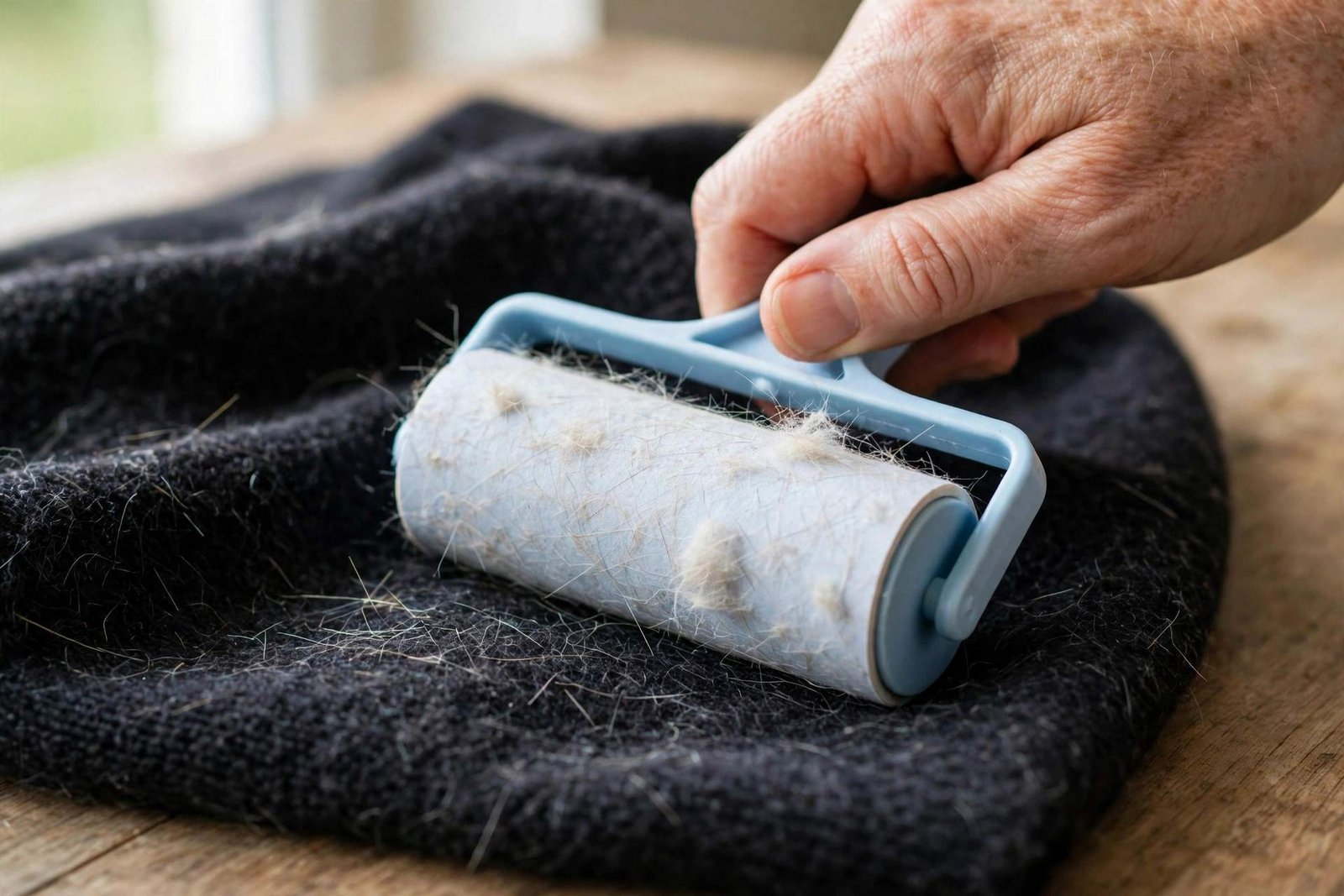
The lint roller is the fastest tool for removing dog hair from clothes, and it works best when the garment is dry and laid flat. Spread the item on a bed or a table, smooth out the wrinkles with your hands, and roll in one direction from the shoulders down, lifting the roller at the end of each pass. Rolling back and forth only moves the hair around.
Peel off each used sheet as soon as it stops feeling sticky, because a full sheet cannot pick up more hair. Work section by section across the front, then turn the garment over and do the back, the sleeves and the collar. Pay attention to the shoulders and the lap, where hair gathers most, and to seams and pockets, where hairs collect in small clumps.
A reusable roller with a washable sticky surface works the same way and costs less over time. Keep one roller by the front door and a small travel roller in a coat pocket, so a quick pass before work or a meeting is always easy.
Damp hands, rubber gloves and other quick fixes
When a lint roller leaves a few stubborn hairs behind, damp hands will usually finish the job. Wet your hands lightly under the tap, shake off the excess water, and sweep them down the garment in long strokes. The hairs cling to the damp skin and gather into small rolls that you can pick off and throw away.
A damp rubber glove works even better, because the rubber surface grips the hair. Put on a clean rubber glove, dampen it slightly, and run your hand down the garment in one direction. This is the best method for upholstery and for the car seat too, and it costs almost nothing. A damp cloth or a damp sponge will do a similar job on smooth fabrics, though it is less effective on wool and fleece.
How to wash dog hair out of clothes
Washing is the best way to remove the hair that dry methods leave behind, but the machine needs a little help. Shake the garment outside first to loosen the worst of the hair, then turn it inside out so the hairy side faces the water. This simple step makes a real difference, because the inside of the garment gets the most movement in the drum.
Wash on your usual cycle with your normal detergent, and add a splash of white vinegar to the rinse if your machine allows it. The vinegar helps relax the fibres and reduce static, which loosens the hair so it rinses away. Do not use too much detergent, because excess detergent can leave a residue that makes hair stick more easily next time.
Drying and the lint filter
The tumble dryer is one of the best tools for removing dog hair from clothes, because the tumbling action and the airflow pull loose hairs off the fabric and into the lint filter. Dry hairy clothes on a low heat for ten to fifteen minutes before washing them, or after washing, and always clean the lint filter first so the air can flow properly.
If you do not have a dryer, hang clothes outside on a breezy day and give them a good shake once they are dry. A clothes brush used in one direction will remove most of what remains.
Dog hair on different fabrics
Wool and knitwear need the gentlest approach. Use a lint roller or a fabric brush, and never scrub the surface, because scrubbing pushes hairs deeper into the knit. Wash wool by hand or on a gentle cycle, following the care label, and dry it flat. Our guide to how to wash a wool sweater covers the full method, including reshaping and drying.
Cotton and linen are far more forgiving. A lint roller, damp hands and a normal wash will usually clear them, and they can be tumble dried on low heat. Dark cotton shows pale hair clearly, so give dark shirts and trousers an extra roll before you leave the house. Light colours hide the hair better, which is worth remembering when you buy new clothes.
Velvet, corduroy and fleece are the hardest fabrics to clear, because their pile traps hair. A rubber glove is the best tool here: dampen it and work in one direction, then follow with a roller. Wash fleece inside out and avoid fabric softener, which can make the fibres hold hair more tightly. For bedding and blankets, a rubber glove and a good shake outside work well; see our guide to how to wash a wool blanket for heavier items.
Prevention: keeping hair off your clothes in the first place
Prevention is easier than cleaning, and it starts with the dog. Brush your dog regularly, ideally outside, to catch loose hair before it reaches the sofa and your clothes. A short daily brush during shedding season removes far more hair than a long weekly session, and most dogs come to enjoy it.
Keep clean clothes away from pet beds and favourite sleeping spots. Hang outfits for the next day on the back of a door rather than draping them over a chair where the dog sleeps, and store out-of-season clothes in closed drawers or garment bags. A throw over the sofa, washed weekly, catches a surprising amount of hair before it reaches your clothes.
Cover car seats and chairs the dog uses, and vacuum them regularly with a brush attachment. Keep a lint roller by the front door so the last-minute check becomes automatic.
Dog hair removal methods compared
| Method | Best for | Speed | Watch out for |
|---|---|---|---|
| Lint roller | Everyday quick clean, all fabrics | Very fast | Used sheets stop working quickly |
| Damp rubber glove | Wool, fleece, velvet and upholstery | Fast | Too much water can mark delicate fabric |
| Damp hands | Last few hairs before leaving | Very fast | Only works on light hair |
| Washing machine | Heavy hair after dry methods | Slow | Overloading the drum, dirty lint filter |
| Tumble dryer, low heat | Final pass after washing | Medium | Heat can damage delicate fabrics |
| Fabric brush | Delicate fabrics and suits | Medium | Scrubbing pushes hair deeper |
Your dog hair removal checklist
Run through this list before you leave the house.
- Roll first: lay the garment flat and roll top to bottom in one direction.
- Peel often: change the roller sheet as soon as it stops feeling sticky.
- Finish damp: use damp hands or a damp rubber glove for the hairs the roller misses.
- Check the worst spots: shoulders, lap, seams, pockets and cuffs.
- Shake before washing: shake hairy clothes outside, then turn them inside out.
- Clean the lint filter: empty it before every dryer load.
- Brush the dog: a quick daily brush outside catches hair at the source.
- Store clothes away: keep clean clothes off pet beds and favourite sleeping spots.
Frequently asked questions
What is the fastest way to remove dog hair from clothes?
A lint roller is the fastest method. Lay the garment flat, roll from the shoulders down in one direction, and peel off the sheet as soon as it stops feeling sticky. Follow with damp hands for any hairs the roller leaves behind.
Does washing remove dog hair from clothes?
Yes, especially when you shake the garment outside first, turn it inside out and avoid overloading the drum. A tumble dryer on low heat afterwards pulls off much of the remaining hair, as long as the lint filter is clean.
Why does dog hair stick to some clothes more than others?
Texture and static are the main reasons. Wool, fleece, velvet and corduroy grip hair, while smooth fabrics such as silk, linen and tightly woven cotton let it fall away. Dark colours also show pale hair far more clearly than light ones.
Can I use a lint roller on wool?
Yes, a lint roller is safe on wool and is one of the best tools for it. Roll gently in one direction and avoid pressing hard. For hairs woven into the knit, a fabric brush or a damp rubber glove works well too.
How do I stop dog hair getting on my clothes?
Brush your dog regularly, keep clean clothes away from pet beds and sofas, cover the seats your dog uses, and keep a lint roller by the front door. These small habits together make the biggest difference.
Does fabric softener help with dog hair?
Fabric softener can reduce static, which helps hair come away in the wash, but it is not suitable for every fabric. Avoid it on fleece and on towels, and check the care label first. A splash of white vinegar in the rinse is a simpler option for most loads.
Sources
This guide reflects widely published advice on lint rollers, damp gloves, washing and drying, and fabric care for pet hair. See also our guides to how to wash a wool sweater, how to remove stains from carpet and how to wash a wool blanket.
The bottom line
Removing dog hair from clothes is a routine, not a battle. Roll the garment dry, finish with damp hands or a rubber glove, wash inside out and dry on low heat, and the hair comes off with far less effort than most people expect.
Your next step is simple: put a lint roller by the front door tonight, and give your outfit a quick pass before you leave tomorrow morning. Once that habit is in place, the rest of the routine takes care of itself.