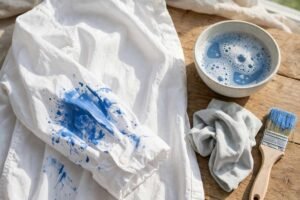
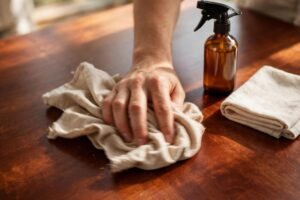
Learning how to remove paint from clothes is mostly about knowing what kind of paint you are dealing with, because the method that lifts water-based paint will not shift oil-based paint, and the wrong approach can set the stain for good. A splashed sleeve, a brushed cuff or a knee pressed against a freshly painted wall all look like disasters, yet most paint stains can be improved, and many can be removed completely.
So how do you remove paint from clothes? First, work out whether the paint is water-based or oil-based, then blot away the excess, treat the stain from the back with the right cleaner, and wash as normal. Water-based paint usually rinses out with warm soapy water, while oil-based paint needs a solvent such as turpentine or white spirit, used with care. This guide covers both, step by step.
Key takeaways:
- Identify the paint type first: water-based paint rinses out, oil-based paint needs a solvent.
- Act fast and blot, never rub, so the paint does not spread or sink deeper.
- Always test any cleaner on a hidden spot and work from the back of the stain.
- Never put a stained garment in the dryer until the paint is gone, because heat sets it.
- Some dried oil paint on delicate fabric is beyond saving, and a professional cleaner is the honest next step.
First, identify the paint type
The paint tin is the best clue. If the label says emulsion, latex, acrylic or water-based, or tells you to clean brushes in water, the paint is water-based. These paints are the most common for walls and ceilings, and they are the easiest to remove from clothes, especially while they are still wet.
If the label says oil-based, alkyd, gloss or enamel, or tells you to clean brushes in white spirit or turpentine, the paint is oil-based. These paints are common for woodwork, doors and metal, and they are much harder to shift once they dry. If the tin is gone, think about where the paint came from: a wall is usually emulsion, while a door frame or skirting board is often gloss.
If you cannot tell at all, start with the water-based method. Rinse the stain under warm running water and work in a little washing-up liquid. If the colour starts to lift, it is water-based. If nothing moves, treat it as oil-based and move on to the solvent method below.
First steps for any paint stain
Act as soon as you can, because wet paint is far easier to remove than dry paint. Scrape off the excess with the blunt edge of a knife or an old credit card, lifting it away rather than spreading it. Blot the stain gently with a clean cloth or kitchen paper, and do not rub, because rubbing pushes the paint deeper into the fibres.
Turn the garment inside out and work from the back of the stain whenever you treat it. This pushes the paint out of the fabric instead of driving it further in.
How to remove water-based paint from clothes

Start by rinsing the stain under warm running water, working from the back, and gently rubbing the fabric against itself. Most fresh emulsion and acrylic paint will start to lift at this stage. Add a little washing-up liquid or laundry detergent to the stain and work it in with your fingers or a soft brush, then rinse again.
If the stain is still visible, soak the garment in warm water with a scoop of laundry detergent for an hour, then wash it as normal on the warmest cycle the care label allows. Check the stain before drying: if any colour remains, repeat the soak and wash rather than putting it in the dryer.
Dried water-based paint needs more patience. Scrape off as much as you can with a blunt knife, then soak the stain in warm soapy water for several hours, or overnight for a thick patch. A soft brush will help loosen the softened paint. Rubbing alcohol can help with stubborn dried acrylic: dab it onto the stain with a clean cloth, let it sit for a few minutes, then rinse and wash as normal.
How to remove oil-based paint from clothes
Oil-based paint will not rinse out with water, so you need a solvent. Turpentine or white spirit are the usual choices, and they are sold in most hardware shops. Work in a well-ventilated room, away from any flame, and wear rubber gloves. Test the solvent first on a hidden spot, such as an inside seam, and wait a few minutes to check the fabric and colour are unharmed.
Dab the solvent onto the stain from the back with a clean white cloth, pressing it through rather than rubbing. Change to a clean part of the cloth as it picks up colour, and keep going until no more paint transfers. The paint should start to dissolve and lift out of the fibres.
Once the paint has lifted, rub a little washing-up liquid into the area to break down the solvent, then rinse thoroughly in warm water and wash as normal. Check the stain before drying, and repeat the treatment if a shadow remains. If the garment is silk, wool or dry-clean only, take it to a professional cleaner instead of using solvents at home.
How to remove dried paint from clothes
Dried paint is harder, but it is not always hopeless. Scrape off the loose flakes with a blunt knife, then soften what remains. For water-based paint, soak the stain in warm soapy water for several hours. For oil-based paint, dab the stain with a solvent on a clean cloth, as above, and let it sit for a few minutes before blotting.
Repeat the treatment rather than scrubbing harder, which damages the fabric long before it removes the paint. Once the paint has softened and lifted, wash the garment as normal and check the result before drying.
What to avoid when removing paint
Never put a stained garment in the tumble dryer or iron it until the paint is completely gone, because heat sets most paints into the fabric and makes them far harder to remove. Check the stain in good light after washing, and repeat the treatment while it is still damp if any colour remains.
Do not use solvents on delicate fabrics such as silk, velvet or acetate, and never use them near a flame or in a closed room. Do not mix cleaning products, and do not pour solvents down the sink: wipe up the excess with a cloth and dispose of it as your local rules require. Avoid bleach on coloured clothes, because it can take the colour out of the fabric along with the paint.
When a garment is beyond saving
Some paint stains will not come out, and it is better to know that early. Dried oil-based paint that has soaked right through a delicate fabric, or a large patch of gloss paint on silk or wool, is often beyond home treatment. A professional cleaner may still be able to help, so it is worth asking before you give up.
If the garment cannot be saved as it was, it may still have a second life. A stained pair of jeans can become gardening or decorating trousers, and a marked shirt can be cut down for rags. For more on repairing clothes, see our guide to how to patch jeans.
Paint removal methods compared
| Paint type | First step | Main treatment | Watch out for |
|---|---|---|---|
| Water-based, wet | Blot and rinse under warm water | Washing-up liquid, then wash as normal | Drying before the stain is gone |
| Water-based, dried | Scrape off loose flakes | Long soak in warm soapy water | Rubbing alcohol on delicate fabric |
| Oil-based, wet | Blot, do not rinse with water | Turpentine or white spirit from the back | Flames, poor ventilation, delicate fabric |
| Oil-based, dried | Scrape, then soften with solvent | Repeat dabbing, then wash as normal | Scrubbing, which damages the fabric |
| Unknown type | Test with warm water and soap | Water method first, solvent if it fails | Guessing and using the wrong treatment |
Your paint stain removal checklist
Run through this list before you start.
- Identify the paint: check the tin, or test with warm water and soap.
- Scrape and blot: lift off the excess and blot gently, never rub.
- Test a hidden spot: check any cleaner or solvent on an inside seam first.
- Work from the back: push the paint out of the fabric, not deeper in.
- Ventilate: open windows and keep solvents away from flames.
- Wash and check: wash as normal, then check the stain before drying.
- Repeat, do not scrub: repeat a gentle treatment rather than scrubbing hard.
- Know when to stop: take delicate or badly stained garments to a professional cleaner.
Frequently asked questions
Does water-based paint come out of clothes?
Yes, in most cases, especially while it is still wet. Rinse the stain under warm water, work in washing-up liquid, then wash as normal. Dried water-based paint needs a long soak first, and may need two or three washes.
How do I remove oil-based paint from clothes?
Use a solvent such as turpentine or white spirit, dabbed onto the stain from the back with a clean cloth, in a well-ventilated room away from flames. Follow with washing-up liquid, rinse well and wash as normal.
Can dried paint be removed from clothes?
Sometimes. Scrape off the loose flakes, then soften the rest: a long warm soak for water-based paint, or a solvent for oil-based paint. Dried gloss paint on delicate fabric is often the hardest to save.
Will paint come out in the washing machine?
Water-based paint often will, especially if you rinse and treat the stain first. Oil-based paint will not wash out on its own and needs a solvent treatment before washing. Never dry the garment until the stain is gone.
What should I not do with a paint stain?
Do not rub the stain, do not put the garment in the dryer or iron it before the paint is gone, and do not use solvents on delicate fabrics or near a flame. Do not mix cleaning products either.
When should I take a paint-stained garment to a cleaner?
Take it to a professional cleaner if the garment is silk, wool or dry-clean only, if the paint is dried oil-based paint, or if home treatment has not worked after two attempts. Mention the paint type if you know it.
Sources
This guide reflects widely published advice on water-based and oil-based paint removal, solvents, spot testing and washing. See also our guides to how to remove stains from carpet, how to remove wine stains and how to patch jeans.
The bottom line
Removing paint from clothes comes down to two things: knowing the paint type, and treating the stain gently rather than scrubbing it. Water-based paint usually rinses out with warm soapy water, and oil-based paint usually lifts with a solvent, patience and a clean cloth.
Your next step is simple: if the stain is fresh, scrape and blot it now, work out the paint type, and start the right treatment today, because every hour of drying makes the job harder.
A short safety note: work in a well-ventilated room, test any cleaner or solvent on a hidden spot first, wear gloves when using solvents, and keep solvents well away from flames and heat. Never mix cleaning products, and follow the instructions on every product you use. If a garment is valuable or delicate, take it to a professional cleaner.