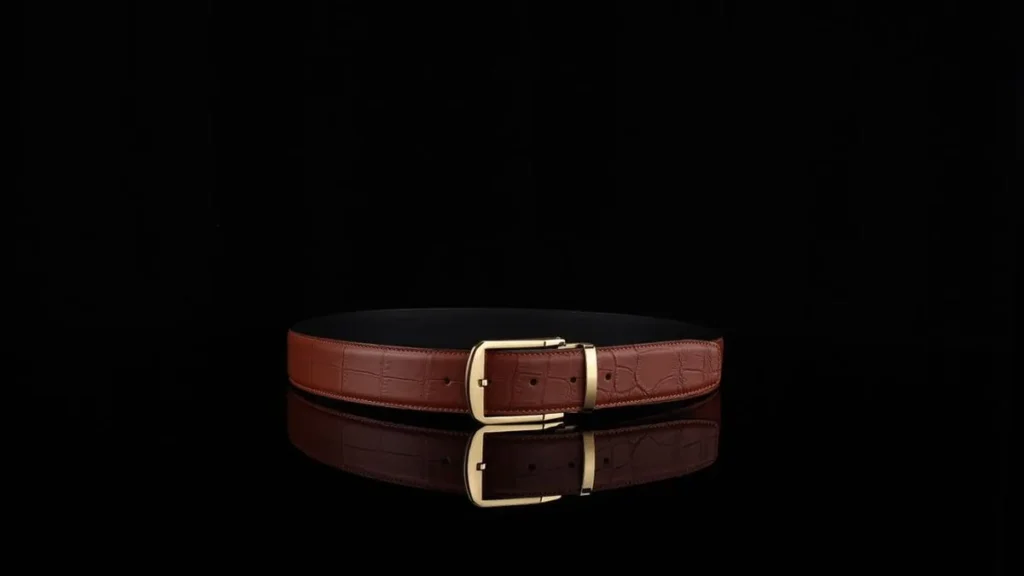
A leather belt is one of the smallest things you will buy, and one of the most used. It holds your trousers in place, finishes an outfit, and sits at the centre of every look you wear, so a wrong one is hard to hide.
Choosing a good belt is not complicated. Five decisions do almost all of the work: the grade of leather, the width, the buckle, the size, and the colour. Get those five right and a belt can serve you for years.
This guide walks through each decision in plain terms, with checks you can do in a shop in under a minute.
Key takeaways
- Choose full-grain leather first and top-grain second; avoid bonded leather if you want a belt that lasts.
- Match width to the occasion: about 1 to 1.25 inches for suits, about 1.5 inches for jeans.
- Buy a belt roughly two inches larger than your trouser waist size, and fasten it on the middle hole.
- Match your belt to your shoes formally, and keep metal tones consistent with your accessories.
- Hang or loosely roll a belt to store it, and condition the leather once or twice a year.
Start with the leather: full-grain, top-grain and the rest
Leather grade matters most, because a belt takes more stress than almost any other leather item you own. It bends at the buckle and carries tension at the holes all day. Weak leather cracks at the fold, peels at the edges, or stretches until the holes sit in the wrong place.
Full-grain leather is the top grade and the one to look for first. It uses the outermost layer of the hide with the natural grain intact, so the strongest fibres are still there. It resists cracking, softens with wear, and develops a patina that makes old leather look better than new.
Top-grain is the next grade down and still a good choice. Makers lightly sand the surface and apply a finish, giving a cleaner, more even look. It suits dress belts, though it does not develop patina like full-grain. Below these grades, quality drops sharply. Corrected-grain is heavily sanded and coated, and tends to crack once the coating wears. “Genuine leather” sounds reassuring, but it is one of the lowest grades, usually thin layers bonded to a backing, and it is the most likely to peel. Bonded leather, made from scraps glued together, is the weakest of all and can split within months. Check the cut edge: solid leather looks dense and fibrous, while bonded leather shows layers.
Match the width to the occasion
Width is the fastest way to tell a dress belt from a casual one. A dress belt is narrow, usually 1 to 1.25 inches wide, with a smooth surface and a small buckle. It threads neatly through the slim loops of suit trousers and sits flat under a jacket. A wider belt looks heavy against fine tailoring and can bunch the fabric at the waist.
A casual belt is wider, usually around 1.5 inches, and often thicker. That width suits jeans and chinos, whose loops are broader and fabrics heavier. Some work belts go to 1.75 inches, but those belong with rugged outfits, not a blazer. The rule is simple: thinner and smoother reads as more formal, wider and more textured as more casual. Check the loops of the trousers you will wear it with before buying. If you wear both suits and jeans, you need at least two belts, because no single width does both jobs well. A good belt also sits comfortably alongside leather jackets as part of a coordinated look.
Buckles: small detail, big difference
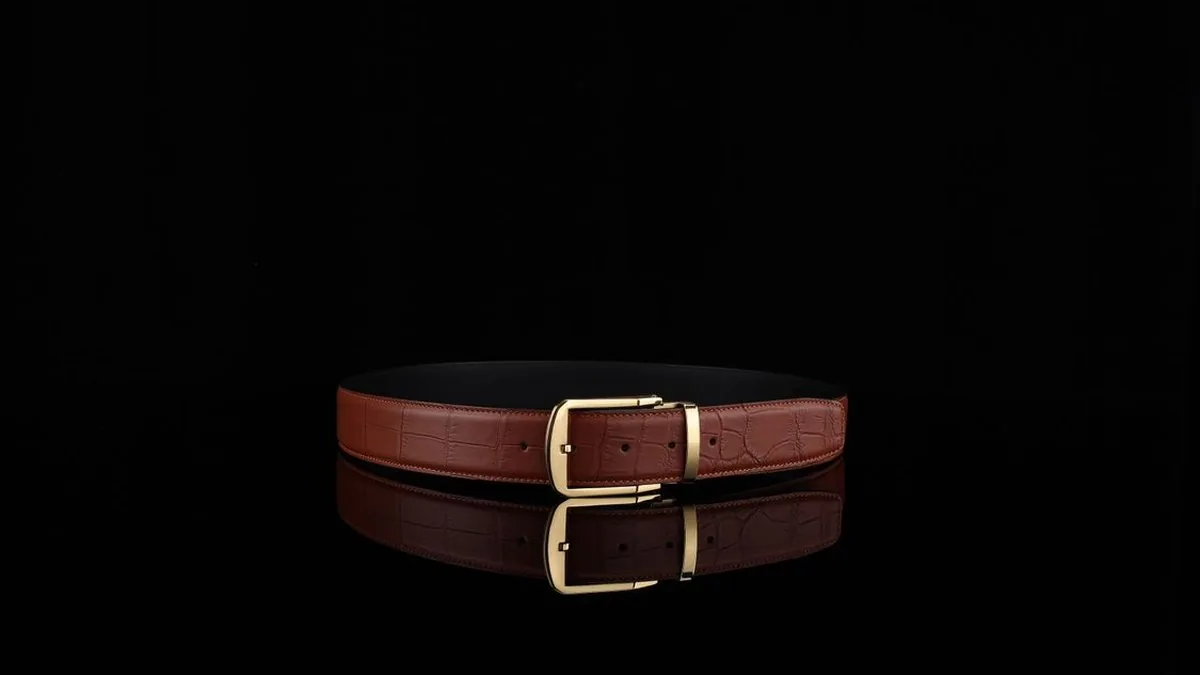
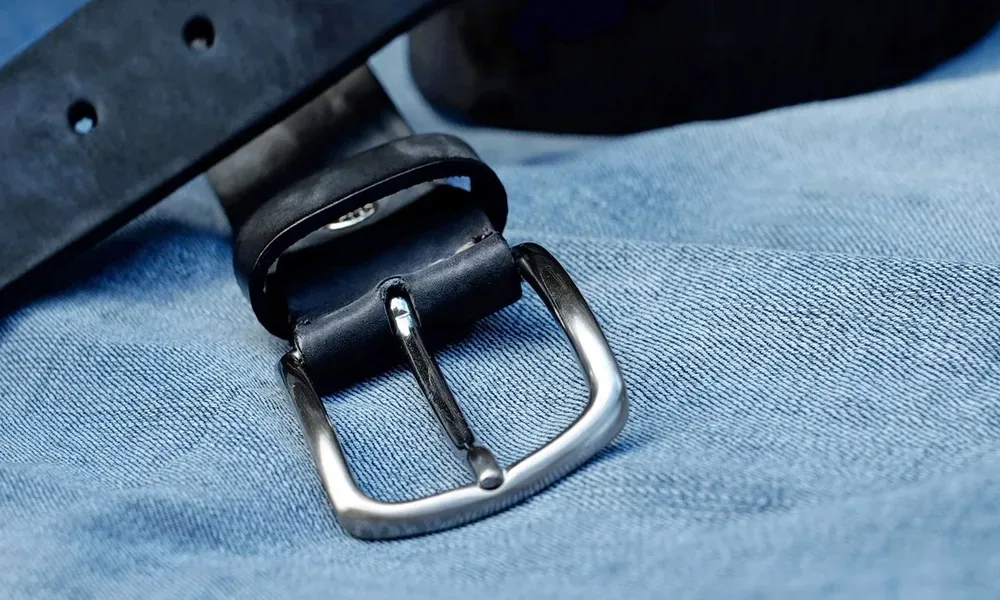
The buckle is the most visible part of a belt, and it sets the tone as surely as the leather does. A dress buckle is small, flat and plain, usually a simple frame in polished silver or gold with a single prong. It should sit quietly against the waist. Casual buckles can be larger, heavier and more decorative: brushed or antiqued finishes, chunky frames and plate buckles all belong on the casual side and pair well with denim and boots.
Mechanisms vary too. The classic pin buckle, with a prong through holes in the strap, is the traditional choice and the safest for formal wear. A ratchet belt has no holes; a track inside the strap lets the buckle adjust in very small steps, giving a precise fit. Whatever you choose, check the metal. A good buckle feels solid and heavy; a cheap one feels hollow and may flex. The prong should slide smoothly through the holes without wobbling.
Getting the size right
Belt sizing confuses almost everyone, because belt size is not the same as trouser size. The usual rule is simple: buy a belt about two inches larger than your trouser waist size. If you wear 34-inch trousers, a size 36 belt is usually right. That covers the trousers’ thickness and the distance from buckle to hole.
Two methods work well. First, measure a belt you own that fits: lay it flat, hook a tape at the inside edge of the buckle, and measure to the hole you use most. Second, measure your waist wearing the trousers: thread a soft tape through the loops, pull it snug, and add two inches. A correct belt fastens on the middle hole. Most belts have five holes about an inch apart, and the middle one leaves room to tighten or loosen either way. Check the size chart before ordering, and size up if between sizes.
Colour and matching: shoes, metals and the rest
The classic rule still holds: in formal settings, match your belt to your shoes. Black shoes call for a black belt, dark brown shoes for a dark brown belt, and tan shoes for a tan belt. This is the rule people notice when it is broken, because the eye travels between shoes and waist. For suits and business dress, keep this rule firm. Casually, tones just need to sit comfortably together.
Metal tones deserve the same attention. If your buckle is silver, your watch and other hardware should ideally be silver too; if it is gold, keep the rest gold. Three belts cover almost everything: one black dress belt, one dark brown belt for smart and casual wear, and one tan belt for jeans and summer outfits. That trio matches most shoes and most outfits, and it is a far better investment than a drawer of cheap belts in colours you never wear. The same thinking applies to the best luxury fashion brands and everyday staples alike.
Dress, casual and statement belts at a glance
| Belt type | Width | Leather | Buckle | Wear it with |
|---|---|---|---|---|
| Dress belt | 1 to 1.25 inches | Smooth full-grain or top-grain | Small, plain, polished | Suits, dress trousers, formal events |
| Smart casual belt | 1.25 to 1.5 inches | Smooth or lightly grained | Medium, simple frame | Chinos, blazers, smart shirts |
| Jeans belt | 1.5 inches | Full-grain, often thicker | Larger pin or roller | Denim, boots, casual shirts |
| Reversible belt | 1.25 to 1.5 inches | Two finishes, black and brown | Rotating plate | Travel, two outfits in one belt |
| Braided belt | 1.25 to 1.5 inches | Woven leather strips | Prong or slide | Smart casual, summer outfits |
| Suede belt | 1.25 to 1.5 inches | Suede | Simple, understated | Chinos, linen, relaxed tailoring |
| Statement belt | 1.5 inches and wider | Textured or embellished | Large or decorative | Over coats, dresses, bold outfits |
| Work belt | 1.5 to 1.75 inches | Thick full-grain | Heavy, solid metal | Workwear, heavy denim, boots |
How to tell a good belt in the shop
You do not need to be an expert to judge a belt; you need about a minute and your hands. Pick it up and feel the weight. Good leather feels dense and supple, with a natural grain you can see and feel, and it bends without creasing sharply. A cheap belt feels light, stiff and plasticky, with a surface so uniform it looks printed. Flex the strap near the buckle: good leather creases softly, while bonded leather may show fine cracks. The edges should be smooth and burnished, with no raw fibres or flaking paint. Stitching, where present, should be even and tight, and the holes cleanly punched, since they take the most strain in daily wear.
Then check the buckle: it should feel solid, sit straight, and fasten with a clean click rather than a wobble. Finally, smell the belt. Real leather has a warm, rich smell that is hard to mistake, while bonded leather and plastic smell chemical or of nothing at all. Price is a rough guide, not a guarantee: very cheap belts are rarely good value, but a high price can also mean you are paying for a logo rather than leather. Judge the belt in your hands, not the label. The same eye for quality applies to accessories, including handbag trends that come and go.
Care that makes a belt last
A leather belt needs very little care, but the little it needs makes a real difference. First, store it well: hang belts on a hook or roll them loosely, and never fold one sharply in half, as the crease can become a weak spot where the belt cracks. Second, rotate your belts. Wearing the same belt every day builds a permanent crease at the hole you use most and never gives the leather time to recover. Alternating between two or three belts lets each one rest.
Third, condition the leather once or twice a year. Leather dries out over time, especially in heated rooms and dry climates, and dry leather cracks. Apply a little conditioner with a soft cloth, rub it in, and wipe off any excess. A little goes a long way, so use less than you think you need. If a belt gets wet, blot it and let it dry naturally, away from heat and sunlight.
Before you buy: a quick checklist
- Leather grade named on the label, full-grain first, top-grain second, bonded avoided.
- Width matches the occasion and threads easily through your trouser loops.
- Size is about two inches above your trouser waist, fastening on the middle hole.
- Buckle is solid metal, sits flat, and matches the formality of the outfit.
- Colour matches your shoes formally, and the metal tone matches your accessories.
- Edges are smooth, stitching is even, holes are clean, and the leather smells like leather.
Frequently asked questions
How do I know my belt size?
Measure a belt you own that fits, from the inside edge of the buckle to the hole you use most. Otherwise, add about two inches to your trouser waist size: a 34-inch trouser usually takes a size 36 belt.
What is the difference between full-grain and top-grain leather?
Full-grain is the outermost layer of the hide with the natural grain intact, making it the strongest grade; it develops a patina and can last many years. Top-grain is the same layer lightly sanded and finished, for a cleaner, more even look.
Should my belt match my shoes exactly?
In formal settings, yes: a black belt with black shoes and a brown belt with brown shoes is the rule. Casually, a belt in the same colour family as your shoes is enough.
How wide should a dress belt be?
Between 1 and 1.25 inches wide, with a smooth surface and a small, plain buckle, threading neatly through the slim loops of suit trousers.
How do I stop my leather belt cracking?
Store it hung up or loosely rolled rather than folded, rotate it with other belts, and condition it once or twice a year. Keep it dry and away from heat and sunlight.
Can one belt work for both suits and jeans?
Not really, which is why most wardrobes need at least two belts: a dress belt is too narrow for jeans, and a casual belt too wide for a suit.
The bottom line
Choosing the perfect leather belt comes down to five decisions. Pick full-grain or top-grain leather, match the width to the occasion, choose a buckle that suits the formality of the outfit, size it two inches above your trouser waist so it fastens on the middle hole, and match the colour to your shoes. Do those five things and your belt will look right and last for years rather than months.
It is worth spending a little more on a belt you will wear almost every day. A good one quietly improves every outfit it touches, and it only gets better with age.
Note: Grades, widths and sizing vary between brands, so always check the label and size chart for the specific belt you are buying.