


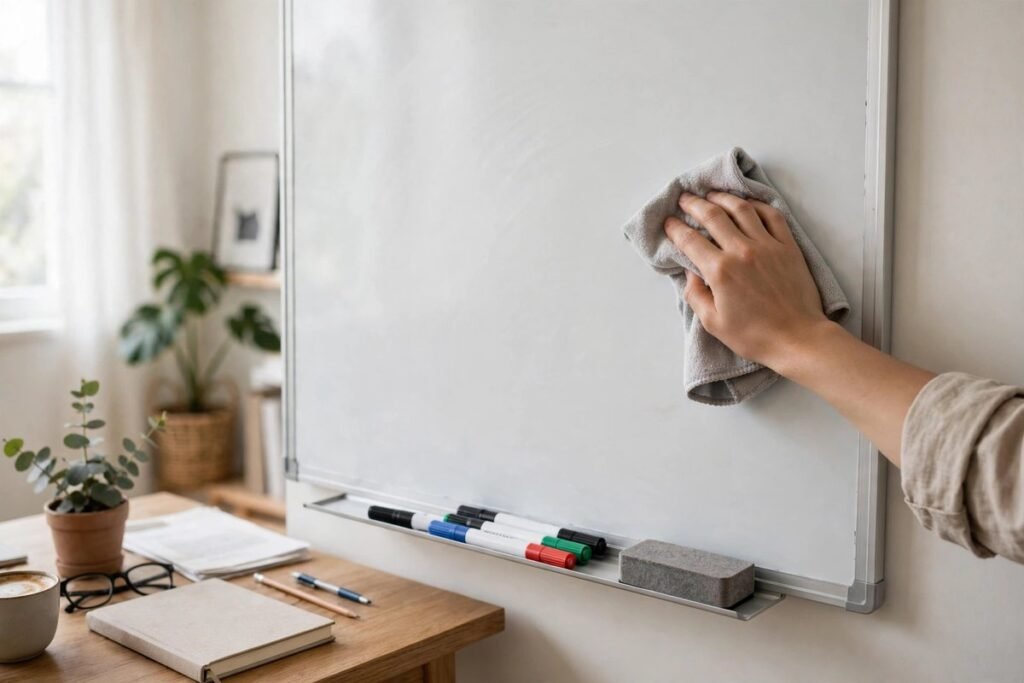
A whiteboard is one of the simplest tools in a home or an office, and it only works well when the surface stays clean. How to clean a whiteboard is a short job when it is done regularly: erase the writing, wipe the surface with a soft cloth, and the board is ready again.
This guide covers the whole job, from a quick daily wipe to removing ghosting and permanent-marker stains, and it explains what not to use, because the wrong cleaner can damage the surface for good.
Key takeaways:
- Erase the board regularly, and wipe it with a soft, dry cloth or a damp microfibre cloth for a deeper clean.
- Ghosting — the faint shadow left after erasing — usually comes from ink left on the board too long, and it can often be lifted with a damp cloth or a whiteboard cleaner.
- Permanent marker can usually be removed by tracing over it with a dry-erase marker and erasing, or with isopropyl alcohol on a cloth.
- Never use abrasive pads, scouring powders or harsh solvents, which can scratch the coating and make staining worse.
- Check the manufacturer’s guidance for your board first, especially on glass and painted boards.
Routine cleaning: the daily wipe
The best way to keep a whiteboard clean is to erase it often. Dry-erase ink is designed to sit on the surface rather than soak in, and it comes off easily while it is fresh. Leave it for a week or more and it begins to bond with the surface, which is when the trouble starts.
For a daily clean, use a felt eraser or a soft, dry cloth, and wipe in long, even strokes from one side of the board to the other. A felt eraser is quick, but it fills up with ink over time, so tap it out or brush it clean regularly. A dry microfibre cloth works just as well and can be washed and reused.
For a deeper clean, dampen a microfibre cloth with plain water, wring it out well, and wipe the board from top to bottom. Then dry the board with a second, dry cloth, because water left on the surface can leave marks of its own.
What to use — and what to reach for first
Most whiteboard cleaning needs only three things: a felt eraser, a microfibre cloth, and water. Keep them beside the board, and the job takes a minute.
Microfibre cloths are worth using because they lift ink without scratching, and they can be washed and used again. Old cotton T-shirts and soft tea towels work too, as long as they are clean and free of grit.
Isopropyl alcohol, also sold as rubbing alcohol, is the usual answer for stubborn marks, and it is worth keeping a small bottle nearby. Dampen a cloth with it, not the board, and wipe gently. Let the board dry fully before writing on it again, because writing on a damp board can smear and stain.
| Method | Best for | Notes |
|---|---|---|
| Felt eraser | Fresh writing | Quick; clean the eraser regularly |
| Dry microfibre cloth | Daily wiping | Soft, reusable, no chemicals |
| Damp cloth with water | A deeper routine clean | Wring well; dry the board after |
| Whiteboard cleaner | Marks water will not lift | Spray on the cloth, not the board |
| Isopropyl alcohol | Stubborn stains | Use a little on a cloth; let it dry |
| Dry-erase marker over permanent ink | Permanent marker accidents | Trace over, then erase at once |
Removing ghosting

Ghosting is the faint shadow that stays on a board after the writing has been erased. It happens when ink is left on the surface for a long time, and it is the most common whiteboard complaint.
Start with the gentlest method: a damp microfibre cloth, wiped firmly across the ghosted area, then dried with a clean cloth. If the shadow stays, try a whiteboard cleaner, sprayed onto the cloth and worked across the area in even strokes. Wipe the whole board, not just the stained patch, so the surface ends up even.
If the ghosting is still there, try isopropyl alcohol on a cloth, wiped gently over the marks and left to dry. Work in a well-ventilated room, and keep the alcohol away from heat and flames. Some ghosting on older boards will not come off.
Removing permanent marker
Permanent marker on a whiteboard feels like a disaster, but it is usually fixable. The simplest method is the dry-erase trick: take a dry-erase marker and trace carefully over the permanent ink, covering it completely, then erase the whole area at once with a felt eraser or a cloth. The solvent in the dry-erase ink loosens the permanent ink, and the two come off together.
It may take two or three passes, especially if the permanent writing is thick or has been there for a while. Trace over the marks, erase, and look at what is left. Repeat if a faint trace remains.
If the dry-erase trick does not work, try isopropyl alcohol on a cloth. Dampen a corner of the cloth, rub the marks gently, and wipe the area clean. Do not reach for nail polish remover or bleach, however tempting it is: these can strip the board’s coating, and a stripped board stains far more easily than a clean one.
What not to use on a whiteboard
The fastest way to ruin a whiteboard is to clean it with the wrong thing. Abrasive pads, scouring powders and rough sponges scratch the coating, and a scratched board holds ink in the scratches, so it stains more with every use. Once the coating is scratched, it cannot be polished back.
Harsh solvents are just as risky. Acetone, nail polish remover, bleach and strong household cleaners can strip the coating or leave a film that makes the board harder to write on.
Never write on a whiteboard with anything other than a dry-erase marker. Ballpoint pens, permanent markers, highlighters and pencils all leave marks that are hard or impossible to remove, and they can score the surface. Keep a dry-erase marker beside the board, and keep other pens away from it.
Keeping a whiteboard clean for longer
A whiteboard stays clean when it is used well. Erase the board at the end of each day, or at the end of each meeting, rather than leaving writing up for a week. It takes a minute, and it stops ghosting before it starts. If the board is shared, make the eraser and a cloth part of the habit, not an afterthought.
Use good markers. Old, dried-out markers leave patchy ink that is harder to erase, and cheap markers can leave more residue than better ones. Replace markers when they start to drag or fade, and keep the caps on when they are not in use, so the tips stay moist.
Give the board a proper clean once a week if it is used every day, and once a month if it is used less often. A damp wipe followed by a dry cloth is enough, and it keeps the surface even, so new writing erases cleanly. A board that is cleaned on a schedule lasts longer than one that is only cleaned when it looks bad.
Glass boards and painted boards
Not every whiteboard is the same, and the surface decides what you can use. A glass board is smooth and non-porous, so it resists ghosting well and can usually be cleaned with water and a microfibre cloth. It is heavier and more fragile than a standard board, so handle it gently and do not lean on it while you clean.
A painted board, sometimes called a dry-erase wall, is a wall or a panel coated with dry-erase paint. It can stain more easily than a factory-made board, and it is more sensitive to strong cleaners. Use only water and a soft cloth unless the paint manufacturer says otherwise, and erase writing promptly.
A magnetic board is usually a steel board with a white coating, and it cleans like a standard board. Check that the cloth is clean and free of grit before wiping, because grit can scratch the coating, and a scratched magnetic board stains just as easily as any other.
Your whiteboard cleaning checklist
Work through this list whenever the board needs attention, and it will stay usable for years.
- Erase often: wipe the board at the end of each day or each meeting, before the ink bonds.
- Use a soft cloth: a felt eraser or a dry microfibre cloth for daily cleaning, and a damp cloth for a deeper clean.
- Dry the board: follow any damp wipe with a dry cloth, so water does not leave marks.
- Lift ghosting gently: try water, then whiteboard cleaner, then isopropyl alcohol on a cloth.
- Fix permanent marker with a dry-erase marker: trace over the ink, then erase at once; repeat if needed.
- Never use abrasives or harsh solvents: no scouring pads, bleach, acetone or nail polish remover.
- Keep other pens away: only dry-erase markers belong on a whiteboard.
- Clean on a schedule: a weekly wipe for a board used every day keeps the surface even.
- Check the manufacturer’s guidance: especially for glass and painted boards.
Frequently asked questions
How often should you clean a whiteboard?
Erase it at the end of each day or each meeting, and give it a damp wipe once a week if it is used daily, or once a month if it is used less often.
Can you use water to clean a whiteboard?
Yes, and it is the safest cleaner for almost every board. Dampen a microfibre cloth with plain water, wring it out well, wipe the board from top to bottom, and dry it with a second cloth. Avoid soaking the surface or letting water run into the frame.
How do you remove permanent marker from a whiteboard?
Trace over the permanent ink with a dry-erase marker, covering it completely, then erase the whole area at once. Repeat two or three times if needed. If a trace remains, try isopropyl alcohol on a cloth, wiped gently over the marks.
What causes whiteboard ghosting?
Ghosting is usually caused by ink left on the board for a long time, which bonds with the surface. It is more common on older boards and on cheaper boards where the coating has worn thin. Erasing promptly and cleaning regularly are the best ways to prevent it.
Why will my whiteboard not erase cleanly any more?
The usual cause is a worn coating, often from abrasive cleaning or from ink left on for a long time. Try a damp wipe, then whiteboard cleaner, then isopropyl alcohol. If the surface still feels rough or looks dull, the coating may be worn, and the board may need replacing.
Sources
This guide draws on widely published whiteboard care advice from board manufacturers and office-supplies guides. For more on keeping a workspace in good order, our guide to how to clean an oven follows the same gentle-first approach, our guide to what a riser desk is covers setting up a workspace well, and our guide to how to improve posture covers using that workspace comfortably.
The bottom line
How to clean a whiteboard is a short job when it is done often: erase the writing, wipe the surface with a soft cloth, and dry it. Ghosting and permanent-marker stains usually yield to a damp cloth, a whiteboard cleaner, or isopropyl alcohol on a cloth, and the dry-erase trick fixes most permanent-marker accidents.
The real secret is prevention. Erase the board at the end of the day, use good markers, and never clean it with anything abrasive or harsh. A board treated that way lasts for years.














