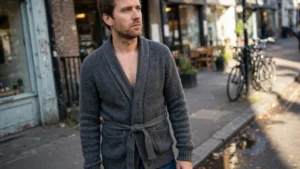
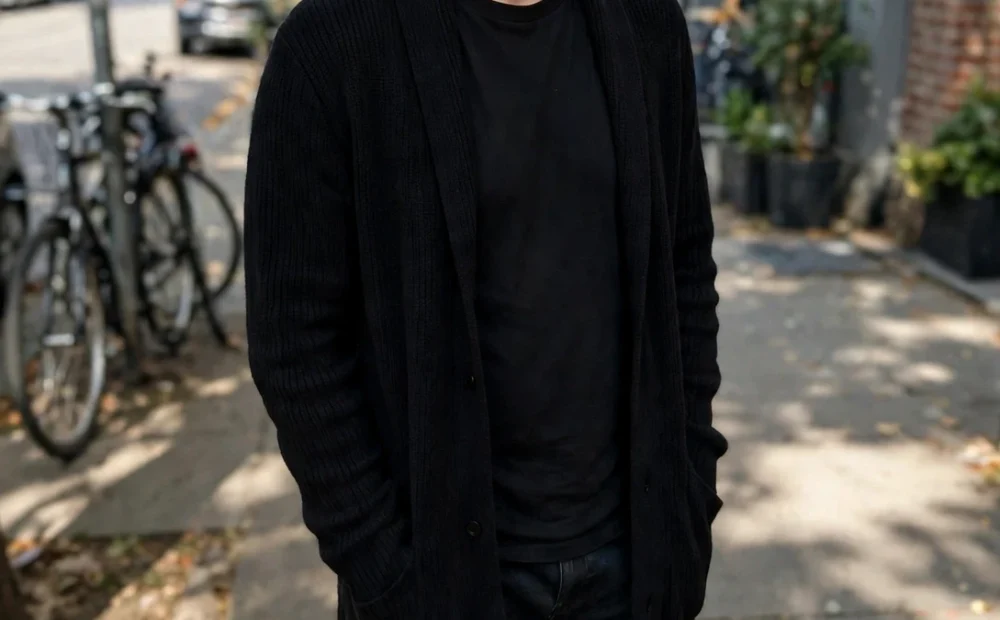
A longline cardigan is easy to buy and surprisingly easy to wear badly. The extra length is the whole point of the shape, but it is also what makes it unforgiving. Get the proportions right and a plain tee, slim trousers and a longline look like a deliberate outfit. Get them wrong and the same pieces look like you forgot to change out of your dressing gown.
The fix is not complicated. A longline needs a slim base, quiet shoes, and one clear vertical line from shoulder to hem. Everything underneath should be plain, so the length is the feature, and everything below the hem should be tidy, because the hem draws the eye down to the ankle.
Below are nine ways to style a longline cardigan for men in 2027, from getting the length right to storing it so it keeps its shape. Each step is a small, practical move, and together they turn a long layer into an outfit that looks intentional.
Key takeaways
- A longline works when the base underneath is slim and plain, so the length is the feature.
- Mid-thigh is the safest hem for most men; knee-length suits taller frames and needs boots.
- One button closed keeps the front in a clean line; everything open works only if the knit holds its shape.
- Boots anchor the length better than trainers, and bulky shoes fight the hem for attention.
- A longline is a layer, not a coat, and a long coat worn over it hides the hem that makes it work.
What makes a longline cardigan different to style
A standard cardigan is a background layer. It stops at the waistband, stays out of the way, and lets the shirt or the trousers lead the outfit. A longline does the opposite. It falls below the hip, to mid-thigh or the knee, and it becomes the longest line in the outfit, which means it becomes the first thing people notice. That changes the job of everything else you are wearing. The trousers, the shoes, and the layer underneath all have to support the length, not compete with it.
The length also changes how the cardigan moves. A short cardigan barely moves. A longline swings when you walk, catches a draught, and shows every fold in the knit. That is why weight matters so much with this shape. A mid-weight knit falls in a straight line and stays put. A very light knit flaps around the knees and looks untidy by the afternoon. A very heavy knit holds its shape but adds bulk at the shoulders, which can make the outfit look top-heavy.
Most mistakes with a longline come from treating it like a short cardigan. Wide trousers, a patterned shirt, a belt over the top, and bulky trainers all work under a hip-length cardigan, because it is too short to argue with them. Under a longline, each one fights the hem for attention, and the outfit ends up looking like several ideas at once. The styling below keeps the base simple and lets the length lead.
The principles that make a longline work
Start with one vertical line. The eye should travel from the shoulder, down the front edge of the cardigan, to the hem, and then to the shoes, without stopping. That means the base layer underneath should be plain, the trousers should be slim or straight, and the shoes should be quiet. A patterned shirt, a wide leg, or a loud shoe each breaks the line, and once it is broken the length stops looking intentional and starts looking accidental.

Next, keep the proportions honest. The cardigan adds length to the top half, so the bottom half needs to stay slim, or the outfit looks bottom-heavy. Wide trousers can work on a taller frame, but they need boots and a tucked-in base layer to stay tidy. The same logic applies to the shoes. Boots anchor the length well, because they add weight at the ankle. Clean trainers work with slim trousers, but bulky trainers make the outfit look heavy at both ends.
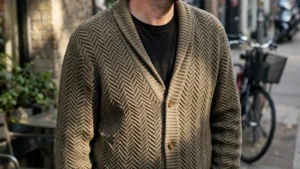
Finally, treat the longline as the statement and let everything else be quiet. That is the same rule that makes a patterned cardigan work, applied to a plain shape. The herringbone cardigan styling guide makes the point with a zigzag pattern: one strong feature, everything else plain. With a longline, the strong feature is the length, so the same discipline applies, just without the pattern.
9 ways to style a longline cardigan for men
Let the hem end at mid-thigh, not at the knee
What to do: Choose a longline whose hem ends at mid-thigh, and check it in a mirror while you walk. What to avoid: A knee-length hem on a shorter frame, which cuts the legs short. Best For: A first longline, on any frame. Time Needed: A few minutes with a full-length mirror. Standout Tip: If the hem swings past the knee when you walk, it is too long for you.
Mid-thigh works for most men, because it reads clearly as longline without shortening the legs. Knee-length suits men over six feet, and still needs boots and slim trousers.
Slim legs below stop the outfit going wide
What to do: Wear slim or straight trousers under the longline, so the hem stays the longest line. What to avoid: Wide or baggy trousers, which make the outfit look bottom-heavy. Best For: Any day you wear a longline out of the house. Time Needed: No extra time. Standout Tip: If the trousers are wider than the hem, the proportions are upside down.
The cardigan adds length to the top half, so the bottom half has to stay narrow. Slim dark denim and straight chinos are the safest choices.
Prints stay out from under a longline
What to do: Wear a plain white or black tee under the cardigan, tucked or untucked, with nothing on it. What to avoid: A graphic, striped, or checked layer underneath, which competes with the shape. Best For: Relaxed days when the cardigan is the feature. Time Needed: No extra time. Standout Tip: A white tee brightens a dark longline; a black tee keeps an all-dark outfit quiet.
A plain tee is the quietest base you can wear, and quiet is what a longline needs, so the layer underneath should disappear.
One closure keeps the front from swinging
What to do: Fasten a single middle button, and leave the rest of the front open. What to avoid: Buttoning every button, which turns the cardigan into a coat, or leaving it fully open in a wind. Best For: Smarter days when the front needs a clean line. Time Needed: Ten seconds. Standout Tip: One button holds the shape; two or more close it up completely.
A single closed button makes a longline look deliberate. It keeps the front edge straight, shows the base layer in a strip, and stops the hem swinging wide when you walk.
Boots below the hem keep the outfit grounded
What to do: Wear boots, Chelsea or lace-up, with slim trousers under the longline. What to avoid: Bulky trainers, which add weight at the ankle and fight the hem. Best For: Cold days and smarter outfits. Time Needed: No extra time. Standout Tip: Clean, slim trainers work too, but only with slim trousers and a mid-thigh hem.
The hem draws the eye down to the ankle, so the shoes matter more than under a short cardigan. Boots add weight at the ankle and anchor the length.
No belt over the top of a longline
What to do: Wear trousers that fit without a belt, or tuck the belt under the cardigan and forget about it. What to avoid: A belt worn over the cardigan, or a wide belt that cuts the outfit in half. Best For: Any outfit where the cardigan is worn open. Time Needed: No extra time. Standout Tip: If the trousers need a belt to stay up, they are the wrong trousers for a longline.
A belt over a longline breaks the vertical line that makes the shape work, cutting the outfit in two and making it look like a dressing gown with a sash.
Push the cuff back a single turn
What to do: Roll each sleeve back once, to just above the wrist, so the cuff sits clear of the hands. What to avoid: Pushing the sleeves up to the elbow, which bunches the knit and shortens the line. Best For: Warm days and working with your hands. Time Needed: Thirty seconds. Standout Tip: One fold keeps the sleeve tidy; two folds make it look like you are about to wash up.
Longline sleeves are often cut long, and a single roll keeps them out of the way without disturbing the shape, showing a strip of shirt or tee at the wrist.
Outer layer duty belongs to the longline
What to do: On cold days, wear a short jacket over the longline, or let the longline be the outer layer. What to avoid: A long coat over a longline, which hides the hem that makes the shape work. Best For: Cold days when you still want the longline visible. Time Needed: No extra time. Standout Tip: If the coat is longer than the cardigan, the cardigan might as well not be there.
A long coat and a longline are two long layers doing the same job, and the coat wins. A short jacket keeps the hem visible, which is the whole point of a longline.
Store a longline folded flat on a shelf
What to do: Fold the cardigan and keep it on a shelf, with the hem straight and the sleeves flat. What to avoid: Hanging it on a hanger, which stretches the shoulders and pulls the hem out of shape. Best For: Keeping a heavy longline in shape between wears. Time Needed: One minute. Standout Tip: A heavy wool longline will show hanger marks within a week, and they are hard to press out.
A longline is heavier than a short cardigan, and gravity works on it whenever it hangs. Folding spreads the weight and keeps the shoulders square, so the hem falls straight next time.
Picking the right longline cardigan for your wardrobe
Start with the length you will actually wear. Mid-thigh is the safe first choice, working with the trousers and shoes you already own. Knee-length is bolder, needing boots, slim trousers, and a taller frame. If you are unsure, buy mid-thigh first and only go longer once you know the shape suits you. The cable-knit cardigan styling guide makes the same point about texture: start with the version that is easiest to wear, and only go bolder once the easy one feels natural.
Think next about the weight. A mid-weight knit is the most useful, because it drapes cleanly indoors and still works outside on a mild day. A fine knit is easier to layer under a jacket, but it can cling and show every fold underneath. A heavy knit is warm and dramatic, but it needs space in the wardrobe and a taller frame to carry the bulk. Most men only need one longline, so pick the weight that matches the days you will actually wear it.
Colour is the last decision, and it is the easiest one. Black is the safest first longline, because it keeps the extra length quiet. Navy is the most useful after black, because it pairs with dark denim and grey trousers. Grey is softer and warmer in feel, but it shows stains more than the darker colours. Buy the length and the weight first, and let the colour follow.
The caveats that matter
The main risk with a longline is looking like you are wearing a dressing gown, and it always comes from the same place: a base that is too soft, too wide, or too loud. A dressing gown is a long, soft, belted layer worn over pyjamas. A longline worn over a plain tee, slim trousers, and boots is a long, structured layer worn over an outfit. The difference is the base, not the cardigan, so keep the base tidy and the cardigan looks intentional.
| Detail | What is known |
|---|---|
| Best first length | Mid-thigh, for most heights and most outfits |
| Best trousers | Slim or straight legs, so the hem stays the longest line |
| Best base layer | A plain tee or a plain shirt, with nothing patterned |
| Best shoes | Boots, or clean slim trainers with slim trousers |
| Button rule | One middle button closed keeps the front in a clean line |
| What to avoid | A belt over the cardigan, wide trousers, and bulky shoes |
| Outer layer | A short jacket, not a long coat, so the hem stays visible |
| Storage | Fold it on a shelf; hanging stretches the shoulders |
The other risk is the coat problem. A longline is not a coat, and it will not keep out rain or a cold wind, so on a wet day you need a proper coat, and the longline will be hidden under it. That is fine, because the longline is at its best indoors and on mild days, where it can be seen. The houndstooth cardigan styling guide faces the same trade-off with a pattern instead of a length: a strong feature needs to be visible to work, so wear it where it can be seen.
Checklist: styling a longline cardigan honestly
Use these checks before you leave the house.
- Check the hem: it should end at mid-thigh, and it should move with you when you walk, not swing wide.
- Check the base: a plain tee or shirt, slim trousers, and nothing patterned underneath.
- Check the front: one middle button closed, or fully open if the knit holds its shape.
- Check the shoes: boots, or clean slim trainers with slim trousers, and nothing bulky.
- Check the belt: leave it off, or hide it under the cardigan, and never wear one over the top.
- Check the back: turn round and look at the hem from behind, because that is the view other people get.
Frequently asked questions
Should a longline cardigan be worn open or buttoned?
Either, but one middle button closed is the safest middle ground. It keeps the front in a clean line and shows the base layer in a strip. Fully open works if the knit is heavy enough to hold its shape, and fully buttoned turns the cardigan into a coat, which is rarely the look you want.
What trousers work under a longline cardigan?
Slim or straight trousers, in dark denim or chinos. The trousers need to be narrower than the hem, so the cardigan stays the longest line in the outfit. Wide trousers make the outfit look bottom-heavy and fight the length.
Do trainers work with a longline cardigan?
Clean, slim trainers work with slim trousers and a mid-thigh hem. Bulky trainers do not, because they add weight at the ankle and fight the hem. Boots are the safer choice, especially with a knee-length cardigan or on a cold day.
How do I stop a longline looking like a dressing gown?
Keep the base tidy: a plain tee or shirt, slim trousers, and boots, with no belt over the cardigan. A dressing gown look comes from a soft, wide, belted base, so the fix is structure underneath, not a different cardigan.
Can a longline cardigan replace a coat?
No, not on a wet or windy day. A longline is an unlined, open-front layer, so it keeps you warm indoors and on mild days, but it will not keep out rain or a cold wind. Wear a proper coat over it on bad days, and let the longline lead on good ones.
What length should a first longline be?
Mid-thigh, for most men. It reads clearly as longline without cutting the legs short, and it works with the trousers and shoes you already own. Only go to knee-length if you are over six feet and happy to wear boots with it.
The bottom line
Styling a longline cardigan comes down to two rules: keep the base slim and plain, and let the length lead. A plain tee, slim trousers, and boots, with one button closed and no belt over the top, will make almost any longline look intentional, and the nine steps above are just that idea worked through in detail.
Start with a mid-thigh length, wear it where it can be seen, and fold it when you take it off. The longline is a simple shape, and it rewards simple styling more than any other cardigan on the list.