
A pleated midi dress is one of the easiest dresses to love and one of the easiest to get slightly wrong. The pleats give it movement and texture before you add anything else, and the midi length lands between the knee and the ankle.
The trick is that a pleated midi dress is not just a longer version of a short pleated dress, and it is not a pleated midi skirt with a top attached. The pleats run through the whole garment, from the bodice to the hem, so every styling choice sits on the same piece of fabric. A belt changes the waist, a long layer can crush the pleats, and the wrong shoes can cut the leg short.
This guide stays firmly on the midi-length pleated dress: how to choose the pleat and the fabric, where the hem should land, which shoes and layers work, and how to take one dress from a workday to an evening out.
Key takeaways
- A pleated midi dress should end at mid-calf or just below the knee, clear of the widest part of the calf.
- Define the waist every time: a slim belt, a tie waist or a seamed bodice stops the pleats swallowing your shape.
- Match the shoe to the pleats: light heels for chiffon and crepe, boots and loafers for knit.
- Keep layers short or open, so the pleats can move freely and are not flattened at the hip.
- Let the pleats carry the texture: keep jewellery, bags and prints simple.
What makes a pleated midi dress different
A pleated skirt is half an outfit, and you can rescue a dull one by changing the top. A pleated midi dress gives you no such escape. The bodice, the waist and the skirt are one continuous line, and the pleats run through all of it.
The midi length adds its own rules. The hem lands at mid-calf, often the widest part of the lower leg, so placement matters more than fabric or colour. A hem at the widest point can widen the leg, while one just above or below it keeps the leg looking long. Knife, accordion, box and sunray pleats each behave differently, from flat and tailored to soft and flared.
Choosing the right pleat and fabric
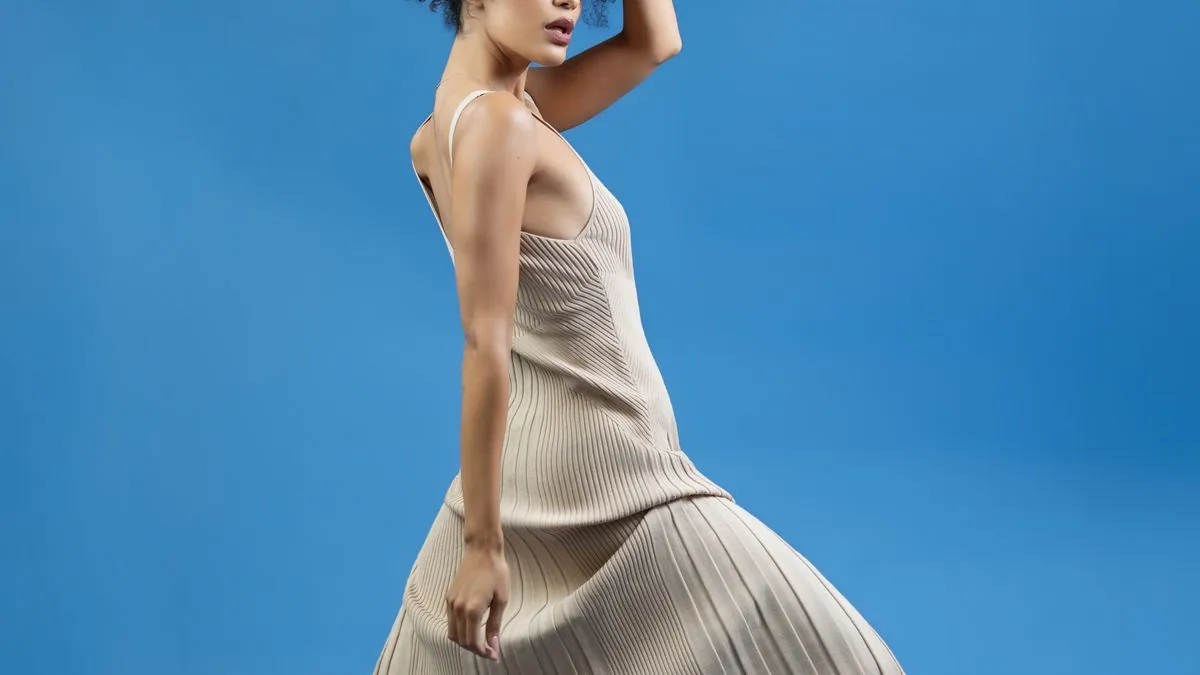
Start with the pleat, because it decides the mood of the whole dress. Accordion pleats in a soft crepe or chiffon are the most versatile choice: they move beautifully and drape rather than stand away from the body.
Fabric matters as much as the pleat. Chiffon and georgette pleats are light and floaty, and they suit spring and summer, but they need a lining, or they will cling. Crepe is the workhorse: it holds a pleat, resists creasing and drapes cleanly, which is why so many office-friendly pleated midi dresses are made from it. Knit pleats are the most forgiving and the warmest, and they suit autumn and winter. A solid colour shows the pleats at their best, while metallic pleats are a party look best saved for evenings.
Getting the length and fit right

Fit starts with the waist. The pleats need a clear starting point, or they will hang straight from the shoulder and hide your shape entirely. Look for a dress with a seamed waist, a tie belt or a fitted bodice, and if your dress has none of those, add a slim belt in a tone close to the dress. Keep it narrow and let it sit at your natural waist.
The hem deserves the same attention. A true midi ends between the knee and the ankle, and the most flattering spot is usually mid-calf, just above or below the widest part of the calf. Petite frames do best with a hem just below the knee, worn with a heel. Check the fit sitting down as well as standing: a dress that looks perfect standing up can pull across the hips when you sit.
Shoes that work with a pleated midi dress
Shoes set the tone more than any other single piece, because they decide where the eye stops. A pointed-toe heel in a nude shade close to your skin tone is the most useful pairing: it lengthens the leg and works with almost any colour. Strappy heeled sandals are the classic warm-weather choice. Block heels are the practical choice for outdoor events, where a stiletto would sink into grass.
For daytime, pointed flats or loafers keep the line clean with a knife-pleated dress and a blazer. Avoid heavy trainers: their bulk at the ankle can cut the leg short. Boots are the cold-weather answer. A heeled ankle boot works with a midi hem, leaving a small gap of leg between boot and hem.
Layering without crushing the pleats
Layering is where most pleated midi dresses go wrong, because the wrong layer flattens the pleats at the hip and ruins the line. The rule is simple: keep layers short or open. A cropped jacket that ends at the waist lets the pleats fall freely below it, and it defines the waist at the same time.
An open blazer is the smarter layer. Wear it unbuttoned in a neutral shade and let the pleated hem show below it. A long coat can work in cold weather, but choose one that is open at the front or belted at the waist, and check that it does not press the pleats flat at the hip when you sit. Knitwear needs care: a chunky jumper will hide the waist and crush the pleats, so wear a fine roll-neck underneath a sleeveless pleated midi instead.
Styling a pleated midi dress for every occasion
For work, choose a solid colour in crepe or a mid-weight knit, with a defined waist and a hem at mid-calf. A knife-pleated navy or charcoal midi with a blazer and pointed flats is polished without being stiff. Keep the jewellery simple and carry a structured tote.
For a wedding guest, an accordion-pleated midi in a jewel tone or a soft pastel is ideal. Emerald, burgundy and navy work year round. Avoid white and ivory out of respect for the bride. For a date night, a darker pleated midi in black, deep plum or forest green works best. For a weekend, dress the same midi down with a denim jacket, slim white trainers and a crossbody bag. The dress has not changed; the shoes, the layer and the bag have.
Colours, prints and accessories in 2027
The 2027 mood is quiet polish, and the pleated midi fits it exactly. Soft neutrals such as champagne, stone, sage and dove grey have taken over from heavy embellishment, and they suit a pleated midi because they let the folds do the visual work. If you want colour, jewel tones are the safest statement: emerald, burgundy, sapphire and deep teal flatter most skin tones.
Accessories should stay slim and simple, because the pleats are already the texture of the outfit. A fine chain, small hoops or a single cuff is enough; a statement necklace will fight with the folds at the neckline, and a large, busy bag will compete with the movement of the skirt. Choose a bag that sits close to the body, a clutch or a small shoulder bag, and keep the colour neutral. The same rule applies to belts: slim defines the waist, while a wide belt can bulge where the pleats begin.
Wearing a pleated midi dress through the seasons
Spring is the pleated midi’s easiest season. A chiffon or crepe accordion-pleated midi in a pastel works on its own with flat sandals and a straw bag, or with a linen blazer for shade and structure. Summer is the same dress worn sleeveless, with strappy sandals and a woven bag. Autumn suits a knit or crepe pleated midi in a jewel tone, with a fine roll-neck underneath, opaque tights and heeled ankle boots. Winter works with a heavier fabric such as knit or lined crepe, opaque tights, knee-high boots and a long coat.
What to wear underneath, and how to care for pleats
What you wear underneath matters more than with most dresses, because pleats show lines. Seamless, laser-cut underwear in a shade close to your skin tone is the safest choice for every colour and fabric. Avoid white under a pale dress and black under a light dress, because both show through.
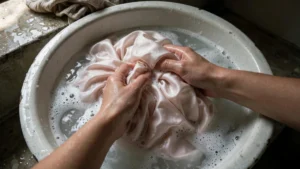
Pleats need gentle care, and they repay it. Never wring a pleated dress; press the water out gently between two clean towels and hang it to dry away from direct sunlight. Fix creases with steam, not an iron: hold a steamer a few inches from the fabric. Never press a hot iron directly onto pleats, because the heat can flatten them permanently. Store it hanging on a padded hanger, and never fold it tightly.
Pleated midi dress styling at a glance
| Occasion | Dress choice | Shoes | Layer | Bag |
|---|---|---|---|---|
| Work | Solid crepe, knife pleat | Pointed flats or loafers | Tailored blazer, open | Structured tote |
| Wedding guest | Jewel-tone accordion pleat | Strappy block heels | Silk wrap or bolero | Structured clutch |
| Date night | Black or plum, subtle sheen | Strappy heeled sandals | None | Small chain bag |
| Weekend lunch | Neutral chiffon pleat | White trainers or flat sandals | Cropped denim jacket | Crossbody bag |
| Cocktail party | Metallic accordion pleat | Pointed-toe pumps | None, or a silk wrap | Metallic clutch |
| Autumn day | Knit pleat, jewel tone | Heeled ankle boots | Fine roll-neck underneath | Top-handle bag |
| Winter party | Dark lined crepe pleat | Knee-high boots | Velvet blazer | Metallic clutch |
| Summer garden party | Pastel chiffon pleat | Block-heel sandals | None | Woven or straw bag |
Your pleated midi dress checklist
- Hem at mid-calf, clear of the widest part of the calf, checked with the shoes you will wear.
- Waist defined with a slim belt, a tie waist or a seamed bodice, sitting at your natural waist.
- Fit checked sitting down as well as standing, with no pulling across the hips and no gaping at the bodice.
- Seamless nude underwear, tested under the dress in daylight before the event.
- Shoes chosen for the occasion and the surface, with block heels for grass and boots for cold weather.
- Dress steamed, not ironed, the night before, with one focal accessory only.
Frequently asked questions
Can you wear a pleated midi dress to work?
Yes. Choose a solid colour in crepe or knit, with a knife or fine accordion pleat and a defined waist. Pair it with a tailored blazer and pointed flats or loafers.
What shoes go best with a pleated midi dress?
Pointed-toe heels in a nude shade are the most versatile choice, because they lengthen the leg and work with almost any colour. Strappy sandals suit warm weather, block heels are practical outdoors, and ankle boots carry it through autumn and winter.
How do you stop a pleated midi dress from looking frumpy?
Define the waist, check the hem clears the widest part of the calf, and keep the shoes light and pointed rather than heavy and round-toed.
Can you wear a pleated midi dress in winter?
Yes. Choose knit or lined crepe, wear a fine roll-neck underneath, add opaque tights and knee-high boots, and finish with a long coat belted at the waist.
What should you wear under a pleated midi dress?
Seamless underwear in a shade close to your skin tone is the safest choice, because pleats show lines easily.
How do you care for pleats so they keep their shape?
Never wring the dress or press a hot iron onto the pleats. Steam them from a distance, store the dress hanging, and never fold it tightly.
The bottom line
A pleated midi dress is one of the most useful dresses you can own, because it asks so little of you and gives so much back. Choose the right pleat, a mid-calf length, and a fabric with enough weight to hold its shape. Define the waist, match the shoe to the weight of the pleats, and keep your layers short or open so the pleats can move.
For more ideas on building outfits around dresses, see our guide to the best satin dresses for 2027, our round-up of the best summer dresses for 2027, and our advice on the best wedding guest dresses for occasion dressing.
Note: Try the full outfit on at home the day before an event, shoes and all, and walk around the house in it. Any pulling, slipping or discomfort will show up at home, where you can fix it, rather than at the event, where you cannot.