Yes, Princess Polly is a real, legitimate retailer. It’s been operating since 2010, it runs proper regional websites, it has physical operations, and it publishes actual payment, shipping, return, and supply-chain policies , not the kind of thing a scam storefront bothers with.
But “is it legit” isn’t really the question that matters once you’re staring at something in your cart. The one worth asking is: is this specific order going to be worth what I’m about to pay for it? And that’s where things get more interesting, because the picture is genuinely mixed. Some customers love the clothes and get exactly what they expected. Others have had rough experiences with shipping, refunds, or getting anyone on the phone. And the brand’s “Lower Impact” labeling is real, but it means something narrower than most shoppers probably assume.
Here’s what I found digging into it.
Key takeaways
- Princess Polly is a legitimate retailer, with a documented business, regional sites, and formal customer policies.
- Quality varies by item, so check fabric, construction, measurements, and product-specific reviews rather than judging the whole brand from one dress.
- Shipping and customer service are the biggest current warning areas in recent third-party reviews, although positive delivery experiences exist too.
- Princess Polly does operate like a fast-fashion/ultra-fast-fashion retailer, even though it has introduced B Corp certification, lower-impact materials, supply-chain audits, and emissions initiatives.
- The company’s “Lower Impact” label has a specific meaning: products in that range must contain at least 50% lower-impact materials; it doesn’t mean the garment has zero environmental impact.
Is Princess Polly Legit and Safe to Order From?
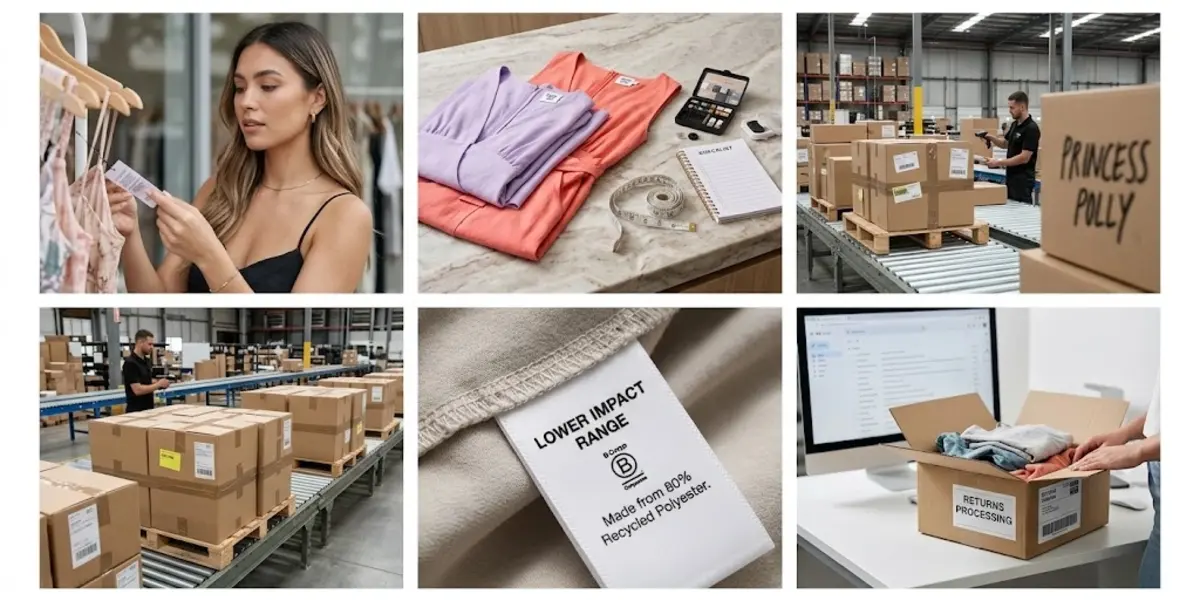
Yes , Princess Polly is a legitimate online retailer, and ordering from the official site is generally safe. The company is upfront about the legal entities handling sales in each region, it has standard terms of sale, and it supports the payment methods you’d expect from an established retailer, not a sketchy one-off site.
The actual risk isn’t “will this website vanish with my money.” It’s more mundane than that: will your order show up, and if it doesn’t, will customer service actually help you.
Worth knowing for context: Princess Polly started on Australia’s Gold Coast back in 2010 and now has teams in West Hollywood and Burleigh Heads. It’s owned by a.k.a. Brands, and it became a certified B Corp in May 2025 , which is a real credential, not marketing fluff, though it doesn’t mean the same thing as “ethically perfect.”
How to make sure you’re actually on the real site:
- U.S.: us.princesspolly.com
- Australia: princesspolly.com.au
- U.K./Europe: princesspolly.co.uk
If an ad on Instagram or TikTok sends you somewhere else, don’t assume it’s legit just because the photos look right. Copying product images is trivial; copying a real return policy and customer service team isn’t.
On payments specifically , Princess Polly says it uses SSL encryption and supports major cards plus PayPal, Shop Pay, Klarna, and Afterpay depending on your market. Fairly standard stuff, nothing alarming there.
The part that actually deserves your attention is what happens after you pay. Trustpilot currently shows Princess Polly sitting around 2.2 out of 5 from over 1,600 reviews, and the BBB page has a steady stream of recent complaints about missing or delayed orders. That’s not a scientific sample of every customer who’s ever ordered, and plenty of people never leave a review at all , happy or not. But when the same complaints keep showing up, it’s worth factoring in.
Returns, while we’re at it: on the U.S. site, you’ve currently got 30 days from delivery to return an eligible item for an exchange, gift card, or refund, as long as it’s unworn, unwashed, and still has its tags. Final-sale items are excluded entirely. If you go the refund route, there’s a $6.95 processing fee taken out; exchanges through their portal skip that fee.
So check whether the item is marked final sale before you buy it, especially if it’s something expensive or fitted. A great sale price stops looking so great once you realize there’s no way to send it back.
Princess Polly Quality: Is It Actually Good?
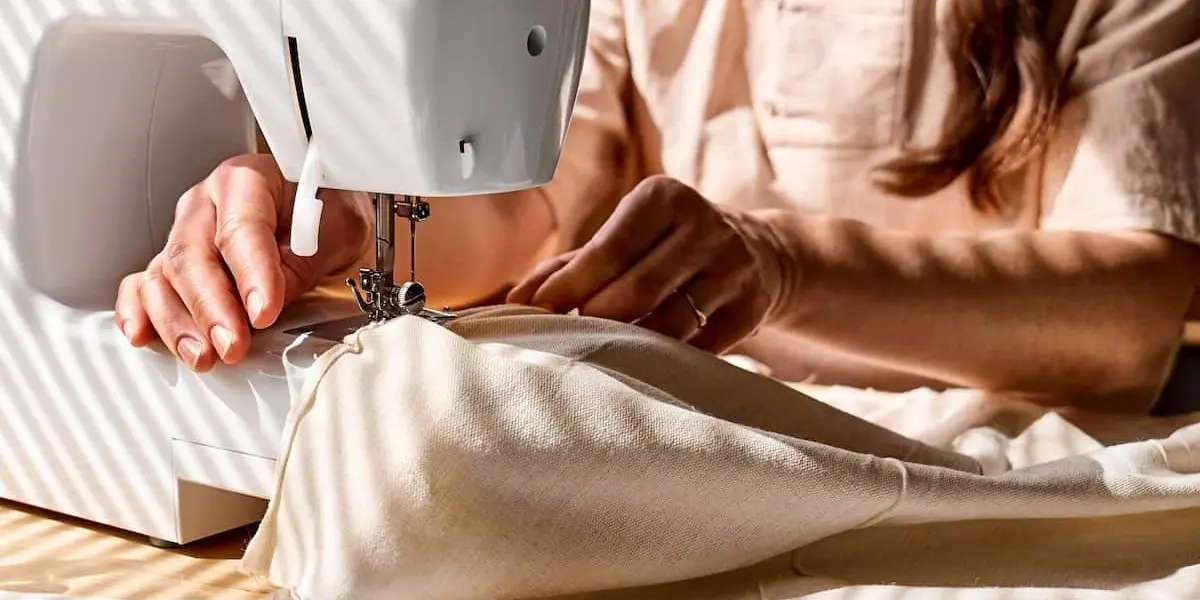
There’s no single honest answer here, because Princess Polly quality isn’t one thing , it swings depending on the item. Some pieces are fully lined with decent fabric blends. Others are simpler and, frankly, cheaper-feeling. Treating “Princess Polly quality” as a fixed brand-wide rating misses the point.
A couple of real examples make this concrete. The current Landon Mini Dress is 97% reclaimed polyester and 3% elastane, fully lined, and tagged as a Lower Impact product. The Lunara Mini Dress, on the other hand, is 95% polyester and 5% elastane with a polyester lining , same category, noticeably different makeup.
Before you buy, it’s worth running through a quick checklist:
- Fabric – check the exact composition listed on the product page
- Construction – is it lined? What’s the closure, the seam quality, does it stretch?
- Measurements – compare the actual garment measurements to your own, not just the size label
- Reviews – read reviews for that specific product, not the brand’s overall rating
- Return status – confirm it’s not final sale if you’re at all unsure about fit
The reviews themselves are as split as you’d expect. Trustpilot has plenty of complaints about cheap-feeling fabric, sizing issues, and faulty items , but it also has reviewers who specifically praise the clothing and say their orders arrived fast. On the U.K. Trustpilot page, some customers say they buy from Princess Polly regularly and genuinely like the quality, right alongside others frustrated about returns and pricing.
Which is honestly why the product-level reviews matter more than the overall brand score. A $65 polyester dress isn’t automatically bad because it’s polyester , plenty of polyester garments hold up fine. What actually determines whether it’s worth it is how the fabric, lining, stitching, and fit come together, and whether you’ll actually wear the thing.
Is Princess Polly Fast Fashion?
Yes. Princess Polly fits the fast-fashion (arguably ultra-fast-fashion) model, even with the sustainability work it’s done on top of that model. Business of Fashion has referred to it as ultra-fast fashion, and Good On You , an independent sustainability assessor , currently rates its business model as unsustainable, pointing specifically to how quickly it releases trend-driven products and how large its catalog is.
That distinction tends to get lost in the brand’s own messaging: you can run real supply-chain improvements and still be, structurally, a fast-fashion company. Those two things aren’t in conflict.
Is it basically the same as Shein? Not exactly, though the comparison isn’t crazy. Both sell trend-led fashion online and depend heavily on rapid turnover and social-driven marketing.
But Princess Polly does publicly disclose its tier-one factory network and reports factory audits through a formal ethical-sourcing program , Shein’s transparency track record is a different conversation entirely. The more accurate framing is that Princess Polly is a fast-fashion retailer that’s built a more developed disclosure and impact program around that model. It hasn’t stepped outside the model.
Is Princess Polly Ethical or Sustainable?
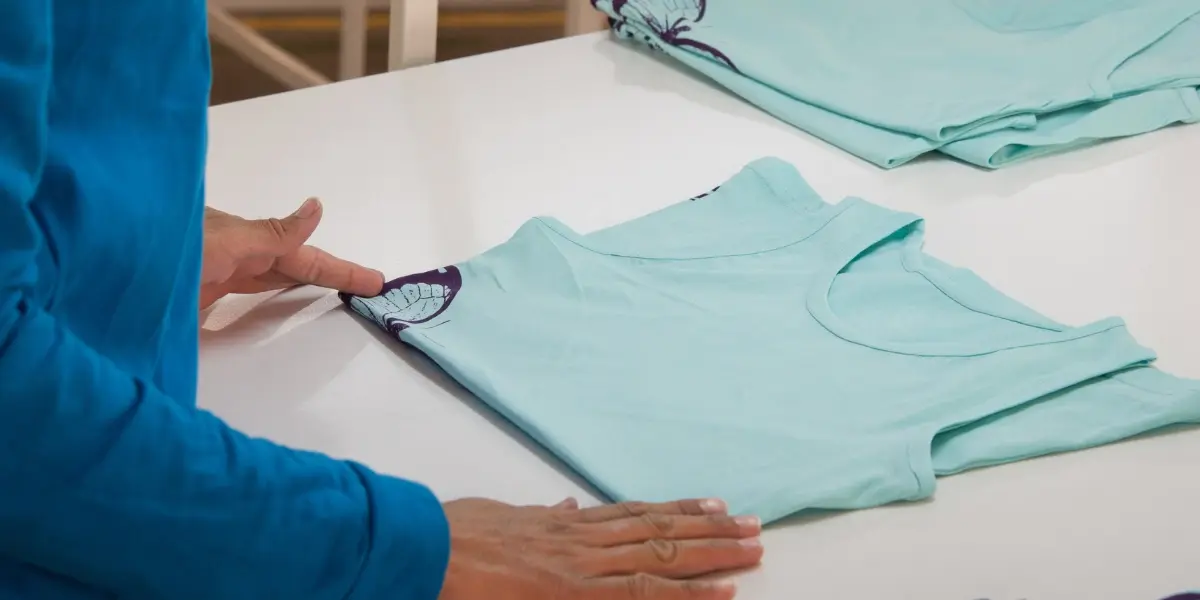
This is where I’d push back a little on how the brand presents itself. Princess Polly does have real sustainability infrastructure , B Corp certification since 2025, lower-impact materials, factory audits, supply-chain tracing, emissions targets.
Those aren’t nothing. But Good On You still rates Princess Polly “Not Good Enough” overall, citing the ultra-fast-fashion model itself, incomplete material disclosure, and no clear evidence that supply-chain workers are paid living wages.
Both of those things are true at once. The brand has made real improvements, and it hasn’t solved the underlying problem. I think that’s the most honest way to sit with the Princess Polly ethics conversation , resist the urge to pick a side and declare it either “greenwashing” or “actually sustainable now.”
So what does “Lower Impact” actually mean?
It’s more specific than most shoppers assume. Princess Polly requires products in that range to be made from at least 50% lower-impact materials, and the range’s average item sits around 80%. Materials that qualify include things like organic cotton, organic linen, recycled polyester, and recycled nylon.
What it does not mean:
- Zero environmental impact
- A fully sustainable supply chain
- 100% sustainable materials throughout
- That the company has stepped away from fast fashion
It means the item clears a defined material threshold. That’s a legitimate, useful label , it’s just not the sweeping claim it can sound like at a glance. The Landon Mini Dress mentioned earlier (97% reclaimed polyester) is a good example of a Lower Impact tag actually backed by specifics.
On factory transparency, credit where it’s due , this is genuinely one of the stronger parts of Princess Polly’s disclosure. The company says 100% of its tier-one suppliers are traced and audited: 78 factories, over 9,300 workers, spread across China (63), Vietnam (10), India (3), and Turkey (2). It also claims 81% of tier-two suppliers are traced.
Audits reportedly cover child labor, modern slavery, wages, hours, health and safety, and freedom of association, with a stated policy against subcontracting to unverified factories.
That’s meaningfully more transparent than most fast-fashion brands bother to be. But it’s worth being precise about what it does and doesn’t prove , an audit isn’t the same thing as a guarantee of living wages, which is exactly the gap Good On You calls out. Disclosure and proof aren’t identical.
Why Is Princess Polly So Expensive for Fast Fashion?
Compared to Shein-tier pricing, Princess Polly can feel pricey , but don’t flip that around and assume a higher price automatically means better quality, because it doesn’t necessarily. You can find a $65–75 dress on the site that’s still made almost entirely of polyester.
The price isn’t just paying for fabric. It covers design, product photography, marketing, fulfillment, staffing, warehousing, returns processing, compliance , the whole retail machine sitting behind the listing.
The more useful question, honestly, is how many times you’ll actually wear the thing. A $70 dress worn twenty times is a better deal than a $35 dress worn twice. That’s a value calculation, not proof of quality.
And to be clear: paying more at Princess Polly isn’t automatically an “ethical premium.” If sourcing ethics are the reason you’re willing to spend more, look at the actual evidence , factory disclosure, wage data, certifications , rather than assuming price correlates with conscience.
Is Princess Polly Shipping Reliable?
The official shipping timelines are clear enough on paper. Whether they hold up in practice is a different story, especially during busier periods.
For the contiguous U.S.:
| Shipping option | Advertised delivery | Listed price |
| Standard | 4–8 business days | Free over $50 |
| Express | 3–4 business days | $3.99 over $50 |
| Expedited | 2 business days | $15.99 over $50 |
| Overnight | 1 business day | $22.99 over $50 |
Orders placed before 11 a.m. Pacific are generally prepped for pickup the same business day; anything after that usually ships the next business day. Sale periods and holidays can add delays on top of that , worth remembering if you’re ordering during a big promo.
But an advertised delivery window describes the intended service, not a guarantee. Recent BBB and Trustpilot complaints repeatedly mention delayed dispatch, lost packages, and missed expedited windows , alongside plenty of customers who got fast, uneventful deliveries. If you’re ordering something for a specific event, I’d build in a buffer rather than cutting it close.
Internationally, Princess Polly runs separate regional sites for the U.S., Australia, and U.K./Europe, and the shipping rules, taxes, and delivery timelines vary by destination.
One detail that trips people up: for some countries, duties and taxes are collected at checkout; for others, you’ll be charged when the package actually lands in-country , and that charge can be non-refundable even if you return the item. Worth checking your country’s specific terms rather than assuming U.S. rules apply everywhere.
Where Are Princess Polly Clothes Made?
Mostly China, based on the disclosed tier-one factory list, with additional factories in India, Vietnam, and Turkey.
But country of origin alone doesn’t tell you much about ethics one way or another. What actually matters is which factory, what audits were run, what labor standards apply, and how deep the company’s visibility actually goes. Princess Polly says it traces 100% of tier-one suppliers , but that visibility thins out fast: 81% at tier-two, and only 49% for primary lower-impact material inputs at tier-three.
That gap is a pretty good illustration of the difference between “we disclose our factories” and “we know everything happening in our supply chain.” Those are not the same claim, even though they can sound like it.
Is Princess Polly a Good Brand?
Depends entirely on what you’re measuring it against. It’s a real, established retailer with substantial operations, formal policies, a disclosed supply chain, and a B Corp certification , that part’s solid. The weaker spots are the inconsistent customer-service record and the sustainability gaps that come with operating a fast-fashion model at scale.
| Question | Short answer |
| Is it legit? | Yes |
| Safe to order from? | Yes, on the official site |
| Reliable? | Established, but recent reviews flag real shipping/support issues |
| Good quality? | Mixed , depends on the item |
| Fast fashion? | Yes |
| Ethical? | Real programs in place, with acknowledged gaps |
| Sustainable? | Some genuine initiatives; calling the whole business “sustainable” overstates it |
| Like Shein? | Some similarities, but more supply-chain transparency |
| Same as Oh Polly? | No, unrelated companies |
Is Princess Polly the Same as Oh Polly?
No , different companies, similar names, understandable confusion. Princess Polly started on Australia’s Gold Coast in 2010; Oh Polly has its own separate history, leadership, and business entirely. If you’ve seen the two mentioned as though they’re the same brand under two names, that’s just wrong.
Who Should (and Shouldn’t) Buy From Princess Polly

It’s a reasonable choice if you’re after trend-led pieces and you’re willing to actually check the fabric, fit, and reviews for the specific item rather than trusting the brand name blindly.
I’d think twice if:
- You need guaranteed delivery by a specific date
- You really don’t want to deal with a return fee
- You’re buying something final-sale without being confident it’ll fit
- You’re expecting premium construction at a $60–100 price point
- Sustainability is your main reason for choosing the brand over cheaper competitors
- You specifically want slow fashion, not fast fashion with better disclosure
None of that makes Princess Polly a bad option outright , it just means your reason for buying should match what you’re actually going to get.
Before You Order: Quick Checklist
- Confirm you’re on the correct official regional site
- Read the exact fabric composition
- Check garment measurements against your own, not just the size label
- Read reviews for that specific product
- Confirm it’s not final sale if you’re unsure about fit
- Check delivery estimates for your country
- Build in a buffer if you need it for a specific date
- International buyers: check whether duties are prepaid or collected on delivery
- Read “Lower Impact” as a material claim, not a blanket sustainability guarantee
- Ask yourself honestly whether you’ll wear it enough to justify the price
Takes a few minutes. Can save you a headache later.
FAQ
Is Princess Polly good quality?
It varies by product. Check the fabric, lining, construction, and reviews for the specific item rather than assuming the whole catalog is consistent.
Is Princess Polly a good brand?
It’s an established retailer with real operations. Whether it’s “good” for you depends on what you value most , price, trend selection, reliability, or sustainability.
Is Princess Polly safe to order from?
Yes, on the official site, using established payment methods and standard security. Just make sure you’re not on a lookalike domain.
Is Princess Polly fast fashion?
Yes , independent fashion reporting and sustainability assessments place it in the fast-fashion/ultra-fast-fashion category, alongside its lower-impact and ethical-sourcing programs.
What does “Lower Impact” mean at Princess Polly?
Products in that range use at least 50% lower-impact materials (organic cotton, recycled polyester, etc.), averaging about 80%. It doesn’t mean zero environmental impact.
Is Princess Polly ethical?
It has a real ethical-sourcing program with 100% of tier-one factories audited. Independent assessments still flag gaps around living wages and full material transparency.
Is Princess Polly the same as Oh Polly?
No , separate companies with separate histories.
Where are Princess Polly clothes made?
Mainly China, with additional factories in India, Vietnam, and Turkey , 78 tier-one factories currently disclosed, all reportedly traced and audited.
Is Princess Polly expensive?
Relative to ultra-low-cost retailers, yes. But pricing varies a lot by item, and higher price doesn’t guarantee better quality or more ethical production.
Does Princess Polly ship internationally?
Yes, through separate regional sites, with shipping methods and tax handling that vary by country.
My Take
Princess Polly is legit , that part isn’t really in question. But I wouldn’t stop there, because “legit” and “good in every respect” aren’t the same claim.
What you’re actually dealing with is a real retailer that’s been around since 2010, became a certified B Corp in 2025, and publishes its full tier-one factory list , those are genuine credentials. At the same time, it’s still operating a fast-fashion model, and Good On You’s independent read is noticeably more critical than the brand’s own sustainability page, particularly around wages and the sheer pace of the business. Both things are worth holding at once.
Same goes for the customer experience , there are plenty of people who order, love the clothes, and never think twice. There’s also a real, recurring pattern of complaints around shipping delays, lost orders, and slow customer service. Neither side of that cancels the other out.
So if something’s sitting in your cart right now: judge that item, not the logo. Check the fabric, the measurements, the reviews for that exact product, the return policy, and your actual delivery date. And if sustainability’s part of why you’re paying more, look past the “Lower Impact” badge to what it’s actually claiming , because knowing a brand is legitimate and knowing what you’re actually buying turn out to be two different things.