If you’re searching “is Depop legit,” there are really two different questions hiding inside that search. Is Depop itself a legitimate marketplace? And can you trust the particular person selling the item you want?
The first answer is straightforward: yes, Depop is a legitimate resale marketplace. It has operated since 2011, has millions of users, and eBay completed its acquisition of Depop on July 30, 2026.
The second question is harder. Depop is a peer-to-peer marketplace, which means the quality of the transaction can depend heavily on the individual seller, the listing, the payment method, and whether you stay inside Depop’s systems.
That distinction matters more than a simple “yes” or “no.”
Key Takeaways
- Depop is legitimate, and eBay completed its acquisition of the marketplace in July 2026.
- The biggest buyer risk usually comes from individual sellers, inaccurate listings, counterfeit goods, and attempts to move payments off Depop.
- Depop Buyer Protection can cover eligible purchases, but only under specific conditions and generally requires a claim within 30 days.
- Current Depop reviews show a real split between customers praising refunds and support and others complaining about slow or frustrating customer service.
- The safest way to use Depop is simple: check the seller, inspect the listing, pay through Depop, and keep the transaction on the platform.
Is Depop Legit?
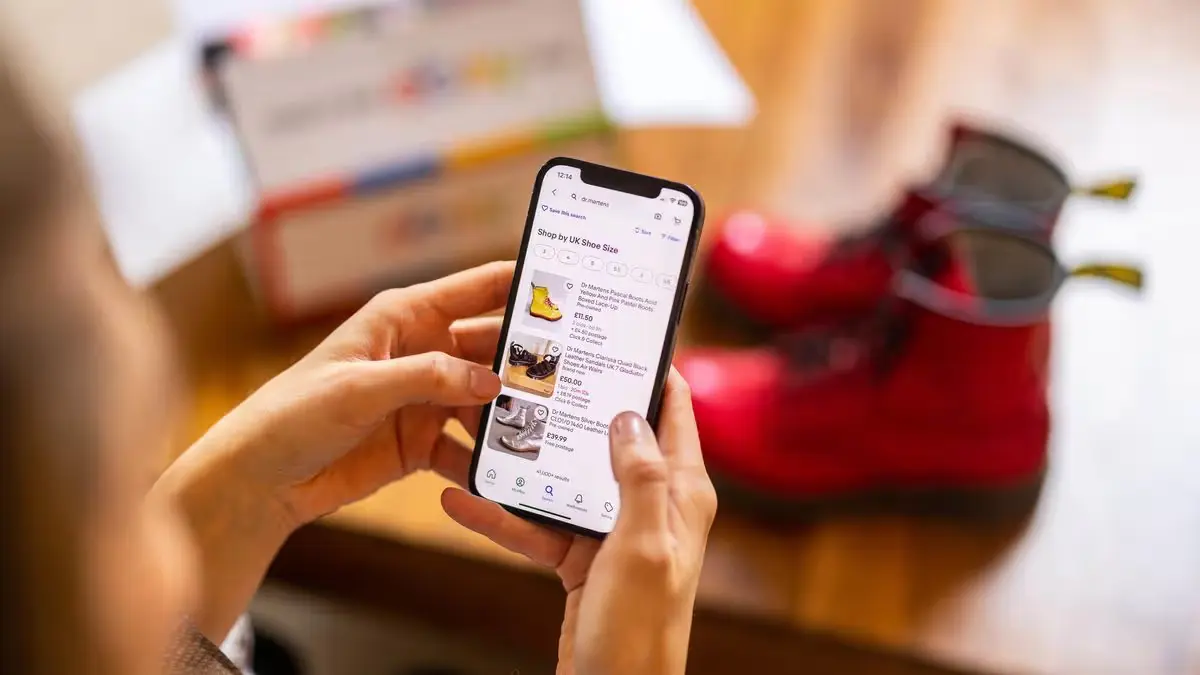
Yes, Depop is a legitimate fashion marketplace. It has operated since 2011, connects buyers and independent sellers, and is now owned by eBay after the acquisition closed on July 30, 2026.
That answers one part of the question.
The other part is more interesting: is the person selling you that vintage jacket, designer bag, or pair of sneakers legitimate?
Depop doesn’t work like a traditional retailer where the company owns the inventory and ships everything from its own warehouse. Its current Terms of Service describe the purchase agreement as being between the buyer and seller, with sellers responsible for making sure their items are accurately described and legally compliant.
So I wouldn’t treat “Depop is legit” as a reason to buy without checking anything else.
A legitimate marketplace can still have bad listings.
What Is Depop and How Does Depop Work?

Depop is a peer-to-peer fashion marketplace where people buy and sell secondhand, vintage, designer, streetwear, and other fashion items.
You can browse through the Depop app or website, open a listing, check the seller’s profile and reviews, ask questions, and purchase through the platform’s checkout. Sellers create their own listings, set prices, add photos and descriptions, and handle shipping according to Depop’s rules.
The basic buying process looks like this:
- Find an item you want.
- Check the seller’s reviews and listing.
- Look closely at photos, condition, sizing, and flaws.
- Ask the seller questions if something isn’t clear.
- Pay through Depop’s Buy button.
- Keep messages and transaction records inside Depop.
- Check the item when it arrives.
The selling side is similarly straightforward. Depop currently lets sellers create listings through the app or website, add photos or video, describe the item, choose the category and condition, set shipping details, and choose a price. Depop can also suggest a price range based on similar items sold on the platform.
And there’s a useful detail here: those suggested prices are only guidance. Sellers can choose their own price.
Is Depop Safe to Buy From?

Depop can be safe to buy from, but you still have to evaluate the individual transaction. Depop itself tells buyers to check seller reviews, inspect listing photos and descriptions, ask for measurements or additional photos, and request proof of authenticity for higher-priced items.
That’s good advice, but it isn’t just generic shopping advice.
On Depop, you’re often dealing with someone you’ve never met who is selling one particular item. A seller might have an excellent profile and still have a bad listing. A buyer might also have a smooth transaction 99 times and run into a problem on the 100th.
The safest approach is to look at three things together:
Seller + listing + payment method.
If the seller has a credible history, the photos appear genuine, the description is detailed, and the transaction stays inside Depop, you’re in a much better position than if someone has no useful history and wants you to pay them directly.
Depop specifically warns buyers not to make direct payments through PayPal, bank transfer, Venmo, Cash App, or other methods outside the platform.
That last point deserves more attention than it usually gets.
What Does Depop Buyer Protection Actually Cover?
Depop Buyer Protection can cover eligible purchases when an item doesn’t arrive, arrives damaged, or is significantly not as described. For current eligible purchases in the UK, US, and Australia, the buyer generally needs to have paid through Depop’s checkout and report the issue within 30 days of purchase.
The important word is eligible.
According to Depop’s current policy, protection applies when the item was purchased through the app or website and paid through Depop Payments using supported methods such as card, Apple Pay, Google Pay, or Klarna.
If those requirements are met, Depop says a qualifying buyer can receive a full refund covering the purchase price, shipping, fees, and applicable taxes or duties.
But there are exclusions.
| Situation | Depop Protection |
| Item never arrives | May be covered if eligibility requirements are met |
| Item arrives damaged | May be covered |
| Item is significantly not as described | May be covered |
| Payment through Depop checkout | Required for the listed Buyer Protection |
| Bank transfer or direct payment outside Depop | Not covered |
| Direct PayPal or Venmo payment outside Depop | Not covered |
| In-person transaction | Not covered |
| Issue reported within 30 days | Required for the stated protection |
| Protection as insurance or warranty | No |
Depop also says Buyer Protection isn’t insurance, a warranty, or a guarantee. The company retains discretion over whether a transaction receives protection under the program.
That’s the part I’d want a buyer to understand before spending $300 on a designer item.
Protection is useful. It isn’t a magic shield.
Can You Get a Depop Scam?

Yes. Depop can have scams, just like other peer-to-peer marketplaces. The common warning signs involve fake payment messages, phishing links, counterfeit products, non-delivery, and people trying to move the transaction away from Depop’s systems.
Depop’s own safety guidance tells buyers to use the Buy button, keep communication in the app, avoid sharing personal information, and report suspicious activity.
Watch for these Depop scam patterns
Someone asks you to pay outside Depop.
This is one of the clearest red flags. If somebody wants a bank transfer or private PayPal payment, you’re moving away from the platform’s protection.
Someone sends you a suspicious payment link.
Don’t assume a message is legitimate just because it uses the Depop name or logo.
The seller refuses to provide additional photos.
This matters particularly for expensive or branded items. Depop itself recommends asking for more information and proof of authenticity for higher-priced purchases.
The price makes no sense.
A genuine designer item being sold dramatically below its normal resale price doesn’t automatically mean it’s fake, but it deserves questions.
Someone pushes you to communicate somewhere else.
Depop specifically tells users to keep communication on the app.
The common thread is pretty obvious: the more a person tries to pull you outside Depop, the less useful Depop’s built-in safety systems become.
What Do Depop Reviews Say About Customer Service?
Depop reviews are genuinely mixed, and customer service is one of the biggest dividing lines. Trustpilot currently shows Depop at 3.1/5 from roughly 8,000 reviews, with 37% of reviews at five stars and 42% at one star. Trustpilot also warns that its reviews may not be representative.
That spread is more revealing than simply saying “reviews are mixed.”
Recent positive reviews include buyers saying Depop resolved disputes quickly, helped with counterfeit items, and issued refunds without much trouble. Other recent reviews describe long waits, automated responses, account restrictions, unresolved payment problems, or difficulty getting a clear answer from support.
The word that keeps appearing in the negative side of the review pattern is support.
Some users describe the process as responsive and helpful. Others describe it as slow, repetitive, or overly automated.
That doesn’t mean every complaint is accurate. User-review platforms aren’t controlled surveys, and dissatisfied customers may be more motivated to post.
But there’s enough repetition to take the customer-service concern seriously.
If a transaction goes perfectly, you probably won’t think much about Depop support. If your $500 purchase arrives counterfeit or never arrives at all, support suddenly becomes the most important part of the platform.
Is Depop Customer Service Good?
There isn’t a clean yes or no answer. Current reviews point to an inconsistent experience rather than a uniformly good or bad one. Some users report fast refunds and helpful support, while others describe delayed replies and difficulty getting specific answers.
Depop’s current Help Center provides support for order problems, refunds, missing orders, listing problems, account issues, and other marketplace questions.
Its own policies also tell users to keep track of disputes and provide proof or escalate within the relevant timeframes.
That makes documentation important.
Save your receipt. Keep the listing. Keep the messages. Keep tracking information. If something goes wrong, you want evidence that doesn’t depend on remembering exactly what happened a week later.
What Are Depop Fees?
Depop fees depend on where the seller is located. As of September 2026, sellers in the UK, US, and Australia don’t pay a Depop selling fee on standard sales through the Buy button, but payment-processing fees still apply. Sellers outside those markets can face a 10% selling fee under Depop’s current fee structure.
Current payment-processing rates listed by Depop are:
- UK: 2.9% + £0.30
- US: 3.3% + $0.45
- Australia: 2.6% + A$0.30
For sellers outside the UK, US, and Australia, Depop lists a 10% selling fee on applicable sales. Boosted Listings can also create additional fees.
Buyers in the UK, US, and Australia can also be charged a Marketplace Fee, which is shown in the order receipt and confirmation email. Depop’s current Terms of Service say that fee is based on the final item price, excluding taxes and shipping, and that the fee is refunded when the order is refunded.
So don’t calculate a Depop sale from the sticker price alone.
How Does Depop Selling Work?

Depop selling starts with creating a listing, setting the price, adding accurate details, and shipping the item after it sells. You can list from the app or website, and Depop currently allows up to four photos and one video in the app or up to eight photos on the web.
A basic listing includes:
- Photos
- Item description
- Category
- Brand
- Condition
- Shipping price
- Item price
Depop can also suggest a price based on similar items that have sold on the platform.
For sellers, accurate descriptions matter more than clever descriptions. If an item has a stain, missing button, sizing issue, or other defect, say so.
That isn’t just good customer service. Depop’s current Terms of Service put responsibility on sellers to make sure their listings accurately describe the items they’re selling.
What Makes a Depop Seller Look Legit?

A good-looking seller profile isn’t enough by itself.
The 7-Point Depop Buyer Check
Before you buy, check these seven things:
- Reviews: Are previous buyers generally describing real, completed transactions?
- Photos: Do the pictures look like photos of the actual item?
- Description: Are condition, size, flaws, and important details explained?
- Price: Does the price make sense compared with similar items?
- Communication: Does the seller answer reasonable questions clearly?
- Authenticity: For expensive branded items, can the seller provide convincing proof?
- Payment: Are you checking out through Depop rather than sending money privately?
Depop itself recommends checking reviews, studying the photos and description, asking questions, using the seller’s own photos, and requesting proof of authenticity for higher-priced items.
One missing piece can happen. Seven missing pieces is a different story.
What Should You Do If Your Depop Order Goes Wrong?
Keep your evidence and use Depop’s dispute process promptly. For eligible purchases made with Depop Payments, the current Buyer Protection policy says buyers generally have 30 days from the purchase date to report a qualifying problem.
If an order hasn’t arrived, Depop currently tells buyers to check tracking and contact the seller first. For Depop Payments orders, its Help Center says buyers can report a missing order within 30 days of the transaction date.
If the item is damaged or significantly not as described, don’t throw it away.
Depop specifically says buyers need to keep the item during the claim process.
Keep:
- Screenshots of the original listing
- Seller messages
- Order receipt
- Tracking information
- Photos or video of the problem
- Packaging if the item arrived damaged
And don’t switch to a private payment arrangement to “fix” the problem. That can remove the very protection you’re relying on.
Is Depop Worth Using?

For buyers who understand how peer-to-peer resale works, Depop can be useful. The appeal is the inventory: vintage clothing, secondhand fashion, streetwear, designer pieces, and unusual items that aren’t always easy to find through conventional retailers.
The trade-off is that the experience isn’t as standardized as buying from a traditional store.
One seller may photograph everything beautifully, answer questions within minutes, ship the same day, and package the item carefully.
Another may disappear after the sale.
The current review record reflects that unevenness. Some buyers praise quick refunds and helpful support, while others complain about sellers who don’t ship, account issues, or slow customer-service responses.
That’s probably the most realistic way to think about Depop.
It’s a marketplace, not a single retailer.
My Read: Is Depop Legit?
Yes but I wouldn’t use “legit” as the end of the investigation. I’d use it as the starting point.
Depop itself is clearly a real marketplace, and its current Buyer Protection system gives eligible buyers a meaningful layer of protection when they follow the rules.
The bigger issue is transaction quality.
The current reviews show both successful refunds and serious complaints about support, account restrictions, unresponsive sellers, missing orders, and payment problems. The review data isn’t a scientific measure of every Depop user’s experience, but the recurring complaints are too specific to ignore.
So my rule would be simple: trust the process before you trust the seller.
Use the Buy button. Keep the conversation on Depop. Check the seller’s history. Ask for proof when the item is expensive. Save your evidence.
If a seller wants you to bypass those safeguards, the bargain isn’t worth much.
Frequently Asked Questions
Is Depop legit?
Yes. Depop is a legitimate peer-to-peer fashion marketplace, and eBay completed its acquisition of Depop in July 2026.
Is Depop safe?
It can be, especially when you use Depop’s checkout and follow its safety guidance. The individual seller and listing still need to be checked.
Can you get scammed on Depop?
Yes. Common risks include counterfeit goods, non-delivery, phishing, fake payment messages, and requests to move transactions outside Depop.
Does Depop have Buyer Protection?
Yes. Eligible buyers in the UK, US, and Australia can receive protection for qualifying problems such as non-delivery, damage, or items significantly not as described.
Does Depop give refunds?
Depop can refund qualifying purchases when the Buyer Protection requirements are met. Buyers generally need to report qualifying issues within 30 days.
Is Depop customer service reliable?
Reviews are mixed. Some users report quick refunds and helpful support, while others report delays, automated replies, and unresolved account or payment issues.
How does Depop work for sellers?
Sellers create listings, set prices, describe their items, manage shipping, and receive payment through Depop’s supported payment system. Fees depend on the seller’s location and transaction type.