

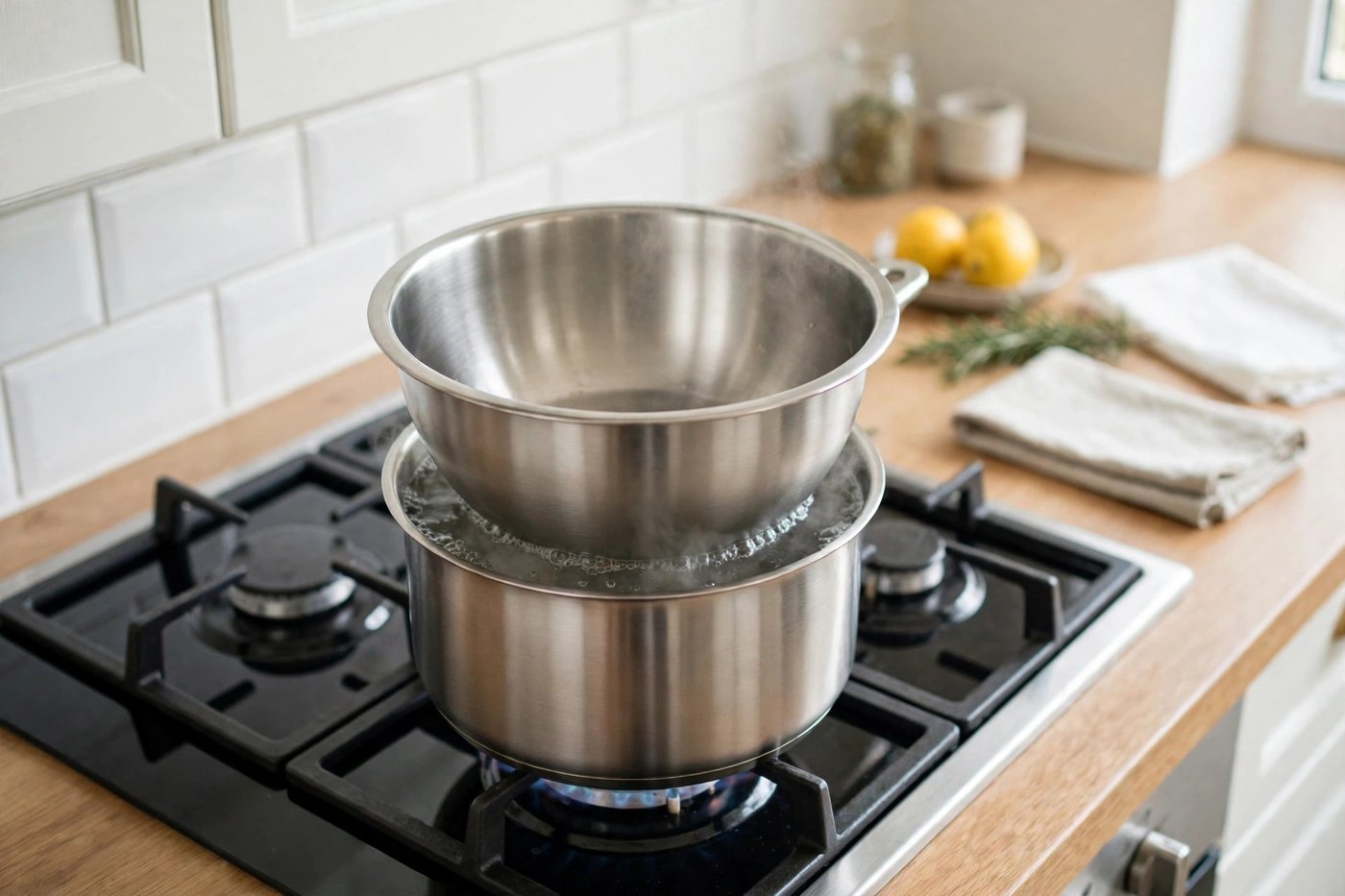
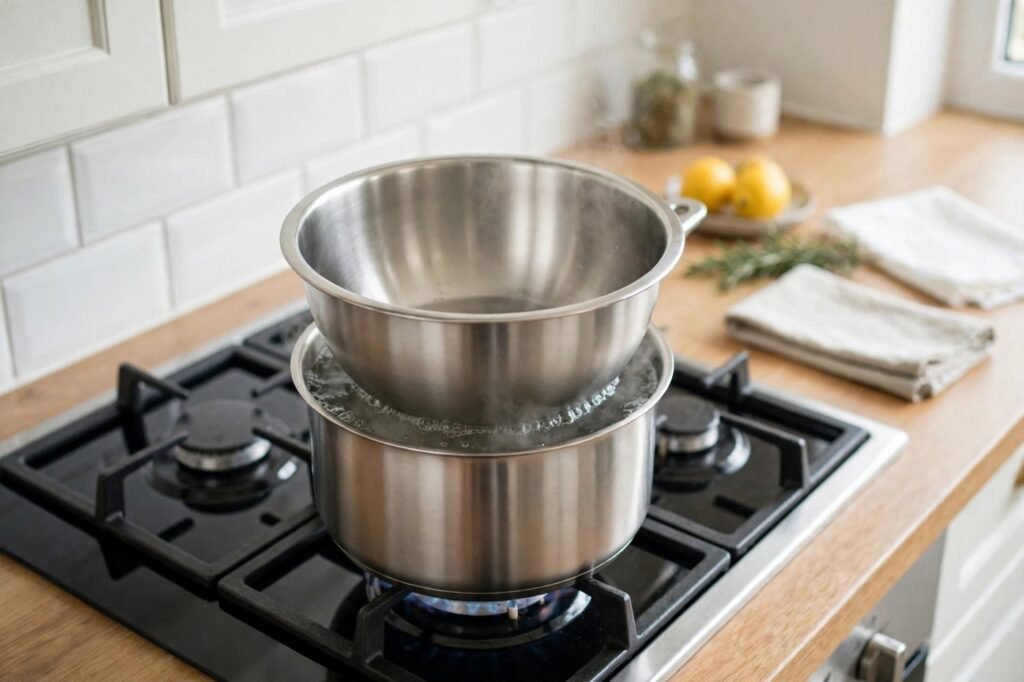
You are melting chocolate for a cake, and it seizes into a grainy lump. Or you are making a custard, and it curdles before your eyes. A double boiler is the tool that stops both of those things happening, and it is simpler than it looks: two pans, one on top of the other, with steam doing the cooking.
So what is a double boiler, and do you actually need one? It is a pair of pans designed to cook delicate foods gently, using steam rather than direct heat, and the answer is that you probably do not need to buy one. A heatproof bowl set over a pot of simmering water does the same job, and most cooks never own the real thing. This guide explains how it works, what it is used for, and what to use instead.
Key takeaways:
- A double boiler is two pans stacked together: water simmers in the bottom pan and steam gently heats the food in the top pan, so delicate foods never touch direct heat.
- It is used for foods that burn or split easily, above all chocolate, custards, hollandaise sauce and cheese sauces.
- A heatproof bowl set over a pot of simmering water works just as well as a bought double boiler, and it is what most home cooks use.
- The water should simmer, never boil hard, and it should not touch the bottom of the top pan, or the food will overheat anyway.
What is a double boiler?
A double boiler is a pair of pans that fit together, one sitting on top of the other. The bottom pan holds a few inches of water, and the top pan holds the food. When the water simmers, steam rises and heats the top pan gently and evenly, so the food warms slowly without ever touching direct heat.
The name is a little misleading, because nothing is actually boiled twice. The water in the bottom pan is brought to a simmer, and the steam does the work. In French cooking the same idea is called a bain-marie, used for the same delicate jobs: melting chocolate, warming custards and keeping sauces at serving temperature without splitting them.
How does a double boiler work?
A double boiler works by keeping the food away from direct heat. Water boils at 100 degrees Celsius, and steam is no hotter than that, so the top pan can never get much hotter than boiling water, however fierce the hob underneath. A pan sitting directly on a flame can reach far higher temperatures in seconds, and that is what burns chocolate and curdles eggs.
The gentle, even heat is the whole point. The steam surrounds the bottom of the top pan, so the food heats from all sides at once, and stirring spreads that heat evenly. The result is a slow, controlled melt, with no hot spots and no sudden jumps in temperature.
What is a double boiler used for?

Chocolate is the classic use. Chocolate melts at a low temperature and burns easily, and a double boiler melts it slowly and evenly, without the risk of scorching. It is the standard way to melt chocolate for dipping, for ganache and for baking.
Custards and egg-based sauces are the second use. Hollandaise sauce, bearnaise sauce, lemon curd and creme anglaise all depend on eggs thickening gently, and direct heat turns them into scrambled eggs. A double boiler lets the eggs thicken slowly while you whisk, and you can take the pan off the heat the moment it reaches the right consistency. Cheese sauces, butter sauces and white chocolate follow the same rule: anything that splits, seizes or burns when it gets too hot is better cooked over steam.
A double boiler is also useful for keeping food warm. Restaurants use it to hold sauces, soups and melted chocolate at serving temperature without overcooking them, and the same trick works at home while the rest of dinner finishes.
How do you set up a double boiler?
Setting one up takes a minute, and the details matter. Fill the bottom pan with a few inches of water, enough to simmer steadily without boiling dry, and bring it to a gentle simmer over a medium heat. Set the top pan, or the bowl, on top, and check that the bottom of it sits above the water, not in it. If the water touches the top pan, the food will heat too quickly.
Add the food to the top pan and stir it often, scraping the sides and the bottom as you go. Keep the heat at a simmer throughout: the water should be bubbling gently, not rolling at a hard boil. When the food is done, lift the top pan off carefully with an oven glove or a dry cloth, because the steam underneath is hot.
| Option | Best for | Cost | Watch out for |
|---|---|---|---|
| Bought double boiler | Regular chocolate and sauce work | Roughly £20 to £50 | Check the top pan fits your hob |
| Heatproof bowl over a pot | Occasional use and small batches | Nothing, if you own a bowl | The bowl must sit snugly on the pot |
| Metal bowl over a pot | Chocolate and custards | Nothing, if you own a bowl | Metal gets hot, so use a glove |
| Glass bowl over a pot | Watching chocolate melt | Nothing, if you own a bowl | Glass heats slowly and holds heat |
| Microwave in short bursts | Quick melting in a hurry | Nothing | Easy to overheat; stir every 20 seconds |
Prices change often, so treat these ranges as a guide rather than a promise, and check the shop before you buy.
What can you use instead of a double boiler?
A heatproof bowl set over a pot of simmering water is the standard substitute, and it works just as well as the real thing. Choose a bowl that sits snugly on top of the pot, so steam cannot escape around the sides, and make sure the bottom of the bowl sits above the water. A metal bowl heats fastest, a glass bowl lets you watch the food melt, and either will do.
A microwave is the other common substitute, and it works for melting chocolate and butter if you are careful. Heat in short bursts of 20 seconds, stirring between each one, and stop while a few pieces are still unmelted, because the residual heat will finish the job. The risk is overheating: a microwave heats unevenly, and chocolate can burn in seconds. For custards and hollandaise, the microwave is a poor substitute, because the eggs need the slow, even heat that only steam provides. Our guide to the best baking sheets covers the rest of the equipment a home baker needs, and our guide to the best blenders covers another kitchen staple.
How do you keep it safe?
A double boiler involves boiling water and steam, so it deserves respect. Keep the water at a simmer rather than a rolling boil, because a hard boil throws steam and splashes hot water around the kitchen. Use an oven glove or a dry cloth when you lift the top pan off, and tilt it away from you so the steam escapes away from your face.
Keep the water level in check. If the bottom pan boils dry, the pan can warp or scorch, and the food in the top pan will overheat. Top the water up from a kettle if it runs low, and never leave a double boiler unattended on a hot hob. Keep children and pets away from the hob while it is on.
How do you clean and care for one?
Cleaning a double boiler is straightforward. Wash both pans in warm soapy water once they have cooled, and dry them thoroughly before you put them away. If chocolate or sauce has set hard in the top pan, fill it with warm water and leave it to soak for a few minutes first.
Stainless steel double boilers are the most forgiving, because they do not rust and they take a scrub. Aluminium is lighter and cheaper, but it can stain and needs drying properly. If you use a glass bowl as a substitute, check it for chips and cracks first, because a damaged bowl can break under heat.
Your double boiler checklist
Work through this list before you start.
- Pick the right pot: choose a pot and a bowl that fit snugly together, so steam cannot escape around the sides.
- Check the water level: a few inches in the bottom pan, and the top pan sitting above the water, not in it.
- Keep it at a simmer: gentle bubbles, never a hard rolling boil.
- Stir often: scrape the sides and the bottom, and take the pan off the heat the moment the food is ready.
- Use a glove: the top pan and the steam underneath are hot, so lift with an oven glove or a dry cloth.
- Dry everything: wash and dry both pans before you put them away, so they do not rust or stain.
- Try the bowl first: before you buy a double boiler, try a heatproof bowl over a pot and see if it does the job.
Frequently asked questions
Do I need a double boiler?
Probably not. A heatproof bowl set over a pot of simmering water does the same job, and it is what most home cooks use. Buy a proper double boiler only if you melt chocolate or make custards and sauces often enough to want one.
Can the bowl touch the water in a double boiler?
No. The bottom of the top pan or bowl should sit above the water, not in it. If the water touches the top pan, the food heats too quickly and you lose the gentle, even heat that makes a double boiler useful.
What is the difference between a double boiler and a bain-marie?
Very little. A bain-marie is the French name for the same idea: a container of food set in or over hot water so it heats gently. In practice, a double boiler sits over simmering water on a hob, while a bain-marie is more often used in an oven or to keep food warm.
Can I melt chocolate in the microwave instead?
Yes, if you are careful. Heat in short bursts of 20 seconds, stirring between each one, and stop while a few pieces are still unmelted. The risk is overheating, because a microwave heats unevenly and chocolate can burn in seconds.
What foods need a double boiler?
Foods that burn or split easily: chocolate, white chocolate, custards, hollandaise and bearnaise sauces, lemon curd and cheese sauces. Anything with eggs or chocolate benefits from the slow, even heat of steam.
Can I use a double boiler to keep food warm?
Yes. Restaurants use double boilers to hold sauces, soups and melted chocolate at serving temperature without overcooking them. Keep the water at a low simmer and stir occasionally, and do not hold food warm for longer than an hour or two.
Sources
Technique details in this guide reflect guidance published by cooking schools and food writers, including the standard advice on melting chocolate and making egg-based sauces from the BBC Good Food and King Arthur Baking websites. Methods vary between recipes, so follow the recipe you are using. Our guide to the best baking sheets covers the rest of the equipment a home baker needs, and our guide to the best blenders covers another kitchen staple.
The bottom line
A double boiler is one of the simplest tools in the kitchen, and one of the most useful. Two pans, a little water and some steam are all it takes to melt chocolate without burning it, or to thicken a custard without scrambling it. The only mistake is cooking delicate food over direct heat and hoping for the best.
Your next step is simple: next time you need to melt chocolate, set a heatproof bowl over a pot of simmering water, stir often, and take it off the heat while a few pieces are still unmelted. The chocolate will finish melting on its own.
Take care with boiling water and steam: keep the water at a simmer, lift the top pan with an oven glove, and keep children away from the hob while it is on.














