

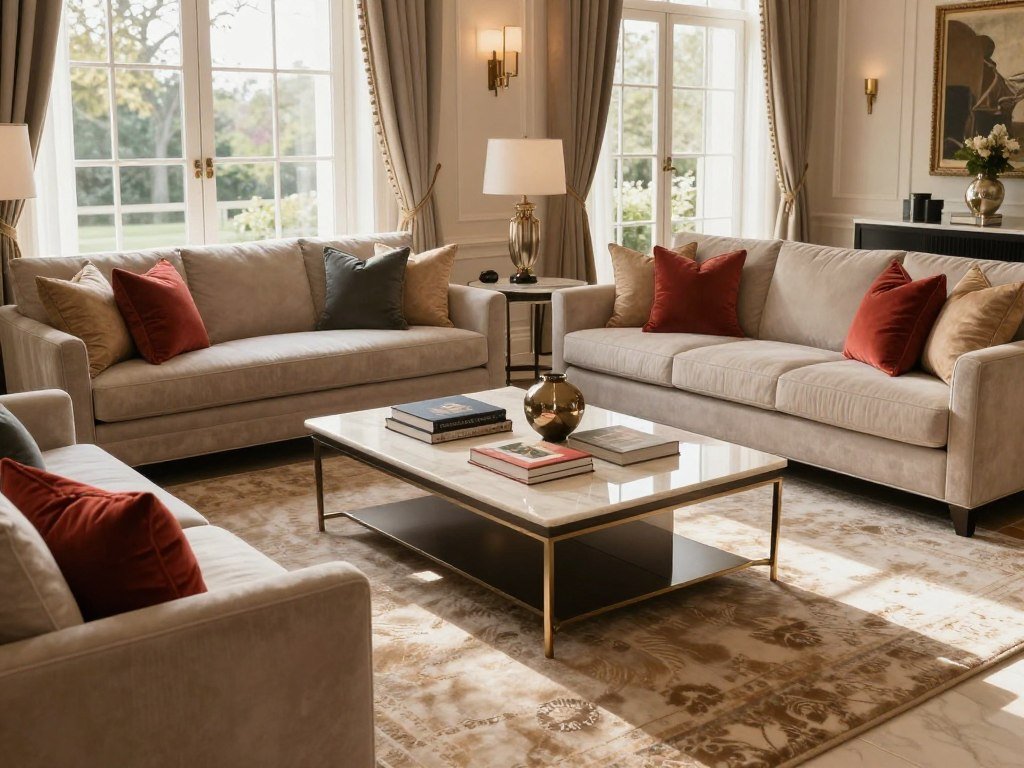
A well-sized area rug can make a living room feel more settled without covering every inch of floor. A luxury living room carpet can add comfort at home, define a seating space, and soften the feel of hard floors. Wall-to-wall carpet is installed flooring, while an area rug moves and covers part of a floor. Pile height is the length of the rug fibers measured from the backing to the surface. This category focuses on movable rugs, not installed carpet. Compare size, touch, visual style, and care to find a fit for your space.
Room use matters as much as appearance. A busy family room calls for a different feel than a quiet space used for reading or guests. Start with the seating footprint and daily use, then let the color and texture refine the choice.
Key Takeaways
- Choose an area rug that connects the main seating.
- Match fiber and pile to traffic, comfort, and care needs.
- Use color and pattern to work with existing furniture.
- Compare construction, size, and upkeep before buying.
- Check the rug and pad together at doorways.
What size luxury living room carpet fits your seating area?
Tape the proposed rug dimensions on the floor before buying, since the outline shows whether the seating group feels connected. An 8×10-foot rug is a starting point for many living rooms, while larger or open-plan spaces often start at 9×12 feet.
For most seating areas, place at least the front legs of the sofa and accent chairs on the rug. A 9×12-foot rug is a starting point for many larger rooms, but the floor plan and furniture can call for more coverage.

| Room area | Starting rug size | Placement note |
|---|---|---|
| 250-350 square feet | 9×12 feet minimum to consider | Front legs of seating on rug |
| 350-450 square feet | 10×14 feet | Check room outline |
| 450-550 square feet | 12×15 feet | Check room outline |
| 550+ square feet | 12×18 feet | Check room outline |
In a large living room, leave 18-24 inches of exposed floor between the rug edge and nearest wall. If a taped outline leaves over 30 inches of bare floor on the wall facing the seating, consider sizing up.
The table offers a starting point, not a strict rule. A large room of roughly 300 square feet or more often calls for at least 9×12 feet. Rooms 18 feet or longer in one direction can suit 10×14-foot or 12×18-foot rugs, with all furniture legs on the rug.
A 120-inch sectional needs a rug at least 10 feet wide. A 9×12-foot rug may look clipped beside it, so consider 10×14 feet or larger when the room allows. Designers’ rug placement rules also favor connecting the main furniture with the rug.
Thin flatweaves and handwoven rugs can look smaller than plush rugs with the same measurements. An 8×10-foot starting size may suit a typical room, but it is too small for many large seating areas. For a 120-inch sectional, do not settle for a rug under 10 feet wide if the room can take a larger size.
Which fibers and pile feel right for everyday living?
For a busy living room, wool is a strong all-around fiber because it is resilient under regular foot traffic. Medium pile balances softness and easy use for many living spaces, while fiber and construction shape the rug’s care needs.
Wool with medium pile is a versatile starting choice for a regularly used living room. A lower-pile synthetic can suit heavier activity and a household that puts easy cleanup first.

Wool and other resilient fibers
Wool can handle regular foot traffic and resist crushing, making it a practical choice beneath a seating group. Wool and bamboo-silk blends can add sheen and depth without relying on a single flat color.
Nylon is a synthetic fiber often chosen for strength in active rooms. Polyester offers a soft feel and can show rich color, while polypropylene is a common choice for rugs that need simple day-to-day care.
Triexta is another synthetic option for busy homes. Cotton rugs often have a more relaxed feel and may suit casual spaces, while blends combine traits from more than one fiber. Check the rug’s construction and care label rather than treating these materials as equal.
The best luxury living room carpet for regular use is often wool with medium pile. If your room sees heavier activity and you want lower-maintenance materials, consider a lower-pile synthetic. Wool can also work in a bedroom, where you may prefer more softness underfoot.
Silk, viscose, and a lustrous finish
Silk has a fine sheen that shifts with light and viewing angle. Bamboo-silk combinations can add a similar gleam and visual depth beside wool or other fibers.
That luster comes with a care trade-off. Delicate fibers may need gentler cleaning, so a rug with a subtle sheen can suit a room with lighter use better than a busy family space.
A quiet bedroom can be a good place for a silk or silk-blend rug. Consider the look alongside your willingness to follow a careful care routine.
Match pile height to traffic and comfort
Low pile measures under 1/4 inch, or under 6 millimeters. It suits high-traffic areas because chairs and feet move across its flatter surface more easily.
Medium pile measures 1/4-1/2 inch, or roughly 6-12 millimeters. This range gives many living rooms a comfortable touch without the extra height of a plush rug.
Plush pile measures 1/2-3/4 inch, or 12-19 millimeters. High pile is above 1/2 inch, or over 12 millimeters, while shag exceeds 3/4 inch, or 19 millimeters.
Plush or shag pile can feel inviting in a bedroom or quiet sitting room. A thinner rug may be easier to vacuum and move furniture over in a busy room. Density and construction also affect durability, furniture stability, and upkeep.
Standard interior doors need roughly 1/2 inch of floor clearance. A rug pad adds height, so measure the rug and pad together against the door. Before choosing a plush pile, check the door’s clearance with the rug and backing together.
How do color, pattern, and style change the room’s look?
A patterned rug makes the strongest focal point when its color relates to something already in the room. Choose a shared color from the sofa, chairs, or art to bring the pieces together.
Let either the rug or the upholstery lead the pattern. A modern luxury living room carpet can use a contemporary shape, geometric design, or restrained abstract motif that suits the existing furnishings.
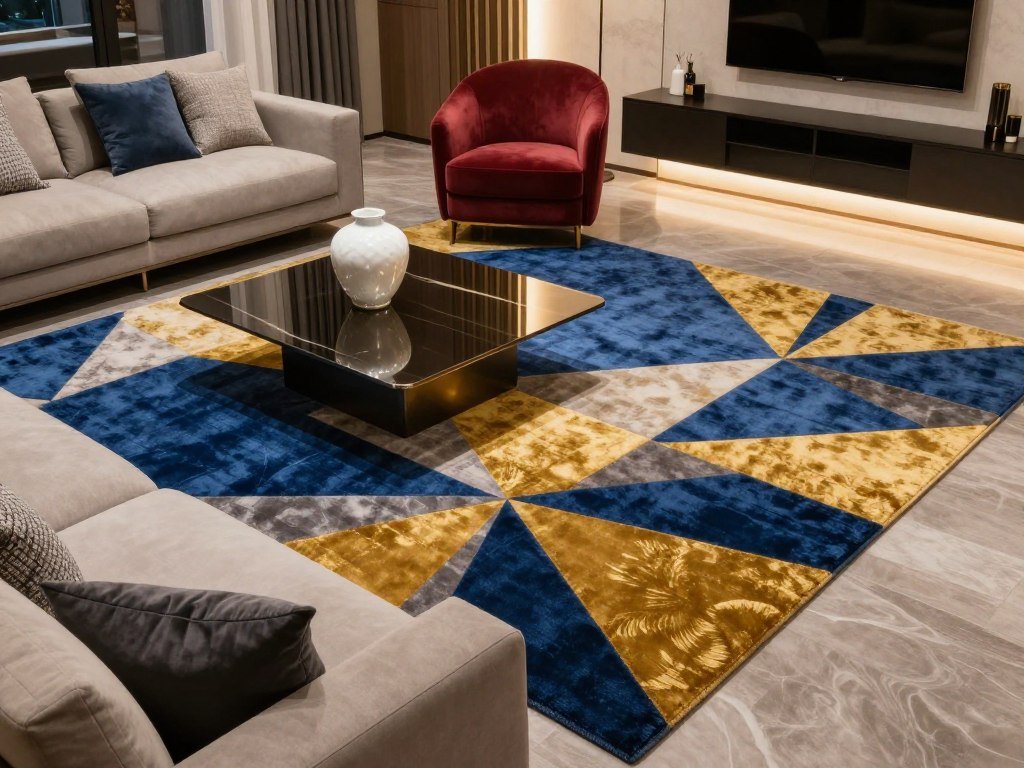
Modern geometry and abstract designs
Geometric and abstract patterns can complement contemporary furniture, while a solid rug gives the room a quieter base. A shared color between the rug and upholstery helps the pieces feel related without matching every shade.
For design inspiration beyond rugs, browse interiors and architecture for ideas on how color and shape work across a room. A collaboration or distinctive motif can also make designer rugs a focal point, while your palette and furniture still guide the choice.
A quick check from your usual seat can show whether the pattern feels too busy. Keep the motif’s scale in mind beside nearby furniture and art.
Traditional motifs and natural textures
Medallion, oriental, and border-heavy patterns give a room a traditional direction. Distressed or vintage-inspired designs can feel more relaxed, while ikat and kilim-inspired flatweaves bring graphic shapes and a woven look.
Luxury rug brands offer different paths rather than one best fit. Loloi sells hand-knotted and hand-tufted wool rugs, power-loomed synthetics, and machine-washable designs. Momeni focuses on hand-knotted wool with traditional motifs.
Several Magnolia Home by Joanna Gaines x Loloi collections, including Sinclair and Charlie, are machine washable. Surya offers jute and wool blends, plus ikat and kilim-inspired flatweaves. Nourison has power-loomed, stain-resistant rugs for high-traffic rooms.
- Compare a rug color with the largest upholstered piece.
- Decide whether the rug or upholstery leads the pattern.
- Check motif scale from the main seating position.
- View the color in daylight and evening light.
If the upholstery already carries a bold pattern, let the rug’s color connect the scheme without competing for attention.
Which products fit different budgets and care routines?
A useful shortlist compares fiber, construction, size, and care together rather than judging a rug by its photograph alone. Construction and upkeep can matter as much as the look when you compare products.
Wool suits regular foot traffic, while polyester and washable rugs can make cleanup easier. Treat named products as comparisons, not ranked winners; the right choice depends on your room and routine.

| Product | Fiber and construction | Pile height | Available sizes |
|---|---|---|---|
| Nordic Knots Grand Rug | 100% wool | 0.5 inch | 2.5×9 to 10×14 feet, custom sizes |
| Joon Loloi Blaze Hand-Tufted Wool Rug | 100% wool, hand-tufted | 0.5 inch | 6×9 to 12×15 feet |
| Lulu and Georgia Deller Hand-Loomed Wool Rug by Jake Arnold | 100% wool, hand-loomed | 0.75 inch | 6×9 to 12×15 feet |
| Loloi Chris Loves Julia Humphrey CloudPile rug | 100% polyester | 0.38 inch | 2×3 feet 6 inches to 8×11 feet 3 inches |
The 9×12-foot Nordic Knots Grand Rug is listed at $3,395, with 100% wool and a 0.5-inch pile. It is not machine washable. The Joon Loloi Blaze Hand-Tufted Wool Rug is listed at $359, while the Lulu and Georgia Deller Hand-Loomed Wool Rug by Jake Arnold is listed at $1,598.
Those listed prices show how far costs can vary between rugs. Fiber, density, pile, construction, and design complexity all affect price. Installation and pad selection can add to the total cost when they apply.
The Ruggable Morris & Co. Kelmscott Tree Green rug has a 100% polyester top and a waterproof barrier. Its sizes range from 2×3 feet to 10×14 feet. Ruggable’s system uses a machine-washable cover and a separate pad; a roughly 6×9-foot rug starts at $479.
Lorena Canals offers machine-washable cotton, wool, and cotton-wool rugs, with a roughly 6×9-foot option starting at $549. Hook & Loom sells machine-washable flatwoven cotton rugs, with a roughly 6×9-foot option starting at $195.
These options span wool, hand-loomed, polyester, and washable constructions from brands such as Nordic Knots, Loloi, and Ruggable. For a luxury living room carpet for sale, compare the size and construction you want, then check the product page for current pricing and availability.
For a hand-knotted rug, inspect the back: the pattern and knots should show, the fringe should continue from the weave, and there should be no secondary backing. The listed 9×12-foot price for the Nordic Knots Grand Rug is one point for comparing its size and materials. Check the reverse and fringe when a hand-knotted construction is part of what you are paying for.
How can you keep a luxury rug looking its best?
Prompt, gentle care is safer than trying an aggressive cleaner on a delicate fiber. Care depends on the material and the maker’s instructions, so check the label before cleaning.
For silk, use the lowest suction setting without a beater bar, and blot spills right away. Silk rugs need professional dry cleaning every 12-18 months with regular foot traffic, or every two years in a lightly used formal room.
Rotate a silk rug 180 degrees every 3 to 4 months to even out wear and fading. Wool has resilience and natural stain resistance, though homes with pets may need more frequent cleaning. Nylon or triexta can be practical alternatives for heavy pet traffic.
Do not use rug shampoo or a steam cleaner on silk rugs. Either can permanently dull the natural sheen.
- Vacuum on a setting suited to the fiber.
- Blot spills promptly instead of rubbing them.
- Rotate the rug periodically to even wear and fading.
- Follow the care label before deep cleaning.
Rug care varies across materials and products, so a method that suits wool may not suit silk. Treat the care label as the final authority before using any cleaning product.
Conclusion
A rug earns its place when it fits the furniture and works with the way the room is used. The right selection supports your home’s comfort, adds a pleasing touch underfoot, and connects with the room’s existing colors.
Before committing, tape the intended size on the floor and order or view a sample of your leading color and texture. Check how it looks beside the sofa in daylight and after dark. Measure the seating area, mark the footprint, and compare a sample against the room’s lighting before choosing.
FAQ
Can you layer an area rug over wall-to-wall carpet?
Can a washing machine handle a full living room rug?
How do I choose a rug when my sofa already has a pattern?
Does a rug pad count toward door clearance?
Should I choose silk for a living room with pets or children?









