

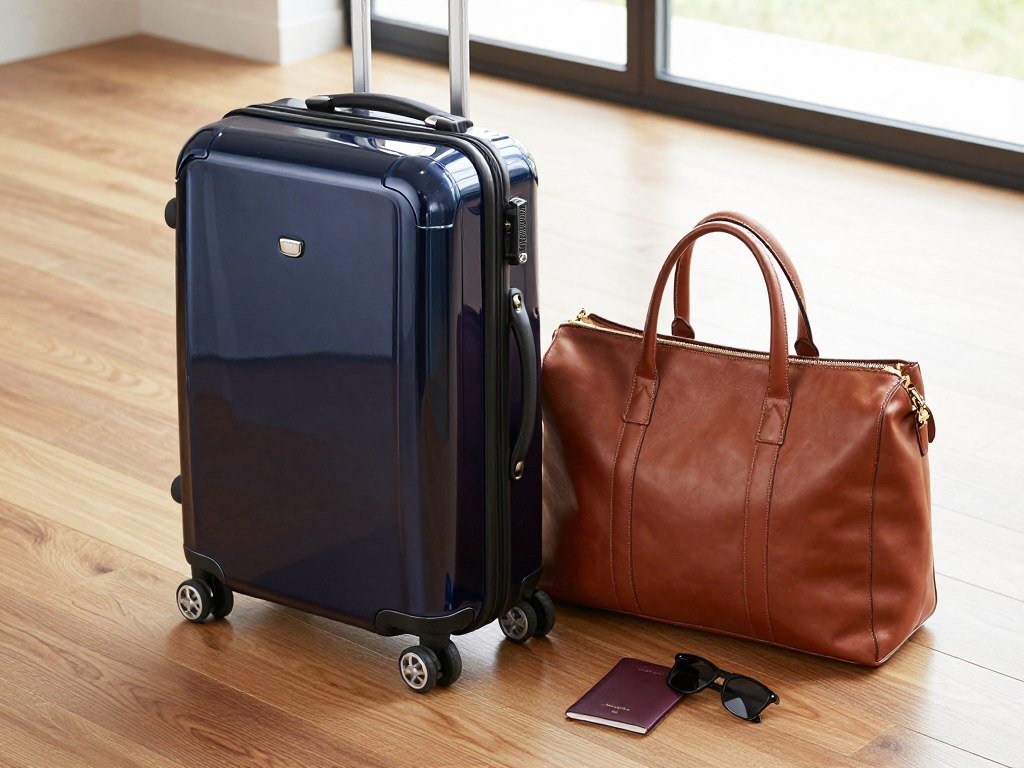
A stylish case earns its place when it makes the trip easier as well as more polished. Luxury designer luggage can look refined, but a good purchase also suits your itinerary, packing habits, and budget. You might need a compact carry-on for a few nights, a checked case for longer trips, or a duffel for flexible weekend travel. The right format can make packing for trips feel less like a puzzle and more like a routine. Let your usual travel plans guide the choice before looks do.
Non-expanded volume means the interior capacity measured before an expansion section is opened. That figure helps you compare the usable space in cases with different designs. A polished look matters, yet thoughtful handles, wheels, and storage can matter more once you are moving through a station or airport. A well-made item can also feel luxurious without a loud logo, much like the advice in this guide to refined style.
Key Takeaways
- Match the bag format to your most common trip.
- Compare materials by feel, weight, and expected wear.
- Check the case’s layout, wheels, handles, and lock.
- Measure the full exterior before choosing a carry-on.
- Compare warranty terms and repair options before buying.
Start with the trip you take most often, since that is the clearest guide to the format you will use.
How Should You Choose Luggage for Each Trip?
For a quick city break, a compact carry-on is usually easier to manage than a large checked case. Trip-based luggage should match the length of your stay, your packing needs, and the route itself. A four-wheel spinner turns while upright, while a two-wheel roller tilts as you pull it. A soft-sided duffel travels by its handles or shoulder strap.
Choose the format that fits both your load and the ground beneath your feet. A wheeled case saves shoulder strain on smooth floors, but stairs and rough streets can make it awkward. A shoulder-carried bag can move more freely, though its weight rests on you. These differences matter during weekend travel with transfers or a walk between stations.
If your route includes stairs, cobblestones, or frequent transfers, prioritize the bag you can maneuver comfortably.
- Short trips: choose a carry-on when your clothes and essentials fit without forcing the zipper.
- Longer itineraries or bulky packing: choose a checked case for room to separate more items.
- Flexible weekends: choose a duffel when soft sides and quick access suit your plans.

A personal item can hold essentials you want close, such as a book, charger, or medication. A case with wheels can feel easy in a terminal, then cumbersome on narrow stairs or uneven sidewalks. Think about where you will carry the bag, not just how it looks beside a departure gate.
Some trips call for more than one format, such as a wheeled case with a small tote. Keep the main bag easy to lift into a car trunk or train rack. If the route includes stairs, cobblestones, or frequent transfers, prioritize the bag you can maneuver comfortably.
Which Materials Match Your Travel Style?
A hard shell protects the shape of a case, while a soft-sided bag can flex around an irregular load. Material choice affects how the luggage handles, marks, and fits your packing style. Aluminum creates a rigid shell, though dents can show with use. Polycarbonate is another common hard-sided option.
Choose a material for how you handle your bags, not only for its first impression. Coated canvas and leather give soft-sided travel bags a more flexible profile. Those materials may suit a traveler who likes a bag that can shift around other items. A structured shell instead keeps its shape when you pack or stack it.

A leather travel bag can feel supple and develop visible signs of use. A hard-sided case may show scuffs or dents on its outer shell. Neither kind of wear means the bag has failed, but the look may matter to you. Match the material’s handling feel with the sort of wear you are willing to see.
Rimowa makes hard-sided luggage only. The word “hybrid” can also be a brand’s product-line name, rather than a promise about construction. Monos, for example, calls one of its product lines Hybrid, so inspect each case’s materials instead of assuming every hybrid luggage design combines the same parts.
Soft-sided designs can give you more flexibility around an unusual load, while rigid shells hold their form. Consider how often you lift, store, or move the bag through tight spaces. Choose the material whose visible wear and handling feel you are willing to live with over repeated trips.
Which Designer Brands Should You Compare?
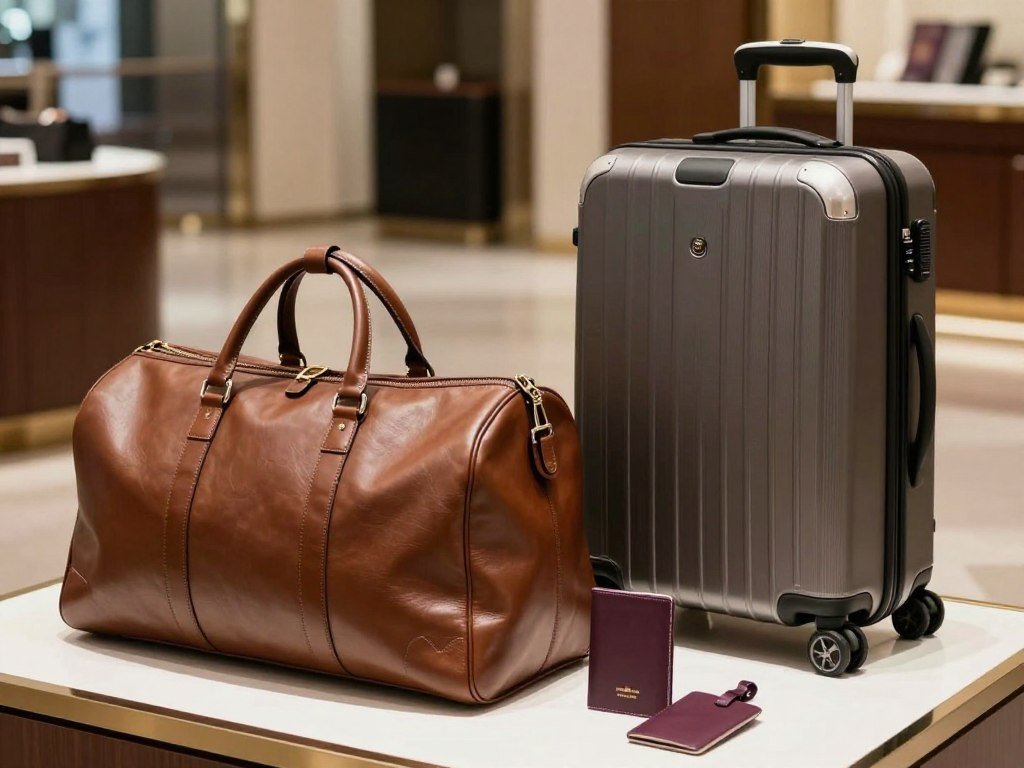
A useful brand shortlist is the one that makes it easy to compare your preferred format, look, and level of organization. Louis Vuitton draws on a long travel heritage, while Rimowa focuses on hard-sided luggage. Monos offers named lines with several case formats and sizes. These differences give you a starting point, not a universal winner.
Compare the actual range of products, not just a label or a logo. Louis Vuitton introduced the Keepall in 1930, building a travel identity around a soft-sided duffel. Rimowa’s hard cases offer a different visual and practical direction. Monos has made luggage since 2018 and offers Standard, Pro, and Hybrid lines.
How signature styles differ
Monos offers Carry-On, Carry-On Plus, Check-In Medium, and Check-In Large sizes across its three named lines. Its average price is $350, with products starting at $275 and reaching $650. Those figures describe the brand’s range, not the price of every particular case. You can browse more designer brands and style ideas while narrowing your preferences.
Louis Vuitton’s name is closely tied to travel goods, while Rimowa’s identity centers on hard-sided cases. Monos gives shoppers a wider choice of named lines and case sizes. Consider which approach matches the look and format you want to use regularly.
A practical shortlist of 10 established brands
This practical top 10 luggage brands in the world shortlist is a set of established names to investigate, not a ranked world list. Compare style, format, and organization across the names that fit your budget. A brand’s signature item can also help you find the product type it is known for.
| Brand | Named line or item | Broad format |
|---|---|---|
| Louis Vuitton | Keepall | Duffel |
| Rimowa | Essential and Original | Hard-sided cases |
| Monos | Standard, Pro, and Hybrid | Carry-on and checked cases |
| Tumi | 19 Degree | Rolling cases |
| Briggs & Riley | Baseline | Rolling carry-on |
Other established names to compare include Gucci, Carl Friedrik, MCM, Horizn Studios, and Antler. Together with the table’s brands, they offer a useful set of designer luggage products to explore. The 2026 Readers’ Choice Awards named Louis Vuitton its readers’ favorite designer luggage brand after 798,867 votes.
Treat a reader poll as a signal of brand recognition, not a substitute for checking the particular model.
Which Details Make a Suitcase Easier to Use?
A suitcase is easier to live with when its handle, wheels, and interior work together rather than compete for attention. Useful luggage hardware should help you move and pack without adding fussy steps. A list of features looks impressive, but the details only matter when they suit your habits.
Test the parts you will touch most before you choose a case. Check the wheels, handles, lock, and interior compartments in this order:
- Wheels: roll the case and turn it in a tight space to feel how smoothly it moves.
- Carry handles: lift the case from more than one angle and check the handle’s comfort and stability.
- Lock access: confirm you can reach and use the lock without fighting the case’s shape.
- Interior compartments: see whether the sections match the way you sort clothing and small items.

The Carl Friedrik Aluminium Carry-On is listed at $945 and has a garment compartment. That feature may help if you pack clothes that crease easily, though it takes interior space. A Tumi 19 Degree Aluminum rolling trunk lists at $1,795 and measures 34.3 x 16.0 x 13.8 inches.
Built-in shelves in the Tumi trunk offer a different kind of suitcase organization. Shelves may suit someone who likes to separate items by type, while a simple open compartment can suit a traveler who packs cubes. A long feature list is not automatically useful if the layout does not suit your clothing or packing habits.
Tests of luggage often focus on wheel movement, construction, and interior storage, as in OutdoorGearLab’s luggage comparisons. A feature that works well for one packing style can feel like clutter to another. Before buying, check that the features you will use most are reachable without unpacking the whole case.
Which Luxury Designer Luggage Is Best for Your Trip?
For most travelers who want a wheeled cabin case, the Rimowa Essential Cabin is the most straightforward pick in this group. The best luxury designer luggage depends on the format you will use, not the logo alone. The Essential Cabin is listed at $990 and suits travelers who want a rolling case with interior compression.
Choose a wheeled carry-on for rolling convenience, or a duffel when shoulder carry suits your route. The Bric’s Bellagio 2.0, listed at $725, is another carry-on option. Your choice should reflect how much structure and organization you prefer during the trip.
Best for a wheeled carry-on
The Rimowa Essential Cabin is a practical choice when you want to roll a case and press packed items into place with interior compression. That can help keep clothes from shifting during a busy itinerary. Its shape and wheels also make it a different experience from a soft-sided bag carried by hand.
The Bric’s Bellagio 2.0 offers an alternative for shoppers who prefer another carry-on style. Compare the balance of the case, handle feel, and interior layout in person if possible. Premium travel bags should be easy to use once the trip gets busy, not merely attractive at home.
Best for a soft-sided short trip
The Louis Vuitton Keepall Bandoulière 55 suits a traveler who wants a roomy duffel with a detachable shoulder strap. It folds down for storage, which can help when closet or shelf space is limited. The soft-sided shape is useful if you prefer carrying a bag rather than rolling a case.
A duffel can be handy when you travel by car or move between places with stairs. Still, its weight rests on your shoulder, and a full bag can feel heavy over a long walk. The best designer luggage for you is the format that supports your actual route and packing needs.
Choose the Keepall only if carrying a soft-sided bag suits your route better than rolling a case.
Can a Designer Carry-On Fit U.S. Airline Rules?
A designer carry-on fits only when its outside measurements, including wheels and handles, stay within the airline’s limit. Brand names do not guarantee cabin fit, since airlines set their own size rules. An expandable design can change its outer size when you open the expansion section.
Measure the full case in the state you plan to carry it. The Tumi 19 Degree International Expandable 4 Wheeled Carry-On is listed at $795. The Tumi Alpha Dual Access Expandable Carry-On lists at $950, while the Briggs & Riley Baseline Global 21-inch Carry-On Expandable Spinner lists at $729.
These models are useful examples to measure, not a promise that every airline accepts them. A model name alone does not confirm that a luxury designer luggage carry-on will fit. Compare its full exterior size with the specific airline’s limit, including any expansion you expect to use.
An expandable case may be compact when closed, then extend beyond a limit when full. That change matters even if the case is sold as a carry-on. Think about whether you would rather keep the expansion closed or have more room for the return trip.
Measure the case in its expanded configuration if you plan to use that extra space.
Which Designer Checked Bags Offer Room to Grow?
A checked case makes more sense than a cabin bag when you need space for bulky clothing or a longer trip. Expandable suitcase designs can offer room for new purchases on the way home. A compression panel or well-organized interior can also help keep packed items in place.
Choose extra capacity only when you can still control how the contents shift. Three options cover different needs:
- Rimowa Essential Check-In M: a hard-sided checked case, listed at $1,150.
- Monos Expandable Check-In Medium: a mid-priced expandable option, listed at $395.
- July Checked Expandable: another expandable style, listed at $395.
Expansion can help when the return trip may include extra items, but more space can also invite overpacking. A panel that compresses clothes or separates sections can keep the contents from moving freely. Think about whether you need a plain large compartment or a more sorted interior.
Briggs & Riley’s Sympatico medium expandable spinner increases capacity by 25%. That gives you a distinct example of a case designed to grow when needed. Reviews can help you compare packing space and organization, such as tested checked-bag capacity and features.
Leave a little room in an expandable case before departure so the extra capacity remains useful on the way home.
Is the Louis Vuitton Keepall the Right Weekender?
The Keepall suits a traveler who wants a soft-sided weekender with a shoulder strap rather than a wheeled cabin case. The Keepall is a duffel with a detachable shoulder strap, and it can fold down for storage. Louis Vuitton introduced the line in 1930, and its shape still suits short trips where you prefer a carry bag.
Choose a Keepall size by the amount you pack and the way you carry it. The listed 2026 prices differ by model and market:
| Model | Europe price | U.S. price |
|---|---|---|
| Bandoulière 45 | €2,400 | Approximately $2,650 |
| Bandoulière 50 | €2,450 | $2,710 |
| Bandoulière 55 | €2,500 | $2,780 |
| Bandoulière 60 | €2,550 | Approximately $2,850 |
These sizes give you a way to compare the range, but they do not make a duffel behave like a rolling case. A shoulder strap frees your hands, yet a packed bag still rests on your body. Consider how far you will carry it and whether you want to stow it in a tight space.
Louis Vuitton designer luggage sets should not be assumed to come bundled. Compare the pieces you want and confirm what each set or listing includes. A leather travel bag also needs care that suits its surface and expected use, so think about your willingness to maintain it.
Choose the size by how much you pack, then confirm the bag’s full dimensions against your planned use.
How Do Louis Vuitton’s Rolling Lines Differ?
Horizon 55 is Louis Vuitton’s rolling carry-on option, while Pegase is another line in its modern rolling-luggage range. The line names point to different product families, but they do not tell you every detail of a particular case. Horizon and Pegase are both modern rolling-luggage collections.
Check the exact model rather than assuming all cases in a line share the same features. Horizon 55 has established features that can help you decide if its format suits your packing routine. Pegase is another name to compare when you want rolling luggage from Louis Vuitton.
What Horizon 55 offers
The Horizon 55 has TSA-approved locks, retractable handles, and lightweight construction. It is a rolling carry-on, which may suit a traveler who wants wheels and a more structured case. The listed 2026 price is $3,550.
Those features answer specific questions about the model, but they do not establish its dimensions. A brand’s line name does not prove that a suitcase will fit a particular airline’s cabin rules. Consider how its handle and lock design work with the way you pack and move.
Where Pegase fits
Pegase is another modern rolling line in Louis Vuitton’s range. Treat it as a collection name, not as a guarantee about size, weight, or interior features. Compare the details of each named case rather than carrying assumptions from one line to another.
A premium rolling case should suit both your packing style and the way you travel. A compact look does not confirm the full outer measurements, and a line name cannot fill in that detail. Confirm the exact model’s measurements before treating any premium rolling case as airline-ready.
What Carry-On Size Fits U.S. Airlines?
A useful U.S. carry-on reference is 22 x 14 x 9 inches, but the airline’s own limit is the one to check. The outermost parts count, including wheels, handles, feet, and external pockets. A cabin bag goes in the overhead locker, while a personal item goes under the seat in front.
Measure the complete bag, not just the hard case or fabric body. Airline limits vary slightly among major U.S. carriers:
| Airline | Listed carry-on limit |
|---|---|
| Delta | 56 x 35 x 23 cm |
| United Airlines | 56 x 35 x 23 cm |
| American Airlines | 56 x 36 x 23 cm |
U.S. airlines generally do not set a cabin-bag weight limit, though each airline can set its own current rules. The stated size limits include wheels, handles, feet, and external pockets. A bag that looks compact can still exceed a limit at its widest or tallest point.
The under-seat personal item has a different job from the overhead cabin bag. It holds smaller items you want nearby and must fit beneath the seat in front. Federal rules require covered airlines to secure carry-on baggage in approved compartments or under a passenger seat; see 14 CFR 121.589 on carry-on baggage.
Measure from the outermost point of each wheel, handle, foot, and pocket before you leave for the airport.
How Do Carry-On Weight and Capacity Compare?
A lighter carry-on is not automatically roomier, so compare weight and capacity together. Non-expanded volume shows the interior capacity before an expansion section opens. Measurements and weight can help you judge how much space you gain for the load you carry.
The Travelpro Platinum Elite holds more than Away The Carry-On, while weighing more empty. Here are the listed dimensions, weights, capacities, and prices:
| Model | Exterior dimensions | Empty weight | Non-expanded volume | List price |
|---|---|---|---|---|
| Travelpro Platinum Elite | 21 x 14.5 x 9 inches | 8.1 pounds | 40.0 liters | $390 |
| Away The Carry-On | 21.7 x 13.5 x 8.5 inches | 7.4 pounds | 35.5 liters | $275 |
Away The Carry-On does not expand, so its listed capacity stays fixed. Travelpro scored 92 overall, with 10.0 for ease of transport, 9.0 for design and functionality, 9.0 for construction quality, and 8.5 for capacity. July Carry-on Max scored 79 overall.
Those overall scores do not replace the details that affect your own packing. A slightly heavier case may offer more room, while a lighter case can be easier to lift. Compare both measures with your usual clothing load and the amount of gear you carry.
Check the dimensions against your airline’s rule even when a case’s capacity looks appealing.
What Does Luxury Luggage Cost?
Luxury luggage spans more than one price level, so compare like-sized items before treating two prices as directly equivalent. Brand averages are broad guides, not exact prices for every item. Rimowa’s average price is $760, with products starting at $700 and reaching $950.
A brand’s average does not set the price of a particular case. Size, materials, construction, and service can all shape the price. Compare a like-sized item with similar features before deciding that one product offers better value.
What drives the price
A larger case may cost more because it uses more material or includes a more complex interior. Rigid shells, metal parts, and special compartments can also affect the price. A brand-level range describes its mix of products, rather than a rule for the whole market.
A luxury designer luggage sale may reduce a listed price, but a lower price alone does not make a case right for you. Check whether the size, material, and features match the trips you take. A deal on a format you rarely use can still be poor value.
How to judge value over time
The Hartmann Tweed carry-on is listed at $775, while the Carl Friedrik Core Large Check-In is listed at $595 and holds 94 liters. These are different sizes and formats, so their prices are not direct substitutes. Compare how much space and which useful features each provides for your trips.
Think about cost per use across the years you expect to travel with a bag. A handle or wheel system you rely on every trip may matter more than a decorative detail. Quality can also come from fit, good construction, and care, not only a prominent label, as discussed in this guide to well-made style.
Pay extra only for a feature or construction choice that matters on the trips you actually take.
Which Warranty and Repair Details Matter?
A long warranty is useful only when its covered parts and repair process match the problems you are most likely to face. Coverage details matter as much as the length of the term. A lifetime warranty may cover selected components, not every kind of damage.
Check four details before buying:
- Warranty duration: note how long the written coverage lasts.
- Covered components: look for wheels, locks, handles, shells, or other named parts.
- Exclusions or wear conditions: read what counts as normal use or excluded damage.
- Repair process: check how to request service and what steps you must follow.
Antler offers lifetime warranties on purchases made after May 2023. Monos offers a lifetime warranty covering wheels, locks, and handles, which shows why the covered parts matter. Tumi’s product warranty is five years.
Repairability is separate from warranty length. Rimowa repair services can address broken wheels, dents, and cracked shells. A repair option can matter even when a warranty does not cover the damage or the case is outside its term.
Read the written terms for exclusions before treating a warranty as full replacement coverage.
Should You Buy a Designer Luggage Set or Shop Pre-Owned?
A set works best when you will use every piece, while a single pre-owned bag can be a more focused purchase. Choose the buying route that fits your real packing needs, not the size of the offer. A coordinated set can be helpful when its pieces cover different trips and fit your storage space.
A designer suitcase set is poor value if one size will rarely leave the closet. Check each item’s purpose before deciding that a bundle suits you. A pre-owned piece may give you one format without adding cases you do not need.
When a coordinated set makes sense
A luxury designer luggage set can work well when you take both short and long trips. You may use a smaller case for a quick visit and a larger one for a longer stay. Make sure you have room to store all the pieces when you are home.
Compare the actual pieces and what each listing includes, since a coordinated look does not always mean a bundle. A luxury designer luggage sale can involve different conditions and terms. Check the exact listing rather than expecting a current discount or a particular stock level.
What to inspect in a pre-owned piece
Check the wheels, handles, corners, locks, and interior wear before you buy. Ask for authentication evidence and read the return terms. Two pre-loved listing prices offer examples: a Louis Vuitton Monogram Canvas Keepall Bandouliere 45 at $1,795, and a Gucci Black GG Supreme Canvas Duffle at $1,650.
Those prices describe individual listings, not a promise that either item remains available. Request clear views of worn areas and ask what the sale includes. For a pre-owned item, get clear photographs of the corners, wheels, handles, and interior before committing.
What Should You Pack Alongside a Suitcase?
A suitcase handles the main load, while a well-organized tote keeps small essentials together. A personal-item bag is useful for things you want within reach, such as a phone charger, book, or travel documents. The right tote can stay useful between trips instead of becoming another bulky bag to store.
Look for an interior pocket, secure closure, and foldable shape. Cuyana’s System Tote is listed at $358 and has a built-in interior pocket, snap closure, and foldable structure. Those features can help you keep small items together and store the tote when you are home.
A packing cube can separate clothing without changing the main case. The Hartmann Tweed carry-on includes a cube that can hold folded clothing. Organization accessories may not come with every case, so check the included items before you add extras to your order.
Check whether packing accessories are included before buying them separately.
A small tote also gives you a place for items you may need during the trip. A secure closure helps keep loose items inside, while a pocket can prevent small essentials from settling at the bottom. Check whether packing accessories are included before buying them separately.
Conclusion
The best purchase is the one that suits the way you travel most often. Start with the format that fits your usual trip, then compare the details that affect comfort and packing. Premium styling should support a useful bag, not replace a careful fit and feature check.
Choose a case you can carry, roll, or store with ease. A clear budget can help you focus on the features you will use rather than decorative extras. Before ordering, measure the case and review the current terms for the exact model you plan to buy.
FAQ
Can I use an expandable carry-on without exceeding the airline limit?
Do U.S. airlines usually weigh carry-on bags?
How can I tell whether a personal item will fit under the seat?
How long should a luxury suitcase last?
What should I check before buying pre-owned designer luggage?
Is a heavier aluminum suitcase always more durable than polycarbonate?









