



What if the most useful object in your kitchen was patented before the American Civil War, and it still works exactly the way it was designed to? That’s the strange position the Mason jar occupies. It holds your cold brew, your sourdough starter, your leftover soup, and your grandmother’s tomatoes. It also happens to be one of the few pieces of 19th-century kitchen technology that never got replaced by something better.
The story behind it is more interesting than most people expect. The design is simple. The rules for using it safely are not. And the gap between “jar” and “Mason jar” matters more than the marketing on the box suggests.
What Makes a Mason Jar a Mason Jar?
A Mason jar is a glass jar with a threaded neck and a screw-on closure. That’s the whole idea. John Landis Mason received U.S. Patent No. 22,186 on November 30, 1858, for an “Improvement in the Preservation of Fruit.” His contribution was the combination of a threaded glass mouth and a matching metal cap.
Before that, preserving food at home usually meant wax seals, corks, or tied-down covers. Those methods worked, but they were fiddly and inconsistent. A screw thread let a home cook close a jar tightly, open it again, and reuse the same container season after season. That reusability is why the design survived.
One clarification that saves a lot of confusion: “Mason jar” is a generic term in the United States. It refers to any threaded glass canning jar, whoever made it. Ball, Kerr, and dozens of smaller manufacturers all produced “Mason jars.” The name comes from the inventor, not from a single brand.
The Parts of the Jar
Most jars break down into three pieces:
- The glass jar body, with a threaded neck at the top.
- The flat lid, a metal disc with a sealing compound on the underside.
- The screw band, which holds the flat lid down during processing.
The two-piece lid is the part people most often misunderstand. The band is reusable. The flat lid generally is not, because its sealing compound is designed for a single trip through a canner.
A Short History of the Jar That Refused to Change
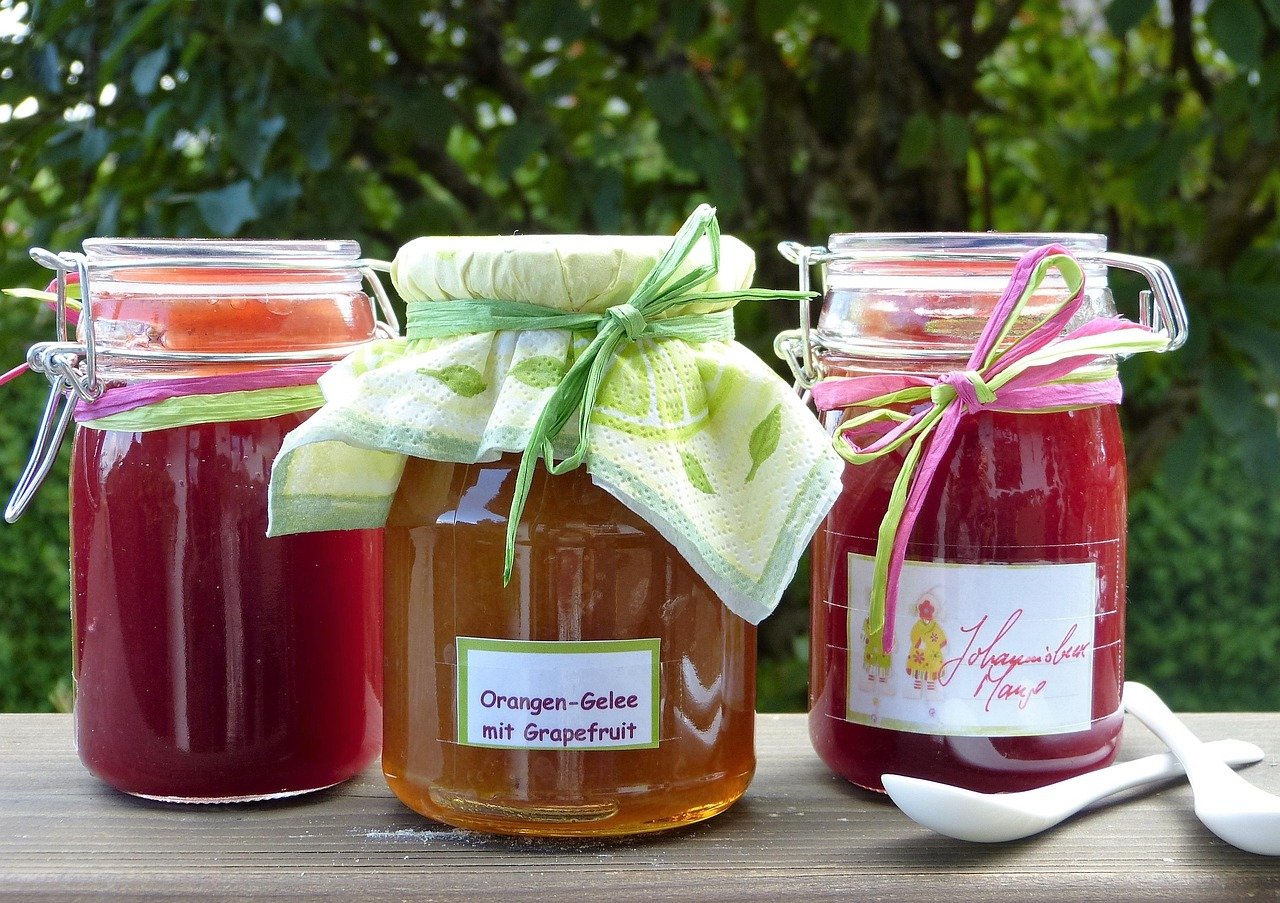
The Mason jar arrived at the right moment. Home food preservation was a household necessity in the mid-19th century, not a hobby. A reliable, reusable seal changed what a family could put away for winter.
The Ball Brothers Glass Manufacturing Company began making glass jars in 1884 in Buffalo, New York, and later moved to Muncie, Indiana. Ball jars became one of the most recognizable American brands, and vintage examples still turn up at estate sales with their wire bails and blue glass intact.
The closure evolved too. Early caps were zinc. Later lids moved to lacquered steel with a sealing compound. The flat self-sealing lid is commonly associated with the Kerr company, though the exact year it appeared is often cited loosely and should be treated with caution rather than repeated as fact.
What did not change much is the core geometry: a glass jar with threads and a screw band. That’s why a jar bought today can sit next to one from the 1930s and look like a cousin.
Regular Mouth vs. Wide Mouth: A Choice That Actually Matters
The single most practical decision when buying jars is mouth size. Both types use the same basic mechanism, but they behave differently in the kitchen.
| Feature | Regular mouth | Wide mouth |
|---|---|---|
| Opening size | Narrower | Broader |
| Best for | Jams, jellies, sauces, liquids | Whole fruit, pickles, chunky foods |
| Filling and emptying | Slower, messier for solids | Easier to load and clean |
| Access for tools | Tight fit | Hand and utensil friendly |
| Common capacities | Half-pint, pint, quart | Half-pint, pint, quart |
Common U.S. canning jar capacities are half-pint (8 oz), pint (16 oz), and quart (32 oz). Exact mouth diameters vary by manufacturer, so lids and bands are not universally interchangeable between brands. If you buy bands and lids separately, check the fit before you commit to a case.
Practical tip: wide mouth jars are worth the small price premium for anything you’ll eat with a spoon or fork. Regular mouth jars are better for pouring and for liquids where a narrow neck gives you control.
What the Jar Is Actually For
The Mason jar has three distinct jobs, and mixing them up causes most of the trouble people run into.
Job One: Water-Bath Canning of High-Acid Foods
High-acid foods include fruits, jams, jellies, pickles, and many tomato products. These can be processed in a boiling-water bath, where jars are submerged and boiled for a specified time. The heat drives air out and creates a vacuum as the jars cool, pulling the flat lid down into a seal.
Job Two: Pressure Canning of Low-Acid Foods
Low-acid foods include vegetables, meats, soups, and beans. These require a pressure canner that reaches temperatures above boiling. This is not a preference. It’s a safety rule.
The reason is Clostridium botulinum, the bacterium behind botulism. Its spores survive boiling and can grow in low-acid, low-oxygen environments, which is exactly what a sealed jar of green beans provides. A pressure canner reaches the higher temperature needed to destroy those spores. The standard reference for these methods is the USDA Complete Guide to Home Canning, current edition dated 2015, which lays out the acid and low-acid distinction and the processing rules that follow from it.
Job Three: Everyday Storage
Dry goods, leftovers, overnight oats, cold brew, salad layers, pantry staples. This is where most jars actually live. No processing, no vacuum, no rules beyond keeping things clean. It’s also the job the jar was never patented for, which is a nice irony.
Common Mistakes People Make With Mason Jars
A few errors show up again and again, and most of them are easy to avoid once you know they exist.
Reusing flat lids for canning. The sealing compound on a single-use flat lid is designed for one processing cycle. A lid that sealed once may not seal again, and a failed seal can go unnoticed until you open the jar months later. Glass jars and screw bands can be reused if they’re undamaged. Flat lids should be treated as consumables.
Skipping the headspace measurement. Every tested recipe specifies how much empty space to leave at the top. Too little and contents bubble out and foul the seal. Too much and the vacuum may not form properly. It’s a small detail with an outsized effect on success.
Water-bathing low-acid food. This is the mistake that matters most. Green beans, corn, and stock are not boiling-water-bath candidates, no matter what an old family recipe card says. Recipes handed down before modern guidance existed are not reliable safety documents.
Using jars with chips or cracks. A nick on the rim can prevent a seal. Inspect rims before every canning session and retire damaged jars to dry storage duty.
Tightening bands too hard. Bands should be fingertip tight, not cranked down. Air needs to escape during processing, and an over-tightened band can cause the lid to buckle or the jar to fail to vent.
Assuming “Mason” means canning-safe. A decorative jar with a threaded neck is not necessarily made for heat processing. Jars sold for crafts or drinks may not be tempered for canning. If the box doesn’t say it’s made for canning, don’t process it.
Buying and Caring for Jars
When shopping, look for jars explicitly labeled for canning if you plan to process food. Capacity, mouth size, and case quantity are the three specs that matter. For storage-only use, almost any threaded glass jar will do.
Care is straightforward. Wash jars in hot soapy water, rinse well, and inspect the rims. Bands can rust if stored wet, so dry them thoroughly and store them off the jars or loosely attached. Storing jars with bands tightened down can trap moisture and odors.
Here’s a detail worth knowing if you’re matching jars to a specific hair or texture analogy in other contexts: the vocabulary of “types” and “patterns” shows up everywhere, from curl patterns to jar threads. If you’ve ever gone down a rabbit hole comparing 4c hair types or 2b hair waves, you’ll recognize the same urge to classify and compare. Jars invite that same instinct, and the regular-versus-wide-mouth split is the classification that actually changes how you use the thing.
Vintage Jars: Collectible, But Not Always Usable
Old Ball and Kerr jars have real charm. Wire-bail closures, aqua glass, embossed lettering. Collectors pay real money for rare examples.
But collectible and canning-safe are different categories. Antique glass may be thinner, may have microscopic rim wear, and may not be tempered to modern standards. Many collectors display vintage jars and can in new ones. That’s the sensible split.
If you inherit jars and want to use them, inspect the rims under good light. Run a finger around the lip and feel for nicks. Any roughness means the jar becomes a storage container, not a canning vessel.
Why the Jar Endures
There’s a reason the the row of jars on a pantry shelf still looks like abundance, decades after refrigeration made it optional. The Mason jar is legible. You can see what’s inside. You can open it without a tool. You can wash it and use it again.
It also fits a modern instinct: buy in bulk, store in glass, avoid plastic. A quart jar holds roughly two pounds of flour or a full bag of coffee beans. It’s a measuring cup, a storage container, a drinking glass, and a canning vessel in one object.
The design earned its longevity. A threaded neck and a screw band solved a real problem in 1858, and the same solution still works. That’s rare in any category of kitchen equipment.
Conclusion
The Mason jar is a case study in getting something right the first time. John Landis Mason’s 1858 patent introduced a threaded glass mouth and a screw-on cap, and the basic idea has outlasted nearly every other piece of 19th-century kitchen gear. Ball started making jars in 1884, the closure materials changed, and the two-piece lid became standard, but the geometry held.
What has changed is the guidance around safe use. High-acid foods go in a boiling-water bath. Low-acid foods need a pressure canner, full stop. Flat lids are single-use for canning. Bands and jars are reusable if undamaged. Headspace matters. Fingertip-tight is tight enough.
Get those rules right and the jar does the rest. Get them wrong and you’ve made a decorative container with a science experiment inside. The jar is forgiving about everything except safety, and that’s a fair trade for a design that’s been earning its place on shelves since before the Civil War.
Frequently Asked Questions
What is the difference between a jar and a Mason jar?
A Mason jar is a specific type of jar: glass, with a threaded neck and a screw-on metal closure. “Jar” is the broad category and includes corked jars, hinged-lid jars, and decorative containers. The threaded neck plus screw band is what defines a Mason jar, and the term is used generically in the U.S. for any threaded glass canning jar regardless of brand.
Can you reuse Mason jar lids for canning?
Glass jars and screw bands can be reused if they’re undamaged. Flat lids generally should not be reused for sealed canning, because the sealing compound is designed for a single processing cycle. A reused lid may fail to seal, and a failed seal isn’t always obvious until the jar is opened. Treat flat lids as consumables and inspect every rim before processing.
Do Mason jars need to be sterilized before use?
It depends on the job. For water-bath canning of foods processed for ten minutes or longer, clean jars are generally sufficient because the processing itself sanitizes them. For shorter processing times, and for pressure canning, sterilizing jars first is the safer habit. For dry storage and leftovers, hot soapy water and a thorough rinse are enough.
What foods cannot be canned in a boiling-water bath?
Low-acid foods cannot. That includes vegetables, meats, soups, stocks, and beans. These require a pressure canner that reaches temperatures above boiling, because the spores of Clostridium botulinum survive boiling and can grow in a sealed, low-oxygen, low-acid jar. High-acid foods like fruit, jam, pickles, and most tomato products are the boiling-water-bath candidates.
Are vintage or antique Mason jars safe for canning?
Often not. Antique glass may be thinner, may show rim wear that’s hard to see, and may not be tempered to modern standards. Many collectors display vintage jars and can in new ones. If you want to use an inherited jar, inspect the rim under good light and feel for nicks. Any roughness means it becomes a storage container, not a canning vessel.
What sizes do Mason jars come in?
Common U.S. canning capacities are half-pint (8 oz), pint (16 oz), and quart (32 oz), with two mouth sizes: regular and wide mouth. Exact mouth diameters vary by manufacturer, so lids and bands aren’t universally interchangeable between brands. Check the fit before buying replacement lids for a case of jars.









