

What happens when urine can’t leave a kidney the normal way? That question drives one of the most common emergency urinary procedures in modern medicine. A nephrostomy tube is a small, flexible catheter inserted through the skin of the back or flank directly into the kidney to drain urine. It sounds dramatic, and it can feel intimidating to patients, but it can be a lifesaver when a blocked ureter threatens the kidney or the whole body.
This guide walks through what the tube does, who needs one, how it is placed, how it is managed day to day, and the mistakes people make when caring for one at home.
What Is a Nephrostomy Tube?
A nephrostomy tube, also called a percutaneous nephrostomy or PCN, is a catheter placed through the skin of the flank directly into the collecting system of the kidney. Urine then flows out through the tube into an external drainage bag rather than down the ureter into the bladder.
The word breaks down simply: “nephro” refers to the kidney, and “stomy” means a surgical opening. So a nephrostomy is literally an opening into the kidney. The tube keeps that opening from closing and gives urine a safe exit route.
Doctors use nephrostomy tubes when the normal drainage path is blocked or when going through the ureter is not practical. The procedure is usually temporary, but some patients live with a tube for weeks or even months while a larger problem is treated.
Why Would Someone Need a Nephrostomy Tube?
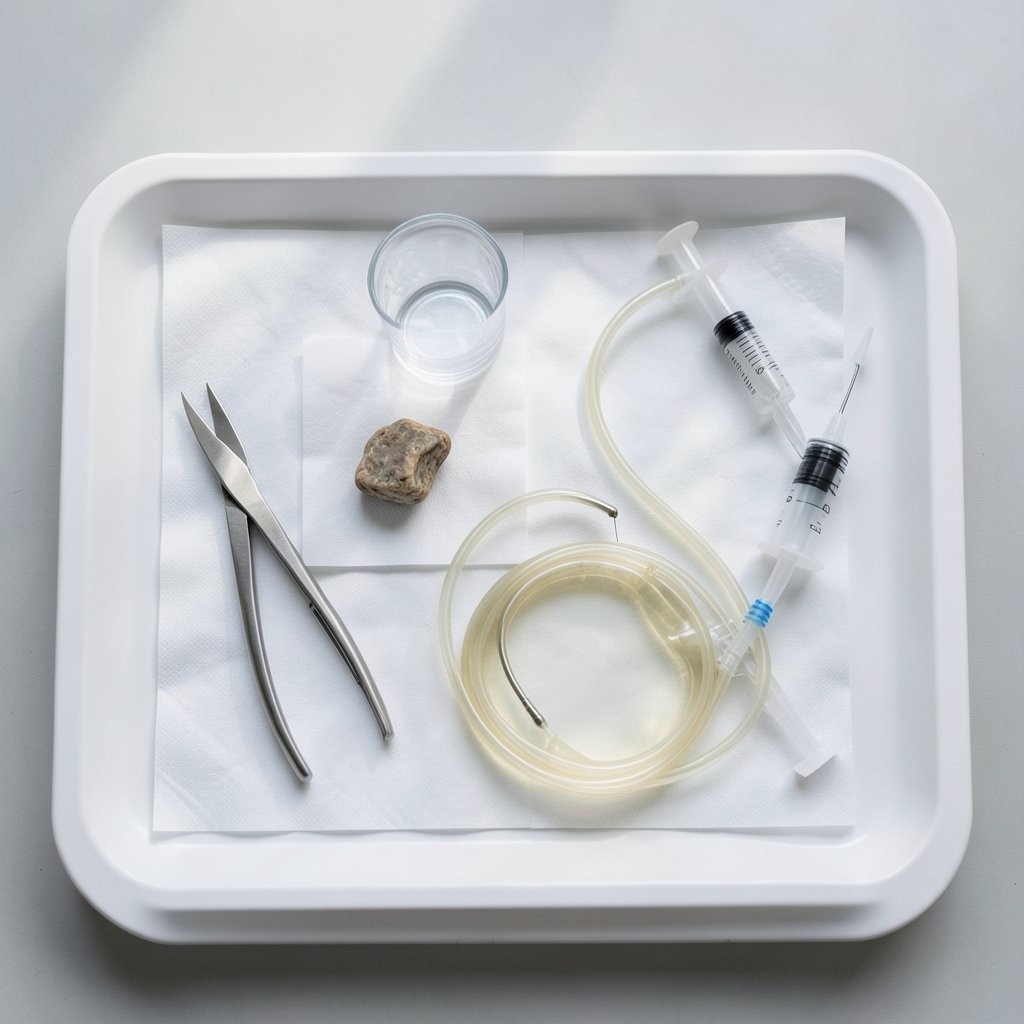
The core reason is almost always the same: urine is trapped, and pressure is building up in the kidney. That backup can damage kidney tissue and, if the urine is infected, can turn into a life-threatening infection.
Common reasons include:
- Kidney stones that lodge in the ureter and block flow
- Tumours in or near the urinary tract that press on the ureter
- Strictures, which are narrowed sections of the ureter from scarring or injury
- Blood clots blocking the drainage path
- Pyonephrosis, an infected, pus-filled, obstructed kidney that needs urgent drainage
- Access for procedures, such as removing stones or placing a stent
- Urinary diversion, when the bladder has been removed or bypassed
The underlying problem can affect anyone, and hair type has nothing to do with it. People with tightly coiled 4c hair sometimes find that adhesive dressings pull at the skin near the back, so choosing the right tape matters for comfort. That is a practical dressing detail, not a medical cause. (2b hair)
How Is a Nephrostomy Tube Placed?
Placement is an image-guided procedure, typically performed by an interventional radiologist or a urologist. It is usually done under local anaesthesia with sedation, so the patient is awake but comfortable.
Here is the general sequence:
- Imaging first. Ultrasound and sometimes fluoroscopy map the kidney and show the safest path for the needle.
- Positioning. The patient usually lies face down or on their side, exposing the flank.
- Numbing. Local anaesthetic is injected into the skin and deeper tissue along the planned track.
- Needle access. A thin needle is guided into the kidney’s collecting system.
- Guidewire and dilation. A wire is threaded through, and the track is gently widened.
- Tube placement. The nephrostomy catheter is slid over the wire into position.
- Confirmation. Contrast or imaging confirms the tube sits correctly and drains.
- Securing. The tube is fixed to the skin with a suture or a securement device and connected to a drainage bag.
The whole thing often takes under an hour, though it varies with the patient’s anatomy and how difficult the access is. (The row)
Nephrostomy Tube vs. Ureteral Stent: How Do They Compare?
A ureteral stent is the main alternative. It is a thin tube placed inside the ureter, running from the kidney to the bladder, so urine drains internally. Both options relieve obstruction, but they differ in important ways.
| Feature | Nephrostomy tube | Ureteral stent |
|---|---|---|
| Drainage route | External, through the skin | Internal, inside the ureter |
| Visibility | Tube and bag visible outside the body | Hidden inside the body |
| Placement | Through the back or flank | Usually through the bladder |
| Day-to-day care | Bag emptying and dressing changes | Little external care |
| Common issues | Dislodgement, blockage, skin irritation | Irritation, urgency, discomfort |
| Suitability | Often when the ureter cannot be reached | Often a first choice when feasible |
Comparative studies generally find similar drainage success between the two, but the complication and quality-of-life profiles differ. Results across studies are mixed, so there is no single definitive winner. Some patients tolerate an external tube better than internal stent irritation, and others feel the opposite. The choice usually comes down to anatomy, the cause of the blockage, and patient preference.
What Does Living With a Nephrostomy Tube Look Like?
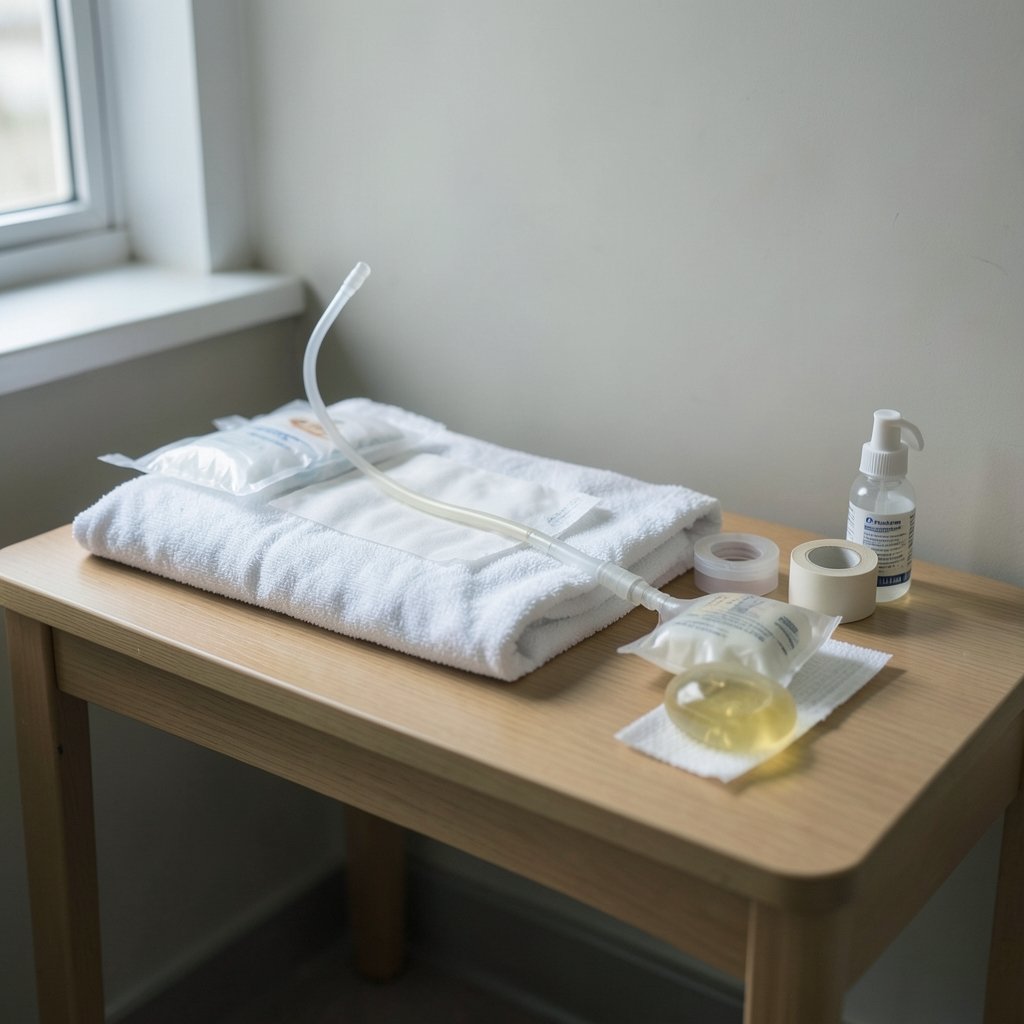
Daily life with a nephrostomy tube is manageable, but it requires attention. The tube connects to a drainage bag that collects urine, and the bag must be emptied regularly, usually several times a day. Some patients use a smaller leg bag during the day and a larger night bag while sleeping.
Practical habits that help:
- Keep the bag below the level of the kidney so urine flows with gravity and does not back up.
- Empty the bag before it gets full, which reduces the risk of traction on the tube.
- Check the dressing daily for moisture, redness, or leaking.
- Keep the site dry according to the care team’s instructions, and follow their guidance on showering.
- Watch for changes in urine colour or smell, which can signal infection.
Many patients find that clothing choices matter. Loose tops and trousers that do not press on the tube make movement easier. Securing the tubing so it does not tug is one of the simplest ways to prevent accidental pulls.
Common Mistakes People Make With a Nephrostomy Tube
In practice, a handful of errors come up again and again, and most are avoidable.
Pulling the tube by accident. This is the big one. Catching the tubing on a door handle, a chair, or clothing during sleep can dislodge the catheter. Taping the tubing with a gentle loop of slack near the skin gives it room to move without pulling the tube itself.
Letting the bag hang too high. If the drainage bag sits above the kidney, urine can flow backward, which raises infection risk. Keep it low, always.
Skipping hand hygiene. Every time someone empties or handles the bag, hands should be clean. This sounds obvious and is still frequently missed.
Ignoring early warning signs. A little redness at the site can be the start of something bigger. Fever, chills, cloudy or foul-smelling urine, or pain that worsens should prompt a call to the care team quickly rather than “waiting to see.”
Flushing or adjusting the tube without instruction. The tube is not a do-it-yourself device. Any flushing or repositioning should follow the specific instructions from the treating team, because the right technique depends on the tube type.
What Are the Risks and Complications?
No procedure is risk-free, and nephrostomy is no exception. Documented risks include:
- Bleeding, ranging from minor blood in the urine to more significant haemorrhage
- Infection or sepsis, especially when the kidney was already infected
- Tube dislodgement, where the catheter slips out of position
- Blockage, from clots or debris
- Urine leak around the tube site
- Injury to nearby organs, which is uncommon but possible given the path through the flank
Reported complication rates vary widely across published series, so it is misleading to quote a single universal figure. The risk for any one person depends on their anatomy, overall health, the reason for the tube, and the experience of the team placing it.
How Is the Tube Removed?
Removal depends on why the tube was placed. If the blockage has resolved, the team may simply remove the tube and watch to confirm urine drains normally. Sometimes a nephrostogram, an imaging test using contrast, checks that the ureter is open before the tube comes out.
In other cases, the tube is exchanged for a fresh one on a schedule, or replaced with an internal stent. Dwell time recommendations vary by source and by patient, so the schedule should always come from the treating team rather than a general rule found online.
Does a Nephrostomy Tube Affect Quality of Life?
It can, and honest conversations about this matter. Studies report that external drainage tubes can reduce quality of life compared with internal stents, though the findings are not uniform across all research. The visible bag, the need for regular emptying, and restrictions on swimming or bathing can weigh on people.
That said, many patients adapt within a couple of weeks. Establishing a routine, involving a partner or caregiver in bag changes, and asking the care team about clothing and sleep strategies all help. It is also reasonable to ask whether an internal stent might be an option once the acute problem settles.
Conclusion
A nephrostomy tube is a small device with a serious job: it protects a blocked kidney by giving urine somewhere to go. The procedure is well established, usually quick, and guided by imaging so the tube lands where it should. Living with one takes some adjustment, mostly around bag management, dressing care, and avoiding accidental pulls, but the routines become second nature faster than most people expect.
The most important takeaway is that the tube is a bridge, not a destination. It buys time and protects kidney function while the underlying problem, whether a stone, a stricture, or something else, gets sorted out. Patients who understand the why behind their tube tend to manage it with more confidence, and confidence is half the battle.
Frequently Asked Questions
How long can a nephrostomy tube stay in?
There is no single universal answer. Some tubes stay in for a few days until a blockage clears, while others remain for weeks or months while a larger problem is treated. The schedule should come from the treating team, because dwell time depends on the reason for the tube, the tube type, and how the kidney responds.
Is getting a nephrostomy tube painful?
Most people receive local anaesthesia plus sedation, so the procedure itself is usually uncomfortable rather than sharply painful. Afterwards, soreness at the site and some blood in the urine are common for a short period. Pain that keeps getting worse is not something to push through, and it should be reported.
Can I shower or bathe with a nephrostomy tube?
It depends on the dressing and the instructions from the care team. Many patients can shower with a protected dressing once the site has settled, but swimming and full baths are often discouraged because of infection risk. Always follow the specific guidance given, since protocols differ between hospitals.
What should I do if the tube comes out?
Treat it as urgent. A tube that falls out means urine may no longer drain from that kidney, and the track can close quickly. Cover the site with a clean dressing and contact the treating team or emergency services right away rather than trying to reinsert anything yourself.
Can I exercise or lift things with a nephrostomy tube?
Light activity such as walking is often encouraged, but heavy lifting and contact sports are usually restricted because they raise the risk of dislodgement or bleeding. Ask the care team for specific limits, since the right answer depends on how recently the tube was placed and why it is there.
How is a nephrostomy tube different from a catheter?
A standard urinary catheter drains the bladder through the urethra. A nephrostomy tube bypasses the bladder entirely and drains the kidney directly through the skin of the flank. The two serve different purposes, and some patients have both at the same time.









