

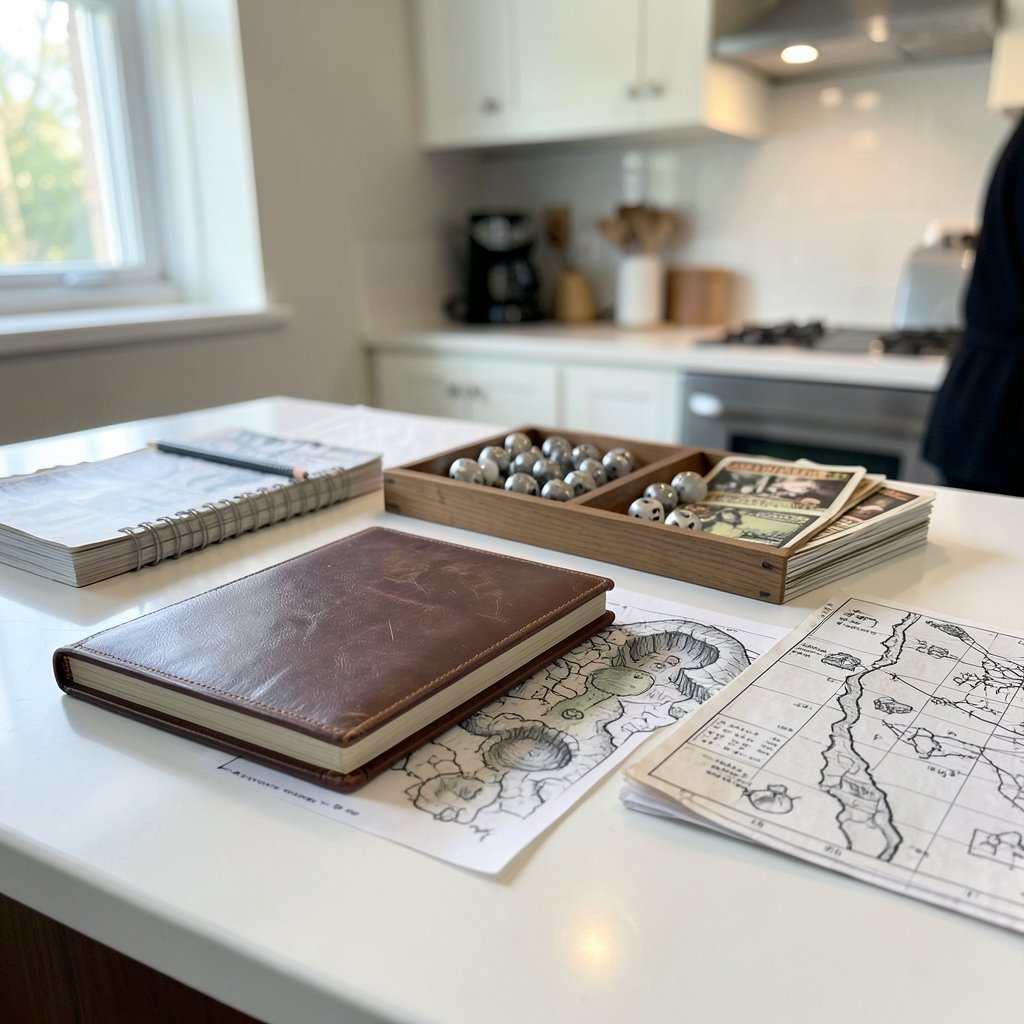
Where does a tabletop RPG fan actually go to find out what happened this week? That question sounds simple until you try to answer it. The hobby’s news doesn’t live in one place. It’s scattered across publisher blogs, crowdfunding dashboards, convention halls, award ceremonies, and a handful of community sites that have been running since the dial-up era. Some of it is marketing dressed up as journalism. Some of it is genuinely important and gets buried under a thousand painted miniature photos.
This piece is a practical map. Not a roundup of specific headlines (those go stale in a week), but a guide to the machinery that produces tabletop RPG news, the places worth checking, and the habits that separate well-informed players from people who only hear about things three months late. If you have ever discovered a major release after everyone else had already finished their campaign, this is for you.
What Counts as Tabletop RPG News, Anyway
The category is broader than it first appears. Tabletop RPG news covers announcements and changes in the pen-and-paper roleplaying hobby: new game releases, new editions, supplements, licensing decisions, crowdfunding campaigns, award results, convention happenings, and industry business moves.
But the edges blur in ways that matter. A new dice set isn’t news. A major publisher changing its open license is news for everyone, including people who have never rolled a d20. A small indie game funded in four hours tells you something about where the hobby’s energy is going. A convention hitting a record attendance number tells you something about the health of the whole sector.
Three broad buckets help organize it:
| News type | What it covers | Why it matters to players |
|---|---|---|
| Product news | New books, editions, supplements, accessories | Tells you what to buy and when |
| Industry news | Licensing, publisher moves, crowdfunding, staffing | Shapes what gets made and who can make it |
| Community news | Awards, conventions, actual play, fan projects | Shows where the hobby’s culture is heading |
Most outlets mix all three. The trick is knowing which bucket a given headline belongs to, because a licensing change deserves your attention in a way that a new dice color usually doesn’t.
Why Tabletop RPG News Is Harder to Track Than Video Game News

Video game players have it easy by comparison. A handful of big sites aggregate everything, publishers blast announcements through centralized storefronts, and release dates are tracked in databases. Tabletop roleplaying has no equivalent.
The reasons are structural. The hobby has thousands of small publishers, many of them one-person operations working out of a spare room. Announcements arrive through newsletters, crowdfunding pages, Discord servers, and social posts that vanish into algorithmic feeds. There’s no single storefront everyone must pass through. Print runs sell out and get reprinted without a press release. Retail distribution moves through a network of distributors and local game stores that most players never see.
That fragmentation is part of the charm. It’s also why so many players rely on a small number of trusted voices to filter the chaos. Those voices are worth knowing.
The Core Sources Worth Bookmarking
A workable news diet doesn’t need twenty tabs. It needs a handful of reliable checkpoints, visited regularly.
Publisher channels first. Official announcements from game companies are the primary source for release dates, edition changes, and licensing. If a publisher says something on its own site, that’s the version to trust over any secondhand summary. Follow the companies whose games you actually play, not every company in the industry.
Community news sites second. Long-running hobby news desks aggregate announcements, interview designers, and cover the business side. They’re faster than official channels and more willing to connect dots, but they’re still secondary sources. When a community site reports something significant, it’s worth checking the original announcement.
Crowdfunding platforms third. Kickstarter and similar platforms have become the de facto announcement venue for independent RPG publishing. Browsing the tabletop category tells you what’s launching, what’s funded, and what’s struggling. It’s the closest thing the hobby has to a live pulse.
Award and convention bodies fourth. Award organizations and major conventions publish their own announcements and results. These are primary sources for the community news bucket, and they’re reliable in a way that social media chatter isn’t.
Trade coverage fifth. Industry-facing outlets report on sales, retail, and business trends. This is where you learn that a category is growing or contracting, information that rarely surfaces in player-focused coverage.
Reading Crowdfunding News Without Getting Fooled
Crowdfunding has become the hobby’s loudest news channel, and also its most misleading one if you read it carelessly. A campaign that funds in ninety seconds is genuinely impressive. It’s also a marketing event, and the number on the page doesn’t tell you whether the finished game is any good.
A few practical habits help here. First, distinguish between funded and delivered. A campaign hitting its goal is news about demand. A campaign shipping on time is news about competence, and it’s much rarer and much more worth noting. Second, read the funding total skeptically. Stretch goals, add-on pledges, and late pledges inflate totals in ways that make comparisons between campaigns nearly meaningless. Third, watch the update feed rather than the pledge counter. A project that posts monthly progress updates is a different animal from one that goes quiet after the campaign closes.
The most useful crowdfunding news isn’t the launch announcement at all. It’s the delivery announcement, months or years later, when a designer confirms that backers are finally getting their books. That story rarely trends, but it’s the one that tells you whether a creator is worth backing again.
Hair, Rows, and the Weird Edges of the Hobby Press
One of the more curious features of tabletop RPG coverage is how far it reaches into adjacent territory. Beauty and styling content, of all things, has become a genuine traffic driver on hobby and lifestyle sites, because players want to look good at the table and cosplayers want to get details right.
That’s not as random as it sounds. Character design in RPGs often begins with hair, and players building a visual for a character frequently search for references. A site covering 4c hair is serving players who want to match a character’s texture and styling accurately rather than guess. Similarly, guides to 2b hair attract readers thinking about a specific character’s look, and content about the row sits in the same crossover zone where personal styling meets character creation.
The lesson for news readers is that the hobby’s coverage ecosystem is broader than the dedicated RPG press. Adjacent lifestyle content often reaches players that traditional outlets miss, and it occasionally surfaces trends before the core sites notice them. It’s worth knowing these corners exist, even if they aren’t where you go for release dates.
Separating Announcement From Advertising
The single most useful skill in following tabletop RPG news is telling a genuine announcement from a marketing push. The two often look identical, because publishers have learned to write press releases that read like news stories.
Here’s a working test. Ask what actually changed. A new product being announced is a change in the market. A new edition being announced is a bigger change, because it affects existing players’ books and campaigns. A licensing change is the biggest change of all, because it alters what the entire independent publishing community can legally do. Announcements that describe a real change are news. Announcements that describe a mood, a milestone, or a partnership with no concrete effect are advertising wearing a news hat.
Another tell: specificity. Real news includes dates, names, and numbers. Marketing copy includes adjectives. If a press release tells you the game is “revolutionary” and “highly anticipated” but won’t say when it ships or what it costs, you’re reading a sales document.
The Licensing Stories That Actually Matter
If there’s one category of tabletop RPG news that consistently deserves attention, it’s licensing. The hobby runs on shared rules systems, and the terms under which independent designers can use those systems determine what gets published for years afterward.
When a publisher changes its open license, the effects ripple outward for a long time. Designers delay projects. Some pivot to different systems. New competing licenses appear, sometimes within weeks. Players notice because the supplements they were waiting for quietly change shape or disappear. None of this makes for exciting headlines, but it’s the structural news that shapes everything else.
The practical takeaway for readers is simple. When a licensing story breaks, read the actual license text rather than the summary. Summaries get details wrong, and the details are where the real consequences live. This is one area where primary sources aren’t optional.
Building a News Routine That Doesn’t Eat Your Week
Most people don’t need to follow tabletop RPG news hourly. A light routine catches nearly everything important.
- Pick two or three trusted sources and check them weekly. Resist adding more.
- Follow publishers directly for the games you actually play, through whatever channel they use most.
- Skim crowdfunding categories monthly rather than daily, to catch launches without doomscrolling.
- Set a calendar reminder for major award announcements and convention dates, which are predictable.
- Read primary announcements whenever a secondary source reports something that affects your games.
That routine takes maybe twenty minutes a week. It will keep you better informed than most people who spend hours scrolling.
Common Mistakes News-Following Players Make
A few habits reliably lead people astray. Treating social media chatter as confirmation is the biggest one; a rumor repeated by enough accounts starts to feel like a fact, and it usually isn’t. Another is assuming that a widely shared post reflects industry consensus when it reflects one loud corner of the community. A third is ignoring the business coverage entirely, then being surprised when a publisher cancels a line or a store closes.
There’s also a subtler mistake: following news as entertainment rather than information. Drama travels faster than substance, and hobby communities generate plenty of both. The players who get the most out of the news cycle are the ones who read for what changed, not for who is angry at whom.
Conclusion
Tabletop RPG news rewards a little structure. The hobby is too fragmented for any single source to cover it all, and too full of marketing for any headline to be taken at face value. But the fix isn’t complicated. Follow a few trusted checkpoints, favor primary announcements over summaries, read licensing stories carefully, and treat crowdfunding numbers with the skepticism they deserve.
The reward is practical. You find out about the games you want before they sell out. You understand why a supplement you were waiting for changed systems. You notice when a publisher’s direction shifts, and you can decide whether to follow. That’s a better position than finding out three months late from a friend at the game table.
How often does tabletop RPG news actually come out?
Announcements arrive constantly, but genuinely significant news is sporadic. Publisher release schedules and crowdfunding launches generate a steady weekly flow, while edition changes and licensing decisions are rare events that arrive without warning. A weekly check catches nearly everything that matters, and a monthly deeper read fills in the rest.
What is the most reliable source for tabletop RPG news?
Official publisher announcements are the most reliable source for anything a publisher controls, including release dates and licensing terms. Community news sites are faster and broader but secondary. For any story that affects your own games, the safest habit is to trace it back to the original announcement and read that.
Why do tabletop RPG licensing changes get so much attention?
Because shared rules systems underpin a huge share of independent publishing. When license terms change, designers have to delay, renegotiate, or switch systems, and those decisions ripple through release schedules for years. Licensing news is structural rather than exciting, but it shapes what gets published more than any single product announcement.
Are crowdfunding campaigns a good way to learn about new RPGs?
They’re excellent for discovering what’s launching and what’s attracting interest, and poor for judging quality. A funded campaign proves demand, not delivery. Read the update history rather than the pledge total, and pay more attention to creators who have shipped previous projects than to campaigns with the biggest launch numbers.
How can I tell real news from a press release?
Look for specificity. Real announcements include dates, names, prices, and concrete changes. Marketing copy leans on adjectives and vague enthusiasm. Ask what actually changed for players or publishers. If the answer is nothing beyond a new product existing, you’re reading advertising rather than news.
Do I need to follow the business side of tabletop RPGs?
Not closely, but a little awareness pays off. Business coverage explains why product lines get cancelled, why stores close, and why certain categories grow or shrink. Players who ignore it entirely tend to be surprised by changes that were visible in the trade coverage months earlier. A monthly skim is usually enough.









