

What makes a drum turn a room full of strangers into a single breathing rhythm section? Walk into any drum circle, school music room, or West African dance class and you will likely find the answer sitting between someone’s knees: the djembe. This goblet-shaped hand drum has traveled from the villages of the Mande empire to living rooms on every continent, and it carries centuries of tradition inside a shell that often weighs less than a bag of groceries. Whether you are shopping for a first drum, trying to understand the ensemble around it, or wondering why your slap sounds like a wet cardboard box, this guide covers what the instrument actually is, how it works, and what to look for before you spend money.
What Exactly Is a Djembe?
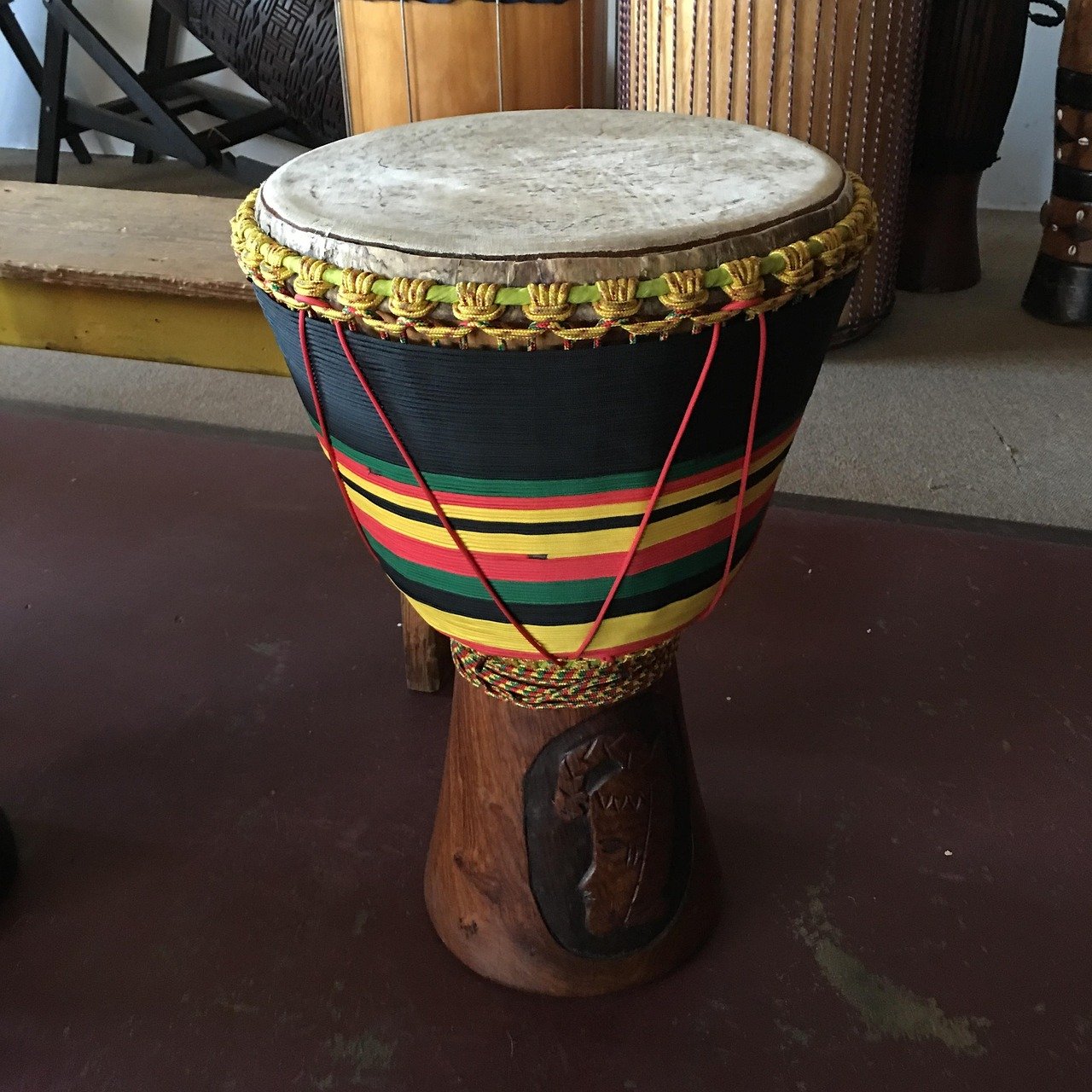
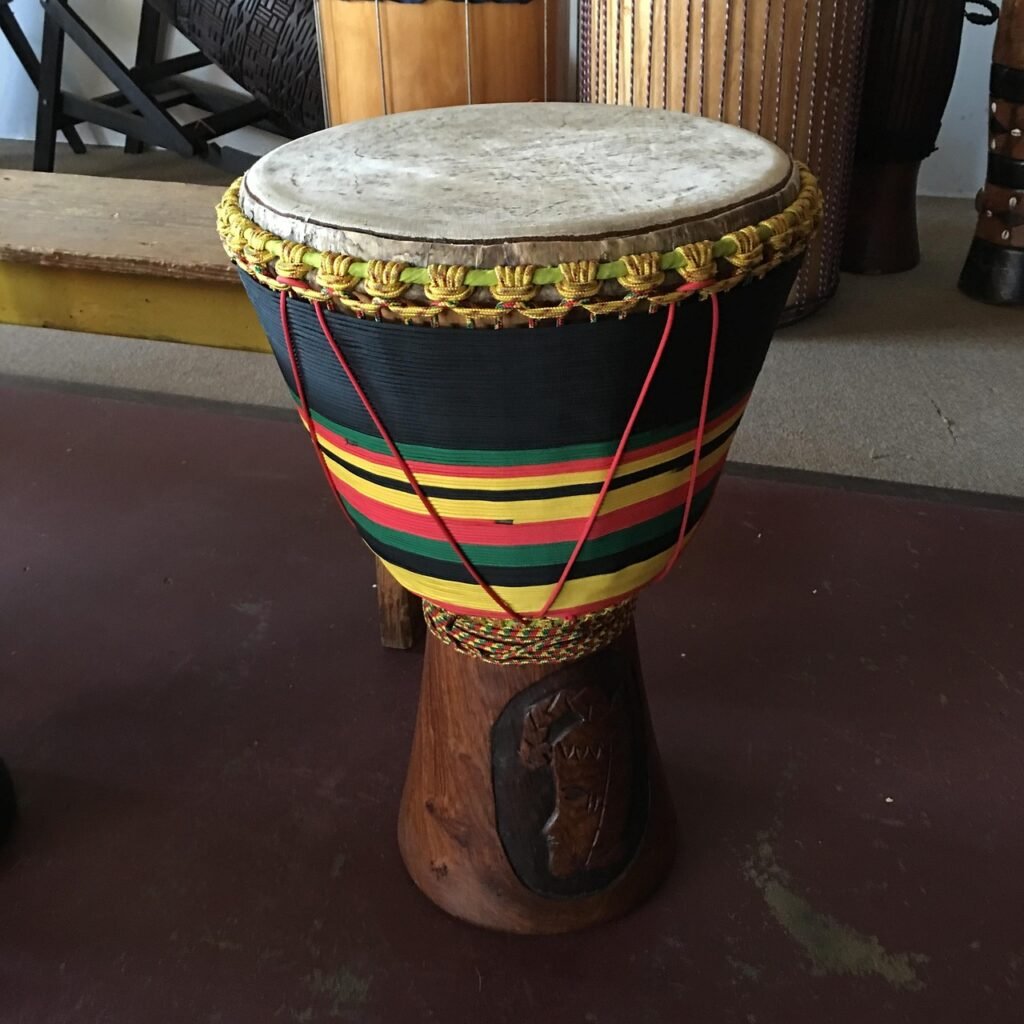
A djembe is a rope-tuned, goblet-shaped hand drum carved from a single piece of hardwood and topped with a goatskin head. It comes from the Mande peoples of West Africa, a cultural region spanning present-day Mali, Guinea, Burkina Faso, and Côte d’Ivoire.
The name is often traced to the Bambara phrase “Anke djé, anke bé,” which translates roughly as “everyone gather together in peace.” That etymology is repeated widely in drumming circles, though it is worth treating as tradition rather than documented fact. What is not in dispute is the instrument’s social role: the djembe has long been a gathering instrument, played at celebrations, ceremonies, and community events.
Three physical features define the instrument:
- The goblet shell. The narrow stem at the bottom flares into a wide bowl at the top. This shape amplifies bass notes and gives the drum its distinctive voice.
- The skin head. Traditionally goatskin, stretched over the bowl and held by rope.
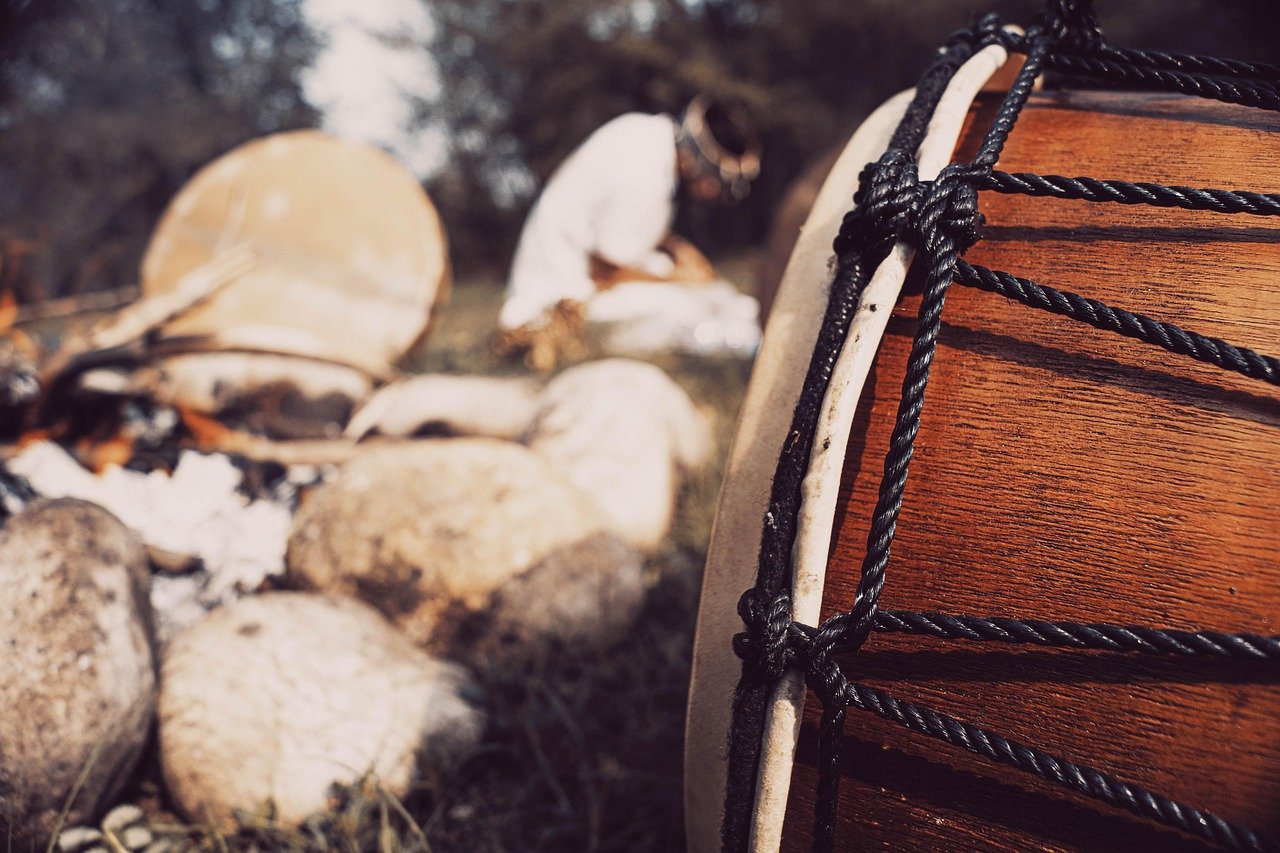
- The rope lacing. A diamond-pattern weave of strong rope runs down the shell and tensions the head. Pulling the rope tighter raises the pitch.
How the Djembe Makes Three Sounds From One Drum
The genius of the djembe is that a single head produces a full tonal range without sticks, pedals, or electronics. Players use bare hands and three basic strokes, each with its own technique and its own place in the music.
| Stroke | Hand position | Sound character | Common mistake |
|---|---|---|---|
| Bass | Flat hand, center of the head | Deep, round, resonant | Hitting too hard and choking the ring |
| Tone | Relaxed hand, fingers together, near the edge | Clear, bell-like, mid-pitched | Tensing the wrist and losing bounce |
| Slap | Fingers slightly spread, sharp strike at the rim | Loud, crisp, percussive | Using arm force instead of a loose, fast snap |
Here is the practical part most beginners get wrong: power comes from relaxation, not muscle. A tight hand deadens the head, and a deadened head produces a thud instead of a tone. Experienced players let the wrist and fingers do the work and let the drum respond. If your slaps sound weak, the fix is usually less force and more speed, plus a looser grip.
The bass, tone, and slap system is why the djembe can play melodies of rhythm rather than just keeping time. Once those three sounds are clean, the drum opens up.
Where the Djembe Fits in a West African Ensemble
The djembe rarely performs alone in its traditional context. It sits inside a percussion section built around the dundun family of bass drums: the dundunba (the largest), the sangban (middle), and the kenkeni (smallest). Bells, often called kenken, add a metallic timeline that anchors the groove.
In this setup, the djembe carries the lead and solo patterns. The dundun drums hold the foundational rhythm, and the lead player improvises around it, signaling changes and driving the energy. This call-and-response structure is central to Mande music, and it is why djembe players eventually need to learn to listen to the bass drums rather than only to their own hands.
For anyone coming from a rock or pop background, this is a real adjustment. The djembe is not a drum kit. It is a conversation, and the lead player is expected to respond to dancers and to the ensemble rather than simply repeat a pattern.
How the Djembe Spread Around the World
The instrument’s international reach is a twentieth-century story. Touring West African ensembles brought djembe rhythms to audiences far beyond the Mande region, and Les Ballets Africains, founded in 1952, became one of the most influential of these groups. Later, teachers and performers such as Mamady Keïta built international teaching networks that spread the instrument through workshops and schools.
Today the djembe shows up in school music programs, therapy settings, community drum circles, and world-music stages. That spread has been mostly positive, but it has also raised fair questions about credit, compensation, and keeping the tradition’s roots visible rather than treating the drum as a generic percussion toy.
Buying a Djembe: What Actually Matters
There is no single international standard for djembe dimensions or tuning. Sizes and tunings vary by maker and tradition, which means shopping can feel like guesswork. A few practical guidelines cut through the noise.
Check the shell first. A well-carved shell from a single piece of hardwood should feel solid, with a smooth interior and no cracks or soft spots. Run your hand inside the bowl; rough, splintery carving is a sign of rushed work.
Test the head. Press gently on the skin. It should feel evenly tensioned, with no thin patches or visible damage. A head that is already sagging or heavily worn will be difficult to tune.
Look at the rope. Even, tight diamond lacing with clean knots signals careful construction. Frayed rope or uneven tension means the drum will be a headache to keep in tune.
Match the size to the player. Smaller drums suit children and travel; larger drums produce deeper bass and more volume for ensemble playing. There is no “correct” size, only the right fit for the body and the setting.
Consider the material honestly. Traditional drums use goatskin heads and hardwood shells, and both have raised sustainability questions in some regions. Synthetic heads and alternative shells exist and can be a reasonable choice for beginners, schools, and humid climates where natural skin stretches unpredictably.
A common mistake is buying the cheapest drum online and discovering the head will not hold tension. Another is over-tightening a new drum to chase a high pitch and splitting the skin. Tune gradually, let the drum settle, and give new skin time to stretch. (The row)
Rope-Tuned vs. Mechanically Tuned Djembes
Modern djembes come in two main tuning systems, and the choice affects cost, convenience, and sound.
| Feature | Rope-tuned | Mechanically tuned |
|---|---|---|
| Tuning method | Pulling and weaving rope | Bolts or a lug system |
| Tuning speed | Slow, requires practice | Fast, with a wrench |
| Traditional feel | Yes | No |
| Best for | Traditional players, ensemble work | Schools, beginners, travel |
Rope tuning is the traditional approach and gives the most authentic feel, but it takes practice to do well. Mechanical systems trade some tradition for convenience, which matters in classrooms where a teacher may need to tune several drums quickly.
Caring for a Djembe So It Lasts
A djembe is a wooden instrument with a skin head, and both respond to their environment. Keep it away from radiators, direct sun, and car trunks in summer. Extreme dryness cracks shells; extreme humidity softens heads and drops the pitch.
After playing, wipe the head if your hands were sweaty, and store the drum upright or on a stand rather than leaning it against a wall. If the head loses tension over time, tighten the rope gradually in small increments rather than all at once.
Players with very curly, coily hair sometimes find that a head covering or a quick check for stray strands before playing saves them from a painful snag at the rim. The same care applies to long sleeves and jewelry, which can catch on rope lacing. (4c hair)
Learning to Play: A Realistic Path
Progress on the djembe comes faster than most people expect, then slows down. The first few weeks deliver quick wins as the three basic tones click into place. The next stage is where players either build good habits or cement bad ones.
A few things that genuinely work:
- Practice the three tones slowly before adding speed. Clean sound at a slow tempo beats sloppy sound at a fast one.
- Play with others early. The djembe is an ensemble instrument, and timing improves fastest when there is something to lock into.
- Learn the bass drum patterns. Understanding the dundun parts makes your lead playing make sense.
- Record yourself. What feels powerful often sounds muddy on playback.
- Study the tradition. Learning where a rhythm comes from, and who plays it, deepens both your playing and your respect for the source.
What does not work is treating the djembe as a novelty. Players who skip the fundamentals and jump straight to fast solos tend to plateau, because their tone never develops enough to carry the speed.
Common Myths Worth Clearing Up
A few persistent misunderstandings follow the djembe around.
Myth: The djembe is a UNESCO-recognized instrument. In 2021, UNESCO inscribed cultural practices linked to the balafon of Senufo communities in Mali, Burkina Faso, and Côte d’Ivoire. That recognition covers the balafon, a xylophone-like instrument, not the djembe. The two are frequently conflated, and the distinction matters for anyone writing or teaching about West African music.
Myth: Any drum with a goblet shape is a djembe. Shape alone does not define the instrument. Construction, skin, lacing, and playing technique all matter.
Myth: Bigger is always better. Larger drums produce more bass, but they are also heavier and harder to transport. Many experienced players own several sizes.
Conclusion
The djembe is one of the rare instruments that is simple to start and deep enough to study for a lifetime. Its goblet shell, goatskin head, and rope lacing have barely changed in form, yet the drum now speaks in classrooms, concert halls, and community centers worldwide. Understanding the three core tones, the ensemble role alongside the dundun drums, and the practical realities of buying and caring for a drum turns a casual purchase into a genuine musical relationship. Start slowly, listen to the bass, respect the tradition the instrument carries, and the drum will reward you with a sound that is far bigger than its size suggests.
Frequently Asked Questions
What is a djembe drum made of?
A traditional djembe has a shell carved from a single piece of hardwood, a goatskin head, and rope lacing in a diamond pattern that tensions the skin. Modern versions sometimes use synthetic heads and mechanically adjustable tuning systems. (2b hair)
Is the djembe hard to learn for beginners?
The basics come quickly. Most beginners can produce recognizable bass, tone, and slap sounds within a few sessions. Reaching a clean, fast, expressive level takes consistent practice, ideally with other players.
How many sounds can a djembe make?
Three core strokes, bass, tone, and slap, form the foundation. Skilled players combine and vary them to create a much wider range of tones, including muted and closed sounds.
Is the djembe the same as a conga?
No. The djembe is goblet-shaped with a single goatskin head and rope tuning, and it is played with bare hands. Congas are taller, barrel-shaped drums usually played in sets, with different construction and technique.
Does the djembe have UNESCO recognition?
No. In 2021, UNESCO inscribed cultural practices linked to the balafon of Senufo communities in Mali, Burkina Faso, and Côte d’Ivoire. The djembe is not part of that inscription, despite the two often being confused.
How do I tune a djembe?
Rope-tuned djembes are tightened by pulling the rope through the lacing in small, even increments around the drum. Mechanical systems use bolts or lugs. Tune gradually, let the skin settle, and avoid over-tightening, which can damage the head.









