

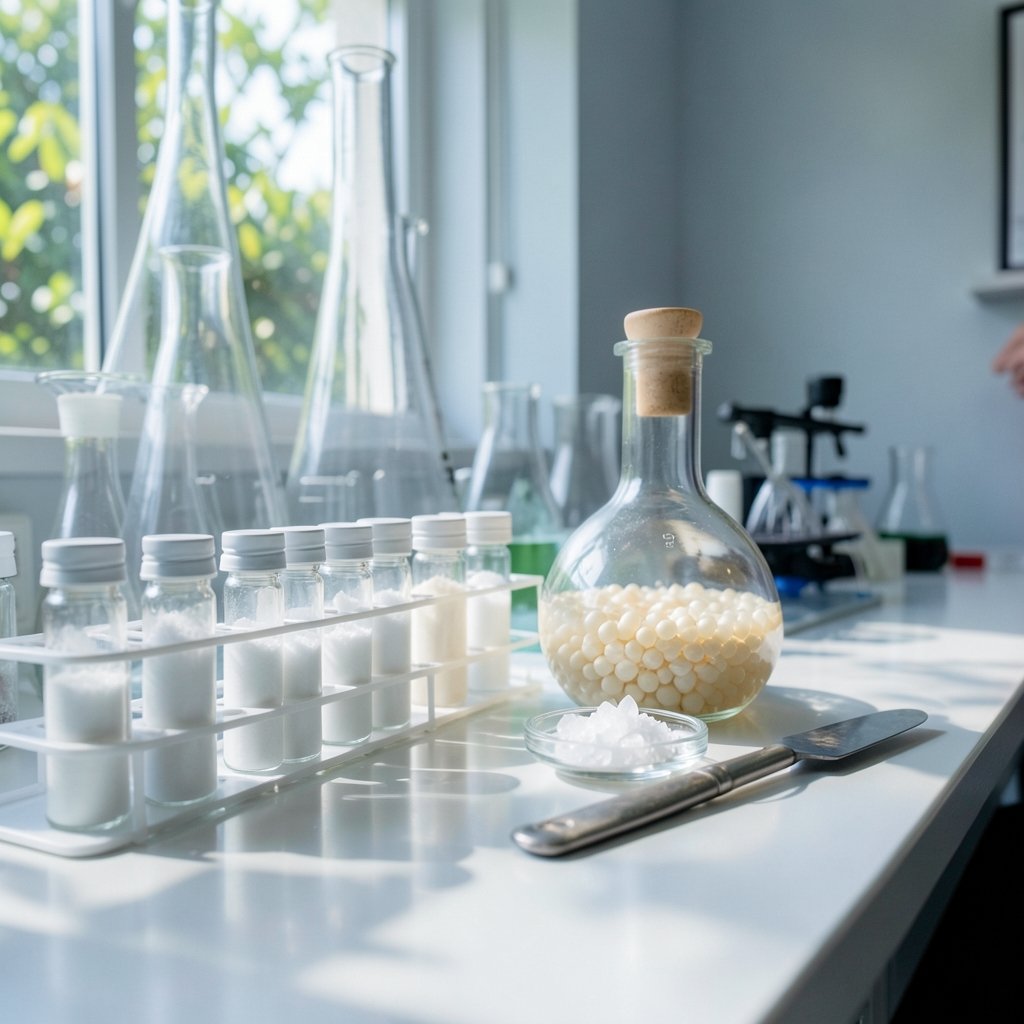
What do a diabetes drug worth billions, a wound-healing cream, and a frog’s skin have in common? They all hinge on peptides, the short chains of amino acids that sit somewhere between simple molecules and full proteins. Peptide science is the field that studies these chains: how to build them, how to measure them, how they behave in the body, and how to turn them into products that actually work. It is part chemistry, part biology, part manufacturing puzzle, and increasingly part regulatory headache.
This article walks through what peptides are, how they are made and analyzed, where they show up in medicine and consumer products, and where the science still trips people up. Expect practical detail rather than hype, because the gap between a promising peptide and a working product is usually wider than the marketing suggests.
What exactly counts as a peptide?

A peptide is a compound of two or more amino acids joined by peptide bonds, the links that form when the acid group of one amino acid reacts with the amine group of the next. That definition is deliberately broad. It covers a two-amino-acid dipeptide and a fifty-residue chain alike.
The usual dividing line between “peptide” and “protein” sits around 50 amino acids, but that is a convention, not a law of nature. Nobody audits a 49-residue chain to confirm it is still a peptide. What matters more in practice is behavior: short chains tend to be more stable, easier to synthesize, and more predictable than large folded proteins, which is precisely why drug developers like them.
Scientists write peptides using standard three-letter or one-letter amino acid codes, conventions maintained through international nomenclature work that stretches back decades. If you see “GG” or “Gly-Gly,” you are looking at a dipeptide of two glycines. Simple notation, enormous consequences for how the field communicates.
From resin beads to medicines: how peptides get made


Modern peptide science rests on a technique that changed everything. Solid-phase peptide synthesis (SPPS) was introduced by Bruce Merrifield in 1963, and it earned him the 1984 Nobel Prize in Chemistry. The idea is elegant: anchor the growing chain to an insoluble resin bead, wash away excess reagents after each step, and build the sequence one amino acid at a time. Because purification happens by washing rather than by isolating material after every reaction, the process became automatable.
SPPS is typically practical for chains up to roughly 50 residues. Beyond that, yields and purity tend to suffer. For longer targets, researchers often turn to native chemical ligation, developed in the 1990s, which joins smaller peptide fragments into a larger whole, or to recombinant expression, where cells do the manufacturing.
The practical limits nobody mentions in the brochure
Anyone who has spent time around a synthesis lab learns quickly that the theoretical elegance of SPPS meets messy reality. Common mistakes and what actually works:
- Assuming every sequence synthesizes equally well. Long stretches of hydrophobic residues or sequences prone to aggregation can fail badly. Experienced teams run small test syntheses before committing to scale.
- Skipping crude-analysis checks. Coupling failures create truncated sequences that can be hard to spot later. In-process monitoring saves weeks.
- Underestimating purification losses. A beautiful crude yield means little if reverse-phase purification removes half of it. Plan for it.
- Ignoring counterion and salt form. The same peptide as a different salt can behave differently in solubility and stability testing. Document it early.
None of this is exotic knowledge, but it is the difference between a project that ships and one that stalls.
How do you prove a peptide is what you think it is?
Characterization is where peptide science earns its credibility. Two methods anchor the field.
Edman degradation, introduced by Pehr Edman in 1950, removes amino acids one at a time from the N-terminus and identifies each in sequence. It remains a reference method for sequencing, though it struggles with blocked termini and long chains.
Mass spectrometry, especially LC-MS/MS, is the workhorse of modern analysis. It gives molecular weight confirmation and, through fragmentation patterns, sequence information. A peptide that passes mass spec and chromatographic purity checks is a peptide you can defend in a regulatory filing.
Here is a rough comparison of the two approaches:
| Method | Strength | Limitation |
|---|---|---|
| Edman degradation | Direct sequence readout from the N-terminus | Blocked termini stop it; impractical for long chains |
| LC-MS/MS | Sensitive, fast, works on mixtures | Requires interpretation; fragmentation can be ambiguous |
In practice, good labs use both plus chromatographic purity data. No single technique tells the whole story.
Peptides as drugs: insulin to GLP-1
Therapeutic peptides are not a new idea. Insulin, a 51-amino-acid peptide hormone, was isolated in 1921 and used clinically from 1922. It remains the foundational example of a peptide therapeutic and the reason the field took seriously the idea that a short chain could be a medicine.
The modern era looks different. Semaglutide, a GLP-1 receptor agonist peptide, was approved by the U.S. FDA in 2017 for type 2 diabetes. Tirzepatide, a dual GIP/GLP-1 receptor agonist, was approved in 2022. These drugs illustrate how much commercial and clinical weight peptides now carry, and they have pulled public attention toward the field in a way insulin never quite did.
Market-size figures for peptide therapeutics circulate widely and vary enormously by source and year, often landing in the tens of billions of dollars. Treat any single number with suspicion unless it comes with a dated, named source. The direction of travel is clear; the exact decimal is not.
Antimicrobial peptides and the slow road to the clinic
Antimicrobial peptides (AMPs) form part of innate immunity across many organisms, from insects to humans. Thousands have been catalogued, for instance in the Antimicrobial Peptide Database maintained at the University of Nebraska Medical Center. They attack microbes in ways that differ from conventional antibiotics, which makes them attractive against resistant strains.
The catch is translation. Despite decades of interest, few AMP drugs have reached approval as of the mid-2020s. Toxicity, stability in the body, and manufacturing cost all get in the way. The science is real; the products are scarce. Anyone claiming otherwise is overselling.
Regulation: drugs, biologics, and the compounding gray zone
In the United States, peptides can be regulated as drugs by the FDA or, in some cases, as biological products. That dual pathway creates friction, and the 2023–2024 debates over compounded GLP-1 peptides made the tension visible to the public. The core question is familiar: when does a peptide count as an approved medicine, and when is it a compounded preparation operating under different rules?
For readers following consumer products, the practical lesson is to check what regulatory category a peptide product falls into before trusting claims about it. A cosmetic peptide and an injectable peptide drug live in entirely different worlds of evidence.
Peptides beyond medicine: hair, skin, and the marketing problem
Peptides have spread into cosmetics and hair care, where the science is thinner and the claims are louder. The hair typing vocabulary that circulates online, from tight coils often discussed as 4c hair to looser waves categorized as 2b hair, gets attached to peptide-containing products with varying levels of supporting evidence. Some formulations have reasonable rationale behind them; many rely on the general prestige of the word “peptide” rather than on robust trials.
A useful habit: when a product leans on peptide science, ask which peptide, at what concentration, and with what study behind it. Vague appeals to “peptide technology” are a red flag. The same skepticism applies to the rows of products in a beauty aisle as to the row of supplement bottles in a pharmacy.
What actually works in practice
For anyone working with or evaluating peptides, a few habits separate good decisions from expensive ones:
- Match the method to the chain length. SPPS for shorter sequences, ligation or recombinant routes for longer ones. Forcing the wrong method wastes time.
- Demand characterization data. Mass spec confirmation plus purity data is the minimum. A certificate of analysis without raw data deserves scrutiny.
- Respect stability realities. Peptides degrade. Storage temperature, pH, and handling matter more than most people expect.
- Read the regulatory category first. It determines what evidence should exist.
- Be skeptical of borrowed authority. A peptide used in a drug is not automatically effective in a cream.
These are not secrets. They are the basics that get skipped when timelines tighten.
Conclusion
Peptide science sits at a genuinely interesting intersection: elegant chemistry from the 1960s, analytical methods from the 1950s, and a drug pipeline that has produced some of the most commercially significant medicines of the past decade. It also carries real limitations, from synthesis ceilings around 50 residues to the stubborn difficulty of turning antimicrobial peptides into approved products. The field rewards precision and punishes shortcuts. Whether the next breakthrough comes from metabolic medicine, immunology, or a cosmetics lab with unusually good evidence, the same rule applies: the peptide is only as good as the data behind it.
Frequently Asked Questions
What is the difference between a peptide and a protein?
The conventional boundary is around 50 amino acids, with shorter chains called peptides and longer ones called proteins. It is a convention rather than a strict rule, and the distinction is more about practical behavior, such as stability and ease of synthesis, than about a hard chemical line.
How are peptides made in the lab?
Most are built using solid-phase peptide synthesis, introduced by Bruce Merrifield in 1963, which assembles the chain on a resin bead one amino acid at a time. Chains longer than roughly 50 residues often require native chemical ligation or recombinant expression instead.
Are peptide drugs new?
No. Insulin, a 51-amino-acid peptide hormone, was isolated in 1921 and used clinically from 1922. The modern wave includes semaglutide, approved in 2017, and tirzepatide, approved in 2022, which brought peptides far more public attention.
Why are antimicrobial peptides not widely used as drugs yet?
Thousands of antimicrobial peptides have been catalogued, but few have reached approval as of the mid-2020s. Toxicity, stability inside the body, and manufacturing cost have all slowed translation from promising lab results to finished medicines.
How do scientists confirm a peptide’s identity?
Two standard methods dominate. Edman degradation, introduced in 1950, reads the sequence from the N-terminus one residue at a time. Mass spectrometry, particularly LC-MS/MS, confirms molecular weight and provides sequence information through fragmentation. Most rigorous work uses both.
Do peptides in skincare and hair products work the same way as peptide drugs?
No. A peptide that functions as an approved injectable drug is not automatically effective in a topical product. The relevant questions are which specific peptide is used, at what concentration, and whether solid studies support the claim. Vague references to peptide technology are worth questioning.
The gap between a compelling in vitro result and a reproducible clinical outcome remains the field’s central challenge, and it is unlikely to close on enthusiasm alone. What will move peptides forward is the same unglamorous work that built the drugs already on the market: rigorous characterization, honest stability data, and trials designed before the hype arrives. Researchers entering the field should expect to spend more time on purification and analytics than on elegant design, and that is not a failure of ambition but the nature of the discipline. For readers outside the lab, the takeaway is simpler. Peptides are neither miracle molecules nor marketing fiction; they are short chains of amino acids whose value depends entirely on the evidence assembled around them. Judge them the way you would judge any other scientific claim: by the data, the methods, and the willingness of their proponents to show both.









