


Can a 100-metre yacht ever be called green? That question sits behind every headline about the eco-friendly superyachts supposedly arriving in 2027. The honest answer is uncomfortable: no large motor yacht is environmentally neutral, and “eco-friendly” is not a regulated term anyone has to earn. What a buyer or charterer can do is separate the vessels with real engineering behind them from the ones with a press release and a leaf motif.
This guide takes a different route from the usual listicle. Rather than naming nine boats and dressing up unverified claims, it explains how the 2027 delivery class is being judged, what the credible propulsion options actually deliver, and the specific checks that expose marketing from substance. Where the wider luxury world has already learned these lessons, it is worth borrowing from it: the same scrutiny applied to eco luxury lodges and how to spot genuine sustainability applies almost word for word to yachts.
Why the 2027 delivery window matters more than any single hull
Shipyards work years ahead. A yacht handed over in 2027 was typically contracted around 2022 to 2024, which places it right in the period when methanol fuel cells, large battery banks and sail-assist systems moved from concept studies into actual build contracts. That makes the 2027 cohort the first genuinely interesting test of whether alternative propulsion survives contact with a real owner’s itinerary.
It also makes the cohort unusually hard to verify. Delivery dates slip. A yacht announced for 2027 can quietly become a 2028 or 2029 handover, and a “hybrid” label can mean anything from a full diesel-electric architecture to a small battery that powers the tender garage for twenty minutes. Anyone repeating a list of nine names without dated yard confirmation is guessing.
The practical takeaway: treat the 2027 window as a category to investigate, not a fixed roster to memorise. The vessels worth watching share identifiable technical traits, and those traits are what a buyer should be screening for.
What “eco-friendly” actually means on a superyacht
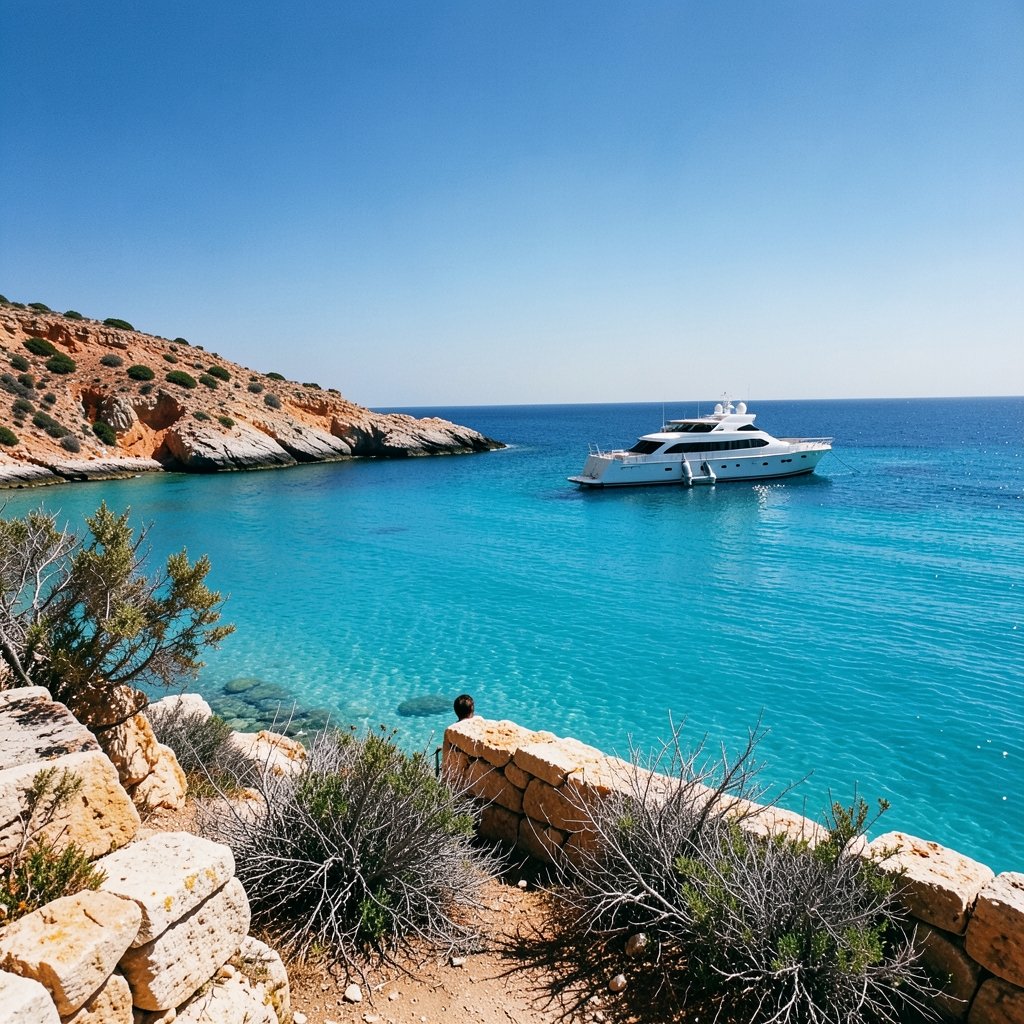
There is no single green badge for yachts. Instead, claims cluster into four buckets, and each one deserves a different level of trust.
| Claim type | What it usually means | How to verify it |
|---|---|---|
| Local emissions | Lower NOx and particulate matter near ports and anchorages | Engine tier certification and class notation |
| Greenhouse gas intensity | Lower CO2 per hour or per nautical mile | Yard technical release with stated baseline |
| Fuel flexibility | Built to run on methanol or another alternative fuel later | “Ready” notation from a classification society |
| Hotel load efficiency | Batteries and heat recovery cut generator running hours | System specification and rated capacity |
The first and fourth are the most defensible. A diesel-electric yacht with a serious battery bank really can sit at anchor overnight without generators running, which cuts noise, fumes and fuel burn in exactly the places people notice. The second is defensible only when the yard states what it is comparing against. The third is the most oversold: “methanol-ready” often means space and piping were reserved, not that the yacht will ever burn methanol.
Absolute emissions remain large regardless of architecture. A 100-metre vessel displaces enormous weight and carries substantial hotel load. The credible claims are relative, and they should always be attributed to whoever makes them, with a date attached.
The propulsion options, ranked by what they deliver today
Not all green technologies are at the same maturity. Here is how the main options stack up for a yacht delivered in 2027.
Diesel-electric hybrid
The most proven path. Generators produce electricity, which drives motors and charges batteries. Benefits are real: quieter anchoring, lower fuel burn at low load, and redundancy. The catch is weight and cost, plus the fact that a hybrid system only saves fuel if it is actually managed well. Poorly operated hybrids can burn more than a conventional setup.
Methanol fuel cells
The most talked-about option and the least proven at yacht scale. Methanol is easier to store than hydrogen and can be produced from renewable feedstocks. Fuel cells convert it to electricity with low local emissions. But the technology is early, the fuel supply chain at marinas is thin, and class rules are still maturing. A 2027 yacht with a genuine installed methanol fuel cell is a pioneer, which means it is also a testbed.
Sail-assist and kite systems
For sailing yachts and some motor yachts, automated sail or kite systems can offset propulsion load on passage. The savings depend entirely on route and weather. A transatlantic crossing benefits; a Mediterranean marina-hop does not.
Hydrogen
Elegant on paper, difficult in practice. Storage volume is the killer for a yacht that also wants tender garages and beach clubs. Expect hydrogen to appear in small auxiliary roles rather than as primary propulsion in this cohort.
For anyone comparing this sector with land-based hospitality, the trade-offs rhyme with what eco-friendly luxury resort destinations wrestle with: the greenest option is often the one designed around a specific place and use pattern, not the one with the longest feature list.
The verification checklist that separates substance from spin
This is the part most articles skip. If a 2027 delivery is described as eco-friendly, six questions will sort the serious projects from the noise.
- Who announced the delivery date, and when? A yard press release with a date is a primary source. A listicle is not.
- New build or refit? Refits are frequently mislabelled as “arriving.” A 1998 hull with new batteries is a refurbishment, not a new eco yacht.
- What is the propulsion architecture, stated technically? “Hybrid” is not an architecture. Diesel-electric with a named battery capacity is.
- Which classification society notation is claimed, and is it granted or merely targeted? A granted notation is verified by a third party. A target is an intention.
- Which emissions standard is met? Engine tier certification for NOx is checkable. Vague “low emission” language is not.
- What is the stated baseline for any CO2 saving? A percentage without a reference point is meaningless.
A useful rule of thumb: the more specific the numbers in a yard’s release, the more likely they survived an engineering review. Vague superlatives usually mean the detail is not flattering.
Common mistakes buyers and charterers make
The mistakes repeat across the sector, and they are avoidable.
Mistaking fuel flexibility for fuel use. A yacht described as ready for alternative fuel may never run on it. Ask what it will actually burn on delivery.
Ignoring the operational side. The greenest architecture fails in the hands of a crew trained on conventional systems. Ask about crew training and system management alongside the hardware.
Forgetting the tender and toys. A yacht’s environmental footprint includes a fleet of tenders, jet skis and generators. Some of the most credible 2027 projects electrify the whole toy box as well as the main engines.
Confusing size with virtue. A smaller yacht with a well-managed hybrid system can outperform a giant with a token battery. Judge the design, not the length.
Skipping the paperwork. Class notations, engine certificates and yard technical releases are dull and decisive. Read them before believing a brochure.
This mirrors a pattern seen across luxury fashion, where buyers who map out where to buy eco luxury fashion online quickly learn that certification and supply-chain transparency beat branding every time. The yacht world is a decade behind, but the logic is identical.
What to watch across the 2027 cohort
Rather than a fixed list of nine names, watch for nine signals. A 2027 delivery that ticks most of these is genuinely notable.
- A dated yard press release confirming the handover year
- A named classification society notation for battery or fuel-cell power, granted rather than targeted
- A stated battery capacity in kWh rather than “large battery bank”
- Engine tier certification for local emissions
- A stated CO2 baseline and the route or profile it assumes
- Shore-power capability at a capacity sufficient for silent marina stays
- Heat recovery specified for hotel load
- Electrified tenders and water toys
- A crew training and system-management plan published alongside the technical spec
Projects that combine several of these are the ones worth following into 2028 and beyond. The rest will quietly rebrand.
The same pattern shows up in other design-led industries entering a sustainability transition. Bridal and couture houses are currently navigating the gap between green claims and verifiable practice, and the 2027 bridal hair trends that will actually work down the aisle illustrate how practical, tested choices outlast trend-driven ones. The runway side has its own version of the problem, visible in what haute couture week 2027 trends suggest to expect from the runway, where craftsmanship claims are increasingly audited rather than accepted.
The honest caveat nobody puts in the brochure
A superyacht is a high-impact object. It is built from composites and metals, it burns fuel, and it spends much of its life in sensitive coastal waters. No propulsion system changes that fundamental equation.
What alternative technology can do is reduce local air pollution in the places yachts congregate, cut fuel burn at anchor and on low-load passages, and create the option to switch fuels as supply chains mature. Those are worthwhile, measurable gains. They are not the same as being green in any absolute sense.
Owners and charterers who understand this distinction make better decisions. They ask for the numbers, they read the class notation, and they discount the adjectives. They also tend to get more out of their yachts, because a well-engineered hybrid system genuinely improves the experience at anchor.
For a broader read on how genuine eco-luxury positions itself in practice, the case of how the Ulaman eco luxury resort in Bali delivers on its eco stay promise is instructive: specificity, not slogans, is what convinces.
Conclusion
The eco-friendly superyachts arriving in 2027 are best understood as a test cohort rather than a shopping list. The 2027 window captures the first generation of yachts where methanol fuel cells, substantial battery banks and sail-assist moved from studies into contracts, which makes it genuinely significant. It also makes it a magnet for unverified claims, because the delivery dates are far enough out that almost anything can be asserted without contradiction.
The practical path is unglamorous. Confirm the delivery year from a dated yard release. Check whether the project is a new build or a refit. Demand the propulsion architecture in technical terms. Verify that class notations are granted rather than targeted. Ask what baseline any CO2 figure uses. Then ask how the crew will operate the system, because hardware without management is decoration.
Do that, and the nine most interesting 2027 deliveries will identify themselves. Skip it, and the brochure wins. The gap between those two outcomes is the whole story of sustainable yachting right now.
FAQ
What counts as an eco-friendly superyacht?
There is no regulated definition, so the term is a marketing label rather than a certification. In practice it describes yachts with lower local emissions, reduced fuel burn at anchor, or the ability to run on alternative fuels. The defensible claims are relative and should be backed by technical specifications and third-party class notations rather than adjectives.
Are any of the 2027 eco-friendly superyachts actually confirmed?
Delivery years for large yachts slip routinely, so any specific 2027 date should be treated as provisional until a yard confirms it in a dated release. The safer approach is to track the technical signals, such as granted class notations and stated battery capacities, rather than relying on a fixed list of names circulating online.
Is a hybrid superyacht really greener than a conventional one?
Usually, but not automatically. A diesel-electric hybrid with a substantial battery bank can cut generator running hours at anchor and reduce fuel burn at low load, which measurably lowers local emissions and noise. However, a poorly managed hybrid can burn more fuel than a conventional setup, so crew training and system management matter as much as the hardware.
What does methanol-ready mean on a yacht?
It typically means the design reserved space, weight allowance and piping for methanol tanks and fuel systems, so the yacht could be converted later. It does not mean the yacht will run on methanol when delivered. Ask specifically what fuel the vessel will burn on handover and whether any conversion contract exists.
How can a buyer verify a green claim on a new yacht?
Ask for four things: a dated yard press release confirming the delivery year, the propulsion architecture stated technically with battery capacity in kWh, the classification society notation and whether it is granted or merely targeted, and the baseline used for any CO2 saving figure. If any of these is missing, the claim is unverified.
Do these yachts produce zero emissions?
No. A large motor yacht has substantial absolute emissions regardless of propulsion architecture, because of its displacement, hotel load and construction materials. Alternative systems reduce local air pollution and can lower fuel burn in specific operating modes, but they do not make a superyacht emissions-free.









