

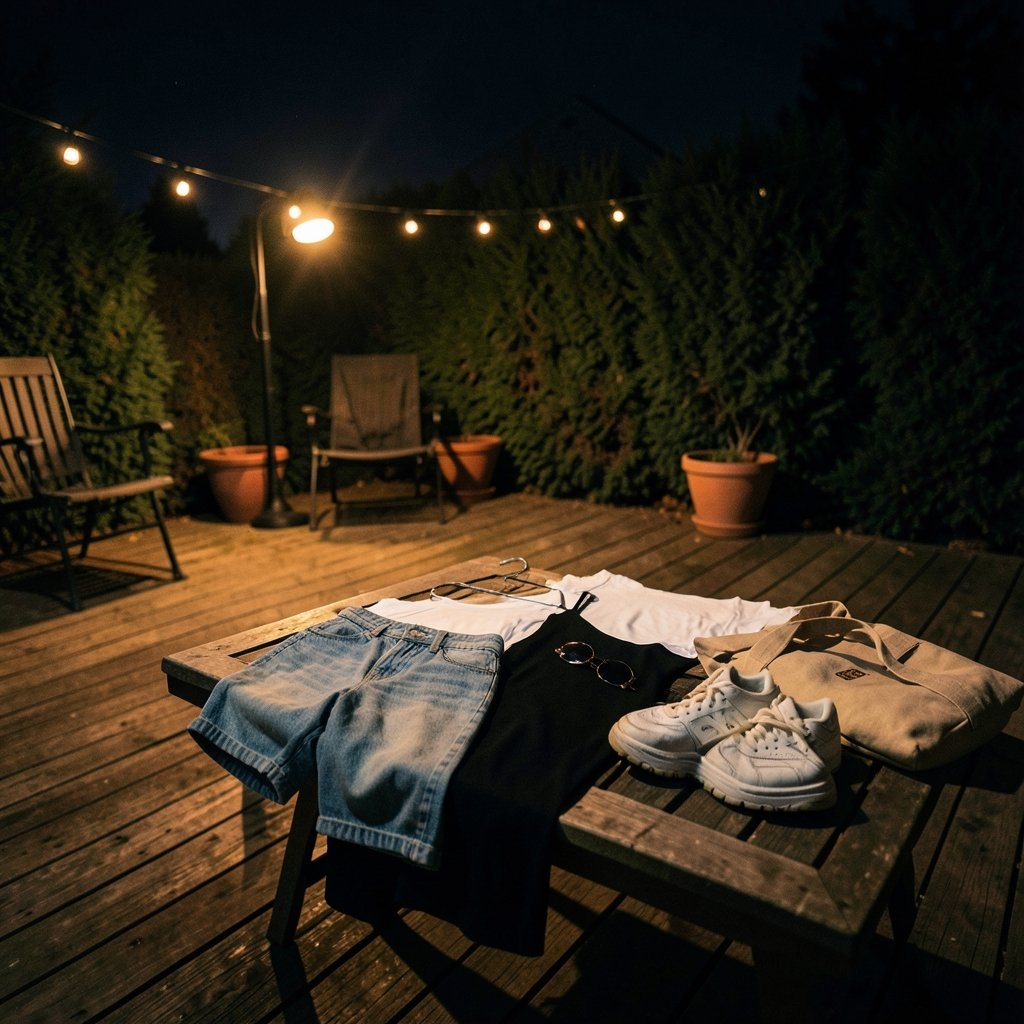
What if the easiest way to dress for hot weather was already figured out thirty years ago? That is the strange gift of 1990s summer style. The decade gave us baggy denim, slip dresses over T-shirts, tiny sunglasses, and shoes that looked like they belonged in a toy box. It was comfortable, a little messy, and completely unbothered by polish. And right now, those same pieces are back on the street, in stores, and in group chats everywhere.
The trick is knowing which parts to bring back and which parts to leave in the photo album. This guide walks through the real building blocks of 90s summer outfits, what each piece looked like in its original moment, and how to wear it today so it reads as style rather than a costume.
Why 1990s Summer Style Still Works
Fashion history describes the 1990s as a turn away from the broad-shouldered, power-dressing silhouette of the 1980s. In its place came looser, more casual, almost anti-fashion dressing. Grunge, minimalism, and streetwear became the major currents of the decade.
That shift matters for summer. When clothes get loose and casual, they also get breathable. A baggy cotton tee, wide shorts, and flat sandals handle heat better than anything structured. The decade’s designers accidentally solved hot-weather dressing by caring less about tailoring and more about attitude.
The other reason it endures is that 90s style was built from pieces people already owned: jeans, tank tops, sneakers, baseball caps. It was never a closed club. You did not need a special wardrobe. You needed to stop ironing.
The Grunge Summer: Flannel, Band Tees, and Ripped Denim

Grunge moved from the Seattle music scene into fashion magazines and designer collections around 1992 to 1993. Marc Jacobs showed a grunge collection for Perry Ellis for the Spring/Summer 1993 season, and it is widely cited as the moment grunge hit high fashion.
In summer, grunge translated into a few recognizable moves:
- Flannel shirts worn open over a tank top, or tied around the waist
- Ripped and distressed jeans, often baggy, sometimes cut into shorts
- Band T-shirts, faded and oversized
- Dr. Martens boots, which many people wore even in July
Practical tip: the boots are where modern wearers usually stumble. A full-height boot in August is a recipe for misery. Swap in a chunky sneaker or a platform sandal and keep the rest of the outfit intact. The attitude survives; the blisters do not.
Common mistake: buying pre-ripped denim that looks too tidy. Real 90s grunge was genuinely worn out, with fraying at the hem and uneven tears. If a pair looks machine-perfect, rough up the edges yourself with a nail file or a pair of scissors.
Minimalism and the Slip Dress Over a T-Shirt
While grunge got loud, a quieter look ran alongside it. A pared-back minimalist style, associated with designers such as Calvin Klein, defined the mid-1990s. That meant simple slip dresses, tank tops, straight-leg trousers, and neutral colors.
The signature summer styling was the slip dress worn over a plain white T-shirt. It sounds odd until you try it. The T-shirt makes a thin, slippery dress wearable for daytime, and the dress adds a little shine on top. It works in almost any color combination, but the cleanest version is a black or navy slip over a white tee.
Here is how to get it right in practice:
- Choose a slip dress that hits at the knee or just below.
- Pick a fitted cotton tee, not an oversized one, so the layers lie flat.
- Add flat sandals or chunky sneakers.
- Keep accessories small and simple.
The mistake people make is choosing a slip dress that is too tight. The 90s version skimmed the body; it did not grip it. Size up if you are unsure.
Denim in Every Form
Denim was the backbone of the decade’s casual summer wear. Baggy and wide-leg jeans, overalls (dungarees), denim shorts, and denim jackets all appeared through the 1990s. Precise peak years vary by source, so treat denim as a decade-wide trend rather than a single dated moment.
For summer, the most useful pieces are:
| Piece | How it was worn in the 90s | Modern update |
|---|---|---|
| Baggy jeans | Low-slung, long, often cuffed | Mid-rise, cropped at the ankle |
| Denim shorts | Long and loose, or cut-off and frayed | High-rise, mid-thigh |
| Overalls | One bib strap undone | Fitted through the waist |
| Denim jacket | Oversized, sleeves pushed up | Cropped or boxy |
One practical note on overalls: the undone-strap look is iconic, but it only works if the bib sits flat against your chest. If the straps are too long, the bib will flop forward all day. Take them up an inch at the buckle.
If you are shopping for a family and want smaller versions of these classics, there are plenty of ideas in this collection of cute summer outfits for infants, and the newborn summer outfits tag covers the tiniest sizes.
Footwear: Chunky Sneakers, Platforms, and Jelly Sandals
Footwear is where the decade had the most fun. Chunky sneakers, platform shoes, Dr. Martens boots, and sandals, including jelly sandals and Birkenstock-style styles, are commonly listed among 1990s summer shoes. These lists tend to come from fashion retrospectives rather than original sources, so treat them as a helpful map rather than a strict rule.
What actually works today:
- Chunky sneakers with baggy shorts or a slip dress
- Platform sandals with wide-leg jeans
- Jelly sandals for the pool or beach, not for long walks
- Flat leather sandals with almost everything
The classic error is buying platform shoes a full size too small because they look bulky. Platforms do not stretch. Try them on late in the day when your feet are at their widest.
Accessories That Make the Outfit
The 90s accessory list is long and instantly recognizable. Small oval or rectangular sunglasses, bucket hats, baseball caps, chokers, scrunchies, and small shoulder bags all belong to the decade. The Fendi Baguette is usually dated to 1997, and the small-shoulder-bag shape it popularized became a defining late-90s item.
A few notes from experience:
- Tiny sunglasses look great in photos and offer very little sun protection. Wear them for style and keep a proper pair in your bag.
- Bucket hats are the most practical 90s accessory for real heat. Choose cotton over synthetic fabric.
- Scrunchies are back and genuinely useful if you have long hair in humid weather.
- Chokers are the piece most likely to make an outfit look like a costume. Keep them thin and simple.
If you are building a whole summer wardrobe rather than one outfit, the summer wedding outfits tag is a good place to see how these ideas translate into dressier settings.
Athleisure and Sportswear
Tracksuits, cycling shorts, sports bras worn as outerwear, and logo-heavy sportswear all grew through the 1990s, helped along by sportswear marketing and the crossover into everyday dressing. For summer, cycling shorts are the most useful survivor of that trend.
The formula is simple: cycling shorts, an oversized tee or sweatshirt, and chunky sneakers. It is comfortable, it travels well, and it works for almost any casual plan.
One warning: cycling shorts are unforgiving about fit. Look for a pair with a wide, flat waistband and a seam that sits flat rather than digging in. Cheap versions roll down constantly, which is the fastest way to ruin an otherwise easy outfit.
Music Scenes and Subculture Style
Hip-hop, grunge, rave, and Britpop each produced distinct summer looks. Hip-hop style leaned on oversized sportswear and Timberland-style boots. Rave culture brought bright, casual clubwear. These scenes are the reason 90s fashion feels so varied; there was no single look, just several loud conversations happening at once.
For a modern summer outfit, pick one scene and commit. Mixing rave neon with grunge flannel usually reads as confused rather than creative.
Getting the Look Right Today
The biggest risk with any revival is looking like you rented the outfit. A few practical rules keep 90s summer style looking current:
- Limit yourself to two or three 90s pieces per outfit. A slip dress plus chunky sneakers is enough. Adding a choker, bucket hat, and tiny sunglasses pushes it into costume territory.
- Keep the fit modern. Baggy was the point in the 90s, but today’s version is usually one size looser, not three.
- Choose one loud element. If the jeans are wide, keep the top simple. If the sunglasses are tiny and bright, keep everything else quiet.
- Buy fabric that breathes. Cotton, linen, and denim handle heat. Cheap polyester does not, no matter how good it looks on the hanger.
- Skip the literal replicas. A real vintage band tee beats a printed reproduction almost every time.
If you are planning a trip and want to test these looks somewhere warm, the European summer vacations tag has plenty of packing inspiration. And if your summer calendar includes a formal event, this guide to guest outfit ideas for a summer wedding shows how to adapt the decade’s cleaner minimalist pieces into something dressy, while the men’s summer wedding attire tag covers the other side of the dress code.
Common Mistakes to Avoid
A few traps come up again and again when people try 90s summer style for the first time.
Buying everything at once. The decade had many moods. Pick the one that suits your actual life, whether that is minimalist slip dresses or baggy denim, and build slowly.
Ignoring proportions. Baggy on top needs something fitted on the bottom, and the reverse. All-baggy can work, but it takes deliberate styling and often a belt.
Forgetting sun protection. Tiny sunglasses and bucket hats are style choices, not sun safety. Wear sunscreen and keep a real hat handy.
Treating vintage as automatically better. Genuine 90s denim is often stiff and oddly sized. Modern reproductions frequently fit better. Buy what fits, not what is oldest.
Overdoing the accessories. The decade’s accessories were fun because they were worn sparingly. Three at once is a lot.
How to Shop for 90s Summer Pieces
Thrift stores and vintage shops are the obvious first stop, but they take patience. Go in with a short list: one pair of baggy jeans, one slip dress, one oversized tee. Try everything on, because 90s sizing runs small and inconsistent.
For new pieces, look for brands that cut their denim wide and their tees boxy. Check the fabric content before you buy. A heavyweight cotton tee will hold its shape through a hot day; a thin one will cling and sag by lunch.
One small tip that saves time: measure a pair of jeans you already like, then carry those measurements on your phone. Vintage denim is rarely labeled accurately, and a tape measure settles arguments faster than trying on six pairs.
Conclusion
The appeal of 90s summer outfits is not nostalgia for its own sake. It is that the decade solved a real problem: how to dress well when it is too hot to think. Loose denim, plain tees, slip dresses, and flat shoes are comfortable, forgiving, and easy to combine. The style was never about perfection. It was about looking like you got dressed in thirty seconds and did not care.
Start with two or three pieces that genuinely suit your life. Wear them until they feel like yours. That relaxed confidence, more than any specific item, is what made the decade’s style work in the first place.
FAQ
What were the most popular summer outfits in the 1990s?
The most common 90s summer looks were baggy denim shorts or jeans with an oversized T-shirt, slip dresses worn over plain white tees, cycling shorts with a sweatshirt, and flannel shirts worn open over tank tops. Footwear usually meant chunky sneakers, platform sandals, or Dr. Martens boots.
How do I wear 90s style without looking like I’m in costume?
Limit yourself to two or three 90s pieces per outfit and keep the fit modern. One statement item, such as a slip dress or baggy jeans, is enough. Avoid stacking every accessory from the decade at once, and skip literal replicas in favor of pieces that fit you properly.
Are 90s summer outfits back in style?
Yes. 1990s styles have been repeatedly revived in later fashion cycles, especially from the late 2010s onward. Baggy denim, slip dresses, tiny sunglasses, and chunky sneakers are all widely available again in both vintage shops and new collections.
What shoes go with 90s summer outfits?
Chunky sneakers are the safest choice and work with almost everything. Platform sandals suit wide-leg jeans, flat leather sandals pair well with slip dresses, and jelly sandals are best kept for the beach or pool. Dr. Martens boots are authentic but impractical in real heat.
What accessories defined 90s summer fashion?
Small oval or rectangular sunglasses, bucket hats, baseball caps, chokers, scrunchies, and small shoulder bags are the most recognizable 90s accessories. The small shoulder bag shape was popularized in the late 1990s and remains easy to wear today.
Where can I find genuine 90s clothing?
Thrift stores, vintage shops, and online resale marketplaces are the main sources. Bring a tape measure or save your measurements on your phone, since 90s sizing is inconsistent and rarely labeled accurately. Modern reproductions are often a better fit if you want a specific size.









