

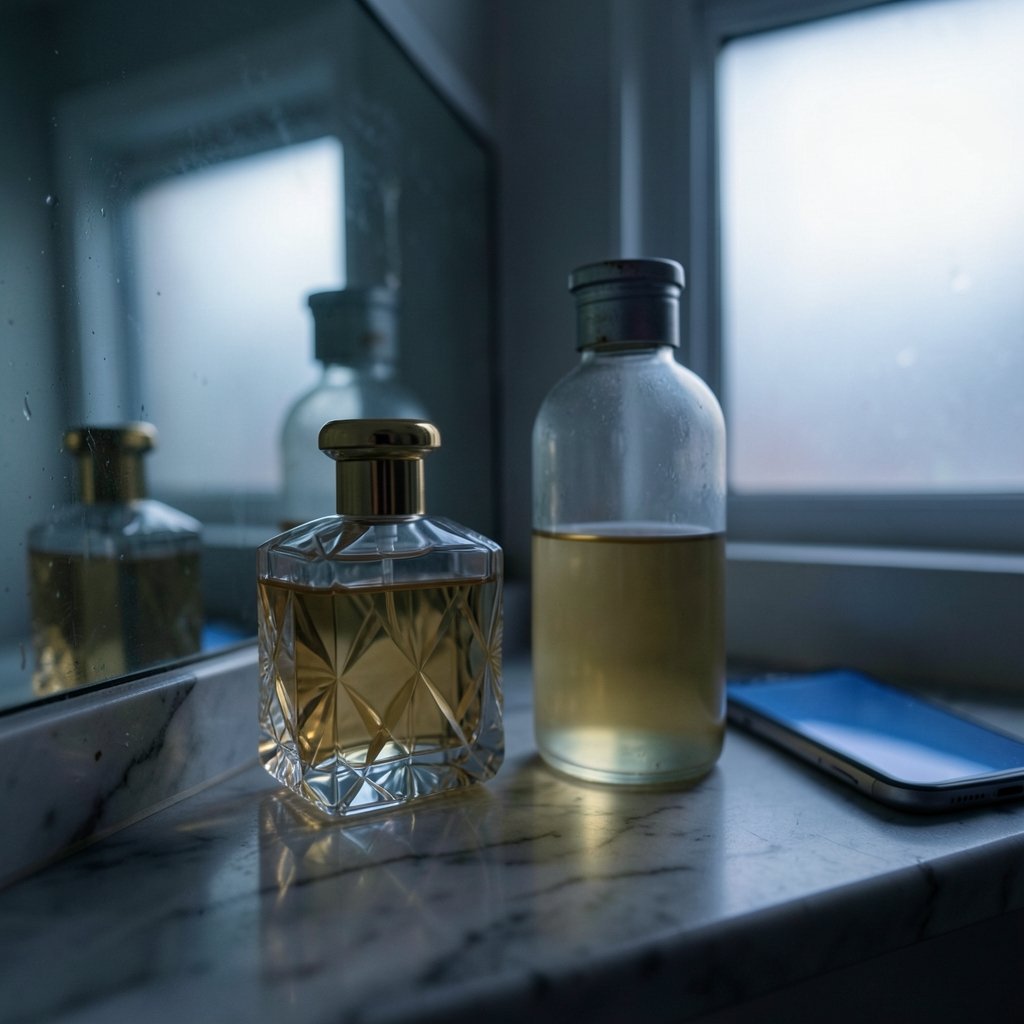
Why does a 50ml bottle of scent cost $40 at a pharmacy counter and $400 three doors down, when both smell pleasant on a paper strip? The answer has surprisingly little to do with how good the perfume actually is. Luxury fragrance is a business of licensing deals, ingredient economics, regulatory limits, and carefully managed scarcity. Understanding how those pieces fit together changes the way you shop, collect, and judge a bottle.
What “luxury fragrance” actually means
There is no official definition. Market researchers split the category into prestige (sold through department stores, specialty retailers, and brand boutiques) and mass (drugstores, discount chains, direct sales). The two camps use different methods, so their numbers rarely line up. A “luxury” fragrance, in practical terms, is one sold through selective distribution at a price point that signals exclusivity, backed by a brand whose name carries weight beyond the perfume aisle.
That definition is deliberately loose, and the industry likes it that way. It lets a fashion house sell a $250 eau de parfum next to a $2,000 handbag while a specialist company quietly handles the actual juice.
The licensing model nobody tells you about

Here is the fact that surprises most shoppers: many designer fragrances are not made by the designer. Fashion houses frequently license their scent business to large beauty groups, which handle formulation, manufacturing, distribution, and marketing in exchange for royalties.
| What the brand contributes | What the licensee contributes |
|---|---|
| Name, logo, brand image | Perfumer briefs and formula development |
| Creative direction and approval | Bottle manufacturing and filling |
| Marketing imagery and campaigns | Distribution, logistics, retail relationships |
| Royalty income | Profit and loss on the scent line |
This is not a scandal. It is a long-standing structure that lets a couture house earn from fragrance without building a factory. But it does mean the word “luxury” on the box describes the brand, not necessarily the supply chain. A handful of groups hold substantial shares of the prestige market, and several of them own the licences for multiple competing designer names.
The practical takeaway: if you love how a designer scent smells, buy it for the smell. Do not assume the house that signs the cheque also chose the formula.
Niche houses and the tier above prestige
Since roughly the 2000s, niche perfumery has grown into a premium tier of its own, with higher prices and tighter distribution. Houses such as Creed, Byredo, Le Labo, Diptyque, and Frederic Malle built reputations on unusual compositions, limited retail, and storytelling about raw materials.
The niche tier has also proved attractive to the big groups. Le Labo was acquired by Estée Lauder (announced 2014), Byredo by Puig (announced 2022), and Creed by Kering (announced 2023). Those announcement dates are worth remembering when someone claims a niche brand is “independent.” Independence is often a phase, not a permanent state.
For buyers, the niche tier offers something concrete: fewer focus-group compromises. A mass-market launch has to appeal to a very wide audience. A niche release can afford to be strange. If you want a scent that does not smell like everyone’s office, that is where the odds improve.
Why the juice costs what it costs
Natural raw materials drive cost in ways most shoppers never see. Rose, jasmine, oud, sandalwood, and iris are agricultural products. Harvests vary. Prices swing. Supply can tighten for reasons that have nothing to do with perfume.
The industry’s response is synthetics and captive molecules, which stabilise both cost and supply. A captive molecule is one developed and often patented by a single fragrance house, meaning competitors cannot use it. This is one reason two perfumes can smell similar but not identical.
Two myths worth retiring:
- “Natural is always better.” Natural materials can be inconsistent, expensive, and occasionally more allergenic than synthetic alternatives.
- “Expensive means higher concentration.” Price reflects brand positioning, packaging, marketing, and distribution as much as the juice inside. A costly bottle is not automatically a stronger one.
What actually works when judging value: compare concentration labels (eau de toilette versus eau de parfum versus parfum), test on skin rather than paper, and give a scent at least four hours before deciding. Paper strips lie. Skin chemistry does not.
The rules behind the formula
Luxury fragrance is heavily regulated, and that shapes what perfumers can even put in a bottle.
In the European Union, cosmetics including perfume fall under Regulation (EC) No 1223/2009. Allergen labelling rules have been under revision, and the EU’s Scientific Committee on Consumer Safety has assessed fragrance allergens. Separately, the International Fragrance Association publishes the IFRA Standards, which set use limits for many materials. These are industry standards rather than law, though regulators often reference them.
In the United States, fragrance is regulated by the FDA under the FD&C Act and the Fair Packaging and Labeling Act. Notably, “fragrance” can appear on an ingredient list as a single generic term, which is the root of a long-running transparency argument.
What this means in practice: reformulations are common and usually not announced. If a beloved scent suddenly smells thinner, a restricted material may have been reduced or replaced. Buying a backup bottle of a formula you love is not paranoia. It is sensible.
Transparency, “clean” claims, and what they are worth
Since the 2010s, some brands have published fuller ingredient lists and marketed “clean fragrance.” There is no single legal definition of “clean” in fragrance. The term is a marketing category, not a standard. Two brands using it may mean completely different things.
A useful habit: read the actual ingredient list rather than the front of the box. If a brand publishes a full breakdown, that is a genuine signal of confidence. If it only says “free from” without saying what is inside, treat the claim as advertising.
Counterfeiting is the other side of this coin. Luxury fragrance is a frequent target for counterfeiters, and enforcement falls to brands and customs authorities. The practical defences are boring but effective: buy from authorised retailers, be suspicious of prices far below market, and check batch codes and packaging quality. A discount that looks too good usually is.
Building a collection that actually works
First-hand experience in this category tends to produce the same advice repeatedly, and it is not about buying more.
Sample before you commit. Decants and discovery sets cost a fraction of a full bottle and tell you far more than a department store spritz.
Test at the right time. Smell fragrances before you have eaten heavily or applied scented lotion. Your nose fatigues quickly, so cap yourself at three or four scents per visit.
Store it properly. Heat, light, and humidity degrade perfume. A dark cupboard beats a sunny bathroom shelf every time. Keep the box if you have space.
Learn your own taste patterns. Note which families you return to (citrus, woods, orientals, florals) and which notes you consistently dislike. This narrows the field fast.
If you are furnishing a home to match a considered lifestyle, scent is part of the same picture as lighting and texture. Guides to luxury home fragrance and to luxury home scents for every room are useful companions to a personal fragrance wardrobe, because the same principles of restraint and quality apply. Readers building a broader set of picks often start with luxury home fragrances and the best options for each room before committing to full sizes.
Where luxury fragrance sits in a wider luxury market
Fragrance is often the entry point to a luxury brand. It is the most affordable item in the boutique, which makes it a marketing tool as much as a product. That dynamic explains a lot of pricing behaviour.
It also explains why the category keeps expanding into adjacent areas. A brand that sells you a candle may later sell you a diffuser, a body line, or a home collection. The logic is consistent across categories: a single aesthetic, applied broadly. The same thinking drives luxury home fragrance lines that pair scented candles with diffusers, and it is visible in how Italian luxury fashion houses extend their identity into scent without ever making the perfume themselves. Even luxury remodeling services get pulled into the conversation, because a dressing room or spa bathroom is where a fragrance collection actually lives.
The pattern to notice: luxury brands sell coherence. You are buying a consistent point of view, and the perfume is one expression of it.
Common mistakes that cost money
A few errors show up again and again among people new to the category.
- Buying on the first spray. Top notes evaporate within minutes. Judge the dry-down, not the opening.
- Assuming stronger equals better. A loud fragrance is not a sophisticated one. Sillage and longevity are separate qualities from quality.
- Ignoring concentration. Eau de toilette, eau de parfum, and parfum are different products with different performance. Compare like with like.
- Trusting the price tag as a quality signal. It is a positioning signal. Sometimes the two align; often they do not.
- Skipping the return policy check. Some retailers allow returns on opened fragrance, many do not. Ask before you buy.
Conclusion
Luxury fragrance is a genuine craft and a genuine business, and the two are tangled together. The perfumer’s art is real. So are the licensing deals, the harvest-driven ingredient costs, the regulatory limits, and the marketing machinery that turns a scent into a status object. Knowing how the pieces fit does not ruin the pleasure of a good bottle. It sharpens your judgment, which is exactly what you want when a single purchase can cost as much as a week’s groceries. Buy for the smell, test on skin, store it dark, and stay sceptical of any word on the box that has no legal definition.
Frequently asked questions
Is luxury fragrance actually better than drugstore fragrance?
Not automatically. Price reflects brand positioning, packaging, and distribution as much as the formula. Some inexpensive scents use excellent materials, and some expensive ones rely on marketing. The reliable test is skin testing over several hours, not the price tag.
Why do designer brands license their perfumes to other companies?
Building a fragrance manufacturing and distribution operation is expensive and specialised. Licensing lets a fashion house earn royalties while a beauty group handles formulation, production, and retail relationships. The brand supplies the name and creative direction; the licensee runs the business.
What is the difference between prestige and mass fragrance?
Prestige fragrance is sold through department stores, specialty retailers, and brand boutiques at higher price points. Mass fragrance sells through drugstores, discount chains, and direct sales. Different research firms define the split differently, so their figures are not directly comparable.
Does “clean fragrance” mean anything official?
No. There is no single legal definition of “clean” in fragrance, so the term means whatever each brand decides. Some brands publish full ingredient lists, which is a meaningful signal. Others use “free from” claims without disclosing what is inside.
Why does my favourite perfume smell different than it used to?
Reformulation is common and usually unannounced. Restrictions on certain materials, supply changes, and cost pressures can all lead a brand to adjust a formula. Buying a backup bottle of a version you love is a reasonable precaution.
How should I store luxury fragrance so it lasts?
Keep it away from heat, light, and humidity. A dark cupboard is better than a bathroom shelf, and keeping the original box slows degradation. A bottle stored well can stay in good condition for years; one left in sunlight can turn within months.









