

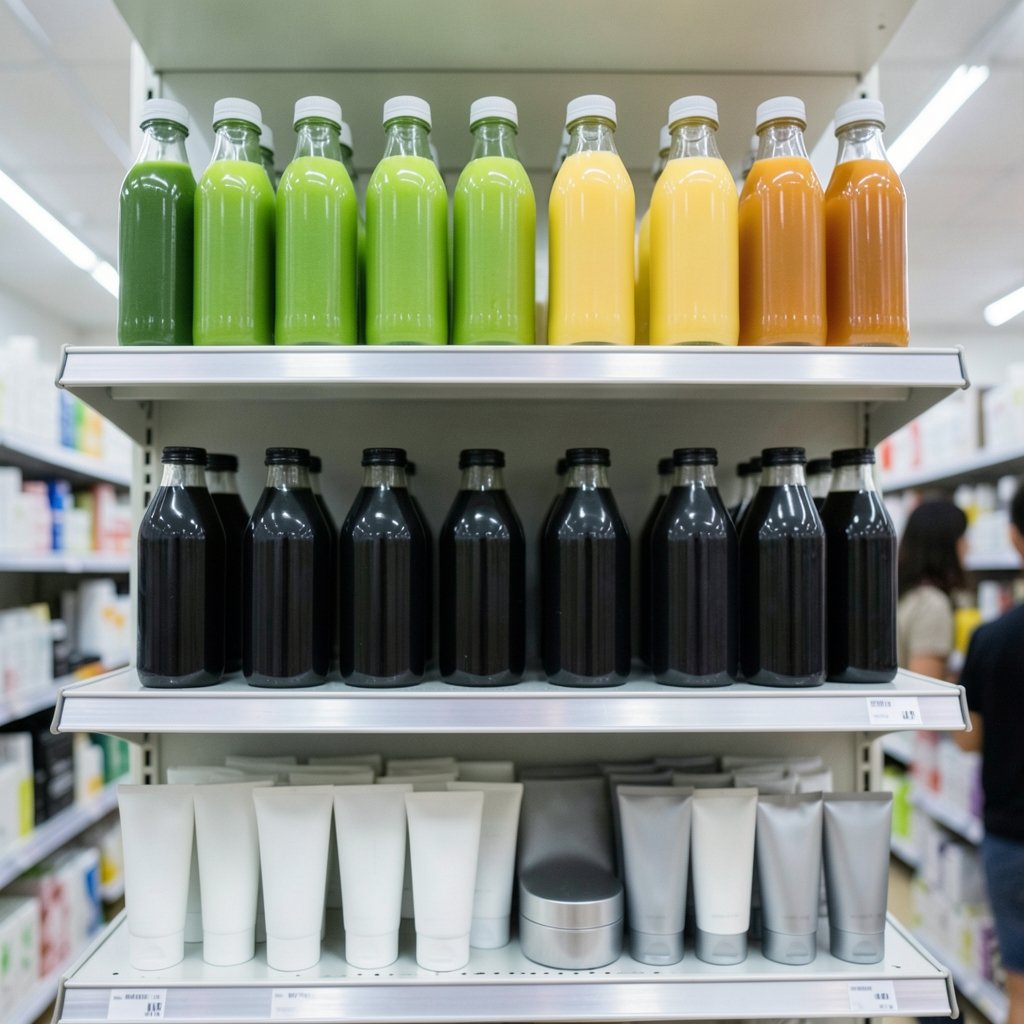
What happens when you type a year into a search box next to a word that has no legal definition? That is essentially what “cleanse 2021” asks. The phrase pulls together two very different worlds that peaked around the same time: the diet detox aisle, with its teas, juices, and “14-day resets,” and the skincare shelf, with its “clean beauty” labels and promises of purity. Both leaned on the same instinct, the idea that the body and the skin need to be scrubbed of something modern and invisible. Both also ran into the same problem in 2021, which is that nobody could quite agree on what the words meant.
This piece looks at what cleanse culture actually looked like that year, what the evidence says, where the marketing got ahead of the science, and how to read a “detox” or “clean” label without getting taken for a ride.
Why “cleanse” has no real definition
Here is the first thing to know, and it surprises a lot of people: in the United States, “detox” and “cleanse” are not defined terms on food or supplement labels. The Food and Drug Administration has no formal definition for either one. That means a company can print “detox” on a box of tea without meeting any standard, because there is no standard to meet.
The same goes for “clean beauty.” The FDA regulates cosmetics for safety and labeling, but it does not recognize “clean” as a category. In the European Union, cosmetic products fall under Regulation (EC) No 1223/2009, which has been in force since 2013 and sets safety and labeling rules across the bloc. That regulation does not define “clean” either. So when a serum is labeled “clean,” the word is doing marketing work, not regulatory work. (Buzz cut trimmers pick one that cuts clean not hot)
That gap is the whole story of cleanse 2021 in miniature. A vague word plus a wellness-hungry audience plus social media equals a very large market built on very little agreed meaning.
The diet side: teas, juices, and the 14-day reset

The 2021 cleanse aisle was crowded. Detox teas, juice fasts, “gut resets,” charcoal lemonades, and multi-day programs all promised to flush out toxins and leave you lighter and clearer. Many were sold through influencers, often with before-and-after photos and discount codes.
The science behind the promise is thin. A widely cited review by Klein and Kiat, published in the Journal of Human Nutrition and Dietetics in 2015, found no compelling evidence that commercial detox diets eliminate toxins, and noted that some carry risks. That review predates 2021, but nothing about the products changed to make the older conclusion outdated. The physiology has not moved either. The liver and kidneys handle detoxification, and no diet has been shown to “boost” that process in healthy people. Public health guidance, including from the NHS, has long described detox diets as unnecessary for most people.
The laxative problem
One of the more concrete risks in the diet-cleanse world is ingredient-based. Some detox teas and cleanses contain laxatives such as senna, which can cause dehydration and electrolyte imbalance. This shows up in case reports and poison-control guidance, and it is not a fringe concern. If a tea promises dramatic results and delivers cramping and urgency, the mechanism is often not “detoxification” but a laxative effect.
In practice, the tell is simple: read the ingredient list before the marketing copy. If a product lists senna, cascara, or similar stimulant laxatives and markets itself as a gentle daily cleanse, that is a contradiction worth taking seriously.
The skincare side: clean beauty’s big year
On the beauty side, 2021 was a growth year for “clean” positioning. The term showed up on serums, shampoos, deodorants, and foundations, usually paired with words like “non-toxic,” “free from,” and “pure.” Trade press and consumer reporting that year increasingly pointed at greenwashing, the practice of making a product sound safer or more natural than the evidence supports.
The core issue is that “clean” has no legal status in the US. A brand can define it however it likes, and those definitions vary wildly. One brand’s “clean” excludes silicones. Another excludes synthetic fragrance but keeps petroleum-derived ingredients. A third uses “clean” to mean vegan. None of these are wrong, exactly, but none are standardized, which makes the label close to useless for comparison shopping. (60 Best Puns for Kids: Clean Jokes for the Whole Family)
What “free from” actually tells you
A “free from” claim is more useful than “clean,” because it is at least specific. “Fragrance-free” and “paraben-free” describe something checkable. “Clean,” by contrast, describes a feeling. That does not make every clean-labeled product bad. Plenty are well formulated. It just means the label is not the reason to buy.
For readers who like practical routines, the same principle applies to household cleaning as to skincare: specificity beats vibes. Knowing exactly what a product removes, and how, is more useful than a purity claim. That is true whether you are matching a cleaner to a surface or figuring out how to clean a whiteboard so it looks new again: the method matters more than the label.
What 2021’s marketing got right and wrong
It would be unfair to write off the whole year. Some of the cleanse 2021 energy pushed people toward genuinely good habits: drinking more water, eating more vegetables, paying attention to sleep, reading ingredient lists. The problem was never the goal. It was the shortcut. (Corrugated plate interceptor it cleans oily water)
| Claim made in 2021 | What the evidence supports | Practical read |
|---|---|---|
| “Flushes toxins from your body” | Liver and kidneys do this; no diet has been shown to boost it in healthy people | Treat as marketing language |
| “Boosts your metabolism” | Weak and inconsistent support for most cleanse products | Look for sleep, movement, and food basics instead |
| “Clean ingredients only” | “Clean” has no legal or regulatory definition | Ask what specifically is excluded |
| “Doctor-formulated detox” | No standardized meaning; credentials vary | Check who the doctor is and what they formulated |
| “Gentle daily cleanse tea” | Some contain laxatives like senna | Read the ingredient list first |
The table is not a verdict on every product. It is a translation key. Most cleanse claims fall into the gap between “not illegal” and “not proven,” and 2021 was a masterclass in living in that gap.
The influencer factor
If cleanse 2021 had a delivery system, it was the short video. Detox routines, “what I eat in a day” cleanses, and clean-beauty shelf tours spread fast, often with affiliate links attached. Regulators on both sides of the Atlantic have rules about health claims in influencer advertising. The UK’s Advertising Standards Authority and the US Federal Trade Commission both require that health claims be truthful and substantiated, and that paid partnerships be disclosed. Those rules predate 2021, but enforcement continued through the year.
The practical takeaway for readers is not “ignore influencers.” It is “separate the person from the product.” A creator can be genuinely helpful about routines and still be paid to promote a cleanse with no evidence behind it. Disclosure rules exist precisely because that combination is common.
Common mistakes people make with cleanses
A few patterns show up again and again, and knowing them saves time and money.
- Buying the label instead of the ingredient list. “Detox” and “clean” are unregulated; the ingredient panel is where the real information lives.
- Confusing feeling with proof. Losing water weight or feeling lighter after a restrictive week is not evidence that toxins left the body.
- Stacking products. A detox tea plus a juice cleanse plus a supplement can multiply risks, especially laxative-related ones.
- Skipping the boring basics. Sleep, fiber, water, and movement do more for how you feel than most cleanses, and they cost less.
- Assuming natural means safe. Senna is a plant. It is also a laxative with real side effects.
None of these mistakes are foolish. The marketing is designed to be persuasive, and the words are chosen because they work. The fix is mostly a habit of asking “what does this word actually mean here?” before reaching for a wallet.
How to read a cleanse label in 2026 and beyond
The skills that would have protected you in 2021 still work now. Start with the claims that can be checked. “Contains 5 grams of fiber per serving” is checkable. “Supports detoxification” is not. Look for specific exclusions rather than vague purity language. If a product says “free from” something, that is a place to start a conversation; if it says “clean,” that is a place to ask a question.
It also helps to know where the burden of proof sits. For a health claim to be legitimate, the seller should be able to substantiate it. If the only support is a testimonial or a before-and-after photo, that is not substantiation. It is advertising.
And keep a sense of proportion. A weekend juice fast is unlikely to harm a healthy adult, and it is also unlikely to do much. The bigger wins tend to be unglamorous and slow. That is not a satisfying message for a market built on dramatic transformations, which is exactly why the dramatic claims keep selling.
Conclusion
Cleanse 2021 was less a health movement than a vocabulary event. Two unregulated words, “detox” and “clean,” carried an enormous amount of commercial weight across diet products and skincare, and the year’s growth exposed how little agreed meaning sat underneath them. The evidence has not changed much since: the body’s detox systems are real and largely self-operating, commercial cleanses have not been shown to improve them in healthy people, some products carry genuine risks like laxative-related dehydration, and “clean beauty” remains a marketing term rather than a regulatory one.
That is not a reason for cynicism. It is a reason for better questions. Read the ingredient list, ask what a word specifically excludes, treat before-and-after photos as advertising, and put your trust in the boring basics that actually move the needle. The cleanses will keep coming, with new names and new years attached. The ability to read past the label is the part that lasts.
The FDA has sent warning letters to companies making unsubstantiated detox claims, and the FTC has acted against deceptive marketing for supplements and teas. These actions are sporadic rather than systematic, which means the burden still falls largely on consumers. That is worth knowing, because it explains why the same claims keep reappearing: the cost of making them is low, and the cost of policing them is high.
There is also a cultural reason the words persist. “Detox” and “clean” carry moral weight. They imply discipline, purity, and self-control, which is why they sell so well in January and why they attach so easily to before-and-after photos. A product that promises to remove something bad from your body is also promising to make you a better version of yourself. That is a powerful pitch, and it has little to do with physiology.
The most useful shift for readers is to replace “Is this clean?” with “What does this product actually do, and how would I know?” That question is answerable. It leads to ingredient lists, serving sizes, and specific claims that can be checked against evidence. It also leads away from the idea that the body needs rescuing from itself on a schedule.
Cleanse 2021 will not be the last year of this. New words will arrive, and old ones will be rebranded. The defense is the same each time: slow down, read the label, and ask what the claim would look like if it were false. If the answer is “exactly the same,” you have learned something useful.









