

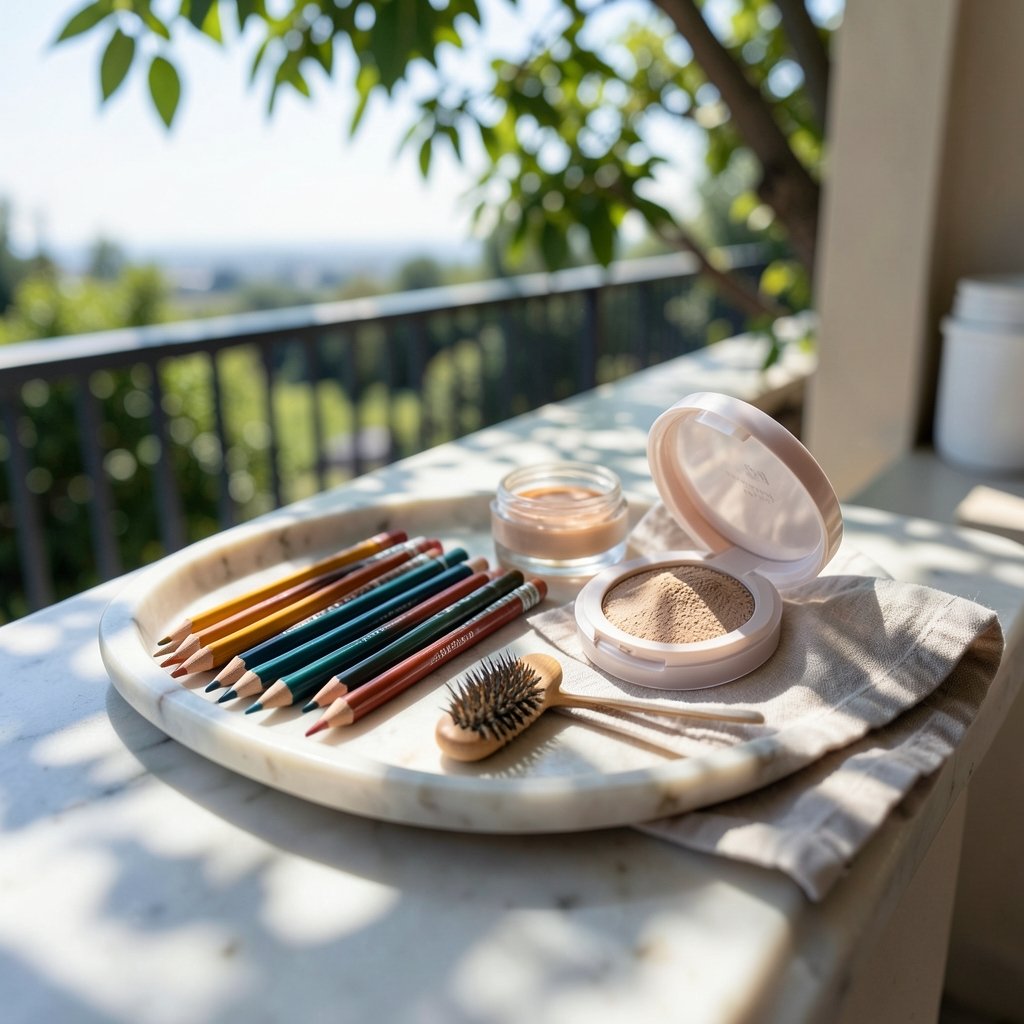
What happens when the brows you draw on every morning become the brows you wake up with? That question sits behind the whole category people search for as “enhancement eyebrows.” It is not a formal term. You will not find it defined in dermatology textbooks or cosmetics regulations. In practice, it covers a cluster of services: cosmetic eyebrow tattooing (microblading and machine shading), semi-permanent makeup, tinting, lamination, and the pencils and gels people use at home.
That loose definition matters, because the risks and costs vary wildly between a twenty-minute tint and a tattoo that sits in your skin for years. This guide separates the procedures, explains what the evidence actually supports, and flags where the industry runs ahead of the science.
What “enhancement eyebrows” actually means
Because no standard definition exists, the term is best understood as an umbrella. At one end sit temporary cosmetics: pencils, powders, pomades, and gels. In the middle are salon treatments that last weeks: tinting and lamination. At the far end are semi-permanent and permanent options, where pigment is placed inside the skin.
The word “enhancement” is doing a lot of marketing work here. It sounds gentle. But microblading is a form of cosmetic tattooing, and it is regulated as tattooing in many jurisdictions, though the rules differ enormously from place to place. Anyone comparing prices across these categories is really comparing four different procedures with four different risk profiles.
A useful sorting rule: ask whether the product stays on the surface, sits on the hair, or enters the skin. Surface products carry minimal risk. Hair treatments carry allergy risk. Skin-penetrating procedures carry infection, pigment, and scarring risk.
Microblading and machine shading: how they differ
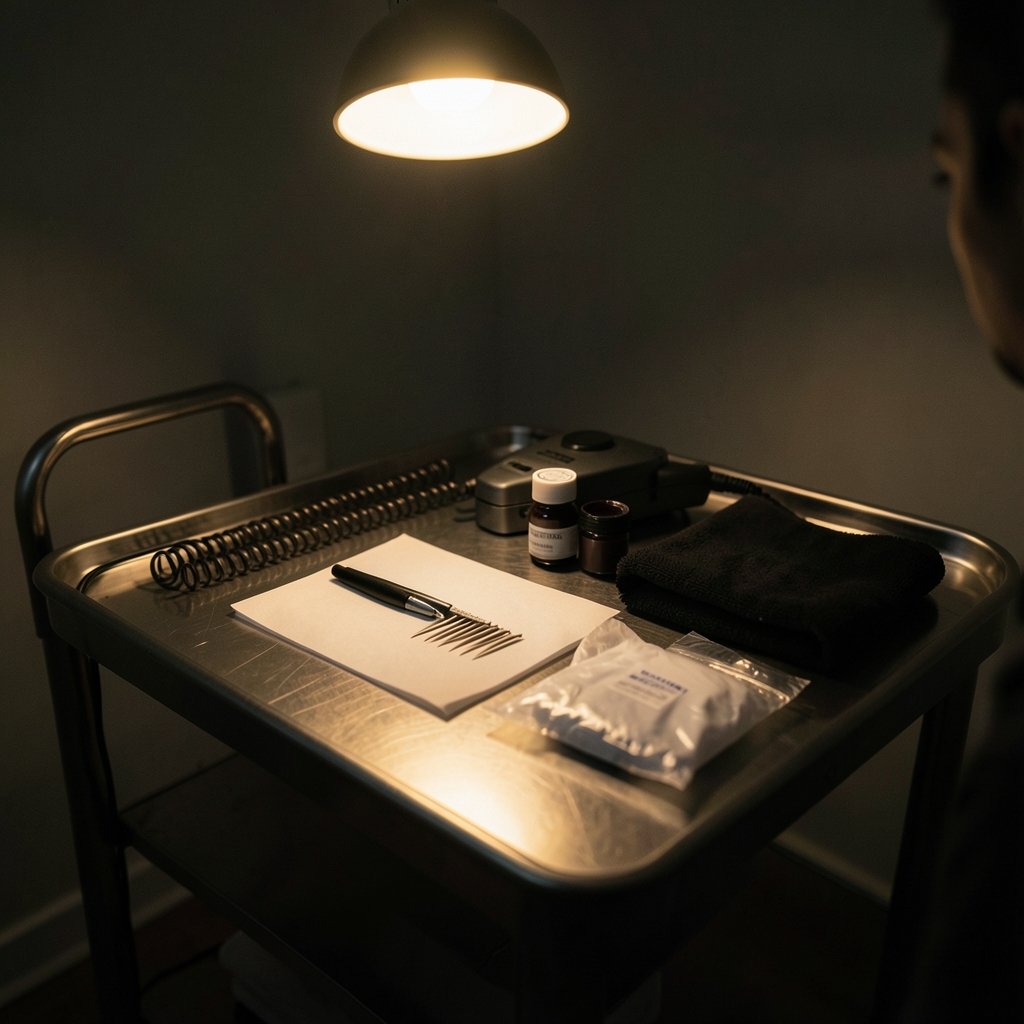
Microblading uses a hand tool fitted with fine blades to deposit pigment into the upper dermis, creating the illusion of individual hairs. Machine shading, sometimes called powder brows, uses a tattoo machine to build a soft, filled effect. Both are cosmetic tattooing. Neither is a skincare treatment, and neither is reversible with a wipe.
| Feature | Microblading | Machine shading |
|---|---|---|
| Tool | Hand-held blade tool | Electric tattoo machine |
| Effect | Hair-like strokes | Soft, misty fill |
| Skin depth | Upper dermis | Upper dermis |
| Typical healing | About 1 to 2 weeks | About 1 to 2 weeks |
| Touch-up | Often at 4 to 8 weeks | Often at 4 to 8 weeks |
| Best suited to | Normal to dry skin, visible pores | Oily or combination skin |
Those healing and touch-up figures come from practitioner guidance rather than controlled studies, so treat them as industry practice, not clinical fact. The same caution applies to claims about which technique suits which skin type. There is very little peer-reviewed outcome data comparing eyebrow enhancement methods head to head.
One practical point people get wrong: pigment retention is not a measure of skill alone. Oily skin, sun exposure, aftercare habits, and the pigment itself all shift how a brow heals. Two clients at the same studio can end up with very different results.
Pigment safety is the part most people skip
Tattoo ink, including permanent makeup pigment, is not automatically safe because it is sold in a salon. Regulators have repeatedly warned about infections and allergic reactions linked to tattoo inks, and have noted that ink ingredients are often not fully disclosed on the label.
In the European Union, Commission Regulation (EU) 2020/2081 restricted certain hazardous substances in tattoo and permanent-makeup inks. It was adopted in December 2020 and applied from 4 January 2022, with transitional periods for some pigments. The United Kingdom did not adopt those restrictions after Brexit, so UK rules on tattoo inks differ from the EU’s from 2022 onward. If you are booking a brow tattoo, the country you are in changes what is legally in the bottle.
This is not an abstract concern. Allergic contact dermatitis, granulomas, infection (including mycobacterial infection), and scarring after eyebrow tattooing are all documented in dermatology case reports and reviews. Reactions to iron-containing pigments during MRI scans have also been reported. A patch test is worth asking for, even where it is not required, and a studio that shrugs at the question is telling you something.
Tinting and lamination: lower commitment, real risks
Eyebrow tinting uses dye or henna to darken brow hair. Lamination is a chemical process that straightens and sets the hairs into a brushed-up shape. Both fade within weeks, which makes them attractive as a trial run before committing to a tattoo.
They are not risk-free. Some dyes contain para-phenylenediamine, a well-documented cause of allergic reactions in hair dye, and sensitivity can develop after repeated exposure. Reactions can be delayed, so a reaction on the second or third appointment is common. Lamination solutions can irritate skin, particularly around the eyes, and over-processing weakens hair.
Practical guidance that actually works:
- Ask what ingredients the dye contains, in addition to which shade it is.
- Request a patch test at least 48 hours before a first tint.
- Skip tinting on broken or recently waxed skin.
- Space lamination sessions out; more frequent is not better.
- Do not combine a fresh tint with lamination on the same day if your skin is sensitive.
A common mistake is treating salon treatments as automatically gentler than tattooing. A chemical burn or a severe dye allergy can be miserable, and neither is rare enough to ignore.
Regulation is a patchwork, and that is the point
In the United States, permanent makeup falls under state tattooing and body-art rules rather than a single federal licensing scheme. The FDA regulates the products, not the procedure. That means hygiene standards, training requirements, and inspection regimes vary by state and sometimes by county.
The result is that two studios a short drive apart can operate under very different oversight. For a reader, this changes what due diligence looks like. Instead of assuming a licence means a high bar, check what the licence in your area actually covers.
What to verify before booking:
- The specific licence or registration held by the artist, and whether it covers cosmetic tattooing
- Local health department inspection records, where published
- Whether single-use needles and blades are opened in front of you
- Whether the studio can explain its pigment sourcing and any restrictions that apply
- Whether a patch test is offered and when
None of this guarantees a good result. It filters out the studios that are cutting corners on the parts you cannot see.
Aftercare: where results are won or lost
Most disappointing brow tattoos are not caused by bad technique alone. Aftercare and healing behaviour play a large role, and clients routinely undermine their own results without realising it.
The standard advice from practitioners is broadly consistent: keep the area clean, avoid soaking it, avoid direct sun, and do not pick at flaking pigment. The healing period runs roughly one to two weeks, and a touch-up session usually follows at around four to eight weeks once the skin has settled.
Where people go wrong:
- Picking at flakes. Pigment comes away with the skin and leaves patchy areas.
- Sweating heavily in the first week. Gym sessions and saunas are best postponed.
- Sun exposure without protection. UV fades pigment and can distort colour.
- Skipping the touch-up. The first session is rarely the final result.
- Using active skincare over the brows. Retinoids and acids on healing skin are a bad combination.
If you are weighing a skin procedure against something less permanent, it helps to understand how other appearance-related enhancements are assessed on the same evidence-first basis. The same logic used to evaluate whether a feature is genuinely worth the intervention applies here, whether you are reading about active cornering enhancement and whether Land Rover’s ACE system really delivers or deciding between a tint and a tattoo.
Matching the procedure to the person
There is no single best eyebrow enhancement. There is a best fit for a given face, skin type, budget, and tolerance for risk. A few honest rules of thumb help more than any product claim.
| Situation | Sensible starting point | Why |
|---|---|---|
| First time exploring shape | Pencil or powder | Zero commitment, easy to adjust |
| Sparse but healthy hair | Tinting | Weeks of colour, low cost |
| Unruly, downward-growing hair | Lamination | Sets hairs into shape |
| Thinning from over-plucking | Tattooing, after consultation | Long-lasting fill |
| Oily skin | Machine shading over microblading | Softer, more even healing |
| Known dye allergy | Patch test or avoid tinting | Allergy risk is real |
| Pregnancy or breastfeeding | Defer skin procedures | Not enough safety data |
That last row is worth stating plainly. There is not enough evidence to call cosmetic tattooing clearly safe during pregnancy, and most cautious practitioners will defer. Anyone who pressures a pregnant client to proceed is not putting safety first. (The row)
For readers dealing with hair and texture questions more broadly, the same principle applies across categories: match the treatment to the actual condition rather than the trend. Resources on 4C hair care make a similar case for working with your hair’s real behaviour instead of fighting it.
What the evidence does not support
It is worth being blunt about the gaps, because brow marketing is loud. There is little peer-reviewed evidence comparing outcomes across microblading, machine shading, tinting, and lamination. Most technique claims, healing timelines, and aftercare protocols come from practitioner experience and industry training, not controlled trials.
That does not make them wrong. It makes them unverified. A studio that says “this is how it is done” is describing a convention, not a proven optimum. A studio that says “this varies by skin and we adjust” is closer to the truth.
The same caution applies to before-and-after photos. Lighting, angle, makeup, and editing all change what you see. A portfolio is a marketing document first and a clinical record second.
Conclusion
Enhancement eyebrows is a search term without a fixed definition, and that looseness is exactly why the category confuses people. Tinting, lamination, microblading, and machine shading are not variations on one theme. They differ in what they do to the skin, how long they last, what can go wrong, and what the law says about them.
The practical path is unglamorous. Decide whether you want a surface product, a hair treatment, or a skin procedure. Ask what is in the pigment or dye. Check what the licence in your area actually covers. Take the patch test. Follow aftercare properly and expect a touch-up. And treat confident claims about technique with the scepticism they deserve until better evidence exists.
The row over how these services should be regulated is not going away, and neither is the demand for them. What readers can control is how much they know before they sit in the chair.
FAQ
What are enhancement eyebrows?
It is an informal umbrella term for cosmetic eyebrow treatments, including pencils and powders, tinting, lamination, microblading, and machine shading. No standard definition exists in dermatology or cosmetics regulation, so the term should always be clarified before comparing prices or risks.
Is microblading the same as a tattoo?
Yes. Microblading is a form of cosmetic tattooing that deposits pigment into the upper dermis using a hand tool with fine blades. It is regulated as tattooing in many jurisdictions, though the specific rules vary widely by country and region.
How long does eyebrow tinting last compared with microblading?
Tinting typically fades within a few weeks as hair cycles and washes. Microblading is a tattoo and is designed to last far longer, though pigment fades over time and periodic refresh sessions are common. Exact longevity varies by skin type, sun exposure, and aftercare.
Are eyebrow tattoos safe?
They carry documented risks, including allergic reactions, infection (including mycobacterial infection), granulomas, and scarring. Tattoo ink ingredients are often not fully disclosed, and restrictions on hazardous substances differ between the EU and the UK. A patch test and a properly licensed artist reduce but do not eliminate risk.
What should I check before booking a brow procedure?
Confirm the artist’s specific licence covers cosmetic tattooing, ask about local inspection records, watch that single-use needles and blades are opened in front of you, ask what is in the pigment or dye, and request a patch test where available.
Can I get my eyebrows tinted while pregnant?
Many cautious practitioners defer chemical treatments and cosmetic tattooing during pregnancy because there is not enough safety evidence. If you are pregnant or breastfeeding, discuss it with a clinician rather than relying on a salon’s reassurance.









