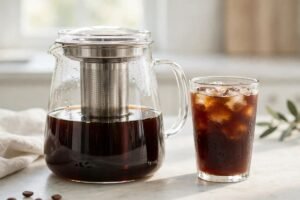
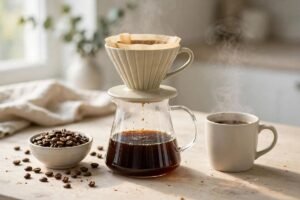
The best coffee to make at home is the coffee that suits your taste, your mornings and the brewer you already own, made from fresh beans and ground just before brewing.
So what is the best coffee to make at home in 2027? For most people, it is a medium roast made from freshly ground beans, brewed with a pour-over or a French press using clean water just off the boil, at a ratio of roughly one part coffee to fifteen parts water. This guide explains how to choose the beans, the grind and the method, so you can make that cup every morning.
Key takeaways:
- The best coffee to make at home starts with fresh beans, ground just before brewing.
- A medium roast suits most drinkers and most brewing methods.
- The grind should match the method: coarse for a French press, medium for a drip machine, fine for espresso.
- Clean, fresh water just off the boil makes a real difference to flavour.
- A ratio of around one part coffee to fifteen parts water is a good starting point, then adjust to taste.
The beans: where good coffee begins
Every good cup starts with the beans, because no brewer can rescue coffee that is stale or poorly roasted. Freshness matters more than origin, more than the name on the bag, and more than almost anything else in this guide. Buy in small amounts and use them up while they are fresh.
The roast shapes the flavour more than anything else on the bag. A light roast keeps more of the bean’s own character, often with bright, fruity or floral notes, while a dark roast brings a bolder, smokier flavour with more bitterness and less acidity. A medium roast sits between the two, with a balanced cup that is smooth, sweet and easy to enjoy, which is why it is the best place to start if you are still finding your taste.
Whole beans keep far better than pre-ground coffee, because grinding exposes a huge surface area to the air and the flavour fades quickly. If you can, buy whole beans and grind only what you need for each brew. Our guide to the best espresso machine explains what to look for in a home setup, and much of that advice — fresh beans, a steady brew — applies to filter coffee too.
The grind: the change that matters most
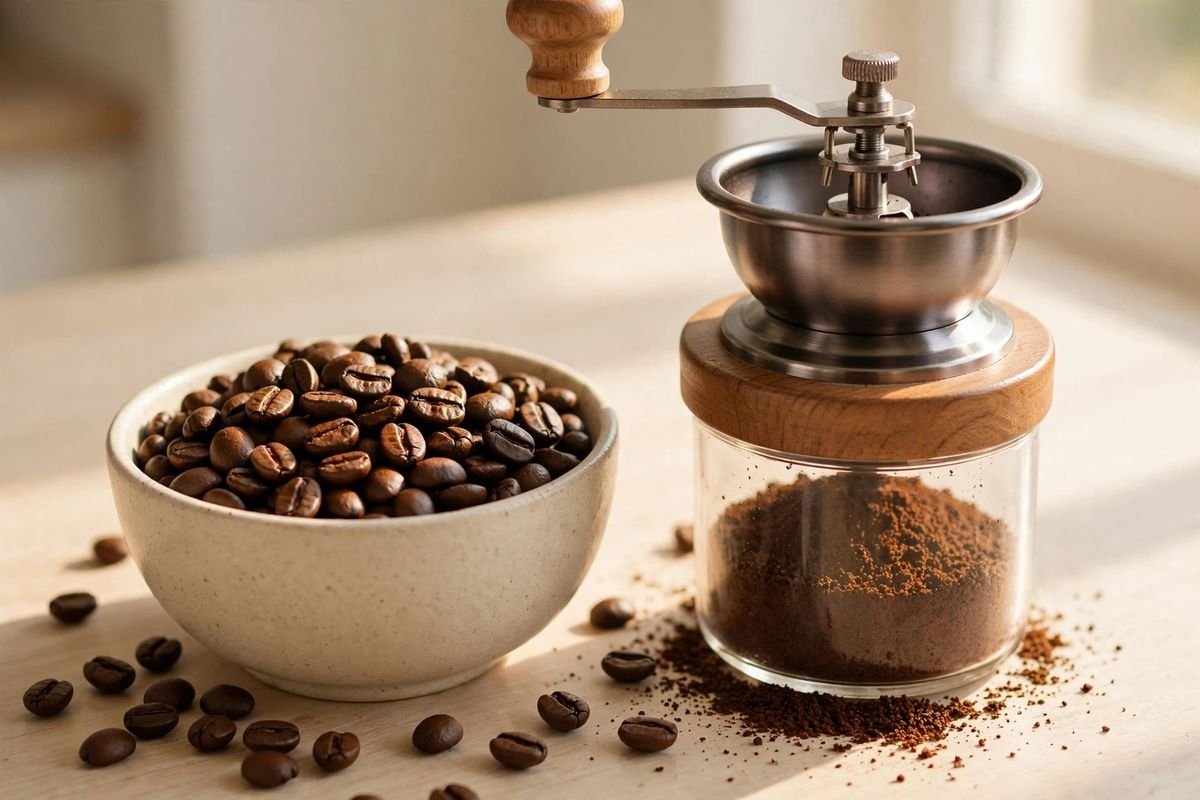
If you change one thing about your coffee, change the grind. Grinding fresh, just before brewing, makes a bigger difference to flavour than any new brewer, because the aroma begins to fade within minutes of grinding. A simple hand grinder is enough to feel the difference, and it turns a small morning task into a short, pleasant ritual.
The grind size should match the brewing method, because it controls how long the water stays in contact with the coffee. A French press needs a coarse grind, like rough sea salt, so the grounds steep slowly without slipping through the mesh. A drip machine or pour-over needs a medium grind, like sand, while espresso needs a fine grind, like table salt, so the water meets real resistance as it passes through.
When the grind is wrong, the cup tells you. Coffee that tastes sour or sharp is usually under-extracted, which often means the grind is too coarse or the water passed through too quickly. Coffee that tastes bitter and dry is usually over-extracted, which often means the grind is too fine or the grounds steeped too long.
A burr grinder gives a more even grind than a blade grinder, because it crushes the beans between two surfaces set to a fixed gap, while a blade chops them into mixed sizes. Our guide to the best budget espresso machine covers the machines worth considering, from a small stovetop brewer to a steady electric model.
Choose a brewing method that fits your morning
The best brewing method is the one you will actually use, every day, without it feeling like a chore. A pour-over makes a clean, bright cup and asks for a few quiet minutes of pouring, while a French press makes a full, rich cup with almost no technique at all. A drip machine makes several cups at once for a busy household, and a moka pot makes a strong, bold cup on the stove in minutes.
Each method draws a different flavour from the same beans. Immersion methods, like the French press, steep the grounds in the water, which gives a heavy body and a rich, rounded taste. Pour-over methods pass water through the grounds, which gives a cleaner cup where the brighter notes show through.
Think about how many cups you make, and when. A single-cup pour-over suits one slow morning, a French press suits two cups shared over breakfast, and a drip machine suits a household that drinks a pot before work. If you are choosing a brewer as well as a coffee, our guide to how to make iced tea covers the cold side of home brewing, for mornings when hot coffee is too much.
Water: the quiet ingredient
Coffee is almost entirely water, so the water you use shapes the cup more than most people expect. Fresh, clean-tasting water is the starting point, and if your tap water tastes of chlorine or minerals, a simple filter jug will improve the cup at once. Bottled water is not needed, and heavily mineralised water can leave a flat or chalky taste.
Temperature matters too. Water just off the boil, roughly in the range most guides suggest for brewing, extracts the sweetness and aroma without scorching the grounds. Let the kettle rest for half a minute after boiling, then pour.
Ratios and timing: a starting point, not a rule
A good starting ratio for filter coffee is around one part coffee to fifteen or sixteen parts water, which works out at roughly sixty grams of coffee per litre of water. That is a widely used starting point, not a rule, and your taste is the final judge. If the cup tastes weak, add a little more coffee; if it tastes too strong, use a little less, and change only one thing at a time.
Timing follows the method. A pour-over usually takes a few minutes from the first pour to the last drip, a French press steeps for around four minutes before the plunger goes down, and a drip machine runs its own course. Taste the coffee, note what you liked, and adjust the next cup.
Storage: keep the beans fresh
Store whole beans in an airtight container, away from light, heat and moisture, and keep them in a cool cupboard rather than the fridge. The fridge seems like a safe place, but coffee absorbs odours and moisture every time the container is opened, and that dulls the flavour. A sealed jar in a dark cupboard keeps beans in far better shape.
Tasting and adjusting your cup
Learning to taste your coffee is the fastest way to improve it, and it takes no special skill, only a little attention. Drink the first sips slowly, while the coffee is hot but not scalding, and notice whether it tastes sweet, sour, bitter or flat. Sweetness and balance mean the brew is close to right, while sourness points to under-extraction and bitterness points to over-extraction.
Change one thing at a time, and keep the rest steady. If the cup is sour, grind a little finer or give the grounds a little more time in the water; if it is bitter, grind a little coarser or shorten the brew.
How do the best home coffee methods compare?
| Method | Flavour | Effort | Best for |
|---|---|---|---|
| Pour-over | Clean and bright | Medium | A delicate, aromatic cup |
| French press | Full and rich | Low | A bold cup with little fuss |
| Drip machine | Smooth and mellow | Low | Several cups at once |
| Moka pot | Strong and bold | Medium | A rich cup from the stove |
| Cold brew | Smooth and sweet | Low | Iced coffee in warm weather |
| AeroPress-style brewer | Clean and strong | Medium | A quick single cup |
Your home coffee checklist
Work through this list once, and your mornings will taste better for it.
- Buy fresh beans: choose whole beans with a recent roast date, in a bag you will finish within a few weeks.
- Grind fresh: grind only what you need for each brew, and match the grind size to your method.
- Use clean water: fresh, filtered water just off the boil, never water that has sat in the kettle.
- Measure your ratio: start at around one part coffee to fifteen parts water, then adjust to taste.
- Match the method to the morning: a pour-over for a slow morning, a drip machine for a busy household.
- Store beans well: an airtight container in a cool, dark cupboard, away from the fridge.
- Clean your brewer: rinse after every use and descale now and then, so old oils never stale the cup.
Frequently asked questions
What is the best coffee to make at home for beginners?
A medium roast, bought as whole beans and ground fresh, brewed in a French press or a pour-over, is the best place to start. Both methods are simple to learn, they need no expensive equipment, and they show off the flavour of good beans clearly.
Is whole bean coffee better than pre-ground coffee?
Yes, in most cases, because whole beans keep their aroma far longer than ground coffee, which loses flavour quickly once it is exposed to air. If you can grind fresh for each brew, even with a small hand grinder, the cup will taste noticeably fresher and more aromatic.
What is the best coffee to water ratio?
A widely used starting point is around one part coffee to fifteen or sixteen parts water, or roughly sixty grams of coffee per litre. Treat it as a starting point and adjust to taste: more coffee for a stronger cup, less for a lighter one.
How long should coffee steep in a French press?
Around four minutes is the rough guidance most brewing guides suggest, with the plunger pressed down gently at the end. If the cup tastes bitter, try a slightly coarser grind or a shorter steep; if it tastes sour, try a finer grind or a little longer.
Should I store coffee beans in the fridge?
No, a cool, dark cupboard in an airtight container is better. The fridge exposes beans to moisture and to the smells of other food every time the container is opened, and both dull the flavour over time.
What is the best coffee to make at home without a machine?
A French press or a pour-over is the best choice without a machine, because both need only hot water, ground coffee and a few minutes. A French press gives a full, rich cup, while a pour-over gives a cleaner, brighter one.
Sources
This guide reflects widely published coffee guidance on beans, roast levels, grind size, brewing methods, water and storage, drawn from standard brewing references and roasters’ published advice.
The bottom line
The best coffee to make at home in 2027 is a medium roast from fresh, whole beans, ground just before brewing and made with clean water at a ratio of around one part coffee to fifteen parts water. The brewer matters far less than the beans, the grind and the water, and any of the methods in this guide can make an excellent cup.
Your next step is simple: buy a small bag of fresh whole beans, grind enough for one cup, and brew it with the method you already own, tasting as you go and adjusting one thing at a time.