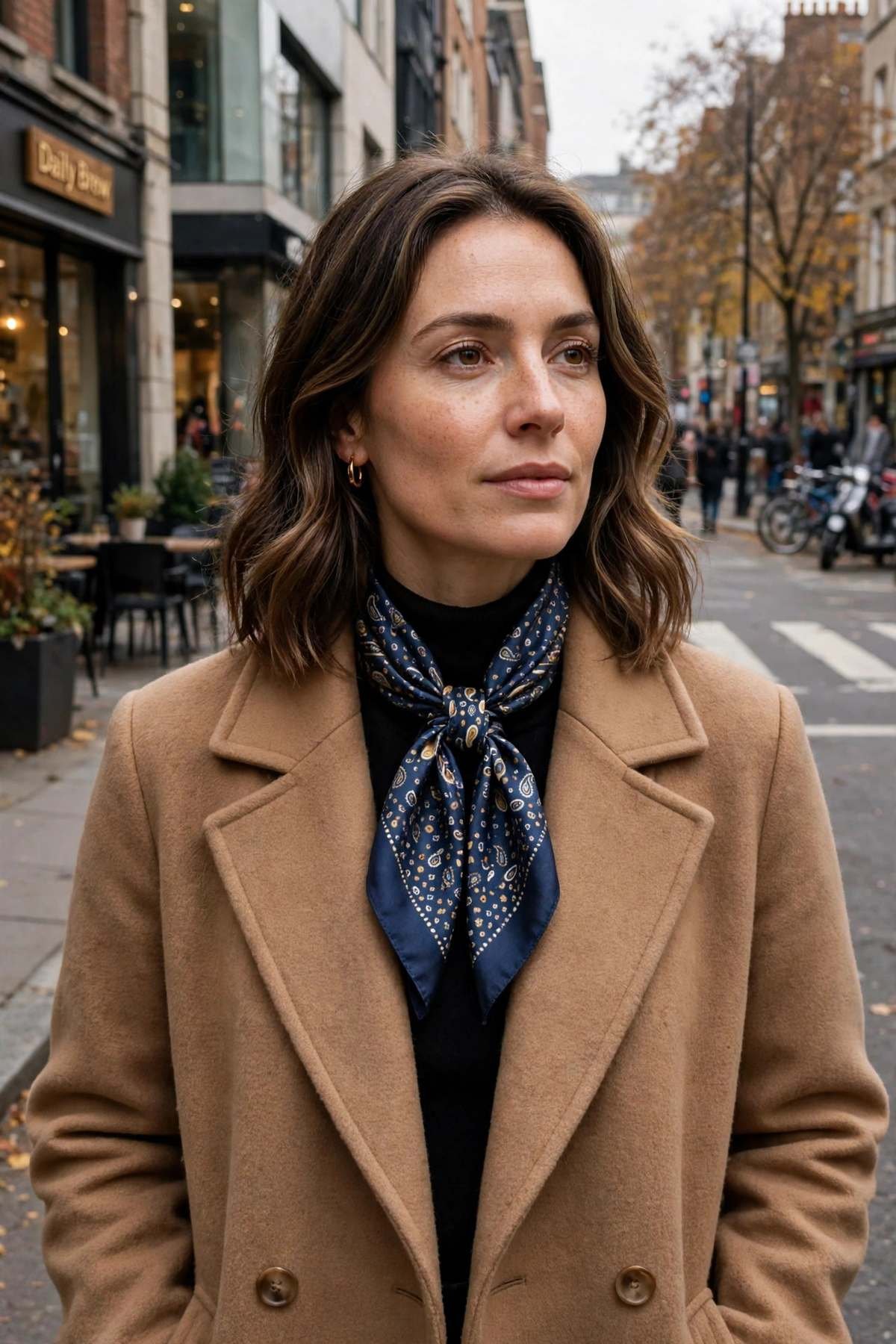
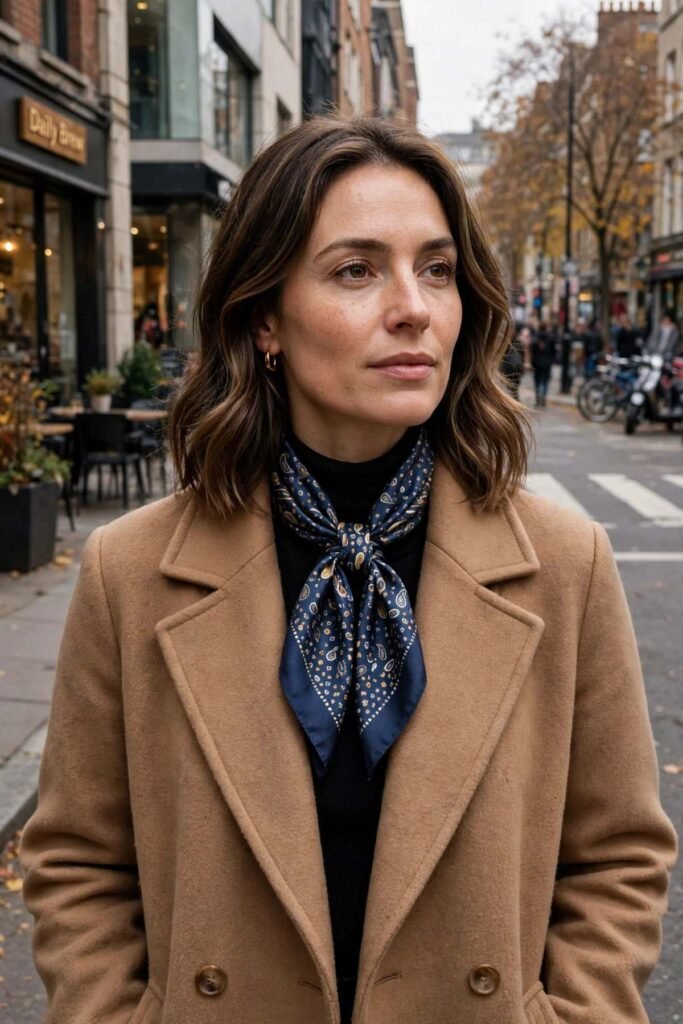
Learning how to tie a scarf is one of the quickest ways to change how an outfit looks. A scarf can keep you warm, add colour to a plain coat, or finish a simple outfit.
So which knots are actually worth learning? The loop knot, the Parisian knot and the simple drape cover most days, and the five other styles below handle cold weather, smart occasions and days when you want the scarf to be the outfit. This guide walks through each knot step by step.
Key takeaways:
- Three knots cover most days: the loop knot, the Parisian knot and the drape.
- Match fabric to season: light silk and cotton for warm days, wool for cold ones.
- A scarf should sit comfortably, never tight; slip two fingers under any knot.
- Fold or roll a scarf before tying it, so the knot sits neatly.
- Wash and store scarves as their labels say.
Scarf fabrics: what to choose
Start with the fabric, because it decides which knots work. Wool is warm, holds a knot well and suits cold weather. Silk is smooth and light and suits smarter outfits, but it slips, so knots need extra care. Cotton sits in the middle: breathable, easy to wash and good for spring and autumn, while linen is cool for summer but creases easily.
Blends are often the easiest scarves to wear. Size matters too: a long, wide scarf suits wraps and loop knots, a square scarf suits neckerchief styles, and a narrow scarf suits a simple drape.
The classic loop knot, step by step
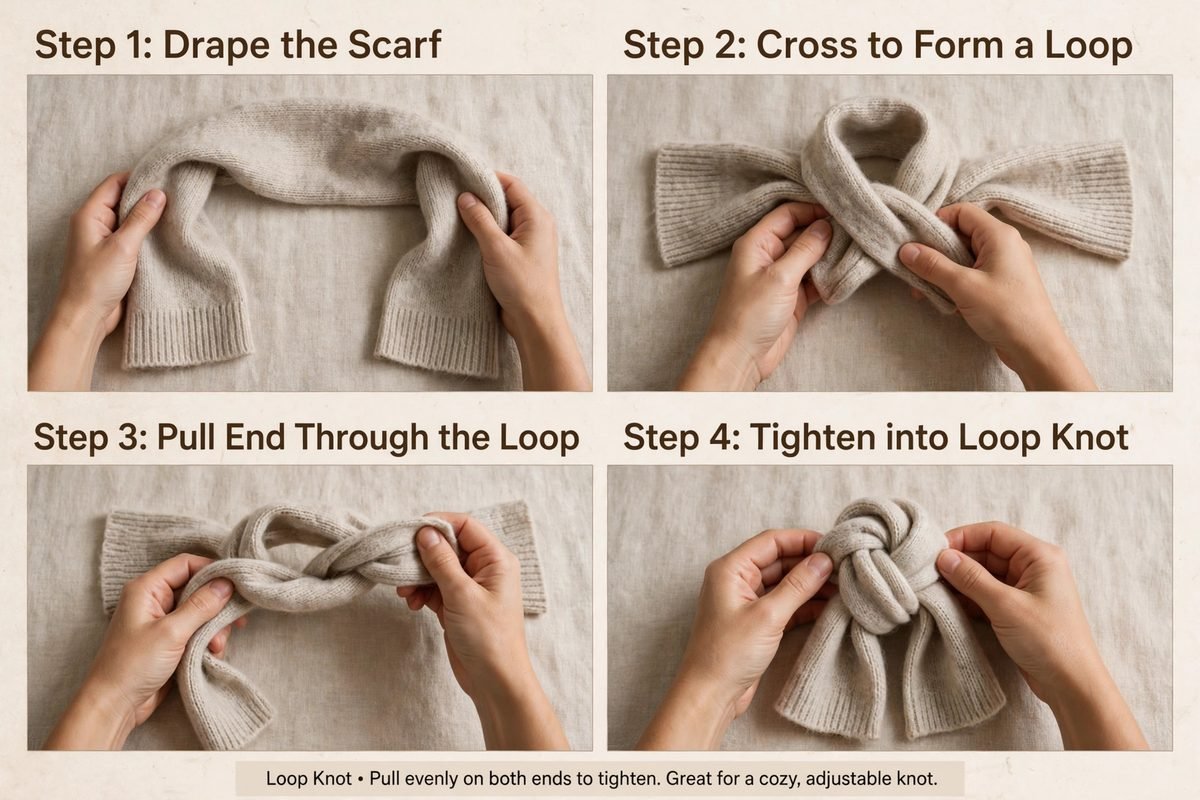
The loop knot is the one to learn first, because it is warm and secure. Fold the scarf in half lengthways, so the two ends meet and a loop forms at the other end. Drape it around the back of your neck, with the loop on one side and the two loose ends on the other.
Now pass the two loose ends through the loop, then pull gently until the knot sits snugly at the front of your neck. That is the whole knot. It works best with a medium-weight scarf. If the knot looks bulky, fold the scarf narrower before you start.
The Parisian knot
The Parisian knot is a smarter, neater cousin of the loop knot, and it suits silk scarves and smart coats. Fold the scarf in half, drape it around your neck, and pass the ends through the loop. Then twist the loop once and pass the ends through again, which tightens the knot into a small, neat shape.
The second pass is what makes it look polished, so take your time and keep the folds smooth. It works best with a thinner scarf, because a thick one makes the double knot too bulky. Wear it at the centre of your chest, or slightly to one side.
The simple drape
The simple drape is not really a knot at all, which is exactly its charm. Drape the scarf around the back of your neck so both ends hang down your front, one a little longer than the other, and leave it there. It takes five seconds and suits mild days.
It looks best when the scarf hangs past your waist, with the two ends slightly uneven rather than perfectly matched. Tuck the ends inside an open coat for a smarter look. If the scarf keeps slipping off, a light knot at the back of the neck, hidden under your collar, will hold it.
The once-around wrap
The once-around wrap is the everyday cold-weather knot. Drape the scarf around your neck with one end much longer than the other, then wrap the long end once around your neck, bringing it back to the front.
It is warmer than the drape and less bulky than the loop knot, which makes it a good middle ground for autumn and spring. If the wrap feels tight, loosen it; comfort matters more than a perfect shape.
The cosy blanket wrap
The blanket wrap is for the coldest days, and it uses a big, wide scarf as a shawl as much as a scarf. Fold it in half widthways so it becomes a wide band, drape it around your shoulders, and bring the ends to the front. Cross them loosely at your chest.
It is the warmest style in this guide. Keep the knot loose, because a tight knot in a thick scarf will pull at your neck and look lumpy. Our guide to how to wash a wool blanket covers washing thick wool, which needs the same gentle care as a blanket.
The neckerchief
The neckerchief turns a small square scarf into a neat triangle at the front of your neck. Fold the square in half diagonally, then roll the long edge loosely towards the point until you have a band a few inches wide. Drape it around your neck with the point at the front, then tie a small knot at the side.
It looks smart with a shirt, a blazer or a plain dress. Keep the triangle small and neat, and let the knot sit to one side if the centre feels too formal. It is also the best style for a printed scarf, because the triangle shows the print off instead of hiding it in folds.
The belted scarf
The belted scarf uses a belt to hold a long scarf in place like a wrap top. Drape the scarf around your shoulders so both ends hang down your front, then fasten a belt over the top at your waist, trapping the scarf underneath.
It suits dresses and long tops. It is more of a styling choice than a warm one, so save it for mild days or indoors. If the scarf bunches under the belt, fold it narrower before you start.
The infinity loop
An infinity scarf is a loop with no ends, and it is the easiest style of all to wear. Drape the loop around your neck, then twist it into a figure of eight and slip the second loop over your head, so the scarf sits in two layers.
It is warm, it never comes undone, and it suits anyone who finds knots fiddly. It looks good with coats and jumpers. If you do not own one, you can make one by tying the ends of a long scarf together, keeping the knot small and hidden under your collar.
| Style | Difficulty | Best scarf | Best for |
|---|---|---|---|
| Loop knot | Easy | Medium-weight wool | Cold days |
| Parisian knot | Easy | Thin silk or cotton | Smart occasions |
| Simple drape | Very easy | Any long scarf | Mild days |
| Once-around wrap | Easy | Long wool or cotton | Autumn and spring |
| Blanket wrap | Easy | Wide, thick wool | The coldest days |
| Neckerchief | Medium | Square silk or cotton | Smart outfits |
| Belted scarf | Medium | Wide, lightweight scarf | A styled look |
| Infinity loop | Very easy | Loop scarf, any fabric | Warmth, no knots |
Styling a scarf with your outfit
A scarf should work with your outfit, not fight it. If your coat is plain, a patterned or bright scarf adds interest; if your coat is patterned, a plain scarf in one of its colours keeps things calm.
A chunky knit scarf suits relaxed clothes such as jeans and boots, while a fine silk scarf suits smarter clothes such as a blazer or a coat dress. Our guide to baggy jeans covers the relaxed half of that pairing. For sunny days, our guide to the best polarized sunglasses covers the accessory that pairs with a light scarf.
How to care for scarves
Scarves last longer when they are washed and stored properly, and the label is the best guide. Wool scarves usually need hand washing in cool water with a gentle detergent, and they should be dried flat rather than hung, which can stretch them. Our guide to how to wash a wool sweater covers the same method for wool scarves.
Silk scarves need the gentlest care: cool water, a mild detergent, no wringing, and drying flat away from direct sunlight. Cotton scarves are the easiest, and most can be machine washed on a gentle cycle. Store scarves clean and dry, folded or rolled rather than hung, and keep wool away from moths. A quick steam removes creases, but check the label first, because silk and wool both scorch easily.
Your scarf checklist
Run through this list before you head out.
- Match fabric to weather: silk and cotton for mild days, wool for cold ones.
- Fold before tying: a folded scarf knots neatly.
- Check the knot: you should be able to slip two fingers under it.
- Balance the ends: slightly uneven ends look more natural.
- Keep it comfortable: loosen any knot that pulls or feels tight.
- Match or contrast: a plain scarf calms a patterned coat.
- Hide the join: tuck small knots and scarf ends under your collar or coat.
- Carry a spare: a light scarf covers a change in the weather.
- Store it well: fold or roll scarves, and keep wool clean and dry.
Frequently asked questions
What is the easiest way to tie a scarf?
The simple drape is the easiest: drape the scarf around the back of your neck and let both ends hang down your front. If you want a knot, the loop knot is the next easiest. Start with those two.
How do you tie a scarf so it stays put?
Choose a knot that grips, such as the loop knot or the Parisian knot, and pull it snug without making it tight. Silk slips more than wool, so fold a silk scarf a little wider before tying it. Tucking the ends inside your coat also helps.
Can you wear a scarf in summer?
Yes, with a light fabric. A silk, cotton or linen scarf adds colour and finish to a summer outfit without adding warmth, and a simple drape or a neckerchief are the best summer styles. Avoid wool in warm weather.
How do you wear a scarf with a coat?
Put the scarf on first, then the coat, so the scarf sits neatly under the collar. A loop knot or a once-around wrap works well, because the coat holds the knot in place. Let the ends hang over the coat.
How do you stop a wool scarf from itching?
Wear a soft layer underneath, so the wool does not touch your skin directly. Softer wools itch less, and a wool and cashmere blend is usually more comfortable than pure coarse wool. If a scarf itches badly even over a layer, wear it as a wrap over a coat instead.
What size scarf should I buy?
It depends on the styles you like. A long scarf suits wraps and loop knots, while a square scarf of about a metre suits neckerchief styles. If you only buy one, choose a medium-weight scarf you can wrap once around your neck with ends left to hang.
Sources
Knotting and care guidance here reflects widely published styling advice, including standard loop, Parisian and neckerchief methods. For wool care, our guides to how to wash a wool sweater and how to wash a wool blanket cover the gentle methods that suit wool scarves too.
The bottom line
How to tie a scarf comes down to three knots and a little practice. Learn the loop knot for cold days, the Parisian knot for smart ones, and the simple drape for everything in between, and you will have a style for every outfit and season. The rest are variations on the same ideas.
Your next step is simple: take the scarf you wear most and practise the loop knot in front of a mirror. Once it feels easy, try the Parisian knot with a thinner scarf.