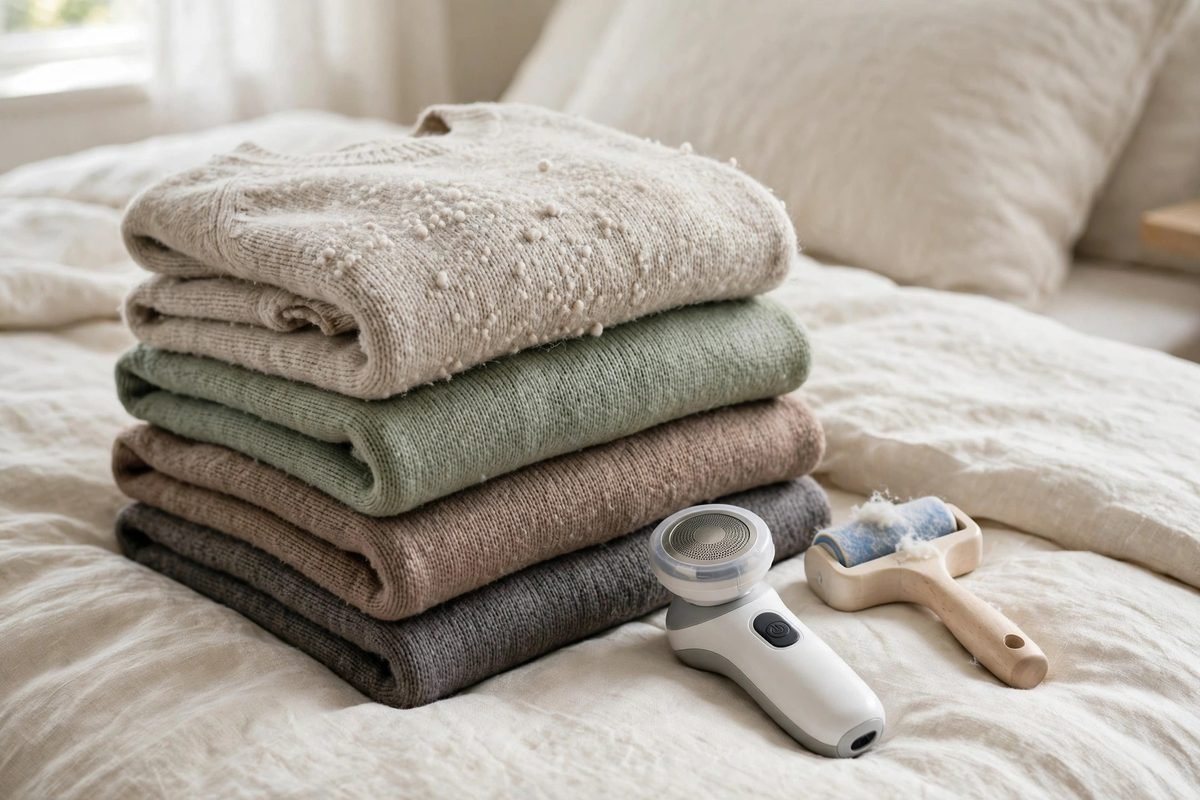
Learning how to remove pilling from clothes takes about ten minutes and the right tool — usually an electric fabric shaver. Pilling is the cluster of tiny fibre balls that forms where fabric rubs against itself — a sign of wear, not ruin. This guide shows you how to remove pills safely, fabric by fabric, and stop them returning.
You do not need a specialist kit or a trip to the dry cleaner. A fabric shaver handles most jobs, a razor works in a pinch, and a lint roller finishes the job. What matters most is a gentle hand and a quick test on a hidden spot before you begin.
Key takeaways:
- Best method: an electric fabric shaver, used with light, even strokes.
- Always test first on a hidden spot, such as an inside seam.
- Match the method to the fabric: shavers for wool and cotton, a lint roller for light pills.
- Prevention matters most: wash inside out, use a gentle cycle and fold knitwear.
- Never pull pills off by hand: it stretches fibres and makes pilling worse.
What causes pilling?
Pilling happens when short, loose fibres on a fabric’s surface tangle into small balls. Friction is the cause: underarms rubbing as you walk, thighs brushing together, a seatbelt crossing a coat, or a bag strap on a shoulder. The fibres break, tangle and roll into pills that cling to the surface.
Some fabrics pill more than others. Loosely spun, short-fibre yarns pill most readily — soft woollen knits, fleece and synthetic blends are the usual victims.
Long-fibre, tightly woven fabrics such as linen and good cotton pill far less. In blends, stronger synthetic fibres hold pills in place instead of letting them fall away, so a wool and acrylic jumper may pill more than either fibre alone.
Pilling is most common when a garment is new, as loose surface fibres work their way out during the first few wears. That early burst usually settles down on its own, so do not give up on a new jumper at the first sign of pills.
Before you start: a quick safety check
Before you remove a single pill, test your tool on a hidden spot, such as an inside seam or a hem. Press lightly, make one pass, and check the fabric. If the surface looks thinner, snagged or shiny, stop and choose a gentler method.
Work on a flat, firm surface, and pull the fabric taut with your free hand. A loose, bunched garment is far more likely to catch in a shaver or nick under a razor. Never work on a garment while wearing it, and keep clear of buttons, zips, sequins, embroidery and loose threads.
Be especially gentle on delicates: fine cashmere, silk blends and open weaves need the lightest touch, and sometimes only a lint roller is safe. If a garment is dry clean only, valuable or sentimental, take it to a professional.
Method 1: use a fabric shaver
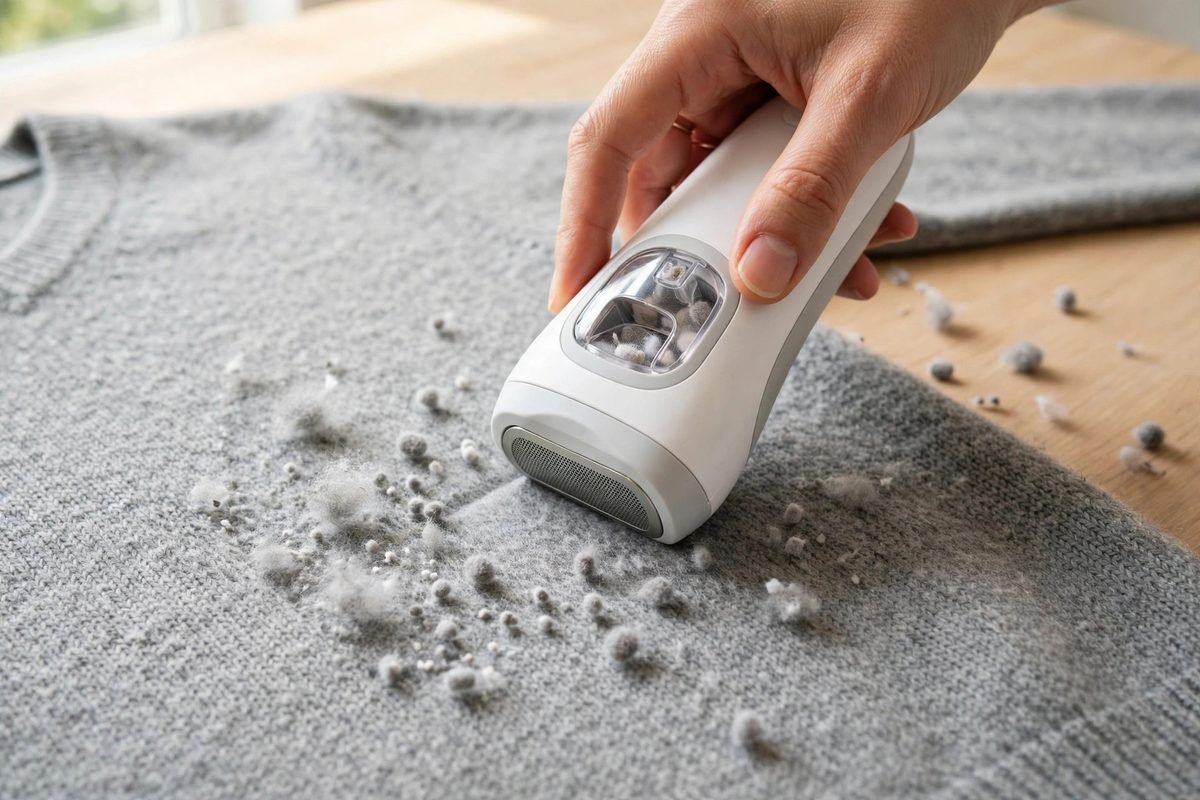
A fabric shaver is the best tool for removing pilling, and the one to buy if you own a lot of knitwear. It is a small handheld device: a fine mesh screen over a rotating blade lifts pills away and trims them into a small chamber.
Lay the garment flat and smooth out any creases. Switch the shaver on and glide it across the pilled area in light, straight strokes, without pressing down. Work in small sections, checking your progress after each pass rather than going over the same spot again and again.
Empty the lint chamber often, as a full chamber makes the shaver less effective. When you finish, shake the garment out and run a lint roller over it to pick up loose fibres. A fabric shaver suits wool, cotton, fleece and most blends.
Method 2: use a razor
A clean, single-blade disposable razor is a good stand-in when you do not own a fabric shaver. It trims pills the same way, but it has no protective screen, so a steady hand matters. Use a fresh razor with no moisturising strip.
Lay the garment flat and pull the pilled area taut. Hold the razor almost flat against the fabric and draw it gently across the pills in short, light strokes, using almost no pressure. After each stroke, tap the razor clean and check the fabric.
A razor suits sturdy fabrics such as cotton sweatshirts, fleece and heavy knitwear. It is not right for fine cashmere, silk, loosely woven fabrics or anything with a raised texture, as the exposed blade can catch a loop and cut a hole. If the blade catches or drags, stop and switch to a lint roller.
Method 3: use a lint roller or sticky tape
A lint roller is the gentlest method, and the best choice for light, surface pills and delicate fabrics. Roll it slowly over the pilled area, pressing just enough to pick the pills up, and peel off the used sheet when it stops sticking. A roller will not remove stubborn pills, but it will tidy a garment quickly and safely.
Sticky tape works the same way when you have no roller to hand. Wrap wide packing tape around your fingers, sticky side out, and dab it over the pilled area, replacing the tape as it fills with lint. This is handy for a small patch before you head out, though slow for a whole jumper.
Use a lint roller as a finishing step after a shaver or razor, to pick up loose fibres and leave the surface smooth.
Method 4: use a pumice stone or a comb
A dry pumice stone, sold for fabric care, can lift pills from sturdy wool and fleece. Rub it very lightly across the surface in one direction, and the pills will gather into clumps you can pick off. Use the lightest possible touch, and test a hidden spot first, as pumice is abrasive.
A fine-toothed comb works in a similar way. Lay the fabric flat, hold it taut, and draw the comb gently across the pills in short strokes. This slow method suits a small area or a delicate garment that cannot take a blade, and gives you complete control.
What not to do
Do not pull pills off by hand: pulling stretches the fibres and draws more loose fibre to the surface, so the garment pills again faster and can look thin and uneven. Do not snip pills off with scissors, and never use a knife, a peeler or any other improvised blade. Do not shave a garment while wearing it.
Fabric by fabric: what works best
Different fabrics need different care, and the wrong tool can do more harm than the pills. Use the table below as a starting point, and always test a hidden spot first.
| Fabric | Pilling risk | Best method | Take care |
|---|---|---|---|
| Wool | High | Fabric shaver | Light strokes; test first |
| Cashmere | High | Lint roller, then a comb | Very gentle; never use a razor |
| Cotton | Medium | Fabric shaver or razor | Pull fabric taut to avoid nicks |
| Polyester and blends | High | Fabric shaver | Pills cling firmly; go slowly |
| Fleece | Medium | Fabric shaver or pumice stone | Light touch, to avoid flattening the pile |
| Silk blends | Low | Lint roller only | Do not use a blade of any kind |
| Linen | Low | Lint roller | A quick roll is usually enough |
Wool deserves a special note, as it is the fabric most people associate with pilling. A good woollen jumper pills in its first few wears, then settles down; remove the early pills gently and it will often stay smooth. Cashmere is different: it pills throughout its life and needs the gentlest care.
Synthetic blends are the most stubborn, because strong polyester fibres hold pills in place instead of shedding them. Only a fabric shaver deals with them properly.
Denim rarely pills at all, though cuffs and seams can fray — a reason to know how your favourite baggy jeans are made. Pilling also shows up on socks where shoes rub, so check the heels of socks worn with your trainers.
How to prevent pilling
Prevention starts in the wash. Turn garments inside out before washing, so the outside rubs against itself less.
Use a gentle cycle, wash with similar fabrics, and avoid overloading the machine. A mesh laundry bag protects knitwear further.
Dry clothes gently. Tumble drying creates heat and friction, both of which encourage pilling, so air-dry knitwear flat where you can. Lay a jumper on a clean towel, reshape it gently, and keep it away from direct heat.
Store knitwear folded rather than hung. Hanging stretches fibres and invites pills where the hanger meets the shoulder.
Fold jumpers neatly and keep them away from Velcro and coarse straps. The same folding habit keeps the rest of your wardrobe tidy — our guide to folding a pocket square shows how much difference a careful fold can make.
Finally, rest your clothes. Wearing the same jumper day after day gives friction no break, so rotate your favourites.
A garment that rests keeps its shape and pills less. Buy quality where you can: tightly spun, long-fibre yarns pill less than loose, short-fibre ones.
Your de-pilling checklist
- Test your tool on a hidden spot first.
- Lay the garment flat and pull the fabric taut.
- Use light, even strokes and let the tool do the work.
- Empty the shaver chamber often; finish with a lint roller.
- Wash inside out on a gentle cycle; air-dry knitwear flat.
- Fold knitwear for storage instead of hanging it.
Frequently asked questions
Can pilling be removed permanently?
No, not permanently. Pills return wherever friction continues, especially on favourites worn often. Regular, gentle removal keeps clothes looking good, and prevention slows new pills.
Is it safe to use a fabric shaver on cashmere?
Use a fabric shaver on cashmere only with great care, on the gentlest setting, after testing a hidden spot. For most cashmere, a lint roller followed by a comb is safer, as the fibres are fine and easily damaged.
Why does my new jumper pill so much?
New garments shed loose surface fibres during their first few wears, and those fibres tangle into pills. This early burst is normal and usually settles down once the loose fibres are gone. Remove the pills gently and it should stay smooth.
Can I remove pilling without any tools?
You can remove a few loose pills with sticky tape wrapped around your fingers, but it is slow for a whole garment. A fabric shaver is a small investment that makes the job quick and safe.
Should I throw away a garment that pills badly?
Usually not. Most pilled garments look almost new again after a careful pass with a fabric shaver. If the fabric itself is thin, worn or holed, it may be time to replace it — but pilling alone is no reason to give up on a favourite.
Our verdict
Removing pilling from clothes is a small job with a satisfying result: ten minutes and a fabric shaver will make a tired jumper look new again. Test a hidden spot first, work gently, and finish with a lint roller.
Start with the most pilled garment in your wardrobe. Lay it flat, test your tool on an inside seam, and work in light, even strokes. You will be surprised how much difference a few minutes makes.
Safety note: always test any tool on a hidden spot first, and be gentle on delicates such as cashmere and silk. Never use a razor or blade on a garment while wearing it, and keep blades away from children. If a garment is valuable, sentimental or dry clean only, take it to a professional instead.