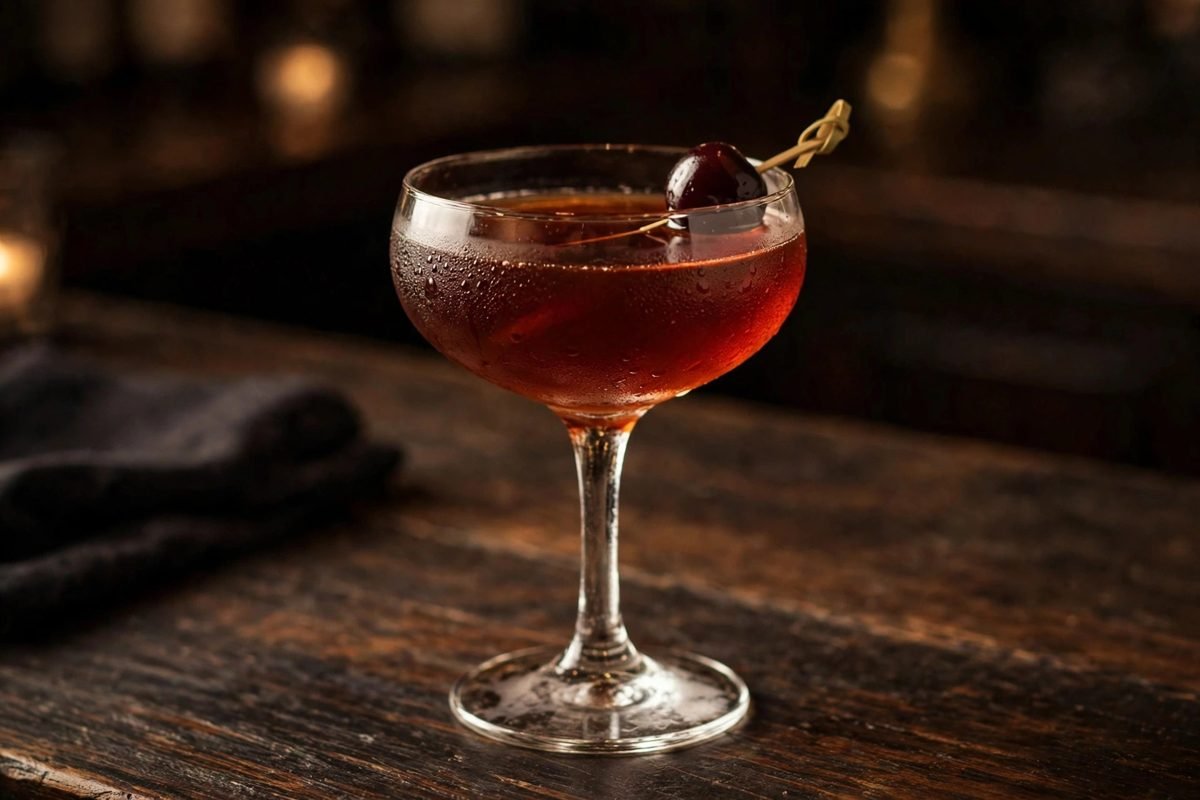

A Manhattan recipe looks almost too simple to need a guide. Three ingredients, a stir, a cherry, and a glass. Yet the gap between a Manhattan that tastes smooth, deep and balanced and one that tastes harsh, thin or cloyingly sweet comes down to small choices, and this guide covers them all.
So what is the classic Manhattan recipe? It is two parts whiskey, one part sweet vermouth and a couple of dashes of aromatic bitters, stirred with ice and served up in a chilled coupe or martini glass with a cherry. The rest of this guide explains how to choose each ingredient and adjust it to your taste.
Key takeaways:
- The classic Manhattan recipe is two parts whiskey, one part sweet vermouth and two dashes of aromatic bitters, stirred with ice and strained into a chilled glass.
- Stir, do not shake. Stirring chills and dilutes the drink gently while keeping it clear and silky.
- Rye whiskey gives a drier, spicier Manhattan; bourbon gives a rounder, sweeter one. Both are correct.
- Keep vermouth in the fridge once opened and use it within a few weeks, since stale vermouth is the most common reason a Manhattan tastes flat.
- Garnish with a good cherry, and add an orange twist only if you like its brighter aroma.
What Is a Manhattan?
A Manhattan is a stirred whiskey cocktail, one of the oldest drinks in the classic cocktail canon. It belongs to the same family as the old fashioned and the martini: spirit-led, short, served without ice in the glass, and built on balance rather than sweetness. Its character comes from whiskey and vermouth softening each other.
The drink is usually said to have appeared in New York in the late nineteenth century, and its name points to Manhattan itself. The exact origin story is debated, as it is for many classic cocktails, and no single account is settled. What is not in doubt is that the Manhattan was already a familiar bar order by the early twentieth century, and it has stayed on bar menus ever since.
The Classic Manhattan Recipe
The recipe below makes one drink. It uses the widely used 2:1 ratio, which gives a whiskey-forward Manhattan that still lets the vermouth show. Treat the measures as general guidance rather than a rigid rule, and adjust the vermouth up or down by a few millilitres once you know what you like.
- Whiskey: 60 ml of rye whiskey or bourbon.
- Sweet vermouth: 30 ml of sweet, or red, vermouth.
- Bitters: two dashes of aromatic bitters.
- Garnish: a maraschino-style cocktail cherry, or a good-quality preserved cherry.
- Ice: plenty of fresh, solid cubes for stirring.
- Glass: a chilled coupe or martini glass.
Chill the glass first, in the freezer or by filling it with ice water. Add the whiskey, vermouth and bitters to a mixing glass, fill it with fresh ice, and stir for about 30 seconds, until the mixing glass feels cold. Strain into the chilled glass, add the cherry, and serve at once.
Stirring for 30 seconds may feel long, yet it matters. The drink needs time to chill fully and to take on enough water from the ice to soften the whiskey without thinning it. A Manhattan stirred for only a few seconds tastes hot and rough, while one stirred far too long tastes flat and tired.
Understanding the 2:1 Ratio
The 2:1 ratio is the standard modern Manhattan, and it is the best place to start. It keeps the whiskey in charge while giving the vermouth enough room to add sweetness, herbal notes and body. If the drink tastes too sweet, try a little less vermouth rather than changing everything at once.
Some older recipes use equal parts whiskey and vermouth, or a ratio closer to 3:1. A 1:1 Manhattan is softer and more vermouth-led, while a 3:1 version is drier and more whiskey-led. Start at 2:1, taste, and move in small steps until the balance suits you.
Which Whiskey Should You Use?
Rye whiskey is the traditional choice for a Manhattan, and it remains the reference point for many bartenders. Rye is typically drier and spicier than bourbon, with notes of pepper, baking spice and grain. In a Manhattan, that spice stands up to the sweetness of the vermouth and keeps the drink lively rather than soft.
Bourbon makes a different, equally valid Manhattan. Bourbon is generally rounder and sweeter, with notes of vanilla, caramel and oak, and it gives a smoother, warmer drink. If you find a rye Manhattan too sharp, try bourbon. Our guide to bourbon explains how the spirit is made, and our guide to the best bourbon covers bottles that work well in cocktails.
Either way, choose a whiskey you would enjoy on its own, at around 40 to 46 percent alcohol by volume. A very mild whiskey can disappear behind the vermouth, while a very strong one can dominate it. Avoid flavoured whiskey, which clashes with the vermouth and bitters.
Choosing Your Vermouth
Sweet vermouth is not a minor ingredient in a Manhattan. At a third of the drink, it shapes the flavour as much as the whiskey does, so a poor vermouth will show. Look for a sweet, or red, vermouth made for cocktails, with a rich, herbal character and a balanced sweetness that is not syrupy.
Freshness matters more than the label. Vermouth is a fortified wine, and once opened it begins to lose its brightness. Keep it in the fridge, tightly sealed, and use it within a few weeks. A bottle left open for months at room temperature will have turned flat, and it will drag the whole drink down.
Stirred, Not Shaken: The Method That Matters
A Manhattan is stirred, not shaken, and the reason is texture. Shaking fills a drink with tiny air bubbles and small chips of ice, which makes it cloudy and gives it a lighter, frothier feel. That suits some cocktails, but a Manhattan should be clear, silky and weighty, and stirring is what gives it that character.
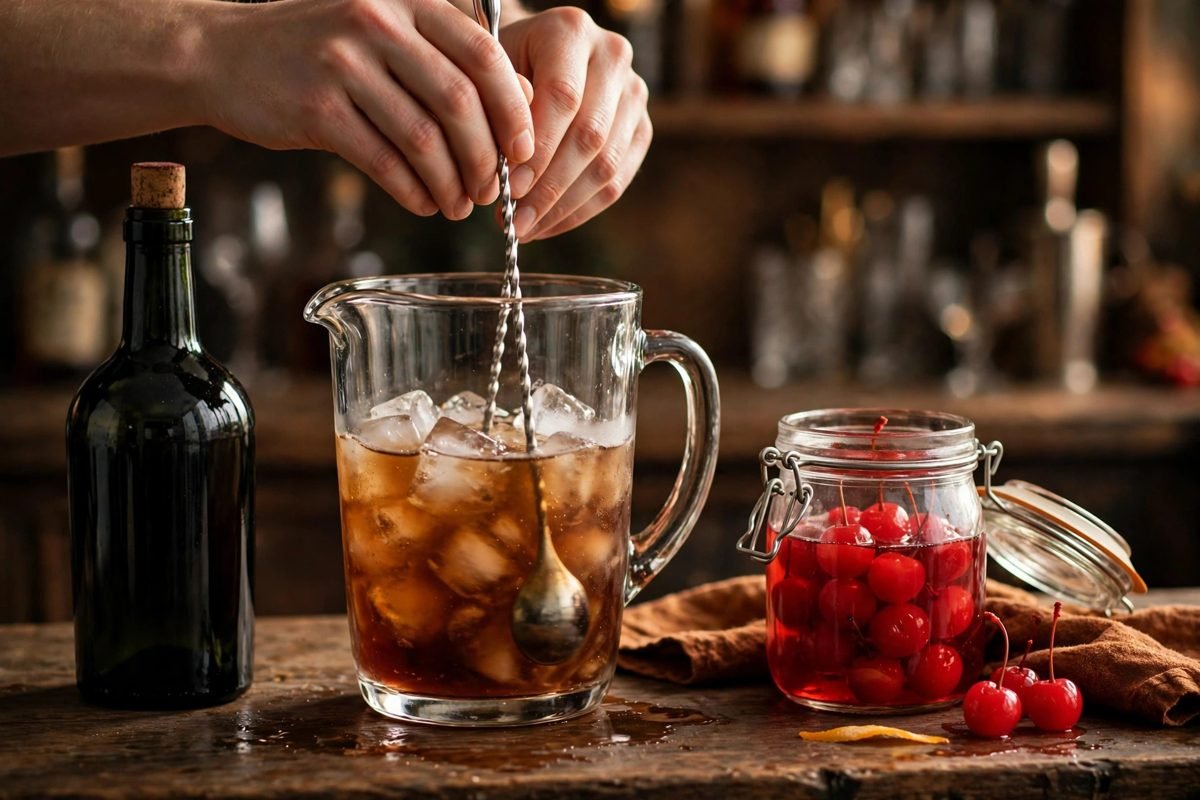
To stir well, use a mixing glass or sturdy jug, a long bar spoon, and plenty of fresh ice. Add the ingredients first, then the ice, and stir in smooth, even circles, keeping the spoon against the inside of the glass. After about 30 seconds, the drink will be cold and properly diluted.
| Variation | How it differs | Taste | Best for |
|---|---|---|---|
| Classic | Two parts whiskey, one part sweet vermouth, bitters | Warm, balanced, gently sweet | A first Manhattan, everyday drinking |
| Perfect | Equal sweet and dry vermouth, half and half | Drier, lighter, more herbal | Drinkers who find the classic too sweet |
| Dry | Dry vermouth instead of sweet vermouth | Crisp, lean, less sweet | Aperitif drinking, a lighter style |
| Black | Averna amaro instead of sweet vermouth | Dark, bitter, richly herbal | Slow evenings, fans of bitter flavours |
| Rob Roy | Scotch whisky instead of rye or bourbon | Smoky, malty, warming | Whisky lovers, cold nights |
The Perfect, Dry and Black Manhattans
The perfect Manhattan splits the vermouth half and half: half sweet vermouth and half dry vermouth, keeping the total at one part. The result is drier and lighter than the classic, with a more herbal edge, yet it keeps some of the sweetness that makes the drink approachable. Garnish a perfect Manhattan with a lemon twist rather than a cherry, which suits its brighter character.
The dry Manhattan replaces the sweet vermouth entirely with dry vermouth. It is crisp, lean and much less sweet, closer in spirit to a martini than to the classic Manhattan. It suits drinking before a meal, and it works best with a good rye, whose spice keeps the drink from tasting thin. A lemon twist is the usual garnish here too.
The black Manhattan replaces the sweet vermouth with Averna, an Italian amaro, in the same proportion. The result is dark, rich and bitter, with notes of herbs, liquorice and dried fruit. It is a slower, more brooding drink, and it suits drinkers who enjoy bitter flavours. Garnish it with a cherry, as with the classic, and stir it just as carefully.
Serving and Garnish
A Manhattan is served up, meaning chilled and strained into a stemmed glass with no ice. A coupe is the classic choice, with its wide, shallow bowl, while a martini glass works just as well. Chill the glass before pouring, since a warm glass will warm the drink within minutes and undo your careful stirring.
The cherry is the traditional garnish, and it is worth choosing well. A good preserved cherry, dark and firm, adds gentle sweetness and deep colour. Bright red, very sweet cherries from a jar can taste artificial, so look for a better-quality cherry if you can.
Manhattan Recipe Checklist
Use this checklist each time you make a Manhattan, and the drink will come out right far more often than not.
- Chill the glass: put it in the freezer or fill it with ice water while you prepare the drink.
- Check the vermouth: it should be fresh, kept in the fridge, and opened within the last few weeks.
- Measure the drink: 60 ml of whiskey, 30 ml of sweet vermouth, and two dashes of bitters.
- Use fresh ice: large, solid cubes, straight from the freezer, not reused or half-melted.
- Stir for 30 seconds: smooth, even circles, until the mixing glass feels cold.
- Strain and garnish: strain into the chilled glass, add a good cherry, and serve at once.
- Taste and adjust: try the classic first, then adjust the vermouth by a few millilitres next time.
Frequently Asked Questions
What is the best whiskey for a Manhattan?
Rye whiskey is the traditional choice, giving a drier, spicier Manhattan, while bourbon gives a rounder, sweeter one. Both work well, so choose the style you enjoy, at around 40 to 46 percent alcohol by volume.
Should a Manhattan be shaken or stirred?
A Manhattan should be stirred, not shaken. Stirring chills and dilutes it gently while keeping it clear and silky, while shaking makes it cloudy and frothy.
What can I use instead of sweet vermouth?
For a perfect Manhattan, use half sweet and half dry vermouth. For a dry Manhattan, use dry vermouth alone. For a black Manhattan, use Averna amaro instead of sweet vermouth.
How long does sweet vermouth last once opened?
Keep an opened bottle in the fridge, tightly sealed, and aim to use it within a few weeks. If it tastes flat, dull or vinegary, replace it, since stale vermouth will spoil a Manhattan.
Can I make a Manhattan without bitters?
You can, but the drink will taste flatter and less complete. Bitters add spice and depth that tie the whiskey and vermouth together, and two dashes of aromatic bitters are enough.
The Bottom Line
A good Manhattan is not about rare bottles or clever technique. It is about fresh vermouth, a whiskey you like, the right ratio, and a patient stir. Get those four things right and the drink almost makes itself, which is why it has lasted for well over a century.
Your next step is simple: chill a coupe, measure 60 ml of whiskey, 30 ml of sweet vermouth and two dashes of bitters, and stir it for 30 seconds. Taste it, note what you would change, and make it again. For another classic, try our guide to the margarita recipe, or our guide to amaretto.
Please drink responsibly. Never drink and drive, and do not drink if you are under the legal drinking age in your country.