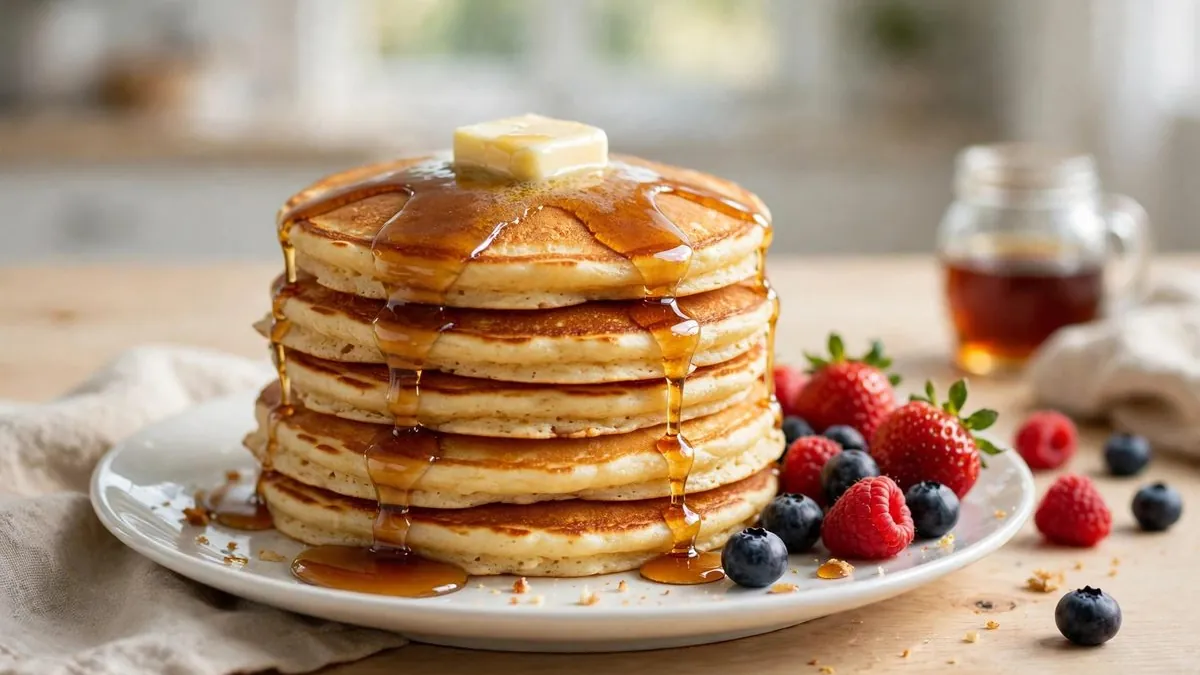

A good pancakes recipe is one of the most useful things a home cook can learn. The pancakes recipe below makes fluffy, golden pancakes with a soft centre and crisp edges, needing nothing more than butter and maple syrup.
Why do some pancakes turn out flat, pale or tough when the ingredients look the same? Usually the method is at fault, not the shopping list. Overmixing, a pan that is too cool, or flipping too early will undo good ingredients, while a rested batter and a properly heated pan will rescue an ordinary one.
This guide gives you the classic recipe first, then explains each step, offers tried variations, and covers serving, storing and fixing common mistakes. By the end, you will know when to flip, how thick to pour, and how to keep a batch warm.
Key takeaways:
- Use plain flour, baking powder, a pinch of salt, sugar, milk, eggs and melted butter for a classic pancake batter.
- Mix until just combined, with a few small lumps left, then rest the batter for ten minutes before cooking.
- Cook over a medium heat, flip once when bubbles appear and the edges look set, and serve straight away.
- Leftovers keep in the fridge for two days and freeze well, reheated in a toaster or a warm oven.
What makes a good pancake?
A good pancake is light, golden and tender rather than rubbery. That balance comes from enough raising agent to lift the batter, enough liquid to keep it soft, and a gentle hand when mixing. Baking powder does the lifting, milk and egg keep the crumb moist, and a short mix stops the flour from developing too much gluten.
The ingredients
This classic pancakes recipe serves four people and makes about eight medium pancakes, each roughly 12 centimetres across. The variations later in this guide build on the same base, so learn this one first.
- 200g plain flour: the structure of the pancake, sifted if it looks lumpy.
- 2 teaspoons baking powder: the lift that makes the pancakes fluffy.
- 1 tablespoon caster sugar: for browning and a gentle sweetness.
- A pinch of fine salt: to sharpen the flavour of the batter.
- 2 large eggs: at room temperature if you can, so the batter mixes smoothly.
- 300ml whole milk: for a tender crumb; semi-skimmed milk works too.
- 1 teaspoon vanilla extract: optional, but it gives the pancakes a warm flavour.
- 25g unsalted butter, melted, plus more for the pan: for richness and frying.
The classic pancakes recipe, step by step
Whisk the dry ingredients together in a large bowl: flour, baking powder, sugar and salt. Make a well in the centre, which gives the wet ingredients somewhere to go and helps you mix without flour flying over the worktop.
In a separate jug, whisk the eggs and milk with the vanilla, then stir in the melted butter. Pour the wet mixture into the well and stir until just combined. Stop as soon as the flour disappears, even if a few small lumps remain; stirring them out now would make the pancakes tough.
Let the batter rest for ten minutes at room temperature. The flour absorbs the milk, the baking powder starts to work, and the batter thickens slightly. Use this time to warm the plates and heat the pan.
Heat a large, heavy frying pan over a medium heat for two minutes, then add a small knob of butter and swirl it until it foams. The pan is ready when a drop of water sizzles quickly. If the butter browns straight away, the pan is too hot; take it off the heat for a moment.
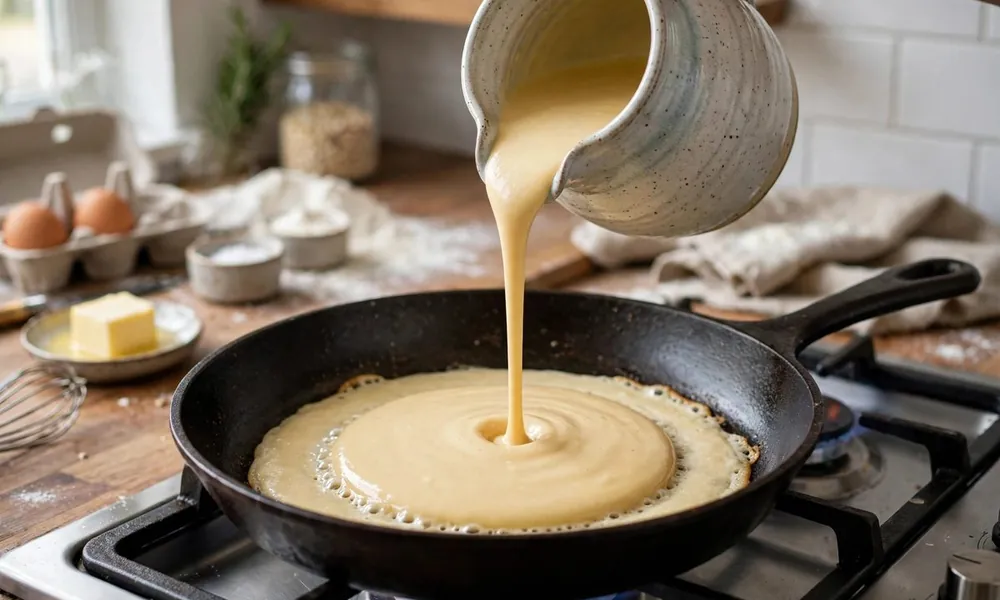
Pour about 60ml of batter, roughly a small ladleful, into the centre of the pan for each pancake, leaving space between them. Let the batter spread on its own rather than pushing it out, which makes uneven pancakes. Cook for one to two minutes, until bubbles appear and the edges look set.
Flip once, with a wide spatula, in one confident movement. Cook the second side for one minute, until golden, then lift the pancake onto a warm plate. Repeat with the rest, adding a little more butter when the pan looks dry. Keep finished pancakes warm in a low oven, loosely covered, while you cook the rest.
Serve straight away with butter and maple syrup, or with one of the serving ideas below. The first pancake is often the least tidy, because the pan is still finding its temperature; cooks call it the test pancake, and eating it yourself is entirely fair. Our guide to the best bread for French toast covers another weekend breakfast that uses the same pan.
Pancake variations to try
Once the classic recipe works, the variations are easy, because each one changes only one or two ingredients. Keep the flour, baking powder, salt and egg the same, and treat the changes below as swaps rather than a new recipe.
Buttermilk pancakes
Replace the milk with the same quantity of buttermilk for pancakes with a gentle tang and a tender crumb. Buttermilk reacts with the baking powder, so the pancakes rise well and brown beautifully. Reduce the baking powder to one and a half teaspoons and add half a teaspoon of bicarbonate of soda.
Best for: a classic American-style pancake with a soft, tangy crumb.
Blueberry pancakes
Stir a handful of fresh blueberries into the rested batter, or drop a few onto each pancake just after pouring it into the pan. The second method keeps the berries evenly spread. Fresh berries work better than frozen ones, which release water and can make the batter thin.
Best for: a fruity pancake that needs little more than butter and syrup.
Banana pancakes
Mash one ripe banana into the wet ingredients before mixing, and reduce the milk by two tablespoons so the batter does not become too thin. The banana adds sweetness and a soft crumb, so you can leave out the sugar. These pancakes brown faster, so use a slightly lower heat.
Best for: using up ripe bananas and a pancake that needs no added sugar.
Chocolate chip pancakes
Sprinkle a small handful of chocolate chips onto each pancake just after pouring, rather than stirring them through the batter, which can make them sink. Use plain chocolate chips, which hold their shape better, and keep the heat at medium so the chocolate melts without the pancake burning.
Best for: a treat breakfast, especially with children helping in the kitchen.
| Variation | What changes | Flavour | Best for |
|---|---|---|---|
| Classic | Nothing | Buttery and light | Everyday pancakes |
| Buttermilk | Buttermilk instead of milk | Gently tangy | A tender, classic stack |
| Blueberry | Fresh blueberries added | Fruity and fresh | A simple fruit pancake |
| Banana | Mashed banana, less milk | Sweet and soft | Using ripe bananas |
| Chocolate chip | Chocolate chips on top | Rich and sweet | A treat breakfast |
Serving ideas
The simplest serving is often the best: warm pancakes, a knob of butter that melts into the stack, and maple syrup poured over the top. Let the syrup warm slightly if it has been in the fridge, and pour it over just before serving so the pancakes stay crisp at the edges rather than soaking through.
For a fuller breakfast, serve the pancakes alongside bacon or sausages, with coffee and juice. The salty side works well against the sweet pancakes. Our guide to the best breakfast casserole covers another dish for feeding a crowd, while the best blender guide helps if you want a smoothie on the side.
Troubleshooting: why pancakes go wrong
Flat pancakes usually mean the baking powder was old, the batter was overmixed, or the pan was too cool. Check the date on the baking powder, stir only until combined, and give the pan time to heat.
Tough pancakes are almost always overmixed. Once liquid meets flour, gluten starts to develop, and every extra stir makes the pancake chewier. Mix until the flour just disappears and let the batter rest.
Storing and reheating pancakes
Let leftover pancakes cool completely on a wire rack before storing them, so steam does not make them soggy. Stack them with baking paper between each one, then keep them in a sealed container in the fridge for up to two days. Reheat them in a toaster or a warm oven.
Pancakes freeze well for up to one month. Cool them fully, stack them with baking paper between each one, and seal them in a freezer bag with the air pressed out. Defrost them in the fridge overnight or reheat them straight from frozen until hot through. Our guide to the best cookware skillet covers the pan that makes cooking and reheating easier.
Your pancakes recipe checklist
Work through this list before you start.
- Measure the flour properly: spoon it in and level it off, so the batter is not too thick.
- Check the baking powder: it should be in date, or the pancakes will stay flat.
- Mix until just combined: stop when the flour disappears, lumps and all.
- Rest the batter: ten minutes at room temperature before cooking.
- Heat the pan properly: medium heat, butter foaming, before the first ladleful.
- Flip once: when bubbles appear and the edges look set.
- Keep them warm: in a low oven, loosely covered, while you cook the rest.
- Cool leftovers fully: then fridge them within two hours, or freeze them.
Frequently asked questions
Why are my pancakes flat?
Usually the baking powder was old, the batter was overmixed, or the pan was too cool. Check the date on the baking powder, stir only until the flour disappears, and let the pan heat properly before the first pancake.
Should pancake batter rest before cooking?
Yes, ten minutes is enough. Resting lets the flour absorb the milk, smooths out small lumps, and gives the baking powder time to start working, so the pancakes cook up lighter.
Can I make pancake batter the night before?
You can mix the batter and keep it covered in the fridge overnight, but the baking powder loses some of its lift. Stir it gently in the morning and expect slightly less rise; for the fluffiest result, mix the batter fresh.
What is the best pan for pancakes?
A large, heavy, non-stick frying pan or a flat griddle, heated over a medium heat. A heavy pan holds its temperature better, and a flat surface makes flipping easier than a pan with high, sloping sides.
Can I freeze pancakes?
Yes, for up to one month. Cool them fully, stack them with baking paper between each one, seal them in a freezer bag, and reheat them in a toaster or a warm oven until hot through.
How do I keep pancakes warm without drying them out?
Hold them in a low oven, around 100 degrees Celsius, in a loose stack covered with a clean tea towel. Do not cover them tightly with foil, which traps steam and makes them soggy.
The bottom line
A good pancakes recipe is less about a secret ingredient and more about a calm method: measure the flour properly, mix until just combined, rest the batter, and cook over a steady medium heat. Get those four things right and the pancakes will be fluffy, golden and tender.
Your next step is simple: make the classic batch this weekend and eat the test pancake yourself. Once the method feels easy, try the buttermilk version next, and the recipe will become one you cook without looking at the page.
Food-safety note: cook pancakes until golden on both sides and hot through, and refrigerate any leftovers within two hours of cooking. Keep raw batter in the fridge and use it the same day, and wash your hands and utensils after handling raw egg.