

A coastal hotel is not the same as a beach hotel. A beach hotel puts you on the sand. A coastal hotel puts you above it, beside it, or wrapped around it, with the sea as the view from your room, your table, and your morning walk. The best coastal stays are chosen for where they sit on the coastline, not just for how close they are to a beach.
That is why this guide is organised by setting and season, not just by star rating. A cliff-top hotel in California and a quiet cove hotel in Portofino are both coastal, but they suit different trips and different budgets. Price is a poor guide on its own. Some of the most memorable coastal hotels are small and simple, and some of the most expensive are the hardest to reach in bad weather.
Below are nine coastal hotels worth considering in 2027, from a grand Riviera address to a relaxed California cliff-top stay. Each one is described by what it is good at, what to watch for, and who it suits best.
Key takeaways
- A luxury coastal hotel is defined by its position on the coastline, not by a private beach, and cliff, cove, and harbour settings each suit a different kind of trip.
- Book for the season you are actually travelling in, because coastal weather, sea conditions, and outdoor dining change far more between seasons than in a city hotel.
- Check what is included before you compare prices, because breakfast, parking, resort fees, and transfers can add a large amount to a coastal stay.
- Ask about the room itself, not just the view, since sea-facing rooms, balconies, and ground-floor terraces vary widely even within the same hotel.
- No coastal hotel can control the sea, and a stay booked for calm water, warm evenings, or a particular view is always subject to the weather on the day.
What a luxury coastal hotel actually is
A luxury coastal hotel sits on or just above the shoreline, with direct access to the coast and views that are part of the stay, not an afterthought. That can mean a cliff-top terrace in California, a harbour-front building in the Mediterranean, or a low, quiet resort on a Pacific bay. What they share is a sense of place that comes from the sea itself, the light, the sound, and the way the hotel is built around the coast.
The setting shapes the stay. Cliff-top hotels tend to be dramatic and windy, with big views and fewer places to walk to. Cove and bay hotels are calmer, often with a small beach or a jetty, and easier to explore on foot. Harbour hotels are the most convenient, with restaurants and shops nearby, but they can be noisier. None of these is better in itself. The right choice depends on whether you want drama, calm, or convenience.
Season matters more on the coast than almost anywhere else. A hotel that is perfect in June can be cold and half-closed in January, and a place that is crowded in August can be peaceful and half the price in October. Check which restaurants, pools, and beach services are open in your month of travel before you book.
How we chose these hotels and what to look for
Look first at the setting and the access. A hotel described as coastal should be on the coast, not a short drive from it, and the walk from your room to the water should be part of the experience. Check the map, not just the marketing. A hotel on a cliff with a long staircase down to the shore suits a different traveller from one with a flat path to a sheltered bay.
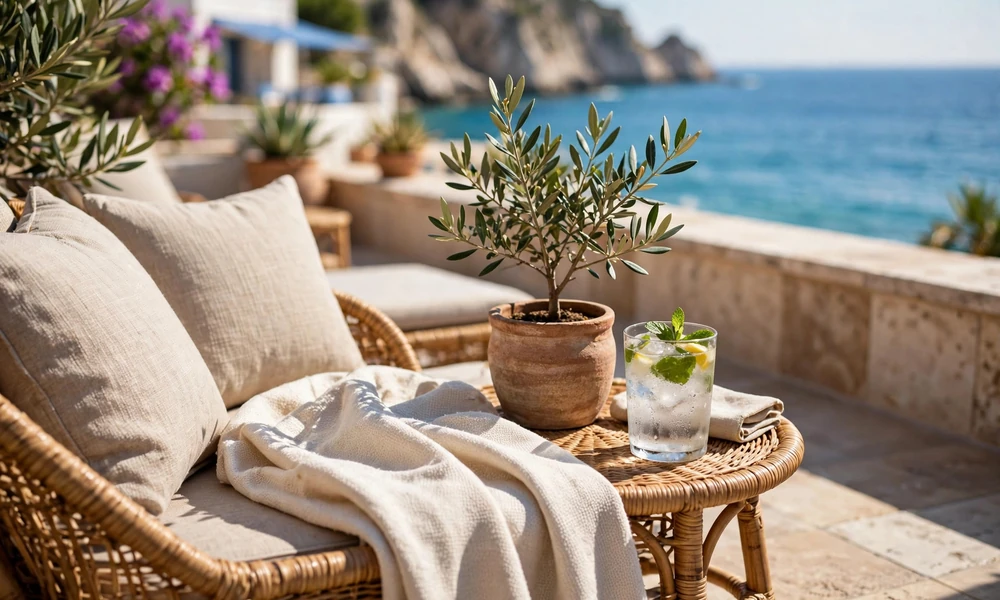
Look next at the room and the view. Sea-facing rooms, balconies, and terraces vary widely, and a partial sea view can mean very different things in different hotels. Ask which rooms have a full view, and whether the balcony is private. Santorini’s cliff-top hotels are a useful comparison here, because they show how much a room’s position matters when the view is the point of the stay.
Finally, look at what is included and what it costs to get there. Coastal hotels often add resort fees, parking, and transfers, and some are a long drive from the nearest airport. A hotel that looks reasonable can become expensive once you add a car and a resort fee, while a pricier hotel with breakfast and parking included can work out cheaper.
The 9 best luxury coastal hotels of 2027
The Ritz-Carlton, Half Moon Bay, California
What we like: A grand cliff-top hotel above the Pacific, with two golf courses, a spa, and fire pits on the terrace. The coastal setting is dramatic, and the rooms feel calm and spacious. What to consider: Fog is common, even in summer, and the coast can be cold and windy. Location: Half Moon Bay, California, USA. Best for: A classic California coast break, golf, and quiet luxury. Price range: From about $700 per night. Standout feature: The oceanfront terrace and fire pits at sunset.
This is the hotel to choose if you want a big, confident coastal setting with full resort facilities, at its best in autumn, when the fog lifts and the light is clear.
Belmond Hotel Splendido, Portofino, Italy
What we like: A historic hilltop hotel above Portofino harbour, with a saltwater pool, terraced gardens, and one of the most famous views on the Italian Riviera. What to consider: Very expensive in high season, and Portofino is crowded in summer. Location: Portofino, Liguria, Italy. Best for: A romantic Riviera stay and harbour views. Price range: From about $1,200 per night. Standout feature: The terrace above the harbour, best at dusk.
This is a hotel for a special occasion. The service is polished, the setting is beautiful, and the short walk down to the harbour is part of the pleasure, so consider May or September for a quieter stay.
Four Seasons Resort Maui at Wailea, Hawaii
What we like: A polished beachfront resort with a calm bay, an adults-only pool, a spa, and generous rooms with ocean views. The service is warm and unobtrusive. What to consider: Premium prices, and Wailea is a resort area rather than a town. Location: Wailea, Maui, Hawaii, USA. Best for: A relaxed Hawaiian holiday and families who want space. Price range: From about $1,000 per night. Standout feature: The calm, swimmable bay directly in front of the resort.
This is the most comfortable choice on this list for a long, easy stay, with a gentle bay, well-kept grounds, and enough to do on site that you do not need to leave.
Aman Sveti Stefan, Montenegro
What we like: A restored 15th-century island village connected to the mainland by a causeway, with stone cottages, a pink-sand beach, and a spa in a former church. What to consider: The island is car-free and reached on foot, and the setting is remote. Location: Sveti Stefan, Budva Riviera, Montenegro. Best for: Privacy, history, and a truly unusual setting. Price range: From about $1,100 per night. Standout feature: Staying in a restored stone cottage on the island itself.
Few hotels feel as separate from the everyday as this one, with a small island, a slow pace, and constant views across the bay, for travellers who want quiet and character.
Hotel du Cap-Eden-Roc, Antibes, France
What we like: A legendary Riviera hotel on a pine-covered cape, with a seawater pool cut into the rock, a spa, and a long history of famous guests. What to consider: Very expensive, and the hotel closes in winter. Location: Cap d’Antibes, French Riviera, France. Best for: Classic Riviera glamour and a grand hotel experience. Price range: From about $1,000 per night. Standout feature: The seawater pool, set into the rocks above the sea.
This is the grandest hotel on this list, best enjoyed slowly, with beautiful gardens, an unforgettable pool, and a short drive to Antibes old town. It is open from spring to autumn, so plan around the season.
Six Senses Zighy Bay, Oman
What we like: A secluded bay resort between mountains and sea, reached by a mountain road or by paraglider, with private villas, a spa, and a quiet, sandy beach. What to consider: Remote and reached by a long drive from Dubai, and the summer heat is intense. Location: Musandam Peninsula, Oman. Best for: Seclusion, nature, and a villa stay. Price range: From about $800 per night. Standout feature: Arriving by paraglider, or by the winding mountain road.
This is the most adventurous choice here, and the most rewarding if you want to switch off, with a sheltered bay, private villas, and mountains that make the setting feel hidden.
Rosewood Miramar Beach, Montecito, California
What we like: A relaxed, elegant beachfront resort with bungalows, gardens, a spa, and direct access to a wide, sandy beach. The atmosphere is calm and unhurried. What to consider: Premium prices, and Montecito is quiet, with few places to walk to. Location: Montecito, California, USA. Best for: A calm California beach stay and couples. Price range: From about $900 per night. Standout feature: The bungalows and gardens, set just back from the beach.
This is a good choice if you want the beach without the bustle of a bigger resort town, with comfortable rooms, an easy-to-reach beach, and the feel of a private house.
One&Only Palmilla, Los Cabos, Mexico
What we like: A long-established resort on a sheltered bay, with a swimmable beach, a spa, and generous suites with ocean views. The setting is warm and sunny for much of the year. What to consider: Premium prices, and Los Cabos is a resort destination rather than a town. Location: San Jose del Cabo, Baja California Sur, Mexico. Best for: Warm winter sun, swimming, and a long resort stay. Price range: From about $1,100 per night. Standout feature: The sheltered, swimmable bay, rare on this stretch of coast.
This is the warmest choice on this list for a winter trip, with a calm, swimmable bay, reliable weather, and a resort large enough to feel lively without feeling crowded.
Montage Laguna Beach, California
What we like: A craftsman-style resort on a bluff above the Pacific, with a spa, three pools, and direct access to a sheltered cove beach. The setting is beautiful and the service is attentive. What to consider: Premium prices, and the cove beach can be busy in summer. Location: Laguna Beach, California, USA. Best for: A classic Southern California coast stay and art-filled Laguna Beach. Price range: From about $800 per night. Standout feature: The bluff-top terrace and the cove beach below.
This is a good balance of resort comfort and a real town, with galleries, restaurants, and walks below, for travellers who want both a hotel to relax in and a place to explore.
Which coastal hotel is right for you
Start with the setting. If you want drama and big views, choose a cliff-top hotel, and accept the wind and the stairs. If you want calm water and easy swimming, choose a bay or cove hotel, and check that the beach is actually swimmable rather than just beautiful. If you want restaurants and shops on foot, choose a harbour or town hotel, and accept that it will be livelier and less private.
Then think about the season. The Mediterranean is at its best from May to October, the California coast is pleasant for much of the year but foggy in summer, and Mexico and the Caribbean are warmest in winter, so match the destination to your month of travel, not just to the photographs.
Finally, think about how you want to spend your days. Some coastal hotels are places to stay put, with a spa, a pool, and a terrace, while others are bases for exploring a coast, a town, or a wine region. The Maldives’ overwater hotels are a good example of the first kind, a stay where the hotel is the destination. Decide which kind of trip you want before you choose the hotel.
The caveats that matter
Coastal hotels are more exposed to weather than city hotels, and that exposure is part of their charm and part of their risk. A sea-facing room can be noisy in a storm, a terrace can be unusable in high wind, and a beach can be closed in rough conditions, so check the cancellation terms and the season before you book.
| Detail | What is known |
|---|---|
| Best setting for views | Cliff-top hotels, such as Half Moon Bay and Portofino, with the sea below |
| Best setting for swimming | Sheltered bays and coves, such as Wailea, Palmilla, and Laguna Beach |
| Best season, Mediterranean | May to October, with September often quieter and warmer than July |
| Best season, California coast | Autumn, when the fog lifts and the light is clear |
| Best season, Mexico and the Caribbean | November to May, when the weather is warm and dry |
| What to check before booking | Resort fees, parking, transfers, and what is open in your month |
| Who should book carefully | Travellers with limited mobility, because cliffs and steps are common |
| What the sea cannot promise | Calm water, warm evenings, or a particular view on any given day |
If you have limited mobility, check access carefully, because coastal hotels often involve steps, steep paths, and uneven ground. Ask the hotel directly about step-free routes, lift access, and the distance from the room to the beach, rather than relying on a general description. A short email before booking can save a difficult stay.
Checklist: choosing a coastal hotel honestly
Use these checks before you book.
- Check the setting on a map: is the hotel on the coast, and how far is the water?
- Check the season: which restaurants, pools, and beach services are open in your month?
- Check the room: does it face the sea, does it have a private balcony, and is it on the ground floor or above?
- Check the total price: nightly rate plus resort fees, parking, and breakfast.
- Check the access: steps, steep paths, and the distance to the beach, the town, and the nearest airport.
- Check the cancellation terms: coastal weather can change a trip, so know what it costs to change.
Frequently asked questions
What is the difference between a coastal hotel and a beach hotel?
A beach hotel sits on or beside a beach, while a coastal hotel sits on the coastline, which may be a cliff, a cove, a harbour, or a bay. Coastal hotels are chosen for position and views, beach hotels for direct sand access, and many coastal hotels have a beach, but not all of them do.
When is the best time to visit a coastal hotel?
It depends on the coast. The Mediterranean is best from May to October, California is often clearest in autumn, and Mexico and the Caribbean are warmest from November to May. Shoulder seasons are usually quieter and cheaper, with weather that is often just as good.
Are coastal hotels good for families?
Often yes, especially bay and cove hotels with calm water and a beach. Cliff-top hotels can be harder with small children, because of steps and drops, so check the layout and ask about family rooms before you book.
Do coastal hotels charge resort fees?
Many do, and they can add a large amount to the bill. Always check what the fee covers, whether parking and breakfast are included, and what the total per night will be.
Is it worth paying for a sea-facing room?
Usually yes, if the view is the point of the trip, because a sea-facing room changes the whole stay. But check what sea-facing means in that hotel, since a partial, side, and full view are priced differently and feel very different.
Can I plan a honeymoon around a coastal hotel?
Yes, and many couples do. Coastal hotels suit honeymoons because they combine a beautiful setting with privacy and good food. Our guide to honeymoon destinations by mood can help you match the coast to the trip you want, whether that is a quiet bay or a lively Riviera town.
The bottom line
The best luxury coastal hotel in 2027 is not the most expensive or the most famous. It is the one whose setting suits your trip, whose season matches your dates, and whose room gives you the view you came for. whether that is a cliff-top, a sheltered bay, or a harbour.
Choose the coast first, then the hotel, and check the total price, the season, and the access before you book, and a coastal stay can be the most memorable part of a trip.