Rain boots are the most practical pair of shoes a man can own, and the most often bought badly. A good pair keeps your feet dry through a wet commute, a muddy walk, or a long day outside, without blistering, sweating, or falling apart after one season. A bad pair leaks, rubs, and ends up at the back of a cupboard.
That is why this guide is organised by use, not just by brand. A tall rubber wellington for a muddy field is a different boot from a short, insulated boot for a cold, wet commute, and a lightweight rain boot for city streets is different again. Price is a poor guide on its own. Some of the most reliable boots are mid-priced, and some of the most expensive are the least comfortable to walk in all day.
Below are nine rain boots worth considering in 2027, from a classic tall wellington to a short, packable city boot. Each one is described by what it is good at, what to watch for, and who it suits best.
Key takeaways
- A rain boot should be waterproof first and comfortable second, and a boot that leaks or rubs is no bargain at any price.
- Tall wellingtons suit mud, fields, and deep water, while short boots and Chelsea-style rain boots suit city streets and commuting.
- Fit matters more with rain boots than with most shoes, because rubber does not stretch, so try them on with the socks you will actually wear.
- Insulation and lining matter in cold weather, and an unlined rubber boot that is fine in October can be miserable in January.
- No rain boot lasts forever, and a boot with cracked rubber, a worn sole, or a leaking seam should be replaced, not patched and trusted.
What a rain boot actually does
A rain boot is a waterproof boot, usually made from rubber or a rubber-like material, designed to keep water out while you walk through rain, puddles, mud, and wet grass. The simplest ones are tall wellingtons, a single piece of moulded rubber with a treaded sole. More modern ones add insulation, a cushioned insole, or a shorter cut that is easier to wear in the city.
The key difference from an ordinary boot is the seal. A rain boot has no stitching or laces for water to get through, and the sole is bonded to the upper, so water cannot creep in from below. That is why a wellington can stand in a puddle that would soak a leather boot in seconds, and why fit matters so much. Rubber does not give the way leather does, so a boot that is too tight will rub, and one that is too loose will slip and blister.
Height matters too. A tall boot protects your calves and keeps water out when you step into deep puddles or mud, but it is heavier and warmer. A short boot is lighter and easier to wear all day, but it will let water in if you step into anything deeper than an inch or two.
How we chose these boots and what to look for
Look first at the material and the build. Natural rubber is flexible and comfortable, but it can crack with age and sun. Synthetic rubber and PVC are tougher and cheaper, but they can feel stiffer and less breathable. A good boot should feel flexible when you bend it, with no thin spots at the ankle or heel, and a sole firmly bonded with no gaps.
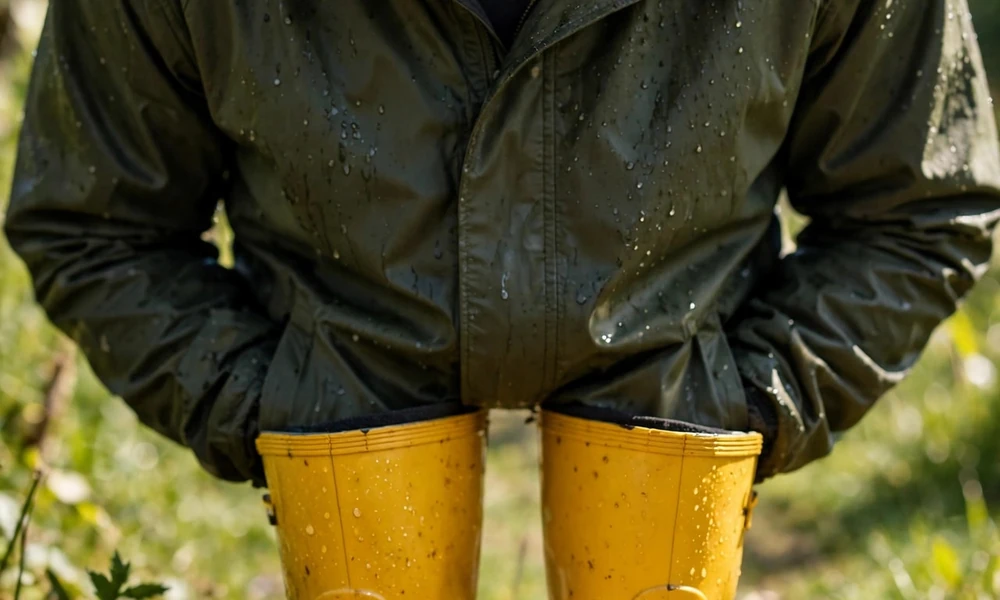
Look next at the sole and the grip. A rain boot is only useful if it stays upright on wet ground, so the tread should be deep and the rubber should feel grippy rather than smooth. A shallow tread is fine for a city pavement, but it will slip on wet grass or mud. This season’s boot trends are a useful check here, because they show which styles are made for real wet weather and which are made for looks.
Finally, look at the lining and the fit. An unlined boot is easy to clean and dries fast, but it can feel cold and clammy. A lined boot is warmer and more comfortable, but it takes longer to dry. Try the boot on with thick socks if you plan to wear it in winter, and walk in it for a few minutes, because a boot that pinches in the shop will not improve with wear.
The 9 best rain boots for men of 2027
Hunter Original Tall Boot
What we like: The classic tall wellington, made from natural rubber, with a comfortable fit, a good tread, and a shape that works in the city as well as in the country. What to consider: Unlined, so it can feel cold in winter, and natural rubber needs care to avoid cracking. Best for: Everyday wet weather, muddy walks, and festivals. Fabric: Natural rubber, unlined. Price range: About $150 to $180. Standout feature: The classic shape and the reliable, grippy sole.
This is the boot to buy if you want one pair that does everything reasonably well, comfortable and well made, with thick socks in winter.
Barbour Bede Wellington Boot
What we like: A smart, slim wellington with a buckle detail, made for country wear but neat enough for town. The fit is comfortable and the rubber is hard-wearing. What to consider: Slimmer than some wellingtons, so wide feet should try before buying, and it is unlined. Best for: Country walks, shooting, and smart rural wear. Fabric: Natural rubber, unlined. Price range: About $180 to $220. Standout feature: The slim, tailored shape that looks good with a jacket.
This is the boot to choose if you want a wellington that does not look like a work boot, well made and neatly fitting, best for walking and standing rather than heavy, muddy work.
Aigle Parcours 2 Iso
What we like: A hand-made French wellington with a neoprene lining, a comfortable, anatomical fit, and a sole designed for grip on wet grass and mud. What to consider: Premium price, and the neoprene lining takes time to dry. Best for: Long country walks, hunting, and cold, wet weather. Fabric: Natural rubber with neoprene lining. Price range: About $220 to $280. Standout feature: The neoprene lining, which keeps feet warm without bulk.
This is the most comfortable tall boot on this list for a long day outside, with a warm lining, a shaped fit, and excellent grip on soft ground.
Muck Boot Arctic Sport Mid
What we like: A short, insulated boot with a neoprene upper and a rugged sole, designed for cold, wet work. Warm, comfortable, and easy to slip on and off. What to consider: Shorter than a wellington, so it will not keep deep water out, and it is heavier than a city boot. Best for: Cold, wet work, farm chores, and winter walking. Fabric: Neoprene and rubber, insulated. Price range: About $130 to $170. Standout feature: The warmth, with insulation rated for very cold weather.
This is the boot to buy if your problem is cold as much as wet, warm and tough, and easy to wear for hours, though it is not a city boot.
Bogs Classic High Waterproof Boot
What we like: A tall, insulated boot with a cushioned insole and a grippy sole, made for wet, muddy conditions. Comfortable from the first wear, with no breaking in. What to consider: Bulky and warm, so it can feel heavy on a mild day, and the tall cut is not the neatest for town. Best for: Muddy work, gardening, and cold, wet days. Fabric: Rubber and neoprene, insulated. Price range: About $120 to $160. Standout feature: The comfort, with a cushioned footbed that suits long days on your feet.
This is a practical, no-nonsense boot for people who need to be outside in all weather, warm, waterproof, and comfortable enough to wear all day.
Xtratuf Legacy 15-Inch Boot
What we like: A tough, flexible boot made for fishing and deck work, with a slip-resistant sole and a comfortable, lightweight feel. What to consider: Unlined, so it can feel cold in winter, and the tall cut is best for work rather than for town. Best for: Fishing, boating, and wet, slippery surfaces. Fabric: Rubber, unlined. Price range: About $140 to $180. Standout feature: The slip-resistant sole, designed for wet decks.
This is the boot to choose if you work on water or on slippery ground, with excellent grip, a light feel for its height, and a build made to be worn hard.
Dunlop Purofort+ Full Safety Boot
What we like: A lightweight, insulated work boot with a steel toe, made from a tough, flexible material that stays comfortable in cold weather. What to consider: A work boot, not a city boot, and the steel toe adds weight. Best for: Construction, farm work, and cold, wet sites. Fabric: Purofort polyurethane, insulated. Price range: About $150 to $200. Standout feature: The light weight for a steel-toe boot, and the insulation.
This is the boot to buy if you need protection as well as waterproofing, lighter than most safety boots, flexible in the cold, and comfortable for a full working day.
Sperry Saltwater Duck Boot
What we like: A classic duck boot with a rubber lower and a leather upper, waterproof where it matters and smart enough for town. Comfortable, with a good grip. What to consider: Not fully waterproof above the ankle, so it will not cope with deep water, and the leather needs care. Best for: City rain, wet streets, and casual wear. Fabric: Rubber lower, leather upper. Price range: About $130 to $170. Standout feature: The classic look, which works with jeans and a coat.
This is the boot to choose if you want rain protection that still looks like a normal shoe, handling puddles and wet streets well, though it is not a wellington and will not cope with deep mud.
Tretorn Strala Rain Boot
What we like: A short, light rain boot with a clean, minimal shape, easy to slip on and off and easy to pack. Good grip, and a comfortable fit for everyday wear. What to consider: Short, so it will not keep deep water out, and unlined, so it is best for mild weather. Best for: City commuting, travel, and light rain. Fabric: Natural rubber, unlined. Price range: About $90 to $120. Standout feature: The light weight and the packable, minimal shape.
This is the boot to buy if you want something light and simple for everyday rain, easy to wear and carry, and the cheapest boot on this list.
Which rain boot is right for you
Start with where you will wear it. If you will be in fields, on a farm, or at a festival, buy a tall wellington, and accept the weight. If you will be on city streets and in and out of offices, buy a short boot or a duck boot, and accept that it will not cope with deep water. If you will be working outside in winter, buy an insulated boot, and accept the bulk.
Then think about fit. Rain boots do not stretch, so try them on with the socks you will actually wear, and walk in them for a few minutes. A boot that is too tight will rub within an hour, and one that is too loose will slip at the heel and blister. If you are between sizes, size up and wear a thicker sock. Hiking boots for men are a useful comparison here, because they show how much fit matters when a boot is worn for hours on end.
Finally, think about warmth. An unlined rubber boot is fine in spring and autumn, but it can be cold in winter, especially if you are standing still. A lined or insulated boot is warmer, but it takes longer to dry. If you only buy one pair, choose the one that suits the coldest day you expect.
The caveats that matter
Rain boots are simple, but they are not foolproof. A boot that fits badly will blister, a boot that is too short will let water in, and a boot with cracked rubber will leak without warning, so check the fit, the height, and the rubber before you trust a pair in bad weather.
| Detail | What is known |
|---|---|
| Best for deep water and mud | Tall wellingtons, such as Hunter Original and Aigle Parcours 2 |
| Best for cold, wet work | Insulated boots, such as Muck Boot Arctic Sport and Bogs Classic High |
| Best for city rain | Short boots and duck boots, such as Sperry Saltwater and Tretorn Strala |
| Best for slippery surfaces | Xtratuf Legacy, with a sole designed for wet decks |
| How to check the fit | Try on with the socks you will wear, and walk for a few minutes |
| How to care for rubber | Clean after use, dry away from heat, and store out of direct sun |
| When to replace them | If the rubber cracks, the sole wears smooth, or a seam leaks |
| What they do not do | They do not replace a hiking boot, and they do not breathe like leather |
If you have foot problems, such as flat feet, bunions, or plantar fasciitis, check the support before you buy, because most rain boots have little arch support. A good insole can help, and a podiatrist can advise on what to look for. Do not buy a boot that hurts in the shop and hope it will soften, because rubber does not break in the way leather does.
Checklist: choosing a rain boot honestly
Use these checks before you buy.
- Check the height: tall for fields and deep water, short for city streets.
- Check the fit: try on with the socks you will actually wear, and walk for a few minutes.
- Check the sole: deep tread and grippy rubber for wet grass and mud, not just for pavements.
- Check the lining: unlined for mild weather, lined or insulated for cold days.
- Check the rubber: flexible, with no thin spots, cracks, or gaps.
- Check the care: clean after use, dry away from heat, and store out of direct sun.
Frequently asked questions
How do I stop rain boots from rubbing?
Fit is the main cause. Wear the socks you will use in the boot, make sure the heel does not slip, and use a cushioned insole if the boot feels hard underfoot. If a boot rubs in the shop, try a different size or a different boot.
Can I wear rain boots all day?
Yes, if they fit well and are lined or insulated for the weather. Unlined rubber boots can feel cold and clammy after hours, so add thick socks in winter, and let your feet dry if you are indoors for a long time.
Are expensive rain boots worth it?
Often yes, if you wear them a lot. A well-made boot fits better, grips better, and lasts longer than a cheap one, but the most expensive boot is not always the best, and a mid-priced boot that fits well beats a premium boot that pinches.
How do I clean rain boots?
Rinse off mud with cold water, wipe with a damp cloth, and let them dry naturally away from radiators and direct sun. Do not use harsh cleaners, and do not dry rubber boots on a heater, because heat cracks rubber.
Can I wear rain boots with jeans?
Yes. Tall wellingtons work with jeans tucked in, while short boots and duck boots work with jeans rolled or cuffed. A slim, tailored wellington looks better with a jacket than a bulky work boot, so match the boot to the outfit as well as to the weather.
What should I wear instead of rain boots on a dry day?
Rain boots are for wet weather, and on a dry day a normal shoe is more comfortable and more breathable. Our guide to everyday sneakers is a good place to start for dry days, because a well-chosen sneaker is lighter and cooler than any rubber boot.
The bottom line
The best rain boot for men in 2027 is not the most expensive or the tallest. It is the one that fits your feet, suits the wettest day you expect, and is comfortable enough to wear for hours. whether that is a tall wellington, an insulated boot, or a short city boot.
Try them on with the right socks, check the grip and the height, and buy the boot that fits, not the one with the best photograph. Do that, and a good pair of rain boots will keep your feet dry for years, not just for one wet season.