A pleated shirt is a small detail that changes the whole shirt. A row of fine folds across the chest or down the back adds texture, movement and a deliberate, tailored look, without a logo or a loud print doing the work. For men, it is one of the easiest ways to make a plain outfit feel considered, and it is also one of the easiest details to get wrong, because pleats can pull, flare and add bulk in the wrong places.
The problem is not a lack of choice. Designer labels have made pleated shirts a regular part of their collections, and high-street brands have followed with cheaper versions. The problem is knowing which ones hold their shape after washing, which fabrics actually breathe, and which cuts suit a real body rather than a runway model. A good pleated shirt should sit cleanly on the shoulders, let the pleats fall straight, and feel comfortable after a full day of wear.
Below are nine pleated shirts for men worth considering in 2027, from sharp designer pieces to practical workwear-inspired options. Each one is described by what it does well, what to watch for, and who it suits best, so you can choose a shirt that earns its place in your wardrobe rather than hanging unworn. The list covers a range of prices, fabrics and cuts, and it is honest about where each shirt falls short, because a shirt that is hard to wash or hard to fit is not a good buy at any price.
Key takeaways
- Pleats add texture and structure to a shirt, but they need a clean shoulder fit and a fabric that holds its shape to look good.
- Cotton poplin and linen blends are the most practical choices, while wool and heavy twill pleats suit cooler weather and smarter looks.
- Men’s pleated shirts are still a small, designer-led category, so sizing is inconsistent and trying before you buy matters more than usual.
- Always check the care label: most pleated shirts need a gentle wash and should be hung to dry so the folds keep their shape.
- No shirt suits every body or every occasion, and a pleated shirt that pulls across the chest or flares at the waist is the wrong size, not the wrong style.
What a pleated shirt actually is
A pleat is a fold of fabric that is stitched or pressed into place, usually running vertically down the front or back of a shirt. Knife pleats are narrow and lie flat, box pleats are wider and more structured, and inverted pleats open outward to give extra room. On a shirt, pleats are most often found across the chest, down the centre back, or as a panel running from the shoulder to the hem.
The appeal is partly visual and partly practical. Visually, pleats break up a flat expanse of fabric and catch the light as you move, which is why they read as more considered than a plain shirt. Practically, they give the shirt extra room to move without adding width to the cut, so a pleated back can make a slim shirt feel comfortable across the shoulders, and a pleated front can add drape without looking loose.
The trade-off is care. Pleats are pressed into the fabric, and heat, water and rough handling can soften them. A shirt that looks sharp on arrival can look tired after a few washes if it is tumble-dried or crammed into a drawer. That is why the fabric and the care instructions matter as much as the design, and why the shirts below are judged on how they hold up, not just how they look in a photograph. A good test is the first wash: if the pleats still look crisp after one gentle cycle and a hang dry, the shirt is well made, and if they have already softened into vague ripples, it never was.
How we chose these shirts and what to look for
Look first at the pleats themselves. They should be even, straight and firmly pressed, with no puckering at the stitching and no pleat that pulls open when the shirt is buttoned. Run a hand down the front: a good pleat lies flat and springs back, while a poor one feels limp or catches on itself. If the pleats open up across the chest when you sit down, the shirt is too tight, whatever the label says.
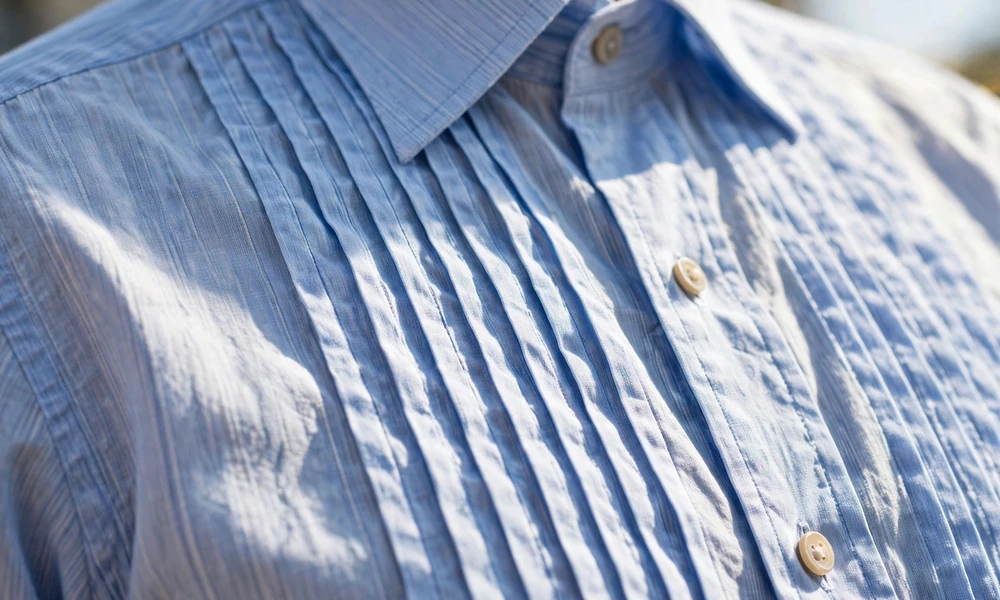
Look next at the fabric. Cotton poplin is the safest choice: it holds a press well, breathes, and suits most occasions. Linen and linen blends are cooler and more relaxed, but they crease more easily and the pleats soften faster. Wool pleats look richer and hold their shape well, but they need dry cleaning and cost more. A shirt in a blend, such as cotton with a little elastane, can be a practical compromise, giving the pleats a little stretch and recovery.
Finally, look at the cut and the details. A pleated shirt should be tried on with the trousers or jacket you plan to wear it with, because the pleats change how the shirt sits at the waist and under a layer. Check the collar, the buttons and the hem, and check the care label before you buy. Our guide to pleated skirts for men follows the same logic, because pleats behave the same way whatever the garment, and a fold that is pressed well on one piece is usually pressed well across the whole collection.
The 9 best pleated shirts for men of 2027
Thom Browne Pleated Oxford Shirt
What we like: A crisp cotton oxford with fine knife pleats across the chest, a clean collar and the brand’s precise tailoring, in a cut that feels sharp without being stiff. What to consider: Premium price, and the slim cut runs small, so size up if you are between sizes. Best for: Smart occasions and office wear. Fabric: Cotton oxford. Price range: Premium. Standout feature: Fine, evenly pressed chest pleats that hold their shape.
Rick Owens Pleated Poplin Shirt
What we like: A long, architectural poplin shirt with deep pleats down the front, a generous drape and a dark, minimal palette that suits the brand’s signature look. What to consider: The long length suits taller frames best, and it needs careful ironing to keep the pleats sharp. Best for: Fashion-forward and evening looks. Fabric: Cotton poplin. Price range: Premium. Standout feature: Deep front pleats with a dramatic, structured drape.
Y/Project Pleated Panel Shirt
What we like: An asymmetric pleated panel that runs from the shoulder to the hem, in soft cotton with a relaxed fit that moves well and layers easily. What to consider: The asymmetry is a deliberate design choice, so it will not suit everyone, and it is dry clean only. Best for: Creative and art-led outfits. Fabric: Cotton. Price range: Premium. Standout feature: An asymmetric pleated panel that makes the shirt distinctive.
JW Anderson Pleated Cotton Shirt
What we like: A clean, modern cotton shirt with subtle box pleats across the back, a neat collar and a fit that works for most body types. What to consider: The back pleats are subtle, so it reads as a classic shirt at first glance, and it creases if left folded. Best for: Everyday smart-casual wear. Fabric: Cotton. Price range: Mid to premium. Standout feature: Box pleats across the back that add movement without bulk.
Comme des Garçons Homme Plus Pleated Shirt
What we like: A bold, structured shirt with wide pleats and a boxy, architectural cut, in a fabric that holds its shape all day. What to consider: The boxy cut is generous, so shorter frames may need it taken in, and the price is high. Best for: Statement and runway-inspired outfits. Fabric: Cotton blend. Price range: Premium. Standout feature: Wide, structured pleats with an architectural silhouette.
Martine Rose Pleated Overshirt
What we like: A relaxed overshirt with soft pleats across the chest, a roomy fit and a slightly retro feel, in a cotton twill that feels sturdy and ages well. What to consider: It is cut oversized, so size down if you want a neater fit, and the twill needs a warm iron. Best for: Layering and casual weekend wear. Fabric: Cotton twill. Price range: Mid to premium. Standout feature: Soft chest pleats on a relaxed, layerable overshirt.
Eckhaus Latta Pleated Camp Shirt
What we like: A short-sleeve camp shirt with fine pleats down the front, a relaxed collar and a lightweight fabric that suits warm weather. What to consider: The lightweight fabric creases easily, and the fit is deliberately loose. Best for: Summer and holiday wear. Fabric: Cotton blend. Price range: Mid to premium. Standout feature: Fine front pleats on a breezy, short-sleeve camp collar.
Telfar Pleated Work Shirt
What we like: A straightforward work shirt with practical pleats across the back, sturdy cotton, useful pockets and a price that is fair for the quality. What to consider: The cut is utilitarian rather than tailored, so it suits casual outfits best. Best for: Everyday workwear and casual looks. Fabric: Cotton. Price range: Mid-range. Standout feature: Back pleats that add shoulder room to a practical work shirt.
Diesel Pleated Denim Shirt
What we like: A denim shirt with pleats stitched across the chest, a rugged feel and a wash that softens with wear, in a cut that suits most builds. What to consider: Denim pleats soften with washing, so the folds will relax over time, and it should be washed inside out. Best for: Casual denim outfits and weekend wear. Fabric: Cotton denim. Price range: Mid-range. Standout feature: Chest pleats on a sturdy denim shirt that ages well.
Which pleated shirt is right for you
Start with the occasion. For work or a smart event, a cotton poplin or oxford shirt with fine knife pleats is the safest choice. It looks tailored, it holds a press, and it sits well under a jacket. For casual wear, a camp shirt or an overshirt with softer pleats is more comfortable and more forgiving, and it will not look out of place with jeans or shorts.
Then think about your build. Slim and tall frames can carry deep pleats and longer lengths, such as the Rick Owens and Y/Project shirts, without the pleats overwhelming them. Broader frames do better with box pleats across the back, which add room without adding visual width, and with a cut that is not too slim across the chest. If a shirt pulls at the buttons, it is too small, and no amount of ironing will fix it.
Finally, think about care. If you will not iron or dry clean, choose a cotton poplin shirt with firmly pressed pleats and a simple care label. If you are happy to look after it, a linen blend or a wool pleat can look richer and last longer. The current denim trends for fall are a useful guide here too, because a pleated denim shirt is one of the easiest ways to wear the trend without buying a whole new outfit.
The caveats that matter
Pleats are a pressed detail, and pressed details need care. A shirt that is tumble-dried, washed too hot, or left crumpled will lose its pleats faster than a plain shirt loses its shape. That does not mean pleated shirts are fragile, only that they reward a little attention. Wash on a gentle cycle, hang to dry, and iron on a warm setting with steam, pressing along the folds rather than across them.
| Detail | What is known |
|---|---|
| Best fabric for most men | Cotton poplin, which holds a press well, breathes, and suits most occasions |
| Most practical pleat | Knife pleats, narrow and flat, which stay neat and add the least bulk |
| Fit check | Pleats should lie flat when buttoned; if they pull open, the shirt is too small |
| Washing | Gentle cycle, cold or warm water, and hang to dry so the folds keep their shape |
| Ironing | Warm iron with steam, pressing along the folds, never across them |
| Who should avoid deep pleats | Shorter frames, where very deep or long pleats can overwhelm the silhouette |
| What to avoid | Tumble-drying and cramming pleated shirts into a drawer, which softens the folds |
| What pleats do not do | They do not hide a poor fit, and they do not suit every occasion or every body |
Sizing is the other honest problem. Men’s pleated shirts are still a small, designer-led category, and sizing varies more than it does for a plain shirt. One brand’s medium can be another brand’s large, and a pleated cut can feel tighter across the chest than the same size in a plain shirt. Try before you buy where you can, and check the returns policy when you buy online.
Checklist: buying a pleated shirt honestly
Use these checks before you buy, and again after the first wash.
- Check the pleats: they should be even, straight and firmly pressed, with no puckering at the stitching.
- Check the fit: button the shirt and sit down; the pleats should stay flat and not pull open across the chest.
- Check the fabric: cotton poplin for everyday wear, linen for summer, wool for smarter, cooler-weather looks.
- Check the care label: most pleated shirts need a gentle wash and should be hung to dry.
- Check the shoulders: the seam should sit on your shoulder, not droop down your arm or pull toward your neck.
- Check the length: it should sit neatly tucked or untucked, without the pleats flaring out at the waist.
Frequently asked questions
Are pleated shirts in style for men in 2027?
Yes. Pleats have moved from runway collections into regular menswear, and they are now a recognised detail rather than a novelty. The key is to choose a clean, well-pressed pleat rather than an exaggerated one, which keeps the look current without dating quickly.
Do pleated shirts make you look bigger?
They can, if the pleats are wide and the shirt is loose. Fine knife pleats and box pleats across the back add very little visual width, while deep, wide pleats on a boxy cut can add bulk. Choose the pleat to suit your frame, and keep the fit clean.
How do I iron a pleated shirt?
Use a warm iron with steam, and press along each fold from top to bottom, rather than ironing across the pleats. Hang the shirt immediately after ironing so the folds set, and avoid pressing the pleats flat with too much pressure.
Can I wear a pleated shirt to work?
Yes, if the pleats are fine and the fabric is smart. A cotton poplin or oxford shirt with knife pleats works well in most offices, especially under a blazer. Save deep pleats, denim and camp collars for casual days.
Do pleated shirts need dry cleaning?
Most cotton pleated shirts do not, and a gentle machine wash is fine. Wool pleats and some designer pieces are dry clean only, so check the label. Either way, hang the shirt to dry rather than tumble-drying it.
What should I wear with a pleated shirt?
Keep the rest of the outfit simple, because the pleats are already doing the work. Tailored trousers or dark jeans, plain shoes and no competing pattern are the safest pairing. A linen shirt for men follows the same rule, and it is a good second shirt to own once you have a pleated one you like.
The bottom line
The best pleated shirt for men in 2027 is not the most dramatic or the most expensive. It is the one with pleats that are pressed well, a fabric that suits your climate, and a fit that stays clean across the chest and shoulders. For most men, a cotton poplin shirt with fine knife pleats is the right starting point, and it will work for work, for evenings and for smart-casual days.
Choose one shirt, try it on with the trousers you actually wear, wash it once to see how the pleats hold, and judge it on how it looks at the end of the day, not just in the mirror at home. That is the honest way to wear a detail that can look superb when it is done well, and tired when it is not.