Retinol is the ingredient most people associate with faces, not feet. Yet feet are skin too, and they are often the most neglected part of a teenager’s routine: dry heels, rough patches, and cracked skin are common, especially in colder months and after sport. A gentle retinol foot serum can help smooth and renew that skin, but it is a product that needs care, particularly for teenagers, whose skin is still developing and who should not be using strong actives without good reason.
That is why this guide is organised around safety first, and products second. Most teens do not need retinol at all, and a plain moisturiser is the right answer for most feet most of the time. But for older teens with persistently rough, dry feet, a low-strength retinol serum, used a few nights a week with a parent or guardian involved, can be a sensible step. The key is choosing a gentle formula, starting slowly, and stopping if the skin becomes irritated.
Below are nine foot serums worth considering in 2027, from true low-strength retinol treatments to gentle, retinol-free foot care that pairs well with them. Each one is described by what it is good at, what to watch for, and who it suits best, so you can choose with your teen’s skin in mind, not just a product list.
Key takeaways
- Most teens do not need retinol on their feet, and a plain moisturiser is the right first step for dry or rough skin.
- For older teens with persistently rough feet, a low-strength retinol serum, 0.1 to 0.3 percent, used two to three nights a week, can help smooth skin gradually.
- Dedicated retinol foot serums made specifically for teens are a very small category, so this guide mixes gentle retinol treatments with plain foot care that pairs well with them.
- Never use retinol on broken, cracked, sunburned or freshly shaved skin, and always involve a parent or guardian and, if in doubt, a dermatologist.
- Retinol does not work overnight, it does not replace moisturiser or sunscreen on exposed feet, and it should never be used with a strong exfoliant on the same night.
What retinol actually does for feet
Retinol is a form of vitamin A that speeds up skin cell turnover. In plain terms, it helps old, rough surface skin shed more quickly and encourages fresher skin underneath, which is why it is used for fine lines, uneven tone and rough texture on the face. On feet, the same process can help with dry, rough patches, thickened skin on the heels, and a dull, flaky appearance, especially when it is combined with a good moisturiser.
What it does not do is work overnight. Most people notice smoother skin after four to eight weeks of regular use, and the effect is gradual. It also does not replace the basics. Feet need moisture, and a retinol serum used on dry, unmoisturised skin will often irritate rather than help. That is why the best approach is a gentle retinol product, used a few nights a week, followed by a rich moisturiser.
Teen skin is different from adult skin. It is generally more resilient in some ways and more reactive in others, and it is still developing. That is why dermatologists usually advise against strong actives for younger teens, and why any retinol use in the teenage years should be low-strength, infrequent, and supervised by a parent or guardian. If a teen has eczema, psoriasis, or another skin condition, or is using a prescription acne treatment, a dermatologist should be involved before any retinol is used.
How we chose these serums and what to look for
Look first at the strength. For teens, the lowest strength is the right strength. A retinol concentration of 0.1 to 0.3 percent, or a gentle derivative such as retinyl palmitate, is enough to help with rough skin without the irritation that a stronger formula can cause. A pea-sized amount is enough for both feet. More does not make it work faster, it makes irritation more likely.
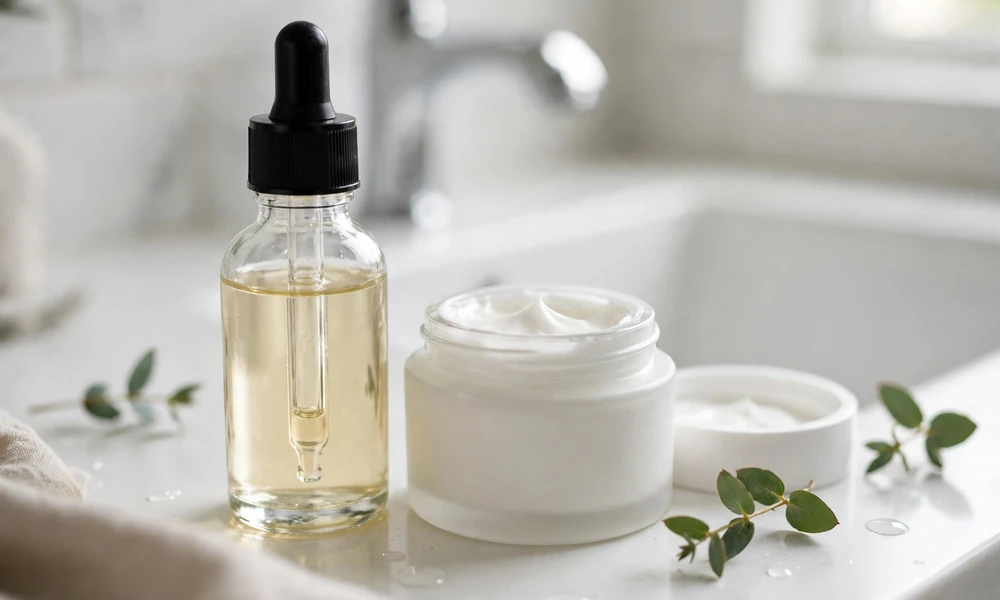
Look next at the supporting ingredients. A good foot serum for a teen should include soothing and moisturising ingredients alongside the retinol, such as ceramides, hyaluronic acid, glycerin or squalane. These help the skin tolerate the retinol and keep the feet comfortable. Avoid formulas with added fragrance, drying alcohol, or strong exfoliating acids, because those increase the chance of irritation, especially on skin that is already dry or cracked.
Finally, look at the form and the routine. A serum is not a moisturiser, and it should not be used on its own. The sensible routine is to wash and dry the feet, apply a small amount of retinol serum, wait a minute, then apply a rich foot cream or body lotion. Wear socks afterwards to lock in moisture. Our guide to retinol creams for beginners explains the same slow-start principles, because the rules for feet are the same as the rules for faces: start low, start slow, and stop if the skin objects.
The 9 best retinol foot serums for teens of 2027
CeraVe Skin Renewing Retinol Serum
What we like: A gentle, encapsulated retinol with ceramides, hyaluronic acid and niacinamide, fragrance-free, and designed to be well tolerated by sensitive skin.
What to consider: It is a face serum, so it is best used in a small amount on the feet, and the retinol strength is modest. Key ingredients: Encapsulated retinol, ceramides, hyaluronic acid, niacinamide. Skin type: Sensitive, dry, normal. Size: 30 ml. Cruelty-free: No.
La Roche-Posay Retinol B3 Serum
What we like: A gentle retinol with niacinamide and hyaluronic acid, designed for sensitive skin, with a smooth texture that absorbs well.
What to consider: It is a face serum, so use a small amount, and the price is higher than a drugstore option. Key ingredients: Retinol, niacinamide, hyaluronic acid. Skin type: Sensitive, normal, combination. Size: 30 ml. Cruelty-free: No.
A good choice for older teens who have used a gentle active before and want a slightly more effective formula without jumping to a strong strength.
RoC Retinol Correxion Night Serum Capsules
What we like: Single-use capsules that give a measured, fresh dose of retinol each time, with no risk of using too much or of the product oxidising in the bottle.
What to consider: The capsules are designed for the face, so one capsule is more than enough for both feet, and they are not the cheapest option. Key ingredients: Retinol, squalane, vitamin E. Skin type: Normal, combination, dry. Size: 30 capsules. Cruelty-free: No.
Neutrogena Rapid Wrinkle Repair Retinol Pro+ Night Serum
What we like: A well-known, affordable retinol serum with a smooth texture and a long track record, available in most drugstores.
What to consider: It is stronger than the gentlest options in this guide, so it should only be used by older teens, and only two to three nights a week. Key ingredients: Retinol, hyaluronic acid, glucose complex. Skin type: Normal, combination, oily. Size: 29 ml. Cruelty-free: No.
Best kept for older teens who have already tolerated a gentler retinol and want a step up. Start with a very small amount and watch for irritation.
Olay Retinol 24 Night Serum
What we like: A gentle, fragrance-free retinol with niacinamide and peptides, designed for nightly use, with a comfortable, non-greasy texture.
What to consider: It is a face serum, so use a small amount on the feet, and it is not the cheapest option. Key ingredients: Retinol, niacinamide, peptides. Skin type: All, including sensitive. Size: 40 ml. Cruelty-free: No.
Paula’s Choice Clinical 0.3% Retinol + Bakuchiol
What we like: A 0.3 percent retinol with bakuchiol, a plant-derived ingredient often used alongside retinol, plus peptides and antioxidants, in a fragrance-free formula.
What to consider: At 0.3 percent, it is at the top of the range for teens, so it should only be used by older teens, and only a few nights a week. Key ingredients: 0.3% retinol, bakuchiol, peptides. Skin type: Normal, combination, oily. Size: 30 ml. Cruelty-free: Yes.
The strongest formula in this guide, and the one that needs the most care. For older teens with very rough feet who have already tolerated a gentler retinol, it can be effective, but it is not a starting point.
The Ordinary Retinol 0.2% in Squalane
What we like: A very affordable 0.2 percent retinol in squalane, a lightweight oil that helps the skin tolerate the retinol, with no fragrance and no fuss.
What to consider: The oil texture feels different from a cream, and it should be used in a small amount, followed by moisturiser. Key ingredients: 0.2% retinol, squalane. Skin type: All, including sensitive. Size: 30 ml. Cruelty-free: Yes.
Versed Press Restart Gentle Retinol Serum
What we like: A gentle retinol serum designed for sensitive skin, with a light texture and a clear, simple ingredient list, at an affordable price.
What to consider: It is a face serum, so use a small amount, and the retinol strength is modest. Key ingredients: Encapsulated retinol, bakuchiol, squalane. Skin type: Sensitive, dry, normal. Size: 30 ml. Cruelty-free: Yes.
A calm, well-designed option for a teen who is new to retinol. The encapsulated form releases slowly, which helps with tolerance, and the price is fair.
CeraVe SA Renewing Foot Cream
What we like: A rich foot cream with salicylic acid, ceramides and hyaluronic acid, designed specifically for rough, dry feet, with no retinol at all.
What to consider: This product contains no retinol, so it is included here as the plain foot care that should be used alongside any retinol serum, not as a retinol product itself. Key ingredients: Salicylic acid, ceramides, hyaluronic acid. Skin type: Dry, rough, normal. Size: 88 ml. Cruelty-free: No.
Which retinol foot serum is right for your teen
Start with age and need. Younger teens, and any teen whose feet are only mildly dry, do not need retinol. A plain foot cream, used daily, is the right answer, and it will solve most problems on its own. Retinol is only worth considering for older teens, usually sixteen and above, with persistently rough, dry feet that have not improved with regular moisturising.
Consider the skin’s condition. If the feet are cracked, broken, sunburned, or irritated, retinol should not be used at all until the skin has healed. If the teen has eczema, psoriasis, or another skin condition, or is using a prescription acne treatment, a dermatologist should be involved first. Retinol can make these conditions worse if it is used without guidance, and a simple check avoids weeks of discomfort.
Finally, think about the routine. A retinol serum is a few-nights-a-week product, not a daily one, and it should always be followed by a rich moisturiser. A good foot cream, such as our guide to the best body lotions, is the other half of the routine, because moisturiser is what keeps the feet comfortable while the retinol does its slow work.
The caveats that matter
Retinol is well studied, but it is not a gentle ingredient, and it is not suitable for everyone. It can cause redness, peeling and dryness, especially at first, and it makes skin more sensitive to the sun, which matters for feet that are exposed in sandals. It should never be used on broken or cracked skin, never at the same time as a strong exfoliant, and never without a parent or guardian involved when the user is a teenager. That is not a formality. A parent or guardian should know what is being used, how often, and what to watch for, and a dermatologist should be involved if there is any doubt.
| Detail | What is known |
|---|---|
| Who needs it | Most teens do not; it is only for older teens with persistently rough, dry feet |
| Best strength | 0.1 to 0.3 percent retinol, or a gentle derivative, used two to three nights a week |
| How much to use | A pea-sized amount for both feet, followed by a rich moisturiser and socks |
| How long to see results | Smoother skin in 4 to 8 weeks of regular use; it does not work overnight |
| Who should avoid it | Younger teens, anyone with broken or cracked skin, eczema, psoriasis, or prescription acne treatment without a dermatologist’s advice |
| What to avoid pairing it with | A strong exfoliant on the same night, or another retinol product at the same time |
| Sun protection | Use sunscreen on exposed feet in the daytime, because retinol makes skin more sun-sensitive |
| When to stop | If there is persistent redness, peeling, burning or cracking, stop and let the skin recover |
If you are pregnant or breastfeeding, retinol should not be used at all, and that includes foot products. That is a firm rule, not a precaution. Speak to a clinician or dermatologist if you are unsure, and never use a retinol product during pregnancy.
Checklist: choosing a retinol foot serum for a teen honestly
Use these checks before you buy, and again after two weeks of use.
- Check the need: try a plain foot cream daily for two weeks first, and only consider retinol if the feet are still rough.
- Check the age: retinol is only for older teens, with a parent or guardian involved, and never for younger children.
- Check the strength: 0.1 to 0.3 percent, or a gentle derivative, and never a strong prescription-strength formula.
- Check the skin: never use retinol on broken, cracked, sunburned or irritated skin, and check with a dermatologist if there is a skin condition.
- Check the routine: use a pea-sized amount two to three nights a week, follow with a rich moisturiser and socks, and protect exposed feet with sunscreen.
- Check the response: if there is persistent redness, peeling or burning, stop, let the skin recover, and do not restart without advice.
Frequently asked questions
Do teens need retinol on their feet?
Usually no. Most teens have healthy, resilient skin, and a plain foot cream is enough for dry or rough feet. Retinol is only worth considering for older teens with persistently rough feet that have not improved with regular moisturising, and even then it should be low-strength and supervised.
How often should a teen use a retinol foot serum?
Two to three nights a week is enough. Start with two nights, and only move to three if the skin stays calm after two weeks. Never use it every night at first, and never use two retinol products at the same time.
Can a teen use a face retinol serum on their feet?
Yes, in a small amount, because the skin on the feet is thicker than facial skin and the same gentle formulas can be used. A pea-sized amount for both feet is enough. The key is to use a low-strength, fragrance-free formula, and to follow it with a rich moisturiser.
What if the feet become red or peel after using retinol?
Stop using it, let the skin recover, and moisturise well. Mild dryness in the first week can be normal, but persistent redness, peeling, burning or cracking is a sign to stop. Do not push through irritation in the hope that it means the product is working. It does not.
Can retinol be used with a foot file or exfoliant?
Not on the same night. A foot file or a strong exfoliant and a retinol serum together can over-exfoliate the skin and cause irritation. Use them on different nights, and never use either on broken or cracked skin.
Do feet need sunscreen if a teen uses retinol?
Yes. Retinol makes skin more sensitive to the sun, and feet are often exposed in sandals. Use sunscreen on exposed feet during the day, and reapply after swimming or sweating. For more on choosing the right formula, our guide to the best retinol serums covers the same strength and sun-protection principles.
The bottom line
The best retinol foot serum for a teen in 2027 is not the strongest or the most expensive. It is the gentlest formula that does the job, used a few nights a week, with a parent or guardian involved, and always followed by a rich moisturiser. For most teens, a plain foot cream is the right answer, and retinol is only worth considering when regular moisturising has not been enough.
Choose one gentle product, start slowly, protect the feet with sunscreen in the daytime, and judge it on how the skin looks and feels after eight weeks, not on how strong it feels on day one. That is the honest way to get the benefit retinol is known for, without the irritation that makes people give up on it.