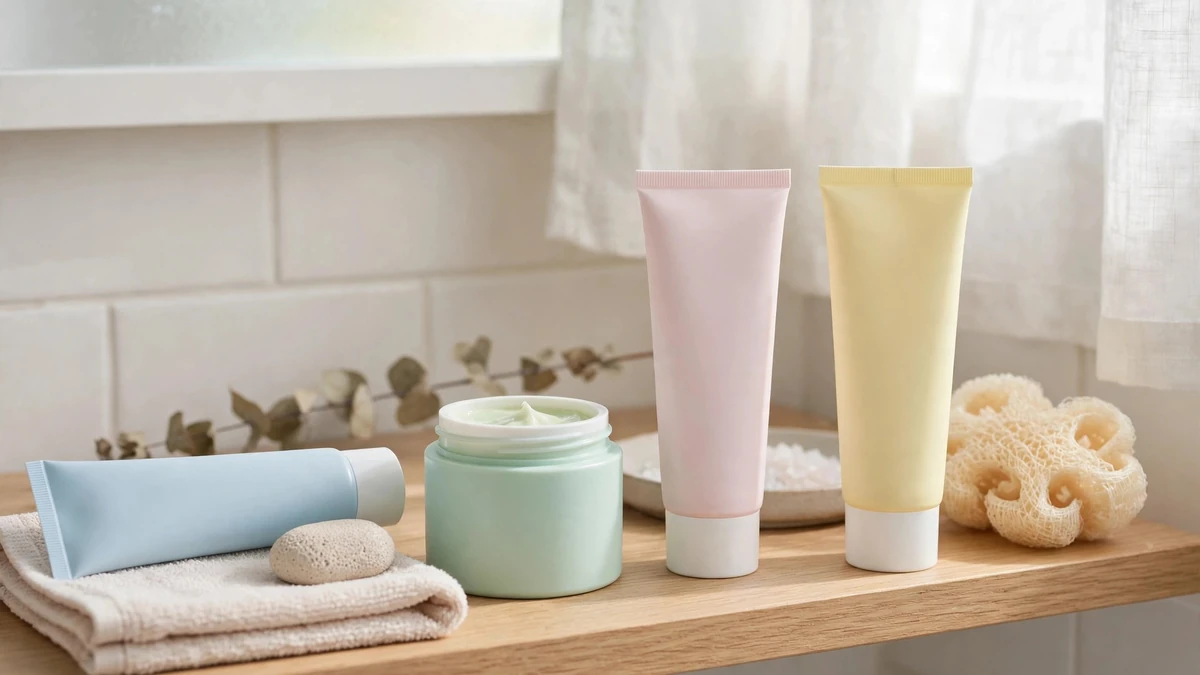

Feet are the part of a skincare routine most teenagers forget, until a pair of sandals or a sports season makes them impossible to ignore. Dry heels, rough patches, and cracked skin are common in teens who play sport, swim, or spend all day in trainers, and they are usually easy to fix with a simple routine. Retinol can help, because it speeds up skin renewal and smooths rough texture, but it needs to be used carefully on young skin.
That is why this guide is organised by what a product actually is, not just by its name. Dedicated retinol foot creams made specifically for teenagers are a very small category, so this roundup mixes gentle retinol treatments that can be used on the feet with plain, well-made foot creams that pair with them. Each entry says plainly which it is, so you can choose with your skin in mind, not just a label.
Below are nine products worth considering in 2027, from gentle low-strength retinol serums to rich foot creams that do the heavy lifting on dry heels. Each one is described by what it is good at, what to watch for, and who it suits best, so you can build a foot care routine that actually works.
Key takeaways
- Retinol smooths rough skin and speeds up renewal, but most teenagers do not need it on their feet, and a plain moisturising foot cream is often enough.
- Older teens only, with a parent or guardian involved, should use the lowest strength, 0.1 to 0.3 percent, two to three nights a week.
- Apply a pea-sized amount to the feet only, never on broken, cracked, or sunburned skin, and never with a strong exfoliant on the same night.
- Moisturise well after retinol, wear socks overnight to lock it in, and use SPF on exposed feet during the day.
- Retinol is not a treatment for eczema, psoriasis, fungal infections, or prescription acne, and it must never be used during pregnancy.
What retinol actually does for feet
Retinol is a form of vitamin A that speeds up how quickly skin cells renew themselves. In plain terms, it helps rough, thickened skin shed faster and encourages fresher skin underneath, which is why it smooths rough heels and softens dry patches over time. It is the same ingredient used on the face for fine lines and uneven tone, but on the feet the skin is thicker, so results can take longer to show, usually four to eight weeks of consistent use.
What it does not do is fix everything. Retinol will not heal a fungal infection, it will not close a deep crack on its own, and it will not replace a good moisturiser. It can also irritate, especially at first. Dryness, peeling, and sensitivity are common in the first two weeks, and on feet that are already cracked or sore, retinol can make things worse. That is why the lowest strength, used sparingly and only a few nights a week, is the right starting point for a teenager, and why a plain foot cream is often the better first step.
The other thing to know is that retinol makes skin more sensitive to the sun. Feet are often exposed in sandals and trainers in summer, so sunscreen on the tops of the feet is not optional when using retinol. If the skin becomes red, sore, or flaky, stop, simplify, and let it recover before trying again.
How we chose these foot creams and what to look for
Look first at the strength and the form. For a teenager, a retinol serum at 0.1 to 0.3 percent is the sensible maximum, and a serum is easier to control than a cream, because you can measure a pea-sized amount. Encapsulated or slow-release retinol is gentler than pure retinol, and a formula that also contains ceramides, hyaluronic acid, or niacinamide will feel more comfortable and support the skin barrier while the retinol does its work.

Look next at the supporting foot cream. A good foot cream does the daily work that retinol cannot: it softens thick skin, seals in moisture, and protects heels from cracking. Urea, salicylic acid, and lactic acid are useful in a foot cream because they gently soften rough skin, while shea butter and ceramides keep it supple. Our guide to retinol creams for beginners explains the same low-and-slow approach in detail, and it applies to feet just as much as it does to the face.
Finally, look at the routine, not just the product. Retinol on the feet works best at night, under cotton socks, after a shower when the skin is warm and slightly damp. In the morning, rinse off any residue, moisturise, and apply sunscreen if the feet will be exposed. A product you will use two to three nights a week, every week, is worth more than a stronger one you abandon after a week of peeling.
The 9 best retinol foot creams for teens of 2027
CeraVe Skin Renewing Retinol Serum
What we like: A gentle encapsulated retinol with ceramides, hyaluronic acid, and niacinamide, designed to release slowly and support the skin barrier while it works. What to consider: It is a face serum used here on the feet, so the bottle is small for the job, and it is best for maintenance rather than severe roughness. Key ingredients: Encapsulated retinol, ceramides, hyaluronic acid, niacinamide. Skin type: All, including sensitive. Size: 30 ml. Cruelty-free: No.
This is the safest starting point for an older teen who wants to try retinol on rough feet. The encapsulated form is gentler than pure retinol, and the ceramides help it feel comfortable rather than stripping.
La Roche-Posay Retinol B3 Serum
What we like: A low-strength retinol combined with vitamin B3, in a smooth, fragrance-free texture that is easy to spread over the feet and heels. What to consider: A modest strength, so results are gradual, and it is best used at night under socks. Key ingredients: Retinol, niacinamide, glycerin. Skin type: Sensitive, normal, combination. Size: 30 ml. Cruelty-free: No.
A good choice if the skin on the feet is easily irritated, or if this is a first retinol. The niacinamide calms as well as it supports, which makes the first two weeks much easier.
RoC Retinol Correxion Night Serum Capsules
What we like: Single-dose capsules that give a measured, pea-sized amount every time, so there is no guessing about how much to use. What to consider: The capsules are designed for the face, so one capsule covers both feet thinly, and they are not the cheapest way to treat a large area. Key ingredients: Retinol, squalane, vitamin E. Skin type: Normal, combination, dry. Size: 30 capsules. Cruelty-free: No.
Neutrogena Rapid Wrinkle Repair Retinol Pro+ Night Serum
What we like: A 0.3 percent retinol serum with hyaluronic acid, in a lightweight texture that absorbs quickly and layers well under a foot cream. What to consider: Stronger than a beginner formula, so it is only for older teens who have already used retinol without irritation. Key ingredients: Retinol 0.3%, hyaluronic acid, glycerin. Skin type: Normal, combination, oily. Size: 29 ml. Cruelty-free: No.
This is a step up, not a starting point. For an older teen who has used a gentler retinol for a month or more and wants a little more smoothing power on stubborn rough patches, it is a sensible next move.
Olay Retinol 24 Night Serum
What we like: A gentle retinol and niacinamide blend in a fragrance-free formula that is designed for nightly use, with a smooth texture that spreads easily over heels. What to consider: It is a face product used here on the feet, so the bottle will not last long if used on a large area every night. Key ingredients: Retinol, niacinamide, peptides. Skin type: All, except very sensitive. Size: 40 ml. Cruelty-free: No.
Paula’s Choice Clinical 0.3% Retinol + Bakuchiol
What we like: A 0.3 percent retinol paired with bakuchiol, a plant-based ingredient that supports retinol’s effects while being gentler on skin, in a fragrance-free formula. What to consider: At 0.3 percent it is a moderate strength, so it is only for older teens who have already tolerated a lower strength. Key ingredients: Retinol 0.3%, bakuchiol, peptides. Skin type: Normal, combination, oily. Size: 30 ml. Cruelty-free: Yes.
The bakuchiol pairing is what makes this one interesting. It lets the formula work at a useful strength while staying more comfortable than a plain 0.3 percent retinol, which is exactly what a teenager needs.
The Ordinary Retinol 0.2% in Squalane
What we like: A very low 0.2 percent retinol in squalane, an oil that cushions the skin, at a very low price, with a simple, fragrance-free formula. What to consider: It is an oil, so it feels heavier than a serum and needs a few minutes to absorb before socks go on. Key ingredients: Retinol 0.2%, squalane. Skin type: Dry, normal, sensitive. Size: 30 ml. Cruelty-free: Yes.
Versed Press Restart Gentle Retinol Serum
What we like: A gentle encapsulated retinol with bakuchiol and a calming botanical blend, designed specifically for people who find retinol irritating. What to consider: A gentle formula, so it is best for maintenance and mild roughness rather than severe thickened skin. Key ingredients: Encapsulated retinol, bakuchiol, arophira. Skin type: Sensitive, dry, normal. Size: 30 ml. Cruelty-free: Yes.
For a teenager with sensitive skin who still wants to try retinol, this is an easy, low-risk place to start. It is gentle enough that the first two weeks are usually uneventful, which is exactly what you want.
CeraVe SA Renewing Foot Cream
What we like: A rich foot cream with salicylic acid, ammonium lactate, and ceramides, designed specifically for rough, dry feet, with a thick texture that seals in moisture overnight. What to consider: This cream contains no retinol, so it is a partner product, not a retinol treatment, and it should be used on the nights you are not using retinol. Key ingredients: Salicylic acid, ammonium lactate, ceramides, hyaluronic acid. Skin type: Dry, rough, normal. Size: 88 ml. Cruelty-free: No.
Which retinol foot cream is right for your teen
Start with the skin, not the product. If the feet are only mildly dry, a plain foot cream is enough, and retinol is unnecessary. If the heels are rough, thickened, or cracked, a gentle retinol two to three nights a week, under a rich foot cream, can help over four to eight weeks. If the skin is broken, bleeding, or infected, skip retinol entirely and see a pharmacist or dermatologist first.
For a first retinol, choose the lowest strength: The Ordinary 0.2 percent in squalane, Versed Press Restart, or CeraVe Skin Renewing Retinol Serum. Use a pea-sized amount for both feet, two to three nights a week, after a shower, and follow with a rich foot cream and cotton socks. If there is no redness or flaking after a month, you can continue at the same strength. There is no need to move up quickly. A good body lotion can also work as a daily moisturiser for the feet on the nights you are not using retinol, because keeping the skin hydrated is what makes any active ingredient tolerable.
For an older teen who has already used retinol without irritation, a moderate strength such as Neutrogena 0.3 percent or Paula’s Choice 0.3 percent is a reasonable next step, still two to three nights a week, still with a parent or guardian aware of the routine. Never use retinol on the same night as a strong exfoliant, and never use it on sunburned or freshly shaved skin.
The caveats that matter
Retinol is well studied, but it is not suitable for everyone, and it is not a quick fix. It can cause dryness, peeling, and increased sun sensitivity, especially in the first two weeks. On feet, the most common mistake is using too much, too often, which leads to sore, flaky skin that is worse than the roughness it was meant to fix. That is why the lowest strength, used sparingly, is the right approach for a teenager.
| Detail | What is known |
|---|---|
| Who should use retinol | Older teens only, with a parent or guardian involved in the routine |
| Best starting strength | Retinol 0.1 to 0.3 percent, two to three nights a week |
| How much to use | A pea-sized amount for both feet, never more |
| When to use it | At night, after a shower, under a rich foot cream and cotton socks |
| What to avoid pairing | A strong exfoliant on the same night, or retinol on broken or sunburned skin |
| Sun protection | SPF on exposed feet every morning, because retinol increases sun sensitivity |
| When to stop | If the skin becomes red, sore, or flaky, stop and let it recover |
| What it does not do | It does not treat eczema, psoriasis, fungal infections, or prescription acne |
If your teen has eczema, psoriasis, a fungal infection, or is using prescription acne treatment, check with a dermatologist before adding retinol, even on the feet. Prescription treatments change what the skin can tolerate, and a simple check avoids weeks of irritation. Retinol must never be used during pregnancy.
Checklist: choosing a retinol foot cream honestly
Use these checks before you buy, and again after two weeks of use.
- Check the strength: retinol 0.1 to 0.3 percent is the right starting point for a teenager.
- Check the form: an encapsulated or slow-release retinol is gentler than pure retinol.
- Check the partner cream: a rich foot cream with urea, salicylic acid, or ceramides does the daily work.
- Patch-test first: apply to one heel for two to three nights before using it on both feet.
- Start slowly: two to three nights a week, under cotton socks, and only increase if the skin stays calm.
- Protect the result: use SPF on exposed feet every morning, because retinol increases sun sensitivity.
Frequently asked questions
How often should a teen use retinol on their feet?
Two to three nights a week is enough. Start with two nights, and only move to three if there is no redness or flaking after two weeks. Daily use is not necessary and increases the chance of irritation.
Can a teen use retinol and a foot cream together?
Yes, and they work best together. Apply the retinol first, let it absorb for a minute, then apply a rich foot cream on top and wear cotton socks overnight. On the nights you are not using retinol, use the foot cream alone.
Is retinol safe for a teenager’s feet?
For older teens, at a low strength and used sparingly, it is generally well tolerated, but most teenagers do not need it. A parent or guardian should be involved, and a dermatologist should be consulted first if there is eczema, psoriasis, or prescription acne treatment.
Why are my teen’s feet peeling after using retinol?
Peeling is a common early side effect, and it usually means the strength is too high or it is being used too often. Stop for a week, moisturise well, and restart at a lower strength, two nights a week. If peeling continues, stop and try a plain foot cream instead.
Can retinol fix cracked heels?
It can help soften rough skin over time, but it will not close a deep crack on its own. A rich foot cream with urea or salicylic acid does more for cracks, and deep or bleeding cracks should be checked by a pharmacist or dermatologist.
Do teens still need sunscreen on their feet if they use retinol?
Yes, every day. Retinol makes skin more sensitive to the sun, and the tops of the feet burn easily in sandals. A broad-spectrum sunscreen is what protects the smoother skin you are working to build, and our guide to retinol serums explains the same sun-safety rule for the face.
The bottom line
The best retinol foot cream for a teenager in 2027 is not the strongest or the most expensive. It is the gentlest one that suits their skin, used two to three nights a week, under a rich foot cream and cotton socks, with a parent or guardian aware of the routine. For most teens, a plain foot cream alone is enough, and that is a perfectly good result.
Choose one low-strength retinol, use it consistently for eight weeks, protect the feet with sunscreen, and judge it on how the skin looks and feels, not on how strong it feels on day one. That is the honest way to get the benefit retinol is known for, without the irritation that makes people give up on it.