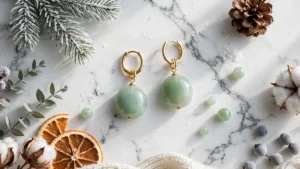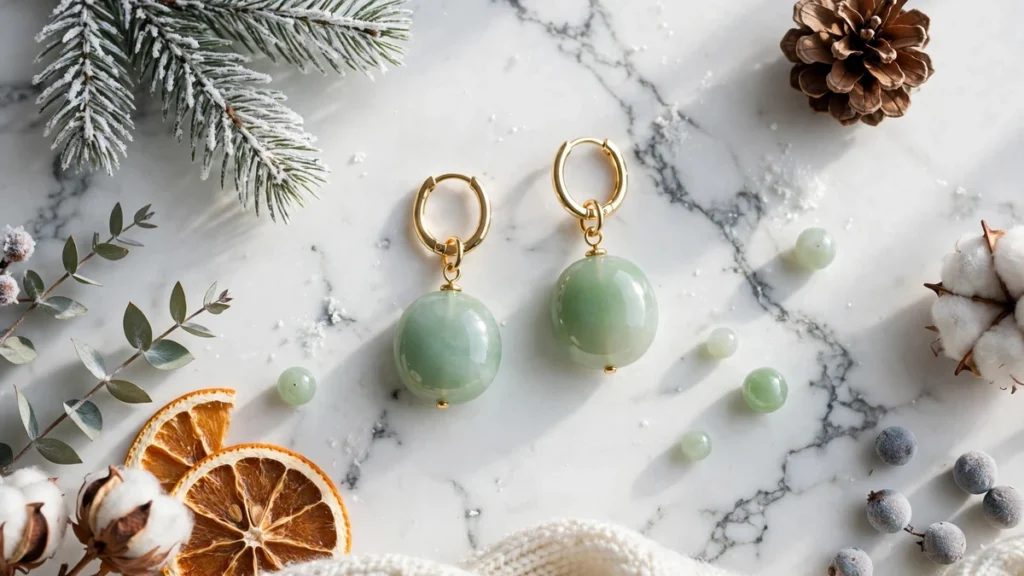
Jade is the green stone that winter jewellery seems made for. Against dark wool, charcoal coats and the low light of short winter days, a deep green jade stud or a soft nephrite drop reads as calm, polished and quietly expensive, without shouting. It is also one of the most misunderstood stones in jewellery. The word jade covers two different minerals, jadeite and nephrite, and much of what is sold cheaply has been dyed or treated to look richer than it is.
That matters in winter, when earrings get more wear than at any other time of year. Cold air, scarves, hats and high collars all tug at earrings, and a soft stone in a weak setting will chip or loosen. The good news is that jade is tougher than it looks, and a well-set pair in gold or silver can be worn every day through the season. The trick is knowing what you are buying: which type of jade, whether it has been treated, and whether the setting protects the stone.
Below are nine jade earrings worth considering for winter 2027, from classic jadeite studs to affordable nephrite drops. Each one is described by what it does well, what to watch for, and who it suits best, so you can choose a pair that looks good in December and still looks good in March.
Key takeaways
- Jade means two minerals: jadeite, rarer and usually pricier, and nephrite, tougher and more affordable.
- Much affordable jade is dyed or treated to deepen its colour, which is standard practice but should always be disclosed.
- A bezel or halo setting protects jade better than a bare prong setting in winter, when scarves and collars tug at earrings.
- Choose the green by your skin tone and your wardrobe: deep imperial green for drama, pale nephrite for everyday wear.
- Jade has no proven healing properties and is not an investment stone, except for fine untreated jadeite, which is a specialist market.
What jade actually is, and why it suits winter
Jade is not one stone but two. Jadeite is the rarer mineral, found mainly in Myanmar, and the finest pieces are a vivid, almost glowing green that collectors call imperial green. Nephrite is the tougher, more common mineral, found in China, Canada, New Zealand and Siberia, and its green is usually softer, ranging from pale sage to deep spinach. Both are called jade, but they behave differently, and they are priced very differently.
What they share is toughness. Jade is not especially hard, at about 6.5 to 7 on the Mohs scale, but it is famously resistant to breaking, because its crystals interlock like felt. That makes it a good winter stone. It can survive a knock against a coat zip or a scarf clasp that would chip a more brittle gem. It is still not indestructible. A sharp blow on a hard edge can chip it, and a thin, poorly cut stone is more vulnerable than a well-cut one.
Winter is also the season when jade looks its best. Its green is deep and cool, which pairs naturally with the dark, muted palette of winter clothes: navy, charcoal, forest green, burgundy and black. A small jade stud adds colour without competing with a patterned scarf or a statement coat, and a jade drop catches the light in a way that suits evening as well as daytime. It is a stone that rewards close looking rather than distance, which is why simple settings usually work best.
How we chose these earrings and what to look for
Look first at the type of jade and whether it has been treated. Untreated jadeite is rare and expensive. Most jade on the market has had some treatment: bleaching and polymer filling, known as Type B, or dyeing, known as Type C, or both. Treated jade is not fake, and it can look beautiful, but it should be sold as treated, and it should cost less than untreated stone. If a seller cannot tell you the type or the treatment, treat that as a reason to shop elsewhere. Our guide to the best diamond earrings uses the same principle, because knowing what a stone is matters more than how it photographs.

Look next at the colour and the cut. The most prized jadeite is an even, vivid green with no grey or brown cast. Nephrite is usually a softer, more muted green, and that is fine, provided the colour is even and the stone is free of large dark patches or cracks. A good cut makes the stone glow from within, while a flat, lifeless stone will look dull even in bright light. Hold the earrings up to daylight, not just shop lighting, before you decide.
Finally, look at the setting. Jade suits a bezel setting, where a rim of metal surrounds the stone, or a halo setting, where small diamonds or white stones frame it. Both protect the edges of the stone, which is where chips start. A prong setting can work for a small stud, but check that the prongs are sturdy and the stone does not wobble. In winter, when scarves and high collars catch on earrings, a secure setting matters more than it does in summer.
The 9 best jade earrings for winter 2027
Tiffany & Co. Jade Studs
What we like: Classic round jadeite studs in 18k gold, with an even green and a polished, unfussy setting that works with everything from a work suit to a winter coat. What to consider: Premium price, and the green is deep rather than vivid, which suits some skin tones better than others. Stone: Jadeite. Setting: 18k yellow gold, four-prong. Best for: Everyday luxury and a first pair of fine jade earrings. Price range: High.
This is the pair to buy if you want jade without any guesswork. The stone is well cut, the setting is secure, and the design will not date.
Cartier Jade Studs
What we like: Elegant jadeite studs with a clean, architectural setting and the careful finishing Cartier is known for, in a green that reads rich rather than loud. What to consider: The price reflects the name as much as the stone, and the studs are small, so they suit a subtle look rather than a statement one. Stone: Jadeite. Setting: 18k gold, bezel. Best for: A refined, understated winter look. Price range: High.
A quiet, confident pair. The bezel setting also makes them one of the most practical choices here for daily winter wear.
David Yurman Jade Studs
What we like: Jade cabochons set in the brand’s signature cable-detailed gold, a design that feels both classic and recognisably Yurman, with a warm, deep green. What to consider: The cable detail adds visual weight, so the studs feel bolder than their size suggests. Stone: Jadeite cabochon. Setting: 18k gold with cable detail. Best for: Someone who likes a designer look with a traditional stone. Price range: High.
The cabochon cut gives the jade a soft, glowing surface that suits winter light, and the setting protects the stone well.
Mejuri Jade Stud Earrings
What we like: Small, well-made nephrite studs in gold vermeil at a fair price, with a clean, modern setting and a soft green that works for everyday wear. What to consider: The stone is nephrite, not jadeite, and the vermeil will need replating after years of wear. Stone: Nephrite. Setting: Gold vermeil, four-prong. Best for: A first pair of jade earrings on a modest budget. Price range: Affordable.
An honest, well-priced entry point. The soft green is easy to wear, and the size is right for daily use under a scarf.
Monica Vinader Jade Studs
What we like: Polished nephrite studs in 18k gold vermeil on sterling silver, with a smooth, even green and a setting that sits comfortably for all-day wear. What to consider: The green is pale rather than deep, so it reads as subtle, and vermeil needs gentle care. Stone: Nephrite. Setting: 18k gold vermeil on sterling silver. Best for: Everyday wear and layering with other gold jewellery. Price range: Mid-range.
A gentle, wearable pair that pairs well with other gold pieces, and the pale green flatters warm skin tones.
Missoma Jade Earrings
What we like: Contemporary nephrite studs with a clean, minimal setting, in a deep green that stands out against winter neutrals without feeling heavy. What to consider: The setting is slim, so check the fit if you wear large scarves, and the stone colour varies slightly between pairs. Stone: Nephrite. Setting: Gold vermeil, bezel. Best for: A modern, minimal winter look. Price range: Mid-range.
The bezel setting is a practical plus in winter, and the deep green is the most versatile colour in this roundup.
Maria Black Jade Studs
What we like: Small jade studs with a slightly edgy, architectural setting, in a dark green that suits the brand’s modern, sculptural style. What to consider: The design is distinctive, so it suits a modern wardrobe better than a classic one. Stone: Nephrite. Setting: Sterling silver or gold-plated, bezel. Best for: A contemporary, understated statement. Price range: Mid-range.
A good choice if you like jade but not traditional jewellery. The dark green is striking against pale winter skin.
Astrid & Miyu Jade Drops
What we like: Nephrite drop earrings with a gentle swing, in a soft green that catches the light when you move, at a price that makes them easy to try. What to consider: Drops catch on scarves more easily than studs, so they are better for evenings and indoor days. Stone: Nephrite. Setting: Gold-plated, hook. Best for: Winter evenings and special occasions. Price range: Affordable.
The movement of a drop suits winter parties and dinners, when a scarf is off and the light is low.
Thomas Sabo Jade Drops
What we like: Jade drops with a small silver detail, in a clear, even green, with a secure hook that stays put through a long day. What to consider: The silver setting suits cool skin tones best, and the drops are best kept for days when you are not wearing a heavy scarf. Stone: Nephrite. Setting: Sterling silver, hook. Best for: A cool-toned winter wardrobe and evening wear. Price range: Affordable.
A straightforward, well-made drop that gives you the colour of jade in a longer, more visible shape.
Which jade earrings are right for you
Start with your skin tone and your wardrobe. Deep green jadeite flatters most skin tones and looks striking against dark winter clothes, while pale nephrite is softer and suits fair skin and lighter, neutral outfits. If you wear a lot of gold, choose a gold setting. If you wear silver, choose silver, since a mismatched metal can make even a beautiful stone look wrong. A guide to gold jewellery for everyday wear can help you match the setting to the pieces you already own.
Think about how you will wear them. Studs are the practical winter choice. They sit close to the ear, they do not catch on scarves, and they work with hats and high collars. Drops are prettier for evenings, but they need a scarf-free neckline to be seen properly. If you only buy one pair, buy studs. If you already own studs, a drop adds variety for parties and dinners.
Finally, think about the stone itself. If you want the best jade and can afford it, look for untreated jadeite with a certificate from a gemmological laboratory. If you want a beautiful, affordable pair, nephrite is a good, honest choice, and treated jadeite is fine provided the treatment is disclosed and the price reflects it. The worst choice is an expensive stone with no paperwork and no answers.
The caveats that matter
Jade is tough but not invincible, and the market is full of treated and imitation stones. Dyed jade, often sold as natural, is the most common problem. So is glass and dyed quartz passed off as jade. A price that looks too good for fine jadeite is usually a sign that the stone is treated, dyed, or not jadeite at all. That does not mean affordable jade is bad, only that you should buy from a seller who is clear about what they are selling.
| Detail | What is known |
|---|---|
| Two types of jade | Jadeite is rarer and pricier; nephrite is tougher and more affordable |
| Hardness | About 6.5 to 7 on the Mohs scale, tough but can chip on a hard edge |
| Common treatments | Bleaching and polymer filling (Type B), dyeing (Type C); both should be disclosed |
| Best setting | Bezel or halo, which protects the stone’s edges from chips |
| Cleaning | Warm soapy water and a soft cloth; never use an ultrasonic or steam cleaner |
| What to avoid | Harsh chemicals, hard knocks, and sellers who cannot name the stone type or treatment |
| Imitations to watch for | Dyed quartz, glass, and serpentine sold as jade |
| What it does not do | It has no proven healing properties and is not an investment, except fine untreated jadeite |
Care is simple. Clean jade with warm, soapy water and a soft cloth, and dry it before putting it away. Never use an ultrasonic cleaner or a steam cleaner, which can damage treated stone and loosen settings. Store earrings separately so they do not scratch each other, and take them off before swimming or using strong cleaning products. If a stone loosens in its setting, stop wearing it until a jeweller has checked it.
Checklist: choosing jade earrings honestly
Use these checks before you buy, and again when the earrings arrive.
- Ask the type: jadeite or nephrite, and whether the stone has been treated or dyed.
- Ask for paperwork: a certificate from a gemmological laboratory for any expensive jadeite.
- Check the colour in daylight: it should be even, with no large dark patches or cracks.
- Check the setting: a bezel or halo protects the stone, and the stone should not wobble.
- Match the metal to your wardrobe: gold for warm tones, silver for cool tones.
- Buy studs first: they are the most practical winter choice, and drops are best for evenings.
Frequently asked questions
What is the difference between jadeite and nephrite?
They are two different minerals, both called jade. Jadeite is rarer, usually more vivid in colour, and more expensive. Nephrite is tougher, more common, usually a softer green, and more affordable. Both are genuine jade.
Is dyed jade real jade?
Yes, dyed jade is real jade that has had its colour enhanced. It is standard practice, but it should be disclosed, and it should cost less than untreated stone of the same colour. Undisclosed dyeing is the problem, not dyeing itself.
Can I wear jade earrings every day in winter?
Yes, especially studs in a bezel setting. Jade is tough enough for daily wear, but take earrings off before swimming, showering with strong products, or doing anything that risks a hard knock.
How do I clean jade earrings?
Warm, soapy water and a soft cloth is enough. Dry them before storing. Never use an ultrasonic cleaner, a steam cleaner, or harsh chemicals, which can damage treated stone.
Are jade earrings a good investment?
Generally no. Fine untreated jadeite can hold value, but that is a specialist market. Buy jade because you like it and will wear it, not because you expect it to gain value. Our guide to diamond jewellery for winter covers stones that hold value more predictably, and the same honest approach applies here.
Does jade have healing properties?
There is no reliable scientific evidence that jade heals, protects, or brings luck. It is a beautiful, durable stone with a long cultural history, and that is reason enough to wear it.
The bottom line
The best jade earrings for winter 2027 are not the most expensive or the greenest. They are the pair whose stone you understand, whose setting protects it, and whose colour suits your skin and your winter wardrobe. For most people, that means a well-made nephrite stud in a bezel setting, or a small jadeite stud if the budget allows.
Buy from a seller who names the stone type and the treatment, check the colour in daylight, and choose studs for daily wear and drops for evenings. Jade rewards that kind of care. It is a quiet stone, and worn well, it looks better in February than it did in December.