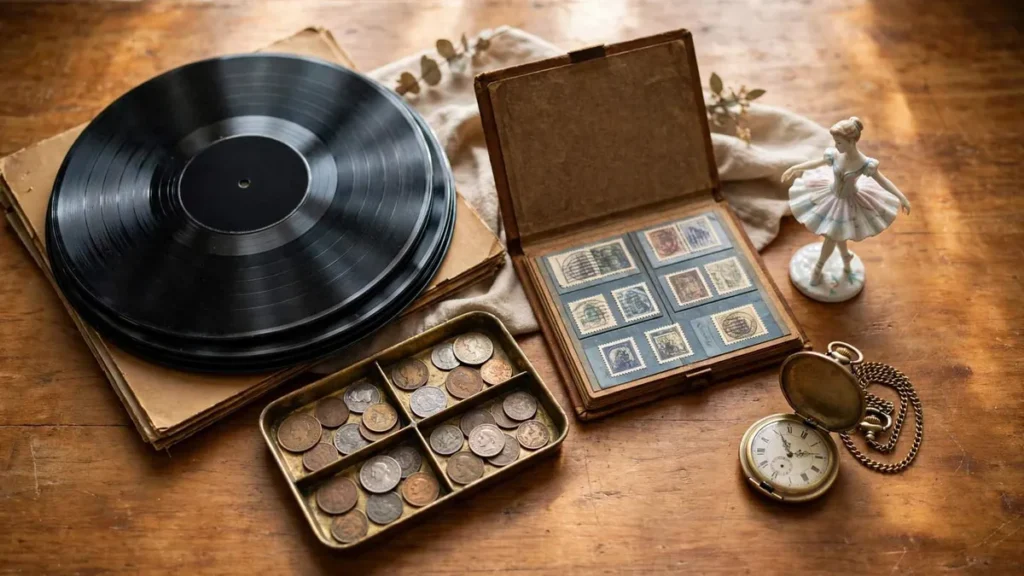
Where to sell collectibles is the first question once a collection outgrows its shelves, and the answer depends on what you own and how much effort you want to put in. A rare coin, a box of vinyl records and a cabinet of porcelain figures do not sell best in the same place. There are more routes than ever: auction houses, online marketplaces, dealers and collectors’ fairs.
This guide explains each of the main places to sell collectibles, how they differ, and how to prepare your items so buyers take them seriously. It keeps to general, practical advice: research your items, present them well, price them honestly, and protect yourself from scams.
Key takeaways:
- There is no single best place to sell collectibles; the right route depends on the item, its value and your time.
- Auction houses suit rare and high-value pieces; online marketplaces suit common and mid-value items.
- Dealers offer speed and certainty, while collectors’ fairs suit items buyers want to see in person.
- Good photos, honest descriptions and proof of authenticity make the biggest difference to the price you achieve.
What counts as a collectible?
A collectible is anything people gather for interest or value rather than for everyday use. The best-known examples are coins, stamps, vinyl records, comics, sports cards, dolls, model trains, porcelain, jewellery, watches and vintage toys. But the category is far wider: old advertising signs, first-edition books, film memorabilia and even early computer games all have active collectors.
What makes something collectible is demand, condition and rarity, in that order. An item many people want, in excellent condition, with few surviving examples, will always attract buyers. An item with little demand will struggle to sell whatever its age. Age alone does not make something valuable: plenty of old objects are common, and plenty of recent ones are already sought after.
Before you sell anything, sort your items into groups: pieces that are clearly valuable or rare, pieces that are ordinary but saleable, and pieces that are damaged or of little interest. This simple sort saves time, because the three groups will usually go to different places.
The main places to sell collectibles
There are four broad routes for selling collectibles, and most sellers use more than one. The best choice depends on the value of the items, how quickly you want to sell, and how much work you are willing to do.
Auction houses
Auction houses sell items to the highest bidder, usually in themed sales that attract serious collectors. They suit rare, high-value and unusual pieces, where competition between bidders can push the price up. A general auction house handles a wide range, while a specialist focuses on one area, such as coins, stamps or art.
The process usually starts with a valuation. You describe or show the item, the auctioneer estimates what it might sell for, and you agree a reserve price, the lowest price you will accept. If the item sells, the house takes a commission, and there may be extra charges for cataloguing or photography. Ask for the full terms in writing before you consign anything.
Online marketplaces
Online marketplaces are the most familiar route, and they suit the widest range of items. Large general marketplaces reach millions of buyers, while specialist ones focus on one category, such as records, books or trading cards. For common and mid-value items, an online listing is often the simplest way to find a buyer.
Selling online means doing the work yourself: photographs, a description, a price, postage and dealing with buyers’ questions. The advantage is control. You choose the price, you write the description, and you can watch similar items to see what they actually sell for. The disadvantage is time, and the fact that buyers cannot hold the item in their hands, so your photos and description have to do the convincing. Check the marketplace’s rules before you list, including how fees and payments work and what happens if an item is returned.
Dealers and specialist shops
A dealer buys items to resell them, and offers speed and certainty in return for a lower price than you might get selling direct. A coin dealer, a record shop or an antiques dealer will usually make an offer on the spot and pay promptly. For a seller who wants the collection gone without weeks of listings and messages, that is a fair trade.
The price a dealer offers will be below the retail price, because the dealer needs to make a margin and takes on the risk of holding the stock. That is normal, not a sign of a bad deal. Get offers from more than one dealer before you accept, and be wary of any dealer who pressures you to decide on the spot. A reputable dealer will be happy for you to think it over.
Collectors’ fairs and local sales
Collectors’ fairs, antique markets and car boot sales suit items that buyers want to see, handle and compare in person. A fair brings together dealers and collectors in one hall, with buyers who know the field. They work well for mid-value items, for items that are hard to photograph well, and for sellers who enjoy talking to buyers.
Local sales take more effort. You need to transport the items, set up a table, and spend the day there. You also need to know your prices, because buyers at fairs expect to haggle. The reward is immediate payment, no postage, and the chance to learn from other sellers and collectors in the same field.
How the main selling routes compare
| Route | Best for | Speed | Effort for you |
|---|---|---|---|
| Auction house | Rare and high-value pieces | Slow, weeks to payment | Low, the house handles the sale |
| Online marketplace | Common and mid-value items | Days to weeks | High, you list and post items |
| Dealer or specialist shop | A quick, certain sale | Fast, often same day | Low, one visit and an offer |
| Collectors’ fair | Items buyers want to see in person | A day at the fair | Medium, transport and a stall |
| Local sale | Low-value items | Fast | Medium, organising and staffing |
Preparing your items to sell

Preparation is where most of the value is won or lost. Buyers pay more for items they can see clearly, understand quickly and trust. Start by cleaning each item gently, using only methods suitable for its material. Never use harsh chemicals, polish or abrasives on an old item: original condition matters, and aggressive cleaning can destroy value.
Photograph every item in good, even light, against a plain background. Take several shots: the front, the back, any marks, signatures or hallmarks, and any damage, however small. Buyers trust sellers who show the flaws. A photograph of a hallmark or a maker’s mark lets knowledgeable buyers confirm what the item is.
Best for: every seller, whatever the route, because good preparation raises the price and reduces disputes.
Pricing your items honestly
The most common mistake sellers make is pricing from memory or sentiment. An item is worth what a buyer will pay for it, not what you paid for it, and not what a similar item was once listed for. The best guide is completed sales of the same item in similar condition. Most online marketplaces let you search past sales, and auction houses publish past results.
Condition changes everything. A coin, card or toy in near-perfect condition can be worth many times the same item with wear, damage or missing parts. Be honest about condition in your description, and price accordingly. Buyers who feel misled will return items and leave poor feedback, which costs far more than a slightly lower price.
If you are unsure of a price, get a second opinion from a dealer, a specialist auctioneer or an experienced collector. For a collection of any size, have the most valuable pieces valued properly before you sell. Our guide to the best place to buy gold and silver covers a related market where the same rule applies: know the value before you deal.
Your selling checklist
Work through this list first.
- Sort the collection: separate rare and valuable pieces from ordinary and low-value ones.
- Research each group: check completed sales of the same item in similar condition.
- Clean gently: use only methods suited to the material, and never polish or repair aggressively.
- Photograph everything: front, back, marks and any damage, in good even light.
- Gather paperwork: receipts, certificates, boxes and any proof of authenticity.
- Choose the right route: match each group to the place that suits it best.
- Read the terms: check fees, payment timing and returns before you commit.
- Price honestly: base the price on real sales, not on sentiment or hopeful listings.
Frequently asked questions
Where is the best place to sell collectibles?
There is no single best place. Auction houses suit rare and high-value pieces, online marketplaces suit common and mid-value items, dealers offer a fast and certain sale, and collectors’ fairs suit items buyers want to see in person.
How do I know what my collectibles are worth?
Check completed sales of the same item in similar condition on online marketplaces and in auction results. For valuable pieces, get a professional valuation. Condition, rarity and demand decide the price.
Should I clean my collectibles before selling?
Clean gently, and only with methods suited to the material. Harsh chemicals, polish and abrasives can destroy value. If you are unsure, leave the item as it is and say so in the description.
Do I need proof of authenticity?
Not for every item, but it helps a great deal for valuable pieces. Certificates, receipts, original boxes and maker’s marks all add confidence. For high-value items, an independent authentication report is worth considering.
Is it better to sell a collection as one lot or piece by piece?
Piece by piece usually brings more money, because each item finds the buyer who wants it most. Selling as one lot is faster and simpler, and it suits a collection of mostly ordinary items. Many sellers do both: the best pieces individually, the rest as lots.
Sources
The guidance in this article reflects widely published advice from auction houses, dealers and collectors’ associations on valuing and selling collectible items.
The bottom line
Where to sell collectibles comes down to matching the item to the route. Rare pieces belong with an auction house or a specialist dealer, everyday items do well on an online marketplace, and anything buyers want to handle belongs at a collectors’ fair. The work you do before the sale matters more than the platform you choose.
Your next step is simple: sort the collection, research the pieces that look most promising, and try one route with a small group of items first. You will learn quickly what sells, what it sells for, and which route suits the rest. Our guides to the best jewellery brands and the best watch brands can help if your collection includes pieces from well-known makers.
A brief safety note
Selling collectibles is usually straightforward, but it attracts scammers, so take a few simple precautions. Never pay upfront fees to a buyer you cannot verify, and be suspicious of anyone who offers far more than the asking price, asks you to move the conversation off the marketplace, or wants payment by an unusual method. Use the marketplace’s payment system where possible, and keep a record of every message.
If you meet a buyer in person, meet in a public place in daylight, take someone with you if you can, and do not carry more than you need. For high-value items, consider meeting at a bank, or completing the sale through a dealer or auction house instead. Trust your instincts: if a deal feels wrong, walk away.