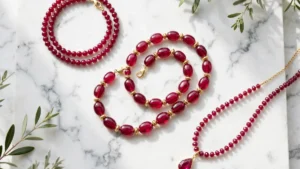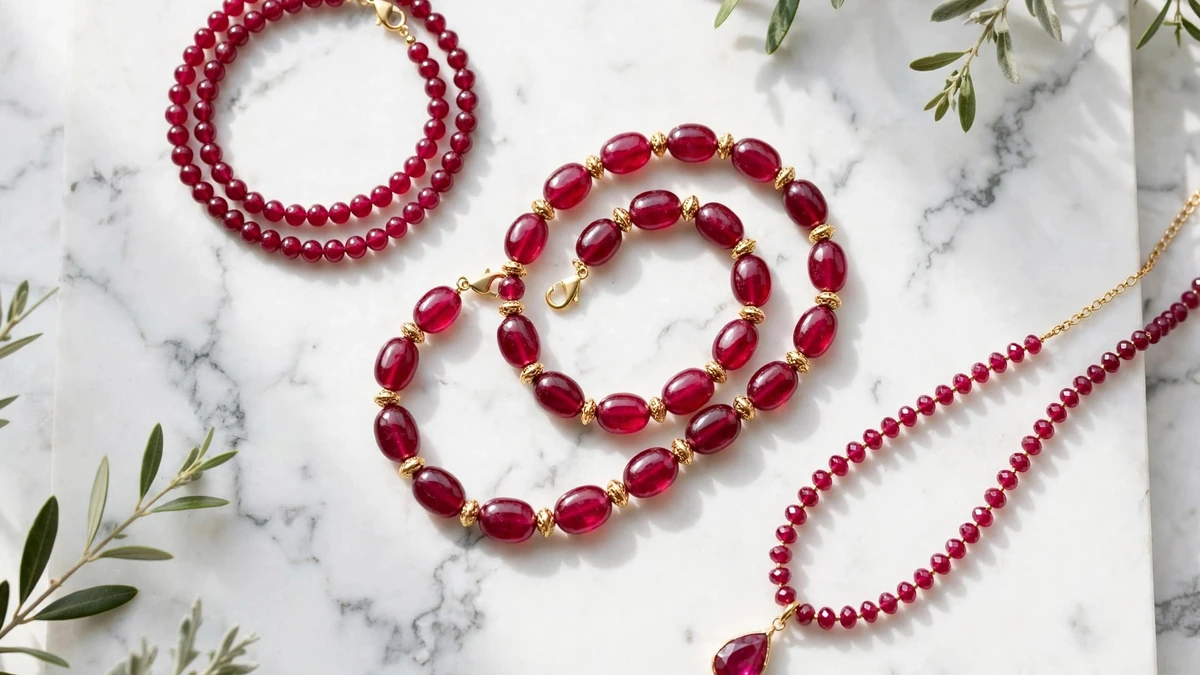

Ruby is the red stone that has never gone out of fashion, and it is also one of the easiest to buy badly. A good ruby necklace is not simply a red stone on a chain. The colour can run from a bright, slightly pinkish red to a deep, dark burgundy, the stone can be heated, glass-filled, or laboratory-grown, and the setting can make the difference between a necklace that glows on the neck and one that looks flat and heavy.
That is why this guide is organised by what actually matters when you buy: colour and clarity first, then treatment, then setting and chain. A vivid red ruby with a few visible inclusions can be a better buy than a flawless stone with a dark, brownish colour. Heat treatment is normal and accepted, but glass filling is a different matter entirely, and it should be disclosed and priced accordingly. And a pendant that sits well on the neckline matters more than a carat weight nobody can see from across a room.
Below are nine ruby necklaces worth considering in 2027, from a classic solitaire pendant to a modern bezel-set design and a vintage-inspired piece. Each one is described by what it does well, what to watch for, and who it suits best, so you can choose with the stone in mind, not just the brand name.
Key takeaways
- Colour is the first thing to judge in a ruby: look for a vivid, pure red without brown or orange tints, and check the colour in daylight as well as indoor light.
- Most rubies are heat-treated, which is standard practice, but glass-filled rubies are common and worth far less, so treatment must be disclosed in writing.
- A bezel or halo setting protects the stone and makes a smaller ruby look larger, while a prong setting shows off the stone but leaves it more exposed.
- Match the chain length to your neckline: 16 to 18 inches suits a crew neck or a collared shirt, while 20 inches and longer works with a V-neck or an evening dress.
- No ruby necklace is an investment, and a very cheap vivid red stone is usually glass, synthetic, or heavily filled, so buy from a jeweller who discloses treatment in writing.
What ruby actually is
Ruby is the red variety of corundum, the same mineral family as sapphire, and it scores 9 on the Mohs hardness scale, second only to diamond. That hardness is the practical reason rubies work so well in necklaces: they resist scratches from daily wear, they hold a polish for years, and they do not chip easily when a pendant knocks against a zip or a button.
The red comes from traces of chromium in the crystal. The most valued reds are vivid and pure, often described as pigeon blood, with no brown or orange cast. In practice, most rubies have some inclusions, which the trade calls silk, and a stone that looks evenly red face-up is worth more than one that is dark at the edges and pale in the middle. A ruby that looks almost black in shade is too dark, however good it looks under a shop light.
Rubies come from several places, including Myanmar, Thailand, Mozambique and Sri Lanka, and the origin is often mentioned in listings. Origin can affect price, especially for unheated stones from Myanmar, but for most buyers the colour and the treatment matter far more than the mine. A well-coloured heated ruby from Mozambique will look better on the neck than a dull unheated stone with a famous origin.
How we chose these necklaces and what to look for
Look first at the colour in daylight. A ruby that looks rich and red under shop lights can turn dark and flat outdoors, so check it near a window or outside if you can. Look for a stone that stays red from different angles and does not go almost black in shade. A slightly lighter, vivid red usually reads better on the skin than a very dark stone.
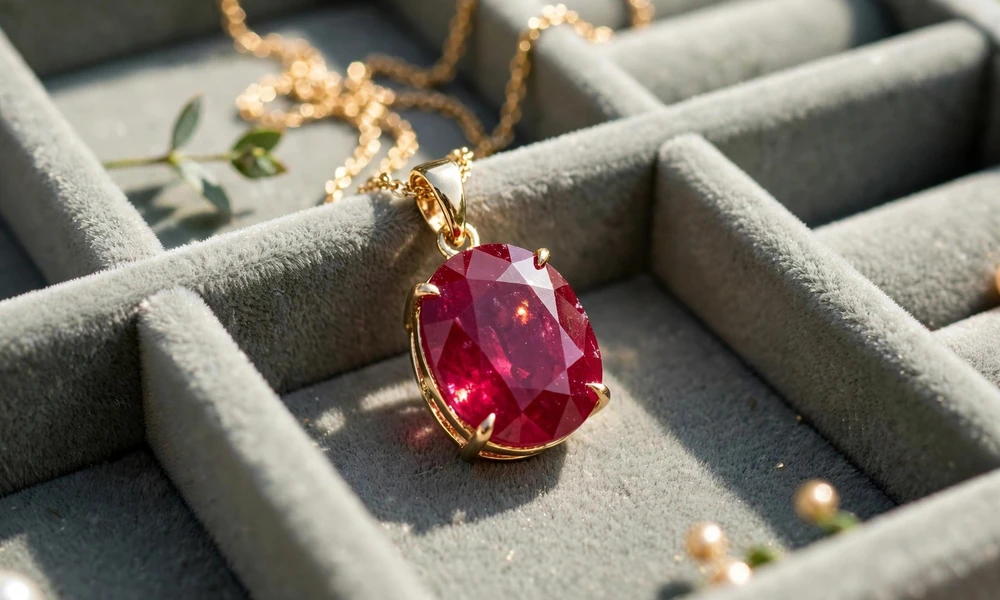
Look next at the treatment. Heat treatment is routine and permanent, and it improves colour and clarity in most rubies. Glass filling, which fills cracks with lead glass, is different: it makes a low-quality stone look clear, but it is fragile, it can be damaged by heat and chemicals, and the stone is worth far less. Our guide to the best diamond necklaces covers the same habit of checking paperwork before you buy, because a necklace without a clear description of its stone is a necklace you cannot fairly compare.
Finally, look at the setting and the chain. A bezel setting wraps the stone in metal and protects its edges, which suits everyday wear. A halo of small diamonds adds sparkle and makes the centre stone look larger. A prong setting shows the most of the stone but leaves it exposed. The chain should be solid, not hollow, and the clasp should close with a clear click. A thin, hollow chain is the most common weak point in an otherwise good necklace.
The 9 best ruby necklaces of 2027
Tiffany & Co. Solitaire Pendant
What we like: A classic round ruby in a clean four-prong setting on a fine platinum chain, with a vivid red that reads well in daylight and a finish that suits both day and evening wear.
What to consider: Premium price for the size of the stone, and the prong setting leaves the ruby exposed to knocks. Stone: Round red ruby, heated. Setting: Platinum, four-prong. Best for: A first fine necklace or a milestone gift. Price range: High.
Cartier Ruby Pendant
What we like: An oval ruby in a polished yellow gold setting with a slim, elegant chain, and a warm red that flatters most skin tones.
What to consider: The oval shape can look smaller face-up than a round stone of the same weight, and the gold setting needs occasional polishing. Stone: Oval red ruby, heated. Setting: 18k yellow gold, four-prong. Best for: Warm skin tones and classic styling. Price range: High.
David Yurman Ruby Pendant
What we like: A cushion-cut ruby in a sculptural sterling silver and gold setting, with a deep red and a design that stands out without shouting.
What to consider: The mixed-metal design is a matter of taste, and the cushion cut can show colour zoning more clearly than a round cut. Stone: Cushion-cut red ruby, heated. Setting: Sterling silver with 18k gold accents, bezel. Best for: A modern, sculptural look. Price range: Mid to high.
Mejuri Ruby Pendant Necklace
What we like: A small, bright ruby in a simple gold vermeil setting at an accessible price, with a fine chain that layers well with other necklaces.
What to consider: The stone is small, so it is a subtle accent rather than a statement, and vermeil needs gentler care than solid gold. Stone: Round red ruby, heated. Setting: Gold vermeil, bezel. Best for: Everyday wear and layering. Price range: Low to mid.
For a first ruby necklace, or a gift that does not need to be a grand gesture, this is an easy, honest buy. Keep it away from perfume and water to protect the vermeil.
Monica Vinader Ruby Pendant
What we like: A pear-shaped ruby in a polished gold vermeil setting, with a soft red and a flattering drop shape that lengthens the neck.
What to consider: The pear shape is more vulnerable at its point, and the vermeil finish will wear with heavy use. Stone: Pear-cut red ruby, heated. Setting: Gold vermeil, bezel. Best for: Evening wear and a longer neckline. Price range: Low to mid.
The pear shape is the most elegant option in this list. It draws the eye downward and pairs well with a V-neck or an open collar.
Missoma Ruby Pendant Necklace
What we like: A round ruby in a delicate gold vermeil setting on a fine chain, with a clean red and a price that makes it easy to wear every day.
What to consider: A small stone with a light setting, so it is best as a daily accent rather than an occasion piece. Stone: Round red ruby, heated. Setting: Gold vermeil, prong. Best for: Daily wear and gifts. Price range: Low to mid.
A simple, well-made everyday pendant. It is the kind of necklace you put on in the morning and forget about, which is exactly what a daily piece should be.
Maria Black Ruby Pendant
What we like: A faceted ruby in a modern, minimal gold setting with an unusual cut that catches the light differently from a standard round stone.
What to consider: The modern styling will not suit a traditional wardrobe, and the stone is smaller than the price might suggest. Stone: Faceted red ruby, heated. Setting: 14k gold, bezel. Best for: Minimal, contemporary styling. Price range: Mid.
If your jewellery leans modern and architectural, this is the ruby necklace to look at first. It is quiet, but it is not ordinary.
Astrid & Miyu Ruby Pendant
What we like: A small ruby in a polished gold vermeil setting with a fresh, youthful design and a chain length that sits neatly at the collarbone.
What to consider: A fashion-jewellery price point with a smaller stone, and the vermeil needs care. Stone: Round red ruby, heated. Setting: Gold vermeil, bezel. Best for: Younger buyers and casual wear. Price range: Low.
A good entry point into ruby jewellery. It is light, easy to wear, and a sensible way to find out whether you reach for red every day.
Thomas Sabo Ruby Pendant
What we like: A vivid ruby in a sterling silver setting with a slightly vintage feel, and a chain that is sturdier than most at this price.
What to consider: Silver tarnishes and needs regular cleaning, and the design is busier than a plain solitaire. Stone: Round red ruby, heated. Setting: Sterling silver, bezel. Best for: A vintage-inspired look on a budget. Price range: Low to mid.
The sturdiest chain in this list for the price, and a good option if you prefer silver to gold. Keep a silver cloth handy and it will stay bright.
Which ruby necklace is right for you
Start with how you will wear it. For daily wear, choose a bezel setting, a modest stone, and a solid chain. A prong-set solitaire is beautiful, but it catches on knitwear and needs more care. For evenings and occasions, a larger stone, a halo setting, or a longer chain will read better with a dress or an open neckline.
Colour matters more than size. A vivid, even red in a 1-carat stone will look more expensive than a dark, brownish 2-carat stone. Hold the necklace against your skin in daylight and ask whether the red flatters you or fights with you. Cool skin tones usually suit a vivid, slightly pinkish red, while warm skin tones often look better with a deeper, warmer red. A guide to engagement rings is useful here too, because the same colour judgement applies when a ruby is set alongside diamonds, and the metal colour changes how the red reads: yellow gold warms a ruby, white gold and platinum keep it cool.
Finally, think about the rest of your jewellery. A ruby pendant pairs naturally with diamond studs and a plain gold chain, and it can clash with a busy, coloured-stone bracelet. If you already own ruby earrings, match the red as closely as you can, because two different reds side by side are more noticeable than one.
The caveats that matter
Ruby is durable, but it is not indestructible, and the most common disappointment is a stone that looked vivid in the shop and dull at home. That is usually a colour problem, not a quality problem: a stone that is too dark, too brown, or too heavily included will never look good in soft light. Always check a ruby in daylight before you buy, and be wary of a stone that is only shown under bright spotlights.
| Detail | What is known |
|---|---|
| Hardness | 9 on the Mohs scale, very resistant to scratches and suitable for daily wear |
| Most important quality | Colour: vivid, pure red without brown or orange tints, checked in daylight |
| Common treatment | Heat treatment is standard and permanent; it should be disclosed in writing |
| Treatments to question | Glass filling fills cracks with lead glass, is fragile, and sharply lowers value |
| Best setting for daily wear | Bezel, which protects the stone edges; prong settings show more stone but expose it |
| Chain length guide | 16 to 18 inches for crew necks and collars; 20 inches and longer for V-necks and evening wear |
| Care | Warm soapy water and a soft brush; never use an ultrasonic cleaner on a glass-filled ruby |
| What it is not | An investment: buy for wear and enjoyment, not for resale value |
If you are buying a ruby necklace as a gift, ask for the treatment disclosure and the return policy in writing. A reputable jeweller will give both without hesitation, and a reluctance to do so is a reason to walk away.
Checklist: choosing a ruby necklace honestly
Use these checks before you buy, and again when the necklace arrives.
- Check the colour in daylight: vivid, pure red, not dark, brown, or orange.
- Check the treatment: heat treatment is normal, but glass filling must be disclosed and priced far lower.
- Check the setting: a bezel protects the stone, a prong setting shows it off but exposes it.
- Check the chain: solid, not hollow, with a clasp that closes firmly.
- Check the length: 16 to 18 inches for high necklines, 20 inches or longer for V-necks.
- Check the paperwork: a receipt that states the stone, the treatment, and the metal, plus a return policy.
Frequently asked questions
Are most rubies heat-treated?
Yes. The large majority of rubies on the market are heated to improve colour and clarity. It is a standard, permanent treatment, and it should be disclosed and reflected in the price. An unheated ruby of good colour costs considerably more.
What is a glass-filled ruby?
A glass-filled ruby is a low-quality stone whose cracks have been filled with lead glass to make it look clear. It is fragile, it can be damaged by heat, chemicals and ultrasonic cleaning, and it is worth far less than a heated ruby. It must be disclosed, and it should be priced accordingly.
Can I wear a ruby necklace every day?
Yes, ruby is hard enough for daily wear. Choose a bezel setting and a solid chain, take the necklace off for swimming, cleaning, and the gym, and clean it with warm soapy water and a soft brush. Never put a glass-filled ruby in an ultrasonic cleaner.
What chain length should I choose?
For most people, 16 to 18 inches sits at the collarbone and suits crew necks and collared shirts. A 20-inch chain suits V-necks and evening dresses. Try the length against the neckline you wear most often before deciding.
Do ruby necklaces hold their value?
Not in the way an investment does. Fine rubies keep some resale value, especially unheated stones with good colour, but most necklaces are bought for wear. Buy the stone you love at a price you are comfortable with, and do not count on getting the money back. Our diamond buying guide makes the same point for all fine jewellery: a necklace earns its price by being worn, not by sitting in a box.
Should I choose yellow gold, white gold, or platinum?
Yellow gold warms a ruby and suits warm skin tones. White gold and platinum keep the red cool and suit cool skin tones. Platinum is the most durable but also the most expensive, while white gold needs occasional re-plating to stay bright.
The bottom line
The best ruby necklace in 2027 is not the largest stone or the most expensive brand. It is the one with a vivid, even red that flatters your skin, a disclosed treatment, a setting that protects the stone, and a chain length that suits the necklines you actually wear. For daily wear, a bezel-set pendant in the mid price range is the sensible choice. For occasions, a larger stone in a halo or prong setting makes more of an impression.
Check the colour in daylight, ask for the treatment in writing, and choose the necklace you will reach for every week, not the one that only looks good under shop lights. That is the honest way to buy a ruby necklace you will still love in ten years.