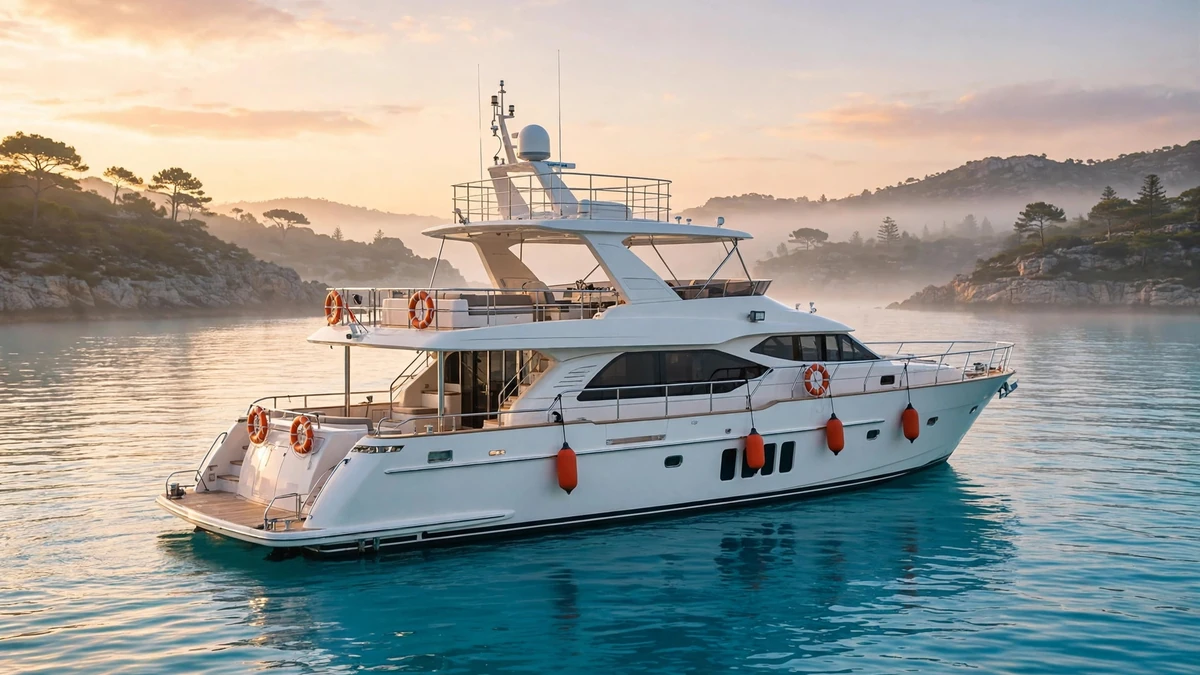

There is a moment on a whale watching trip that no photograph quite captures. The sea goes still, the guide raises a hand, and then a humpback surfaces so close to the yacht that you can hear the breath leave its blowhole before you see the animal itself. A good whale watching yacht is built for exactly that moment. It is quiet enough not to frighten the whales, stable enough to watch from comfortably for hours, and equipped with the tenders, guides and viewing decks that turn a lucky sighting into a properly planned encounter.
The problem is that most superyachts are not designed for wildlife. A fast, noisy yacht with a deep draught and no naturalist on board can cruise straight past a pod without anyone noticing, or worse, disturb the animals it came to see. Whale watching rewards a different kind of vessel: an expedition-style yacht with a shallow draught for coastal waters, a quiet hull, stabilisers for long hours at anchor, and a crew that knows the migration seasons and the local rules for approaching whales.
Below are nine luxury yachts worth considering for whale watching trips in 2027, from a 126-metre expedition yacht with its own submarine to smaller, nimbler vessels that can slip into the bays where whales feed. Each one is described by what it is good at, what to watch for, and who it suits best, so you can choose with the whales in mind, not just the size of the yacht.
Key takeaways
- Whale watching rewards quiet, stable, expedition-style yachts with shallow draughts and experienced naturalist guides, not the fastest or flashiest vessels.
- The best seasons vary by destination: humpbacks in Tonga and the Dominican Republic from June to October, grey whales in Baja from January to April, and blue whales off Sri Lanka from December to April.
- A yacht with a tender, kayaks, and a hydrophone lets you watch whales from the water and listen to them underwater without crowding the animals.
- Responsible operators keep a respectful distance, limit viewing time, and never chase, feed, or swim with whales unless local rules clearly allow it.
- No yacht can guarantee a sighting, and weather, sea state, and migration timing matter more than the size of the vessel.
What whale watching from a yacht actually means
Whale watching from a yacht is not a day trip with a bigger boat. It is a multi-day expedition, usually of a week or more, built around the migration calendar of a particular species in a particular place. The yacht anchors or cruises slowly through known feeding and breeding grounds, the crew scans the horizon from dawn, and when whales are found, the yacht approaches slowly and keeps a respectful distance while guests watch from the deck, the tender, or the water.
The crew matters just as much. A naturalist or marine biologist on board can read the surface behaviour, explain what the whales are doing, and know when to stay and when to leave. A captain who knows the local regulations will keep the yacht at the legal distance and avoid the engine noise that stresses the animals. Ask about both before you book, because the same yacht with a different crew can deliver a very different trip.
How we chose these yachts and what to look for
Look first at the hull and the draught. Expedition yachts with ice-class or reinforced hulls, shallow draughts, and dynamic positioning are the best fit for whale watching, because they can hold position quietly in coastal waters without dropping anchor on a reef. A yacht that needs deep water will spend its time offshore, where sightings are rarer and the sea is rougher.
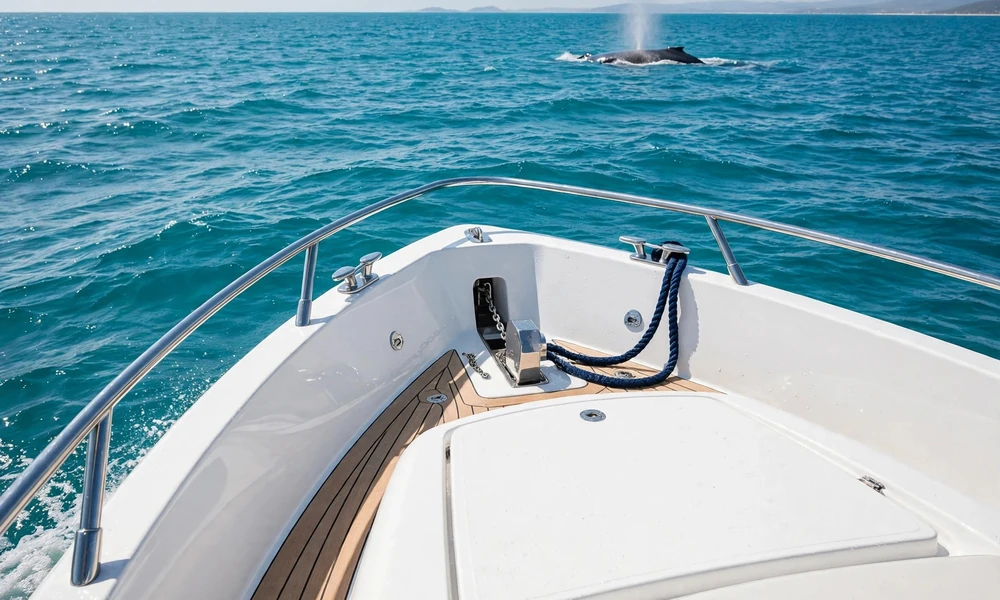
Look next at the tenders and toys. A fast, quiet tender with a low profile is the single most useful piece of equipment on a whale watching trip. Kayaks and paddleboards are a close second, because they let guests watch whales silently at water level. A hydrophone, which lets you hear whale song through the yacht’s speakers, is a small luxury that changes the whole trip, and a submarine or submersible is the rarest treat of all. Our guide to chartering a luxury yacht explains how to check what is actually included in the rate, because tenders, guides and fuel are not always part of the headline price.
Finally, look at the season and the destination. A yacht is only as good as its itinerary. The best whale watching yachts move with the migrations: Baja in winter, Tonga in the southern winter, Alaska in summer, Sri Lanka and the Maldives in the northern winter. Ask where the yacht will be in the month you want to travel, and whether the charter includes a naturalist guide, because that is what separates a wildlife expedition from a cruise that happens to pass a whale.
The 9 best luxury yachts for whale watching trips of 2027
M/Y Octopus
What we like: A 126-metre expedition yacht with a submarine, a helicopter, a research laboratory and a shallow enough draught for coastal work, built for exactly this kind of wildlife expedition. What to consider: One of the most expensive charters in the world, and its size means it needs careful planning for the smallest bays. Length: 126 metres. Guests: 26. Best for: Serious whale watchers who want the full expedition kit. Charter price range: From about $2,200,000 per week.
M/Y Legend
What we like: A 77-metre expedition yacht with an ice-class hull, a helicopter, a submarine, and a crew that has run polar and tropical wildlife expeditions for years. What to consider: A working expedition feel rather than a glossy superyacht interior, and it books far ahead for migration seasons. Length: 77 metres. Guests: 26. Best for: Families and groups who want a real expedition atmosphere. Charter price range: From about $490,000 per week.
M/Y Alucia
What we like: A 56-metre research and expedition yacht with a submarine, a helicopter pad, and a laboratory, originally built for ocean science. What to consider: Fewer cabins than larger yachts, so it suits smaller groups, and the interior is practical rather than palatial. Length: 56 metres. Guests: 12. Best for: Small groups who want a science-led whale watching trip. Charter price range: From about $290,000 per week.
M/Y Tatoosh
What we like: A 92-metre expedition yacht with a helicopter, a swimming pool, a cinema, and a shallow draught for its size, plus a crew used to long wildlife itineraries. What to consider: Premium pricing, and its size limits access to the smallest anchorages. Length: 92 metres. Guests: 12. Best for: Guests who want expedition capability with full superyacht comfort. Charter price range: From about $850,000 per week.
M/Y Attessa IV
What we like: A 100-metre yacht with a helicopter, a large sun deck, stabilisers, and a crew experienced in long-range cruising through whale-rich waters. What to consider: A deep draught for its size, so it stays further offshore than smaller expedition yachts. Length: 100 metres. Guests: 12. Best for: Luxury travellers who want whale watching as part of a longer cruise. Charter price range: From about $1,100,000 per week.
M/Y SuRi
What we like: A 63-metre expedition yacht with a helicopter, a large tender garage, kayaks, and a crew that has run wildlife charters in the Pacific and the Indian Ocean. What to consider: A more utilitarian interior than a classic superyacht, and it is popular in migration season. Length: 63 metres. Guests: 12. Best for: Active travellers who want to combine whale watching with kayaking and diving. Charter price range: From about $460,000 per week.
M/Y Cloudbreak
What we like: A 72-metre expedition yacht with a helicopter, a large aft deck, stabilisers, and a proven record of long-range wildlife itineraries. What to consider: A bold, modern interior that will not suit traditional tastes, and it books early for peak seasons. Length: 72 metres. Guests: 12. Best for: Groups who want a modern expedition yacht with serious range. Charter price range: From about $950,000 per week.
M/Y Loon
What we like: A 67-metre yacht with a large sun deck, a beach club, kayaks, paddleboards, and a crew known for thoughtful, guest-focused service. What to consider: Less of a dedicated expedition yacht than others on this list, so check the itinerary and guide arrangements carefully. Length: 67 metres. Guests: 12. Best for: Families who want whale watching with plenty of onboard comfort. Charter price range: From about $600,000 per week.
M/Y Samara
What we like: A 50-metre yacht with a shallow draught, a large tender, kayaks, and a warm, relaxed interior that suits long, slow days on the water. What to consider: The smallest yacht on this list, so it suits groups of ten or fewer and has less range than larger expedition yachts. Length: 50 metres. Guests: 10. Best for: Small groups and couples who want an intimate whale watching trip. Charter price range: From about $350,000 per week.
Which whale watching yacht is right for you
Families with children usually do best on a mid-sized yacht like Legend or Loon, where there is space to move, a beach club or sun deck for downtime, and a crew used to younger guests. Small groups and couples often prefer Alucia or Samara, where the atmosphere is intimate and the yacht can enter the shallow bays that larger vessels cannot reach. Large groups and multi-generational parties will need Octopus or Legend, the only yachts on this list that sleep more than twelve guests comfortably.
Budget is the other deciding factor. Weekly rates on this list range from about $290,000 to about $2,200,000, and that is before tax, fuel, food, drinks, tips and licences, which can add a substantial amount. A smaller expedition yacht with a good naturalist often delivers a better whale watching experience than a larger yacht without one, so spend the money on the crew and the itinerary rather than on extra cabins you do not need. The best luxury hotels in the Maldives are worth considering as a base before or after your charter, because the Maldives is one of the few places where whale watching, diving and a luxury hotel stay combine easily in a single trip.
Season matters more than the yacht. Humpbacks gather in Tonga and the Dominican Republic from June to October, grey whales pass through Baja from January to April, blue whales feed off Sri Lanka from December to April, and Alaska’s humpbacks and orcas are at their best from May to September. Choose the destination and the month first, then find the yacht that will be there.
The caveats that matter
Whale watching is wildlife, not a show, and the animals set the schedule. A yacht can put you in the right place at the right time of year, but it cannot make a whale surface, and bad weather can keep you at anchor for a day or more. That is part of the experience, and the best charters build flexible itineraries with alternative activities, such as snorkelling, kayaking and island visits, for the days when the whales are elsewhere.
| Detail | What is known |
|---|---|
| Best seasons | Baja January to April, Tonga June to October, Alaska May to September, Sri Lanka December to April |
| Best yacht type | Expedition yacht with shallow draught, quiet hull, stabilisers and a naturalist guide |
| Typical charter length | Seven to ten days, built around the migration calendar |
| What is usually extra | Tax, fuel, food, drinks, tips, licences and local permits |
| Closest encounters | From a quiet tender or kayak, not from the mothership |
| Who should avoid it | Anyone prone to severe seasickness, or travellers who need a fixed daily schedule |
| Responsible watching | Keep distance, limit viewing time, never chase, feed, or touch whales |
| What no yacht guarantees | A sighting, calm weather, or a particular species on a particular day |
Responsible watching deserves a word of its own. The best operators follow local rules on approach distance and viewing time, cut their engines near whales, and leave when the animals show signs of stress. Swimming with whales is allowed in a few places, such as Tonga, under strict local rules, and banned in many others. If an operator promises guaranteed close encounters or swimming with whales in a place where it is not clearly legal, that is a warning sign, not a selling point.
Checklist: booking a whale watching yacht honestly
Use these checks before you book, and again before you board.
- Check the season: confirm the yacht will be in the right destination in the right month for the species you want to see.
- Check the guide: confirm a naturalist or marine biologist is included, not just a captain who likes whales.
- Check the tenders: confirm a quiet, fast tender is included, plus kayaks or paddleboards for silent watching.
- Check the draught: ask whether the yacht can enter the shallow bays where whales nurse and feed.
- Check the extras: confirm what the rate covers and what tax, fuel, food, drinks and permits will add.
- Check the rules: confirm the operator follows local approach distances and never chases or feeds whales.
Frequently asked questions
When is the best time to go whale watching by yacht?
It depends on the destination. Baja is best from January to April for grey whales, Tonga from June to October for humpbacks, Alaska from May to September for humpbacks and orcas, and Sri Lanka from December to April for blue whales. Choose the species and the month first, then the yacht.
Can you swim with whales from a yacht?
In a few places, yes, under strict local rules. Tonga allows regulated swimming with humpbacks, with a licensed guide and a small group. In most other destinations it is banned or discouraged, and a responsible operator will not offer it. Ask about the local rules before you book, not after you arrive.
How close can a yacht get to a whale?
Approach distances are set by local law and vary by country, commonly 100 to 300 metres for large whales, with stricter rules for mothers and calves. A good crew keeps its distance and lets the whales approach the tender if they choose to, which is how the closest encounters usually happen.
Is whale watching safe for children?
Yes, with the right yacht and crew. Choose a stable, mid-sized yacht with stabilisers, a beach club or sun deck for downtime, and a crew experienced with younger guests. Children should stay with an adult on deck during encounters, and life jackets are standard on tenders.
What should I pack for a whale watching charter?
Binoculars, a camera with a long lens, layers for wind and spray, sun protection, seasickness tablets if you are prone to it, and a waterproof bag for electronics. A hydrophone is provided by the yacht if it has one, so ask in advance. A honeymoon destination guide is a useful starting point if you are planning a whale watching trip as part of a honeymoon, because several of the best whale watching destinations double as romantic escapes.
Do I need a permit to watch whales from a yacht?
In some destinations, yes. Certain marine parks and whale sanctuaries require permits, and some countries limit the number of boats that can watch whales on a given day. A reputable charter broker or operator handles the permits as part of the booking, so confirm this in writing before you pay a deposit.
The bottom line
The best luxury yacht for whale watching in 2027 is not the biggest or the most expensive. It is the quiet, stable, expedition-style yacht that will be in the right place at the right time, with a naturalist on board, a good tender, and a crew that respects the animals. For most travellers, a mid-sized expedition yacht like Legend, SuRi or Alucia offers the best balance of access, comfort and price, while Octopus remains the ultimate choice for those who want the full expedition kit.
Choose the destination and the season first, check the guide and the tenders second, and treat the yacht itself as the platform that makes the encounter possible. The whales will do the rest, on their own schedule, which is exactly what makes the trip worth taking.