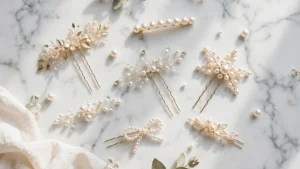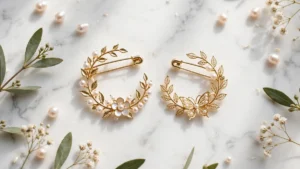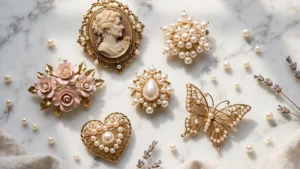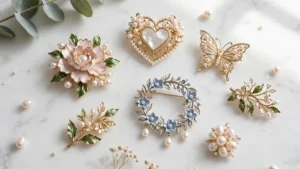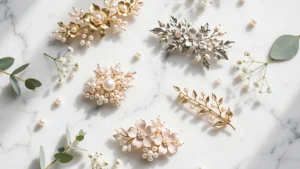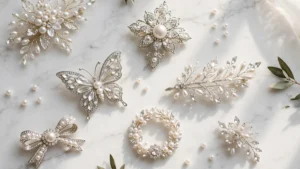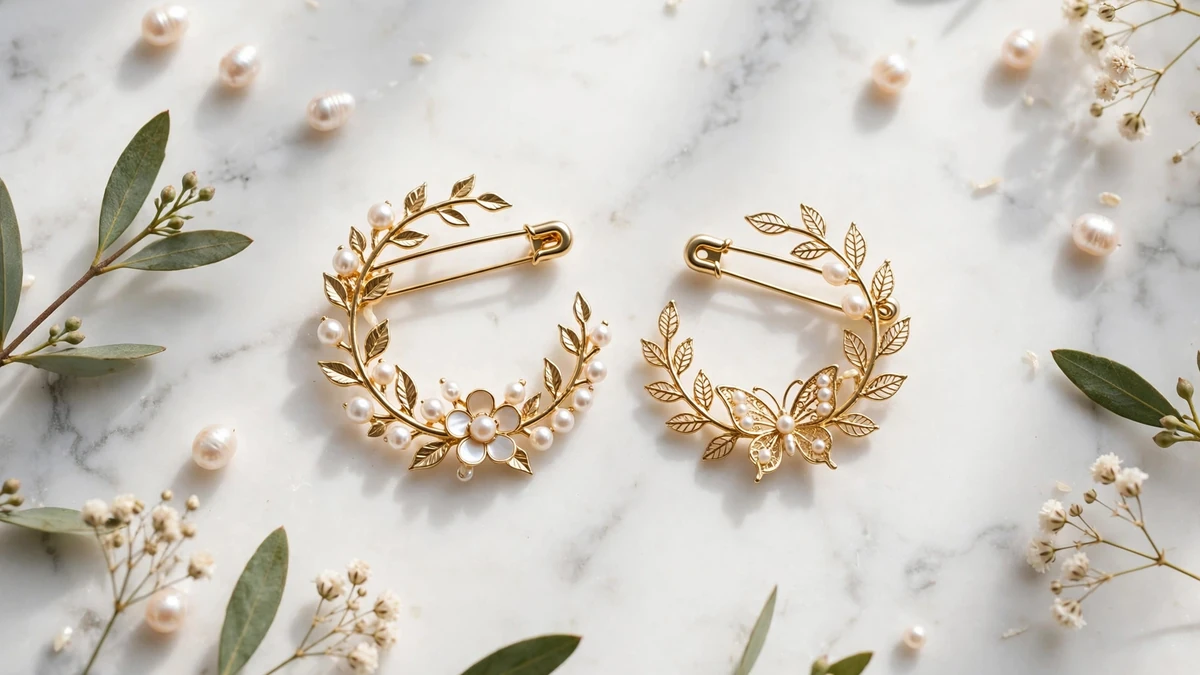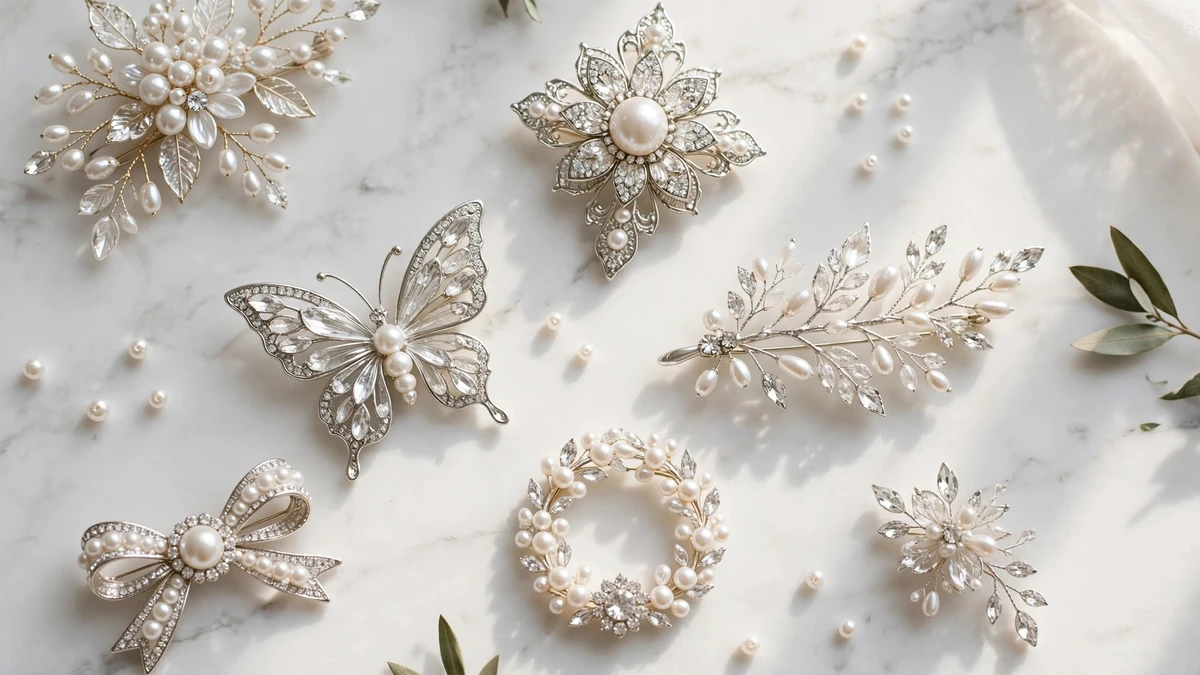

A bridal brooch is the smallest piece of jewellery a bride wears on her wedding day, and often the one people remember most. It sits on a sash, a shoulder, a bouquet wrap or a veil, catching the light in photographs long after the dress has been put away. Unlike a necklace or earrings, a brooch is a choice, not an expectation, which is why it feels personal: it can carry a family stone, a grandmother’s pearl, or simply a shape that means something to the bride.
The problem is that brooches are easy to get wrong. A piece that is too heavy pulls on delicate fabric. A pin that is too short will not hold through a long day of hugging, dancing and sitting. The right brooch should look as though it was always part of the dress, not added at the last minute.
Below are nine brooches worth considering in 2027, from a classic diamond cluster to a simple pearl pin. Each is described by what it is good at, what to watch for, and who it suits best, so you can choose with your dress and your day in mind.
Key takeaways
- A brooch should weigh under 20 grams for delicate fabrics, and always be tried on the actual dress before the wedding day.
- Pearl, diamond and crystal brooches suit most bridal looks, while coloured stones work best when they echo the bouquet or the wedding colours.
- Check the pin and clasp before buying: a secure rollover clasp and a pin long enough for the fabric are what keep a brooch in place all day.
- Pin a brooch through a seam, a sash or a reinforced area, never through a single layer of silk or tulle on its own.
- No brooch suits every dress, and a heavy or oversized piece can damage fine fabric, so the dress comes first and the brooch second.
What a brooch actually does for a bridal look
A brooch does three jobs at once. It adds a point of light where the dress is plain, it marks a place on the outfit that the eye returns to, and it can hold something in place, a sash, a wrap, a veil, a bouquet ribbon. On a strapless or simple sheath dress, a single brooch at the waist or shoulder can be the whole jewellery statement. On a heavily beaded gown, a small, quiet brooch is usually better, because the dress is already doing the talking.
Placement matters more than size. At the waist, a brooch defines the silhouette and works well with a sash or a belt. At the shoulder, it frames the face and photographs beautifully. On a bouquet wrap, it hides the stems. On the back of a dress, it is a surprise for guests, though it is the placement most likely to be knocked loose during hugs.
A brooch also carries meaning. Many brides wear one that belonged to a mother or grandmother, or one bought to mark the day. That is why the pin and the setting matter as much as the stone: a brooch that will be kept, worn again or passed on should be made to last, with a clasp that can be serviced and a setting that holds its stones firmly.
How we chose these brooches and what to look for
Look first at the weight and the pin. A brooch should be light enough that the fabric does not sag or pucker, and the pin long enough to pass through the layers it must hold. A rollover clasp, which locks the pin tip into a small C-shaped catch, is the most secure for a long day. A simple open C clasp can work on a sash or a thick wrap, but it is more likely to catch on fabric or open during a hug.
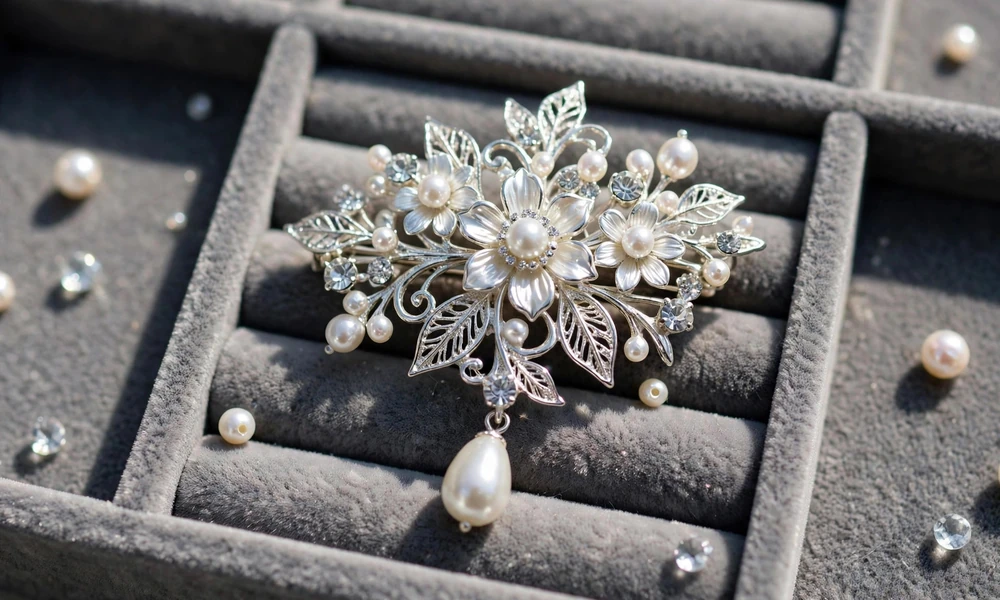
Look next at the metal and the stone. Gold, whether yellow, white or rose, suits warm and classic bridal looks, while platinum and sterling silver suit cooler, more modern dresses. Pearls are the safest choice for most brides, because they suit every skin tone and every dress colour. Diamonds and clear crystals add sparkle without colour, which is useful when the bouquet is already colourful. Coloured stones should echo something else in the look, or they can feel like an afterthought.
Finally, think about the rest of the jewellery. A brooch does not need to match the earrings or the necklace exactly, but the metals should agree and the scale should be balanced. A large brooch pairs best with small, quiet earrings, while a small brooch leaves room for a bolder necklace. Our guide to the best wedding shoes for brides makes the same point about balance, because a wedding look works when every piece earns its place, not when every piece competes for attention.
The 9 best brooches for brides of 2027
Tiffany & Co. Schlumberger Bird on a Rock Brooch
What we like: A jewelled bird perched on a coloured stone, with pavé diamonds and a sense of movement that photographs beautifully. A genuine heirloom piece with a design that has been made for decades. What to consider: Very high price, and the coloured stone base makes it a statement rather than a quiet accent. Stone: Diamond with morganite or aquamarine base. Setting: 18k yellow gold with pavé diamonds. Best for: A bride who wants one unforgettable piece. Price range: Over $10,000.
Best pinned to a sash or a structured bodice, where the weight is supported, it pairs best with small diamond studs rather than a necklace.
Cartier Panthère Brooch
What we like: The panther in onyx and diamonds is instantly recognisable, with a sculptural quality that suits a modern, confident bridal look. What to consider: Bold and unmistakably Cartier, so it suits a bride who likes a strong design, not a quiet one. Stone: Diamond with onyx spots. Setting: 18k white gold. Best for: A modern bride with a simple, structured dress. Price range: Over $10,000.
Best on a plain bodice or a tailored jacket, where its shape can be seen clearly, with the rest of the jewellery kept minimal.
Van Cleef & Arpels Vintage Alhambra Brooch
What we like: The four-leaf clover motif is lucky, recognisable and soft, with mother-of-pearl or onyx that suits a romantic dress. What to consider: The motif is widely copied, so buy from the maison or an authorised dealer. Stone: Mother-of-pearl or onyx. Setting: 18k yellow gold with beaded edge. Best for: A romantic bride who wants luck and softness. Price range: $3,000 to $6,000.
Light enough for most fabrics, it is pretty enough to wear again after the wedding, on a coat, a jacket or a scarf.
Mikimoto Akoya Pearl Brooch
What we like: A single perfect Akoya pearl, or a small cluster, with a lustre that suits every bridal dress and every skin tone. What to consider: Pearls are soft and need care, so keep the brooch away from perfume and hairspray. Stone: Akoya pearl. Setting: 18k white gold. Best for: A classic bride who wants timeless simplicity. Price range: $1,000 to $3,000.
The safest and most versatile choice in this guide, it works at the waist, the shoulder or the bouquet, and matches pearl earrings or a necklace without ever looking overdone.
Harry Winston Cluster Diamond Brooch
What we like: A cluster of round brilliant diamonds that catches the light from every angle, with the clean, precise setting Harry Winston is known for. What to consider: Very high price, and the sparkle can compete with a heavily beaded dress. Stone: Diamond. Setting: Platinum. Best for: A bride in a plain, elegant gown who wants maximum sparkle. Price range: Over $10,000.
At its best on a simple silk or crepe dress, pin it at the waist or the shoulder and keep the earrings small.
Chanel Camellia Brooch
What we like: The camellia is Chanel’s signature flower, soft and romantic, made in white or black ceramic, crystal or fabric, so there is a version for almost every dress. What to consider: Fabric versions are delicate and should not be worn in rain, and the design is recognisably Chanel. Stone: Crystal or ceramic camellia. Setting: Gold-tone metal. Best for: A fashion-conscious bride who loves Chanel. Price range: $500 to $2,000.
A designer piece without a five-figure price, it works well on a bouquet wrap, where the flower shape looks natural, or on a sash.
Dior Rose des Vents Brooch
What we like: A delicate rose in gold, sometimes with a small diamond or mother-of-pearl centre, that reads as pretty and modern rather than traditional. What to consider: The design is small, so it suits a sash or a shoulder rather than a wide, plain bodice. Stone: Mother-of-pearl or diamond. Setting: 18k yellow or rose gold. Best for: A modern romantic bride. Price range: $1,500 to $4,000.
A good middle ground, a designer piece with a soft, floral shape that does not shout, it pairs well with a simple gold band and small gold earrings.
Boucheron Plume de Paon Brooch
What we like: A peacock feather in pavé diamonds and coloured stones, with a sense of movement and colour that suits a bride who wants something unusual. What to consider: The feather shape is long, so it needs a firm pinning point, and the colour suits a dress with a warm or champagne tone. Stone: Diamond with sapphire and emerald accents. Setting: 18k white gold. Best for: A bride who wants colour and drama. Price range: $5,000 to $10,000.
Best pinned at the shoulder or the waist of a structured dress, where its length can be seen, it is a conversation piece for a bride who enjoys that.
Monica Vinader Pearl Brooch
What we like: A simple, well-made pearl brooch in gold vermeil, at a price that leaves room in the budget for the rest of the day. What to consider: Vermeil wears through in one to three years with regular use, and the pin is lighter than on a fine jewellery piece. Stone: Freshwater pearl. Setting: 18k gold vermeil over sterling silver. Best for: A bride who wants a pretty, affordable brooch. Price range: Under $250.
The sensible choice for a bride who wants the look without the heirloom price, it is light, easy to pin, and pretty enough to wear again on a coat or a jacket.
Which brooch is right for your dress
Start with the fabric. A heavy brooch on silk, chiffon or tulle will pull and pucker, so choose a light piece, under 20 grams, and pin it through a seam or a sash. A structured bodice or a satin gown can carry a heavier brooch, because the fabric supports it. If in doubt, ask the dressmaker to add a small reinforced patch where the brooch will sit.
Next, look at the neckline. A strapless or sweetheart neckline leaves the shoulder free, a natural place for a brooch. A high neckline or a heavily embellished bodice leaves less room, so a brooch at the waist or on the bouquet works better. A V-neck suits a brooch at the point of the V, while a boat neck suits one at the shoulder.
Finally, match the metal to the dress colour. Yellow gold suits ivory and champagne, white gold and platinum suit bright white, and rose gold suits blush and warm tones. A guide to engagement rings makes the same point about metal and skin tone, because the metal that flatters the bride’s skin will usually flatter the dress too.
The caveats that matter
A brooch is a pinned object on a moving person, so the risks are practical: the pin can open, the brooch can fall, the fabric can tear, and the stones can catch on a veil or a bouquet. Most of these problems are avoidable with a fitting, a secure clasp and a pinning point checked by the dressmaker. Do not pin a brooch for the first time on the wedding morning. Try it at the final fitting, walk in it, sit in it, hug someone in it, and check that it stays put.
| Detail | What is known |
|---|---|
| Safe weight for delicate fabric | Under 20 grams, pinned through a seam, sash or reinforced area |
| Most secure clasp | Rollover clasp that locks the pin tip into a C-shaped catch |
| Best all-round stone | Pearl, which suits every dress colour and skin tone |
| Best metal for ivory dresses | Yellow gold, which warms ivory and champagne tones |
| Best metal for bright white dresses | White gold or platinum, which stay cool against bright white |
| Who should avoid a heavy brooch | Brides in silk, chiffon or tulle, unless the dress is reinforced |
| When to try it on | At the final fitting, and again with the veil and bouquet |
| What it does not do | It does not fix a dress that fits badly, and it cannot hold up a strapless bodice on its own |
If the brooch is a family piece, have it checked by a jeweller before the wedding. A loose stone, a bent pin or a tired clasp can be fixed in a day, but not on the wedding morning. A quick check is cheap, and it protects both the brooch and the dress.
Checklist: choosing a bridal brooch honestly
Use these checks before you buy, and again at the final fitting.
- Weigh it: under 20 grams for delicate fabric, and always try it on the actual dress.
- Check the clasp: a rollover clasp that locks, not a loose open C clasp, for a long day.
- Check the pin: long enough to pass through the layers it must hold, and straight, not bent.
- Match the metal: yellow gold for ivory, white gold or platinum for bright white, rose gold for blush.
- Try it with everything: veil, bouquet, sash and earrings, at the final fitting, not on the morning.
- Have a backup plan: a small safety pin or a second pinning point, in case the brooch needs moving during the day.
Frequently asked questions
Where should a bride pin her brooch?
The waist, the shoulder and the bouquet wrap are the three most reliable places. The waist defines the silhouette, the shoulder frames the face, and the bouquet wrap hides the stems. The back of the dress looks beautiful as the bride walks away, but it is the easiest place to knock a brooch loose.
Can a brooch damage a wedding dress?
Yes, if it is heavy and pinned through a single layer of fine fabric. Pin through a seam, a sash or a reinforced area, and ask the dressmaker to add a small patch where the brooch will sit. A light brooch on a supported point will not damage the dress.
Should the brooch match the engagement ring?
It should agree with it, not match it exactly. If the ring is yellow gold, a yellow gold brooch feels coherent. If the ring is platinum with diamonds, a white metal brooch with diamonds or pearls will sit comfortably beside it.
Can I wear a brooch with a necklace?
Yes, but keep the scale balanced. A large brooch pairs best with small earrings and no necklace, or a very fine chain, while a small brooch leaves room for a bolder necklace. A statement necklace and a large brooch together will usually feel like too much.
What if my brooch is a family heirloom?
Have it checked by a jeweller before the wedding, and tell the dressmaker where it will sit so the dress can be reinforced. Heirlooms are often heavier than modern brooches, so the pinning point matters more.
Can I wear my brooch again after the wedding?
Yes, and most brides do. A pearl or diamond brooch works on a coat, a jacket, a scarf or a handbag. A very large or very bridal design may stay in the box, so choose a size and shape you would wear again.
The bottom line
The best brooch for a bride in 2027 is not the most expensive or the most sparkling. It is the one that suits the dress, sits securely through a long day, and means something to the bride wearing it. A pearl brooch is the safest choice for most dresses, a diamond cluster suits a plain gown, and a designer flower or a family piece suits a bride who wants her jewellery to tell a story.
Choose the dress first, try the brooch at the final fitting, and pin it where the fabric can support it. Done well, a brooch is the detail people remember in the photographs, and the piece a bride keeps long after the dress has been put away.