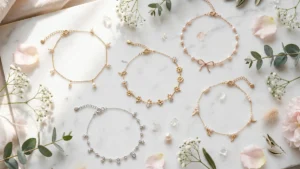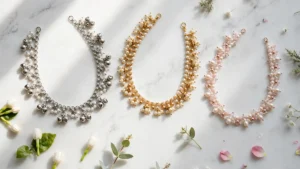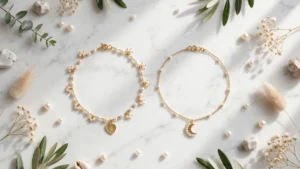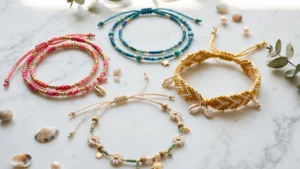
A bridal anklet is the smallest piece of jewellery you will wear on your wedding day, and the one most likely to be noticed in photographs. It sits just above the shoe and catches the light as you walk down the aisle. The problem is not finding a pretty anklet. It is finding one that stays comfortable for ten hours, does not snag on lace or tulle, and still looks like you.
That is why this guide is organised by how an anklet actually behaves on a wedding day, not just by how it looks in a product photo. A delicate chain can be perfect for a beach ceremony and invisible under a long gown. A tennis anklet catches the light beautifully, but it needs a secure clasp and a fit that does not slide down by the third hour. Price is a poor guide on its own: some of the most reliable bridal anklets are modestly priced, and some of the most expensive are the hardest to wear all day.
Below are nine anklets worth considering in 2027, from a classic pearl strand to a diamond tennis chain, each described by what it is good at, what to watch for, and who it suits best, so you can choose with your dress, your venue, and your comfort in mind.
Key takeaways
- Choose a bridal anklet for comfort over a full day, not just for how it looks in one photograph.
- Sterling silver and solid gold are safest for sensitive skin; gold vermeil and plated brass wear through faster.
- Measure your ankle with the shoe you will wear, and add half an inch so it does not slide or pinch.
- Try the anklet with your dress before the day, and check it does not catch on lace, tulle, or beading.
- No anklet suits every bride, dress, and venue at once, and a piece that is beautiful on a beach may be invisible under a ball gown.
What a bridal anklet actually does
An anklet is a chain worn around the ankle, usually with a small charm, a row of stones, or a strand of pearls. On a wedding day it does two jobs. The first is decorative: it adds a small point of light at the hem of the dress, where the eye naturally falls in full-length photographs. The second is personal. Many brides choose one because it is the piece nobody else can see from across the room.
What it does not do is replace the rest of your jewellery. An anklet works best in balance with your necklace, earrings, and bracelet, not competing with them. If your necklace is a statement piece, a fine chain anklet is usually the better match. If your jewellery is quiet and simple, a pearl or tennis anklet can carry a little more presence. The metal should match, too: a gold anklet with silver earrings looks like a mistake in photographs, even if each piece is lovely on its own.
Fit is the part most brides underestimate. An anklet that is too tight will leave a mark by the reception. One that is too loose will slide down over the heel of your shoe and need constant adjusting. The right fit sits just above the ankle bone, moves a little when you walk, and stays in place when you stand still. Measure in the evening, when your feet are at their largest, wearing the shoes you will marry in.
How we chose these anklets and what to look for
Look first at the metal and the finish. Sterling silver and solid gold are the safest choices for a long day, because they do not irritate sensitive skin and they hold up to sweat and dancing. Gold vermeil, a thick layer of gold over sterling silver, is a good middle ground, but it wears through in one to three years with regular wear. Plated brass is the material to avoid, because it can tarnish quickly and turn skin green when it meets sweat.
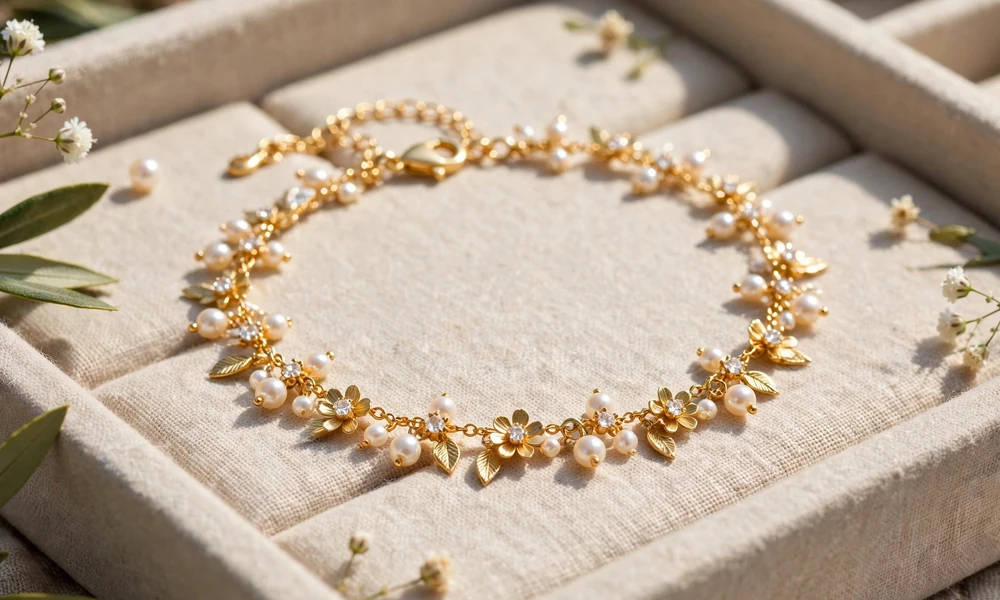
Look next at the clasp and the chain. A lobster clasp is the most secure choice for a wedding day, because it is unlikely to open while you dance. A spring-ring clasp is smaller and neater, but harder to fasten on your own. A chain with an extender, an extra inch or two of links, is worth having, because it lets you adjust the fit if your feet swell in the heat. Our guide to the best wedding shoes for brides is a useful companion here, because the height and shape of your shoe changes where the anklet sits and how much of it shows.
Finally, look at the setting and the stones. A bezel setting, where the stone is held in a rim of metal, is the safest choice for a long day, because the stone is protected and nothing can snag on the dress. A prong setting holds a stone higher and catches more light, but it can catch on lace and tulle, so try it with your dress before the day. Small stones are usually better for an anklet, because they sit flatter against the skin.
The 9 best anklets for brides of 2027
Tiffany & Co. Return to Tiffany Heart Tag Anklet
What we like: A classic sterling silver chain with the small heart tag that has become a quiet signature, lightweight, well made, and instantly recognisable. What to consider: Premium price for a simple chain, and the heart tag can catch on very fine lace. Stone: None. Metal: Sterling silver. Setting: Link chain with heart tag charm. Best for: A classic or traditional wedding. Price range: £200 to £300.
A timeless, understated anklet that suits a classic wedding and wears well long after the day.
Monica Vinader Fiji Friendship Anklet
What we like: A fine 18k gold vermeil chain with small woven links, light enough to forget you are wearing it, and warm enough for a summer wedding. What to consider: Vermeil wears through in one to three years, and the chain is delicate, so it needs gentle handling. Stone: None. Metal: 18k gold vermeil over sterling silver. Setting: Woven link chain. Best for: A beach or destination wedding. Price range: £100 to £150.
A light, warm gold chain that suits a beach or destination wedding and layers well with a second chain.
Mejuri Diamond Tennis Anklet
What we like: A line of small diamonds in 14k gold that catches the light with every step, with a secure lobster clasp and a chain that sits flat. What to consider: The most expensive pick here, and the stones need an annual check, because a loose stone on the day is hard to fix. Stone: Diamonds. Metal: 14k gold. Setting: Four-prong tennis setting. Best for: An evening or formal wedding. Price range: £700 to £1,200.
The sparkliest pick here, best with a dress that shows the ankle, and worth the price if you want diamonds at the hem.
Pandora Moments Snake Chain Anklet
What we like: A smooth sterling silver snake chain that is comfortable against the skin, with a clasp that is easy to fasten alone and room to add a small charm. What to consider: The chain is plain on its own, so it suits a bride who wants a quiet base. Stone: None. Metal: Sterling silver. Setting: Snake chain. Best for: A bride who wants to add a charm. Price range: £50 to £90.
An affordable, comfortable starting point, especially if you want to add a charm that means something to you.
David Yurman Cable Collectibles Anklet
What we like: The twisted cable design David Yurman is known for, in sterling silver with a small gemstone end cap, substantial without being heavy. What to consider: Premium price, and the cable design is distinctive, so it suits a bride who likes that look. Stone: Blue topaz. Metal: Sterling silver. Setting: Cable with gemstone end caps. Best for: A modern or sculptural wedding look. Price range: £300 to £450.
A modern, beautifully made anklet for a bride whose jewellery leans sculptural rather than traditional.
Kendra Scott Elisa Gold Anklet
What we like: A 14k gold-plated brass chain with a small oval pendant, light, affordable, and available in finishes that match most wedding palettes. What to consider: Gold-plated brass wears through faster than vermeil, and it can irritate sensitive skin, so it is best for a single day. Stone: None. Metal: 14k gold-plated brass. Setting: Link chain with oval pendant. Best for: A budget-friendly bridal look. Price range: £40 to £70.
A budget-friendly choice if the anklet is a one-day detail, or if you are buying matching pieces for the group.
Missoma Gold Vermeil Pearl Anklet
What we like: A row of small freshwater pearls on a gold vermeil chain, soft, classic, and romantic, with a lustre that photographs beautifully. What to consider: Pearls are softer than metal and can be scratched, so keep the anklet away from rough ground and store it carefully. Stone: Freshwater pearls. Metal: 18k gold vermeil over sterling silver. Setting: Beaded pearl strand. Best for: A romantic or garden wedding. Price range: £120 to £180.
A soft, romantic pearl anklet that pairs naturally with pearl earrings or a pearl bracelet.
Astrid & Miyu Vintage Pearl Anklet
What we like: A vintage-inspired design with small pearls and a fine gold-plated chain, delicate and a little unusual, with an easy-to-adjust clasp. What to consider: Gold-plated silver wears through faster than vermeil, and the vintage styling suits a softer, romantic dress. Stone: Freshwater pearls. Metal: Gold-plated recycled silver. Setting: Beaded pearl strand. Best for: A vintage-inspired wedding. Price range: £70 to £110.
A delicate, vintage-inspired anklet that suits a softer dress with lace or a romantic silhouette.
Mikimoto Akoya Pearl Anklet
What we like: Akoya pearls with a deep, even lustre, knotted on silk and finished with an 18k gold clasp, the most refined pearl anklet here. What to consider: The most expensive pearl option here, and pearls need care, so wipe the strand after the day. Stone: Akoya pearls. Metal: 18k gold clasp. Setting: Knotted pearl strand. Best for: A luxury or black-tie wedding. Price range: £800 to £1,500.
The most refined pearl anklet here, a keepsake you will wear again at anniversaries and formal occasions.
Which anklet is right for your wedding
Start with the dress. A long gown that covers the ankle means the anklet will only be seen in photographs of the hem and the first dance, so a fine chain or a small pearl strand is usually enough. A shorter dress, a beach dress, or a dress with a slit means the anklet is visible all day, so it can carry a little more presence. The venue matters too.
Next, think about your other jewellery. The metal should match, and the style should be in the same family. If your engagement ring is gold, a gold anklet will look intentional, while a silver one will look like an afterthought. If your necklace is a statement piece, keep the anklet quiet. If your jewellery is simple, the anklet can carry a little sparkle. Our guide to the best engagement rings is a useful reference here, because the metal and stone of your ring set the tone for everything else you wear on the day.
Finally, think about comfort. You will wear this anklet for ten hours or more, through a ceremony, photographs, a meal, and dancing. A chain that is too tight will hurt by the evening. A clasp that is hard to fasten will be a problem when you are getting dressed. Try the anklet on with your shoes and your dress, walk in it, sit in it, and dance in it, before the day, so there are no surprises.
The caveats that matter
Anklets are small, but they are not without risks on a wedding day. The most common problem is fit. Feet swell in heat, after standing for hours, and after dancing, so an anklet that fits in the morning can feel tight by the evening. An extender chain, or a fit that leaves half an inch of slack, solves most of this. The second is snagging: a prong setting or an open link can catch on lace or tulle.
| Detail | What is known |
|---|---|
| Best metals for a long day | Sterling silver and solid gold; vermeil is a good middle ground |
| Metal to avoid | Plated brass, which tarnishes quickly and can irritate skin |
| Best clasp | Lobster clasp, the most secure choice for dancing |
| How to measure | Measure in the evening, with your wedding shoes on, and add half an inch |
| Safest stone setting | Bezel setting, which protects the stone and does not snag |
| Who should check first | Anyone with a metal allergy, sensitive skin, or a gown that hides the ankle |
| What to test before the day | Fit with shoes and dress, clasp security, and whether it catches on lace |
| What it does not do | It does not suit every dress, and it is invisible under a full ball gown |
If you have a metal allergy, check the metal before you buy. Nickel is the usual culprit, and it is often present in plated brass and in some lower-grade gold alloys. Sterling silver and solid gold are usually safe, but if you are unsure, wear the anklet for a few hours at home first. If you are getting married on a beach, rinse the anklet in fresh water afterwards, because salt and sand can dull the finish.
Checklist: choosing a bridal anklet honestly
Use these checks before you buy.
- Check the metal: sterling silver or solid gold for sensitive skin, vermeil as a middle ground, and avoid plated brass.
- Check the fit: measure in the evening with your wedding shoes on, and leave half an inch of slack.
- Check the clasp: a lobster clasp is the most secure, and an extender chain lets you adjust the fit on the day.
- Check the setting: a bezel setting protects the stone and does not snag, while a prong setting needs testing.
- Check it with the dress: wear the anklet at your final fitting and walk, sit, and dance in it.
- Check the metal match: the anklet should match your ring, necklace, and earrings.
Frequently asked questions
Should a bride wear an anklet?
Only if you want to. An anklet is a lovely detail, but it is not required, and it is invisible under a long gown for most of the day.
What metal is best for a bridal anklet?
Sterling silver and solid gold are the safest choices for a long day. Gold vermeil is a good middle ground; plated brass is best avoided.
How tight should a bridal anklet be?
It should sit just above the ankle bone and move a little when you walk. Measure in the evening, with your wedding shoes on, and add half an inch for swelling.
Will an anklet snag on my dress?
It can, especially with prongs or open links. A bezel setting and a smooth chain are the safest choices, and you should always try the anklet with your dress at your final fitting.
Can I wear an anklet with a long dress?
Yes, but it will only be seen in photographs of the hem and the first dance, so a fine chain or a small pearl strand is usually enough. Our guide to the best statement necklaces can help you balance the rest of your jewellery.
Should the anklet match my engagement ring?
Yes, the metal should match. A gold anklet with a gold ring looks intentional, while a silver anklet with a gold ring looks like a mistake in photographs.
The bottom line
The best anklet for a bride in 2027 is not the most expensive or the sparkliest. It is the one that suits your dress, matches your other jewellery, and stays comfortable for ten hours. For a classic wedding, a sterling silver chain or a pearl strand is a strong choice. For a beach wedding, a fine gold vermeil chain is the smarter start. For an evening wedding, a diamond tennis anklet can carry the sparkle, if the dress shows the ankle.
Choose one anklet, try it with your shoes and your dress before the day, and judge it on how it feels after an hour of walking, not on how it looks in a product photo.