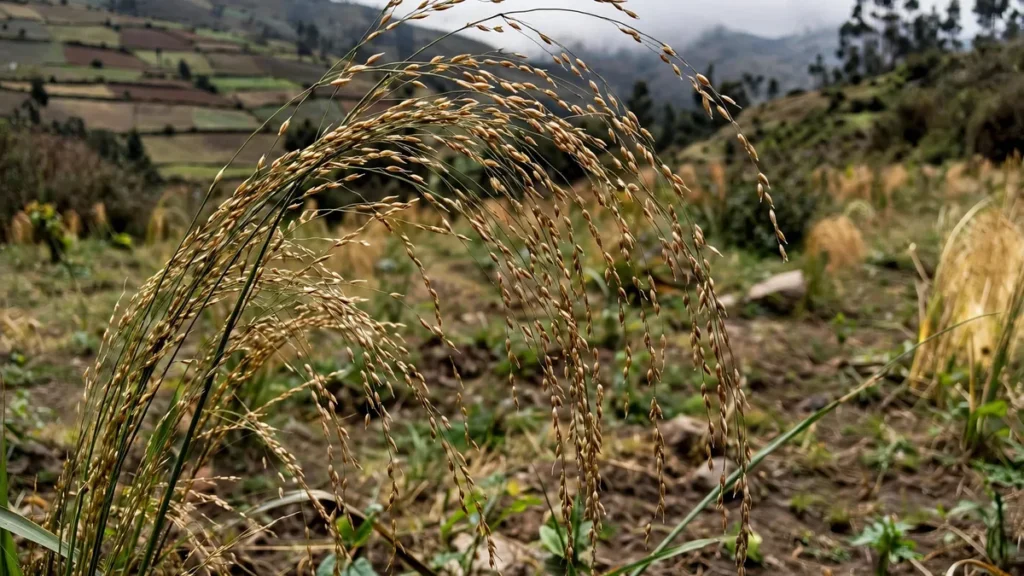
Teff is the smallest grain you will ever eat, and it feeds a whole country. Each seed is barely bigger than a grain of sand, yet in the highlands of Ethiopia and Eritrea it is milled, fermented for two or three days, and poured onto a clay griddle to become injera, the spongy flatbread that serves as plate, spoon and supper all at once. The grain grows on terraces two thousand metres above the sea, where wheat falters, and it has fed the highlands for thousands of years.
A teff farm retreat takes you to those terraces at harvest time, in the dry months after the rains, when the fields turn gold and the threshing floors fill with oxen. You sleep in a farmhouse room or a mud-and-thatch guest hut, eat injera torn by hand with stews of lentils, chicken and greens, and watch the grain cut with sickles, threshed under hooves and winnowed. Some farms keep bees and brew honey wine from their own harvest, others stand below rock churches or beside coffee forests, and the grain is only half the reason to go.
Below are nine teff farm retreats worth considering in 2027, from Gojjam’s white teff heartland to the Asmara plateau of Eritrea. Each stay below is weighed on its strengths, its limits and the traveller it suits best, so you can choose by the way you travel rather than by a pin on a map.
Key takeaways
- Teff is cut in the dry season, roughly October to December, and the harvest week moves with the rains, so confirm the dates first.
- Most teff farms are working farms first and guesthouses second, so expect plain rooms, shared meals and early starts.
- Teff itself has no gluten, but injera is often mixed with wheat or barley flour, so ask whether the batter is pure teff.
- The farms sit high, often above two thousand metres, so the air is thin, the nights are cold and the sun is fierce by day.
- No farm can promise a cutting day in advance, and a trip pinned to one threshing day can leave you staring at green grain that is not ready yet.
What a teff farm retreat actually is
A teff farm retreat is a stay on a working teff farm, usually three to five nights, where the farm is the reason for the trip. You sleep in a farmhouse room or a small guest hut, eat meals cooked from the farm’s own grain, and join in the work of the season, walking the terraces, watching the oxen thresh the crop, and seeing the flour fermented into injera on a clay griddle.
Teff is one of the oldest farmed grains, grown on the high plateaus of the Horn of Africa long before wheat reached the region, and it became the grain of injera in Ethiopia and Eritrea, of genfo porridge at breakfast and honey wine at feast days, wherever the soil was too thin for wheat.
Most of these farms sit in quiet, high country, with small terraced fields, golden grain in the dry season, and a griddle, a coffee pot or a beehive close to the farmhouse. The work is slower and the food is shared from one plate.
How we chose these stays and what to look for
We looked first at where teff actually grows well, not where it is marketed well. A real teff farm has terraces to walk through, grain to stand in at harvest, and a griddle, mill or beehive that uses its own grain.

The best farms host few guests at a time, usually under a dozen, so the harvest stays real work instead of a show staged for visitors. They also set out plainly what the nightly rate covers, with meals, lifts from the nearest town and guided walks inside the price rather than added on arrival. A farm that answers questions about the harvest, the injera and the altitude plainly is usually a farm that treats its guests well. Our rye farm retreats roundup runs the same check, and it is the quickest way to tell apart two farms that look alike on paper.
The 9 best luxury teff farm retreats of 2027
Gojjam, Amhara, Ethiopia — White Teff at the Source
What we like: White teff grown in the heartland of Gojjam, where the grain is milled on the farm and fermented into the softest injera in Ethiopia, served with doro wat and greens picked that morning, then a coffee ceremony with beans roasted over charcoal.
What to consider: The roads are rough and the region is remote, so the journey in takes most of a day, and the farm asks guests to check current travel advice first. Style: Gojjam highland farm stay. Best for: Travellers who want injera at the source. Price range: $65–$95 per night. Standout feature: Injera from white teff milled on the farm, with a buna coffee ceremony at dusk.
Shewa, Ethiopia — Teff Below the Entoto Hills
What we like: Teff grown in the central highlands of Shewa, where the fields run below the Entoto hills and the farm is a short drive from Addis Ababa. The kitchen cooks injera on a clay griddle each morning, and the Saturday market sells white teff by the sack.
What to consider: The farm is close to the city, so the nights are quieter than the deep countryside, but the fields are smaller and the views are hills, not wilderness. Style: Shewa highland farm stay. Best for: Travellers who want an easy first teff trip. Price range: $100–$130 per night. Standout feature: Teff fields a short drive from Addis Ababa, with a Saturday market selling grain by the sack.
Tigray Highlands, Ethiopia — Teff Among the Rock Churches
What we like: Teff grown in the northern highlands of Tigray, where the grain ripens below the sandstone cliffs of Gheralta and the farm sits within walking distance of rock-hewn churches. The kitchen serves injera with shiro wat and honey, and the evenings are cold and starry.
What to consider: The churches are reached on foot over rough ground, so this stay suits steady walkers who are happy with steep paths. Style: Tigray highland farm stay. Best for: Travellers who want grain and ancient churches together. Price range: $135–$165 per night. Standout feature: Teff fields below the Gheralta cliffs, with rock churches a morning walk away.
Gondar, Ethiopia — Teff by the Castles
What we like: Teff grown on the high plains around Gondar, where the grain is threshed on open floors and the farmhouse faces the castles of Fasil Ghebbi. The kitchen cooks injera with tibs and greens, and Lake Tana, with its papyrus boats and island monasteries, is a day trip away.
What to consider: The plains are windy and the sun is strong, so bring a hat and a layer for cold nights. Style: Gondar highland farm stay. Best for: Travellers who want castles and grain in one trip. Price range: $170–$200 per night. Standout feature: Injera suppers in a farmhouse near Gondar’s castles, with Lake Tana a day trip away.
Bale Mountains, Oromia, Ethiopia — Teff on the High Moorlands
What we like: Teff grown on the high moorlands of the Bale Mountains, cut below the Sanetti Plateau, at the edge of a national park. The kitchen serves injera with lentil wat and mountain honey, and the park holds Ethiopian wolves and mountain nyala within a day’s walk.
What to consider: The farm sits above three thousand metres, so the air is thin and the first day should be slow. Style: Bale mountain farm stay. Best for: Travellers who want grain and wildlife together. Price range: $205–$235 per night. Standout feature: Teff on the Sanetti Plateau, with Ethiopian wolves and mountain nyala in the park nearby.
Arsi, Oromia, Ethiopia — Teff in the Arsi Highlands
What we like: Teff grown in the Arsi highlands, where the grain shares the hills with wheat and barley and the farm keeps the sure-footed Arsi horses the region is known for. The kitchen cooks injera with gomen and chickpea wat, and crater lakes lie within walking distance.
What to consider: The highlands are cool and rain can arrive without warning, so pack a waterproof layer even in the dry season. Style: Arsi highland farm stay. Best for: Travellers who want horses, lakes and grain. Price range: $240–$270 per night. Standout feature: Teff and Arsi horses in the highlands, with crater lakes for morning walks.
Jimma, Oromia, Ethiopia — Teff Beside the Coffee Forests
What we like: Teff grown around Jimma, cut at the edge of the cloud forests in which coffee was first found, and the farm roasts its own beans after supper. The kitchen serves injera with coffee-leaf greens and honey, and the forest paths run past wild coffee trees.
What to consider: The forest is humid and the paths are muddy after rain, so closed shoes and a rain jacket matter most. Style: Jimma forest-edge farm stay. Best for: Travellers who want grain and coffee at the source. Price range: $275–$305 per night. Standout feature: Teff fields at the edge of the coffee forests where coffee was first found.
Harar, Ethiopia — Teff in the Walled City
What we like: Teff grown in the eastern highlands around Harar, where the grain is milled for injera served inside the old walled city, and the farm sits a short walk from lanes that have changed little in centuries. The kitchen cooks injera with spicy wat and dates, and the evening hyena feeding is a short walk away.
What to consider: The old city is crowded and the lanes are narrow, so this stay suits lovers of busy streets and early mornings. Style: Harar highland farm stay. Best for: Travellers who want grain and an old city together. Price range: $310–$340 per night. Standout feature: Teff suppers inside the old walled city, with the evening hyena feeding a short walk away.
Asmara Plateau, Eritrea — Teff on the Eritrean Highlands
What we like: Teff grown on the high plateau around Asmara, milled for injera served with zigni, the slow-cooked beef stew of Eritrea, above a city of art-deco streets. The kitchen cooks injera with lentils and chilli, and the coffee ceremony follows the Eritrean way, with popcorn and incense.
What to consider: Eritrea is less travelled and the paperwork takes longer, so arrange permits and transport well ahead. Style: Asmara plateau farm stay. Best for: Travellers who want teff beyond Ethiopia. Price range: $345–$380 per night. Standout feature: Injera and zigni on the Asmara plateau, with the city’s art-deco streets to walk after supper.
Which teff region fits your trip
If this is your first teff trip, start in Gojjam, the cheapest stay on this list, and pair it with Shewa’s markets and easy arrival.
For history, the Tigray stay is the classic choice, with rock churches a morning walk from the fields and cold starry nights at the farmhouse.
If food is the point, look to Jimma or Harar, where the coffee forests and the walled city do more with teff than any other farm on this list. Our oat farm retreats roundup makes the same point another way: pick the journey, not only the place.
The caveats that matter
Teff farming bows to the weather in a way that surprises first-time visitors: farms give their best guess, never a promise, and a trip tied to one threshing day is a bet on the rain.
| Detail | What is known |
|---|---|
| Best time to visit | October to December, when the rains have stopped and the grain turns gold; the exact week moves with the rain |
| What the work involves | Walking the terraces and watching the grain threshed by oxen and winnowed by hand |
| How long a stay runs | Three to five nights, with the harvest in the long dry-season days |
| Who should take care | Travellers unused to altitude, coeliac travellers, or anyone unsteady on steep ground |
| What the kitchen serves | Injera, wat stews, genfo porridge and coffee from the farm’s own grain, often with lentils and honey wine |
| Gluten-free note | Teff has no gluten, but injera is often mixed with wheat or barley flour, so ask whether the batter is pure teff |
| What to pack | Closed shoes, a hat, warm layers for cold highland nights, and clothes that wash easily |
| What it does not do | It does not guarantee a harvest day, a set menu, or hotel-style service on a working farm |
If you have an altitude problem, coeliac disease, or a condition that thin air makes worse, talk to the farm before you book. One question about the kitchen and the batter can spare you a difficult stay, and a farm that answers it straight is usually worth the visit. The same advice closes our barley farm retreats roundup.
Checklist: booking a teff farm stay honestly
Run through these checks before you pay, and once more in the week before you travel.
- Pin the farm down on its cutting week in writing, with a backup plan if the grain is not ready.
- Check the price covers supper, the ride in from town and the walks, so nothing extra lands on the bill.
- Ask whether the injera batter is pure teff or cut with wheat, and whether the kitchen can feed a dairy-free guest.
- Look at the bedroom before you pay — farmhouse rooms are plain, so check the bed, water and warmth first.
- Pack for thin air and fierce sun: shut shoes, a hat, a warm layer for the night, and clothes that rinse clean.
- Leave a spare day for the nearest town, so a harvest that moves still leaves you with a good trip.
Frequently asked questions
Is teff really gluten-free, or is that a myth?
Teff itself is gluten-free, with no gluten in the grain at all. The confusion comes from injera, which is often made with a mix of teff and wheat or barley flour, especially in restaurants. A farm that ferments pure teff batter serves gluten-free injera, but you have to ask, because the blend is rarely labelled.
Why is white teff dearer than red teff?
White teff makes the softest, palest injera, and it grows more slowly and yields less per hectare than red or brown teff, so farmers charge more for it. Red teff is hardier and cheaper, and its injera is darker and earthier. Most farms grow both, and the kitchen will usually let you taste the difference at the same meal.
When is teff cut, and how long does the harvest last?
Teff is sown with the rains in June and July and cut in the dry season, usually October to December, when the grain has turned gold and the stalks are dry. The cutting lasts a few weeks on each farm, and the threshing follows at once, so the best window is the first half of the harvest, while the fields are still full.
What does injera taste like to a first-timer?
Injera tastes mildly sour, like a soft sourdough pancake, with a spongy texture full of tiny holes that soak up the stew. The sourness comes from two or three days of fermentation, and it is strongest in pure teff injera. First-timers usually find it strange for one meal, then start tearing it without thinking.
Can a vegan eat well on a teff farm?
Yes, and better than in most places. Ethiopian fasting food is vegan by tradition, so the kitchen will serve lentil wat, chickpea wat, gomen greens and shiro without being asked, all with injera. Tell the farm in advance and the fasting dishes will be on the table every night.
Where does almost all the world’s teff come from?
Ethiopia grows almost all of the world’s teff, with Eritrea a distant second, and the grain is still a small crop. Small amounts are grown in the United States, mainly Idaho, and in India, Australia and South Africa, but the highlands of Ethiopia remain the heart of it.
The bottom line
A teff farm retreat is a slow, high, generous kind of trip, suiting travellers who like golden grain, sour injera and honest cooking more than a hotel. The grain is tiny, the bread is sour, and the best stays feed you from their own terraces.
Set the harvest week first, then the dates, and leave a spare day at the end. If the teff ripens on time you will eat injera from grain cut that same week, and if it does not, the churches, the forests or the old city will still carry the trip.