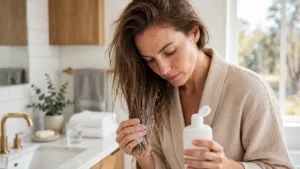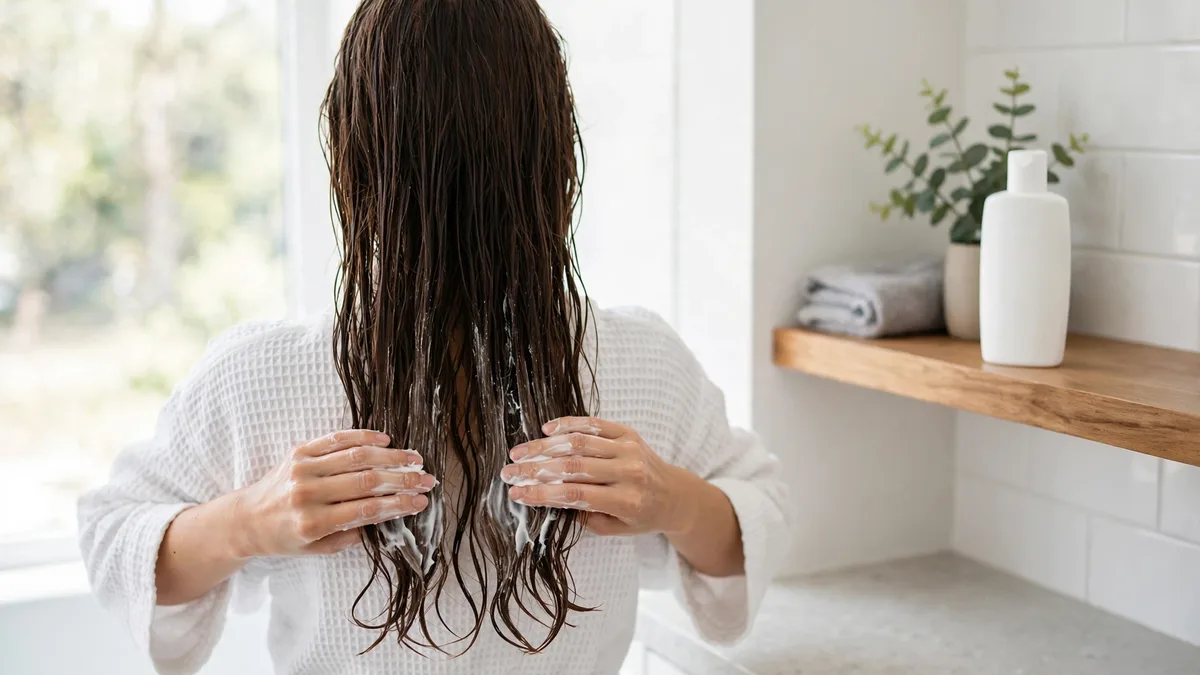
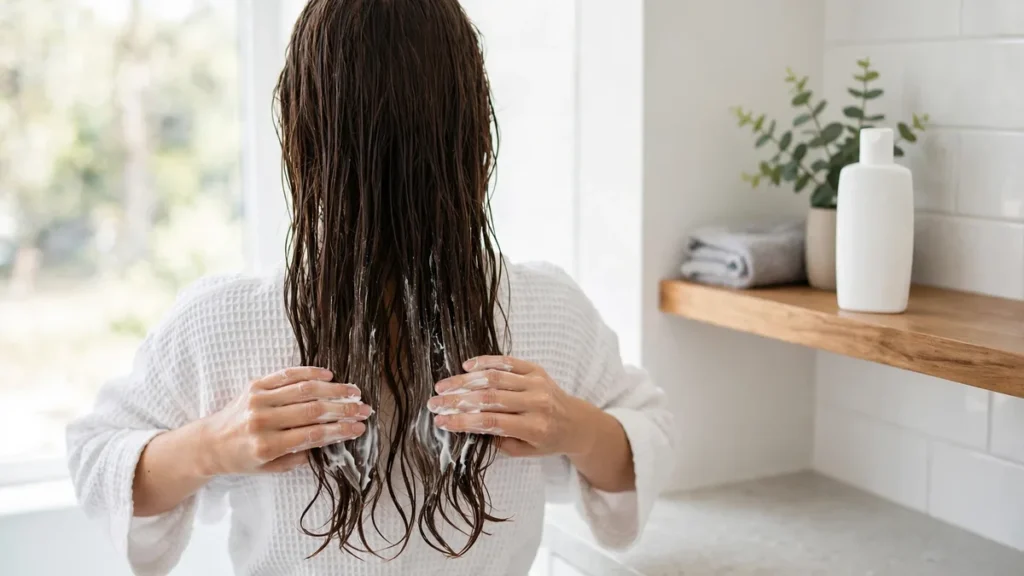
The best conditioner for damaged hair in 2027 is a bond-building repair conditioner that rebuilds strength while it softens, and Olaplex No.5 Bond Maintenance Conditioner is the strongest all-round pick for most damaged hair. For hair weakened by bleach, colour or heat, a repair conditioner with bond-building or protein technology beats a purely moisturising one, because it addresses the broken structure underneath the dryness.
Damaged hair is not just dry hair. Bleach, colour, heat styling and rough brushing all lift and chip away at the cuticle, the outer layer that keeps each strand smooth and strong. Once that layer is roughened, hair loses moisture faster, tangles more easily and snaps under tension. A good conditioner smooths the cuticle and deposits strengthening ingredients that help hair feel less fragile.
Key takeaways
- Bond-building conditioners suit bleach and colour damage best.
- Protein helps weak, stretchy hair, while moisture suits stiff, straw-like hair.
- Apply conditioner to the mid-lengths and ends, not the roots.
- Leave it on for two to three minutes so it has time to work.
- Pair it with a gentle shampoo for the best results.
How to Choose a Conditioner for Damaged Hair
Start by working out what kind of damage you have. Hair that stretches and then snaps is usually weak and needs protein or bond-building ingredients, while hair that feels rough and straw-like usually needs moisture first. Many people have a mix of both, so many repair conditioners combine the two. Fine hair suits a lighter formula, thick hair a richer cream.
Read the label with a sceptical eye. Words such as repair and bond-building usually signal strengthening ingredients, while hydrating and smoothing point to moisture. Neither group is better in itself; the right one matches your hair. Colour-treated hair benefits from a formula made for coloured hair, since heavy build-up can dull the colour faster.
Think about how you wash your hair. A rinse-out conditioner suits most people for everyday use, while a weekly mask adds extra help when the damage is severe. A harsh shampoo can undo much of what a good conditioner does, so a gentle wash pairs naturally with a repair conditioner. Our guide to the best sulfate-free shampoos for 2027 helps if your wash routine needs softening.
The 10 Best Conditioners for Damaged Hair in 2027
These ten picks cover the main kinds of damage, from bleach and colour to heat and everyday wear. Each suits a particular hair type or problem, so you can match the bottle to your hair.
| Conditioner | Best for | Key ingredients | Texture |
|---|---|---|---|
| Olaplex No.5 | Bleach damage | Bond builder | Rich cream |
| Redken Acidic Bonding Concentrate | Breakage-prone hair | Citric acid | Light cream |
| K18 Leave-In Molecular Repair | Severe damage | Peptides | Lightweight mask |
| L’Oréal Elvive Total Repair 5 | Everyday repair | Pro-keratin | Light cream |
| Aussie 3 Minute Miracle Reconstructor | Quick deep conditioning | Macadamia oil | Thick cream |
| Garnier Ultimate Blends Honey Treasures | Damaged lengths | Honey, propolis | Rich cream |
| SheaMoisture Manuka Honey & Mafura Oil | Very dry hair | Manuka honey | Very rich cream |
| Pantene Pro-V Repair & Protect | Heat-damaged hair | Pro-vitamin B5 | Light cream |
| Aveda Damage Remedy Daily Hair Repair | Daily leave-in protection | Quinoa protein | Light leave-in |
| Moroccanoil Moisture Repair | Colour-treated hair | Argan oil | Rich cream |
1. Olaplex No.5 Bond Maintenance Conditioner
Best for: bleach and colour damage.
Olaplex built its name on bond-building technology, and No.5 is the rinse-out conditioner in that range. It aims to repair broken disulphide bonds inside the hair shaft, the links bleach and colour break apart, so lightened hair often feels stronger after a few weeks of steady use. It smooths and detangles well.
2. Redken Acidic Bonding Concentrate Conditioner
Best for: weak, breakage-prone hair.
Redken’s Acidic Bonding Concentrate is built around citric acid and a bonding care complex, and it aims to strengthen hair while restoring its natural pH balance. Damaged hair tends to be more alkaline and porous, so bringing the pH down helps the cuticle lie flat again. It feels light, suits finer hair, and rinses clean.
3. K18 Leave-In Molecular Repair Hair Mask
Best for: severe chemical damage.
K18 is not a traditional rinse-out conditioner, and that is exactly why it earns a place here. It is a leave-in treatment built on a peptide that aims to reconnect broken keratin chains inside the hair, and for badly bleached hair it can beat ordinary conditioners. A little goes a long way on towel-dried hair: leave it in for four minutes and do not rinse it out.
4. L’Oréal Elvive Total Repair 5 Conditioner
Best for: everyday repair.
Total Repair 5 is the workhorse of this list. It targets five signs of damage — split ends, weakness, roughness, dullness and dehydration — with pro-keratin and ceramide, ingredients that help reinforce the hair fibre. It is light enough for daily use, detangles well and adds shine, suiting most hair types including fine hair.
5. Aussie 3 Minute Miracle Reconstructor
Best for: quick deep conditioning.
Aussie’s 3 Minute Miracle Reconstructor is a deep treatment that works in the time it takes to finish the rest of your shower. It uses macadamia nut oil to soften hair roughed up by heat, colour or sun, and the short leave-in time makes it easy to use often. The thick, rich cream suits medium to thick hair best, used once or twice a week.
6. Garnier Ultimate Blends Repairing Conditioner
Best for: dry, damaged lengths.
Garnier’s Honey Treasures conditioner blends honey and propolis to nourish hair that feels dry and brittle at the ends. Honey is a natural humectant that helps draw moisture into the hair, while the rich base smooths the cuticle so lengths feel softer and less frizzy. It suits long hair that tangles easily, working best on the mid-lengths and ends.
7. SheaMoisture Manuka Honey & Mafura Oil Intensive Hydration Conditioner
Best for: thick, very dry hair.
SheaMoisture’s Manuka Honey and Mafura Oil conditioner is one of the richest formulas on this list, made for hair that drinks up moisture. Manuka honey and mafura oil sit alongside shea butter in a thick cream that coats each strand generously, suiting thick, curly or coily hair that feels constantly dry. Leave it on for three minutes and rinse thoroughly.
8. Pantene Pro-V Repair & Protect Conditioner
Best for: heat-damaged hair.
Pantene’s Repair and Protect conditioner is built on pro-vitamin B5, an ingredient that helps hair hold on to moisture and feel more flexible. It targets hair weakened by straighteners, curling wands and blow-drying. It is light, rinses clean, and leaves hair smoother and easier to comb when wet.
9. Aveda Damage Remedy Daily Hair Repair
Best for: daily leave-in protection.
Aveda’s Damage Remedy Daily Hair Repair is a leave-in treatment rather than a rinse-out conditioner, designed to protect hair from the daily wear that causes damage in the first place. Quinoa protein strengthens the fibre, while the lightweight formula detangles and guards against heat styling. Apply it to towel-dried hair before styling, on the lengths and ends.
10. Moroccanoil Moisture Repair Conditioner
Best for: coloured hair needing moisture.
Moroccanoil’s Moisture Repair Conditioner combines argan oil with keratin to restore moisture and strength to colour-treated hair. Argan oil smooths the cuticle, while keratin supports the hair’s structure, leaving hair softer, shinier and easier to manage. It is rich but rinses out cleanly, and suits medium to thick hair well.
How to Use Conditioner on Damaged Hair
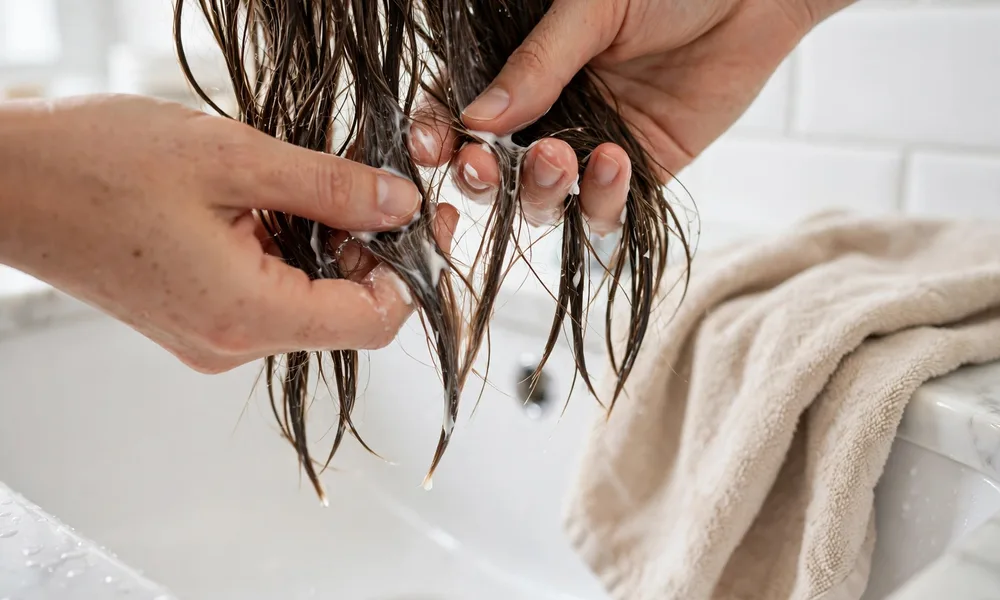
Technique matters as much as the bottle you choose. Squeeze excess water from your hair after shampooing, since conditioner works better on damp hair than on dripping wet hair. Smooth a coin-sized amount through the mid-lengths and ends, using more for long hair.
Leave it on for two to three minutes before rinsing, so the conditioning agents can coat the hair. Rinse with lukewarm water rather than hot water, which can rough up the cuticle again. If your hair is very damaged, follow with a leave-in or a few drops of hair oil on the ends.
One common mistake is putting conditioner on the roots, where the scalp’s own oils already do the job and conditioner can leave hair looking flat. Another is rinsing too quickly: a ten-second rinse wastes most of what the conditioner could do.
A Quick Checklist Before You Buy
- Match the formula to your damage: bond-building for bleach, moisture for dryness.
- Check it suits your hair thickness: fine hair needs lighter formulas.
- Look for a colour-treated formula if you colour your hair.
- Decide between a rinse-out conditioner, a mask and a leave-in.
- Look for protein, keratin or bond-building technology on the label.
- Choose a gentle shampoo, since harsh washing undoes repair work.
- Check the scent and texture, since you will use it every wash.
- Give a new conditioner three weeks before judging the results.
What Else Helps Damaged Hair Recover
Conditioner is only one part of the recovery. Cutting back on heat styling makes a real difference, and a protectant spray helps when you do use heat. A wide-tooth comb is kinder to wet hair than a brush.
Regular trims help too, even if you are growing your hair out. Snipping split ends stops them travelling further up the strand. If your hair is curly, our guide to the best conditioner for curly hair in 2027 covers formulas made for curl patterns that need extra moisture.
Your shampoo choice matters more than most people realise. A gentle, well-matched shampoo cleans without stripping, which gives your conditioner a better starting point. Our round-up of the best shampoo brands for 2027 explains how to find one that suits your hair type. And if your hair is dry as well as damaged, the best conditioner for dry hair in 2027 guide covers moisture-first formulas in more depth.
Frequently Asked Questions
Can conditioner repair split ends?
No conditioner can permanently seal a split end back together. A good repair conditioner can smooth frayed ends so they look and feel better, and help prevent new splits from forming. The only lasting fix for split ends is a trim.
How often should I use conditioner on damaged hair?
Use conditioner every time you wash your hair, usually two to four times a week. Damaged hair needs consistent care, and skipping conditioner leaves the cuticle unprotected. Add a deep mask once a week for extra help.
Should I use a hair mask instead of a conditioner?
Use both. A conditioner is your everyday product, while a mask is a stronger weekly treatment that stays on longer. For badly damaged hair, a mask once or twice a week alongside a daily conditioner gives the best results.
Is protein conditioner good for damaged hair?
Protein helps hair that feels weak, stretchy or gummy, classic signs of chemical damage. Too much protein can make hair feel stiff, though, so balance it with moisture. If your hair starts feeling crunchy, switch to a moisture-rich conditioner for a few washes.
How long does it take for damaged hair to improve?
Most people notice softer, smoother hair within two to three weeks of using a good repair conditioner. Structural improvement takes longer, usually six to eight weeks of consistent care. Hair cannot heal like skin, so the goal is steady improvement and protection while new, healthy hair grows in. Give the repair time to work, protect the new growth, and the results will follow.
Please note: this article is for general information only, not medical advice. If your hair loss is sudden or severe, or your scalp is painful or inflamed, speak to a doctor or trichologist before trying new products. Patch-test first if you have sensitive skin or a history of allergies.