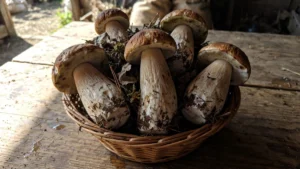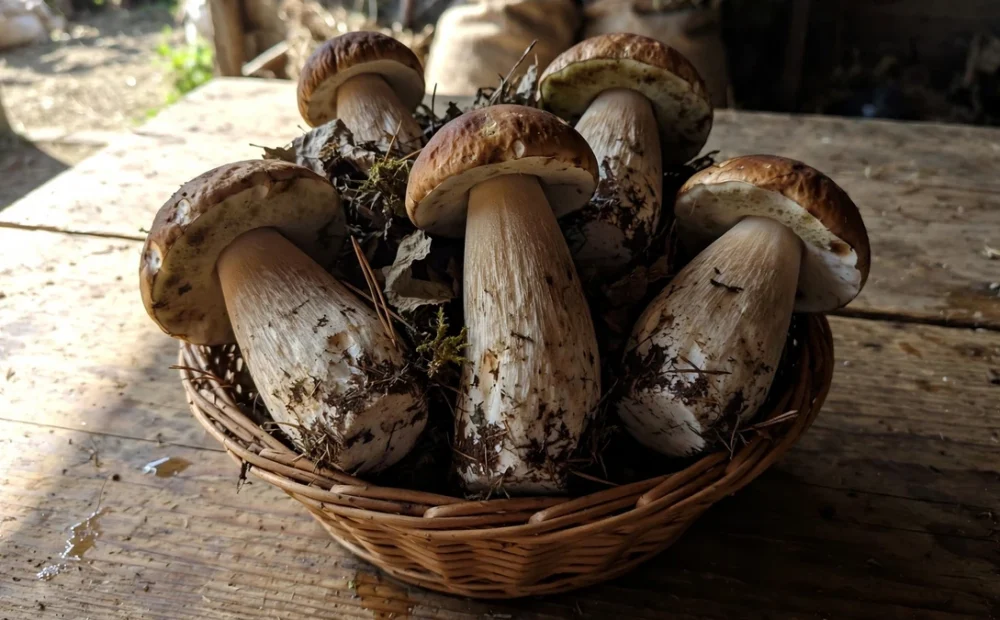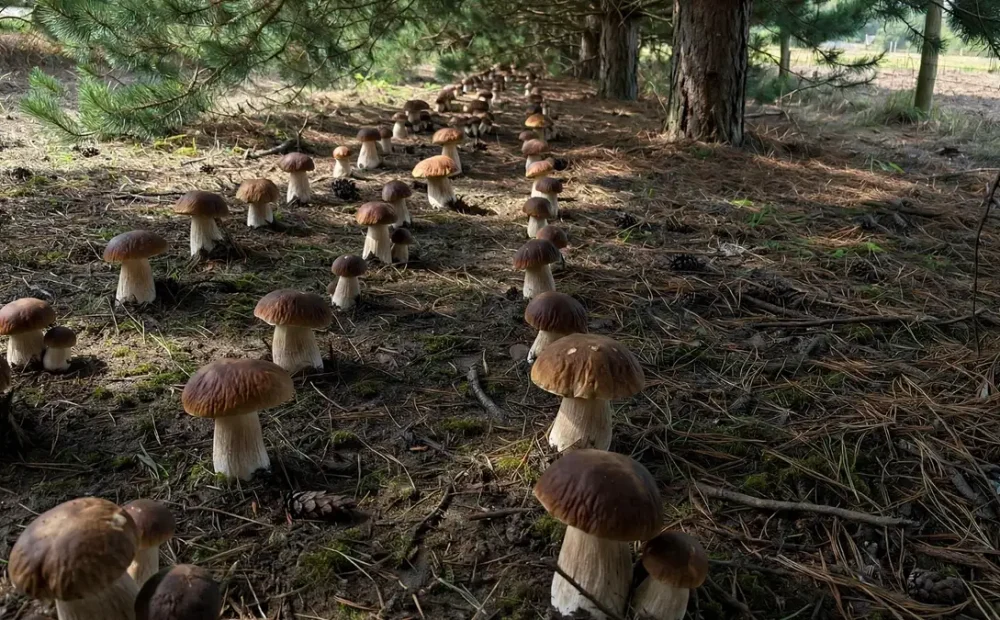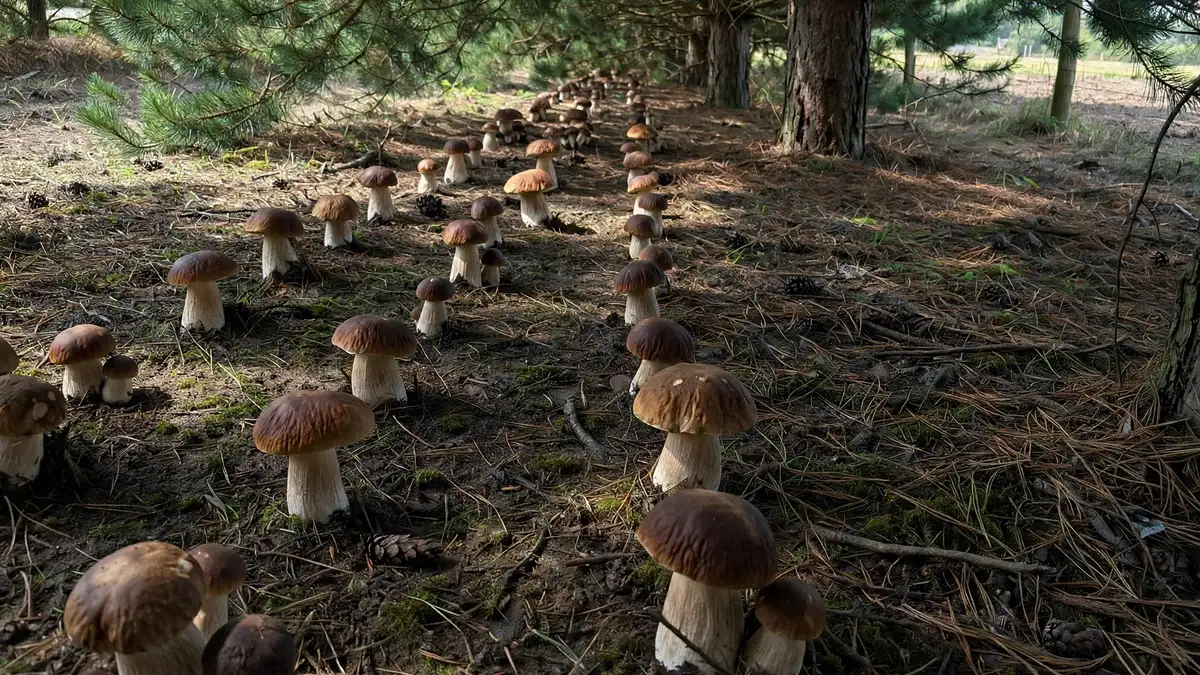
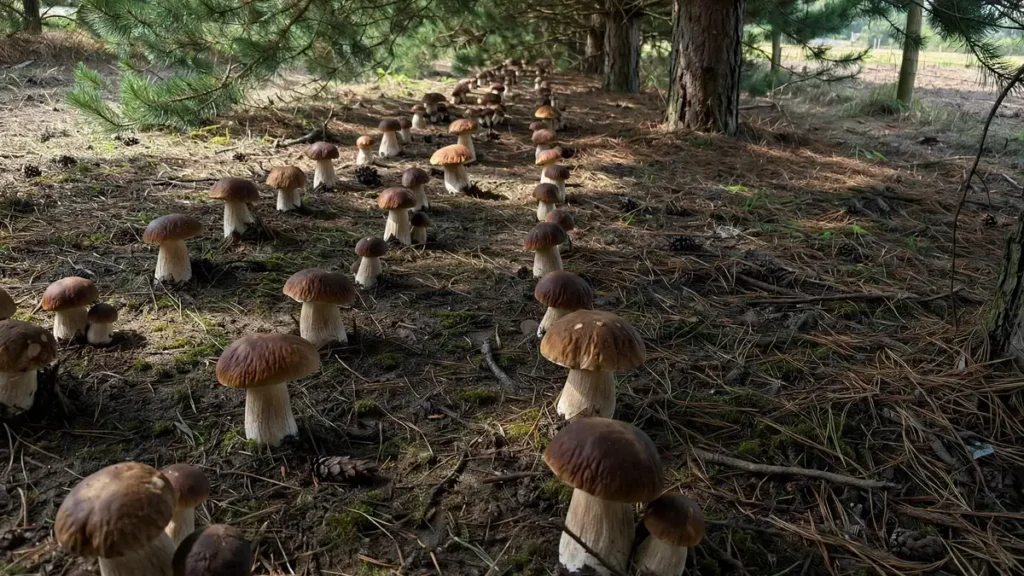
Porcini is the wild mushroom that makes a risotto taste like the forest it came from. Its botanical name is Boletus edulis, and it is recognised by a thick, pale stem and a broad brown cap, with a spongy layer of pores underneath instead of gills. The flesh is firm, white and nutty, and it holds its shape in the pan.
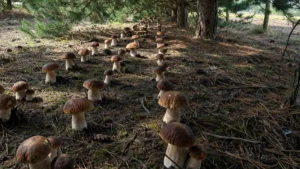
A porcini farm stay puts you in the woods at dawn with a basket and a guide who knows the ground. You walk pine, oak and chestnut slopes, learn which caps to cut and which to leave, and spend the afternoon cleaning, slicing and drying the morning’s haul. Some stays are small family farms with a handful of guest rooms and a kitchen that smells of garlic and butter by noon. Others are larger estates with a pool, a drying barn and a dining room built for long suppers. The nine below all grow or gather their own porcini on their own land, all take overnight guests, and all let you walk the woods yourself.
Prices run from about sixty-five dollars a night for a simple farmhouse room to around one hundred and sixty for a private suite with meals and guided walks included. Pick by region first, then by how much foraging and cooking you actually want to do.
Key takeaways
- Porcini is Boletus edulis, a thick-stemmed brown-capped wild mushroom with a spongy pore layer instead of gills, and a firm, nutty flesh.
- It grows in partnership with pine, oak and chestnut trees, so porcini stays are woodland stays, and the season runs from late summer into autumn.
- The best stays gather on their own land, cook with porcini daily, and send a guide into the woods with every guest.
- Confirm what the nightly rate covers: guided walks, meals, transfers and drying sessions are not always included.
- Porcini itself is naturally gluten-free, but farm kitchens bake with flour, so ask about gluten before you sit down to eat.
What porcini actually is
Porcini is the king bolete, a wild mushroom that grows in a partnership with tree roots rather than in a bed of compost. The cap is brown and slightly sticky when wet, the stem is thick and pale with a fine net pattern near the top, and the underside is a pale sponge of tiny tubes that turns yellow-green as the mushroom ages. Cut it open and the flesh is white, dense and faintly sweet, with a smell of hazelnuts and damp leaves.
The flavour is what sets it apart. Fresh porcini is mild and nutty, almost meaty, and it browns beautifully in butter without turning to mush. Dried porcini is a different ingredient again: the flavour concentrates into something deep and savoury, and the soaking liquid becomes a stock in its own right. That is why the kitchens on this list dry as much as they cook fresh, and why a bag of dried caps is the souvenir most guests take home.
Keep it separate from its lookalikes and its cousins. Shiitake is a cultivated Asian mushroom with a thinner stem and a very different flavour, oyster mushroom is Pleurotus, a pale shelf fungus that grows on dead wood, and chanterelle is Cantharellus cibarius, golden and funnel-shaped, with ridges instead of pores. None of them is a bolete, and none of them behaves like porcini in the pan. If you enjoy hands-on farm stays in general, our kohlrabi farm retreats run the same kind of picking-and-cooking trip in northern Europe, with a crisp green bulb instead of a wild mushroom.
How we picked these nine farm stays
Every stay on this list gathers porcini on its own woodland, sleeps guests on the farm, and runs guided walks during the season. We looked for farms that publish a nightly rate, say clearly what meals and transfers cost, and put a guide in the woods with every group rather than handing out a map and a basket. Region mattered too: the nine below spread across France, Italy, Austria, the Czech Republic, Hungary, Slovenia and Croatia, so you can pair a stay with a city break or a country week without a second flight.
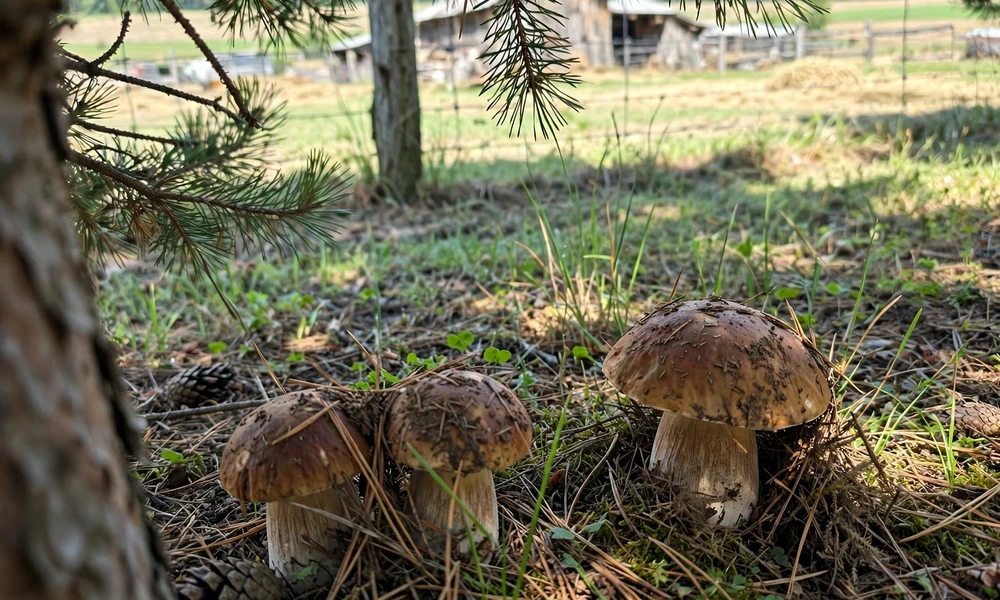
We left out farms that buy their mushrooms from a market, resorts that bus guests to a forest once a week, and stays with no woodland of their own. A porcini stay should smell of damp leaves in the morning and taste of risotto by the evening. If it does neither, it is a hotel with a mushroom dish on the menu, and it has no place on this list.
The 9 best porcini farm retreats of 2027
Île-de-France Porcini Woodland Stay, Paris
What we like: A walled woodland an hour from Paris, with three guest rooms, a shaded drying shed and oak slopes you can walk in ten minutes. The dawn walk is real foraging, and the afternoon drying session is generous. What to consider: The rooms are plain, the lane in is tight, and there is no swimming pool. Best For: A first porcini trip from Paris. Style: Working woodland farm. Price Range: $79–$119 a night, breakfast included. Standout Feature: The dried porcini are sliced by hand in the shed.
Stay two nights and you will walk on the first morning, dry on the first afternoon, and eat a porcini risotto on the second. The guides know the oak slopes by heart and will show you the difference between a young cap and one past its best.
Rhône Valley Porcini Forest Retreat, Lyon
What we like: Chestnut woods above the river, a small pool, and a kitchen that turns the morning harvest into lunch. The evening light across the terrace outshines every other stay on this list. What to consider: The climb from the road is steep, and the nights are very quiet. Best For: Couples who want a view with their foraging. Style: Hillside forest farm. Price Range: $86–$126 a night, breakfast included. Standout Feature: Chestnut woods overlooking the river.
Book the upper room if you can. It catches the morning light over the trees and stays cooler than the ground-floor rooms in the afternoon heat.
Piedmont Porcini Pine Stay, Turin
What we like: Pine slopes at the foot of the Alps, a truffle dog that doubles as a mushroom dog, and a farmhouse that serves porcini pasta with farm eggs. The light on the slopes at dawn is superb. What to consider: Winters are cold and damp, and little English is spoken beyond the main house. Best For: Slow mornings under the pines. Style: Alpine pine farm. Price Range: $74–$114 a night, breakfast included. Standout Feature: Porcini pasta made with farm eggs.
Walk the pine slopes before breakfast. The ground is soft, the air smells of resin, and the baskets fill fastest in the first hour.
Tuscan Porcini Oak Retreat, Florence
What we like: A short ride from Florence, with oak woods, a Saturday market nearby and a garden kitchen that teaches porcini risotto as well as soup. What to consider: Weekends fill fast, and the woods are more compact than the other farms here. Best For: A weekend add-on to a Florence trip. Style: Oak-wood farmhouse. Price Range: $92–$138 a night, breakfast included. Standout Feature: Porcini risotto taught in a garden kitchen.
Arrive on a Friday and you get the market on Saturday morning, the walk on Saturday afternoon, and a slow breakfast on Sunday before the ride back.
Styrian Porcini Forest Stay, Vienna
What we like: Cool pine-scented air, lakes at the fence line, and a farm that gathers porcini alongside chanterelles and wild herbs. The roasted porcini suppers are a highlight. What to consider: Rain is frequent, the drive from Vienna can take ninety minutes, and the rooms are basic. Best For: A cool escape from Vienna. Style: Lakeside forest farm. Price Range: $71–$111 a night, breakfast included. Standout Feature: Porcini, chanterelles and herbs on one slope.
Come for the boletes and stay for the lake. The farm keeps a small dock, and the evening swim after a day in the woods is worth the early start.
Bohemian Porcini Woodland Retreat, Prague
What we like: A working forest farm with a large drying barn and a family that has gathered porcini for three generations. The porcini and barley soups are excellent. What to consider: It is hot in high summer, the walks start early, and the rooms have fans rather than air conditioning. Best For: Dawn walks and forest mornings. Style: Forest farm with drying barn. Price Range: $69–$109 a night, breakfast included. Standout Feature: Three generations of porcini gatherers.
Take the dawn walk to the oldest oak stand. The farm’s best caps grow there, and you will see the whole meal take shape before lunch.
Buda Hills Porcini Forest Stay, Budapest
What we like: A polished farm an hour from the city, with air-conditioned rooms, a proper restaurant and a mushroom festival in season. The porcini goulash is made on site. What to consider: It feels more estate than farm, and the walks are shorter than elsewhere. Best For: Comfort with a forest flavour. Style: Polished estate farm. Price Range: $84–$128 a night, breakfast included. Standout Feature: Porcini goulash from the farm kitchen.
If you want tidy rooms and a real restaurant while still getting your boots muddy, this is the middle-ground choice. Time your visit for the mushroom festival if the dates line up.
Julian Alps Porcini Pine Retreat, Ljubljana
What we like: The easiest logistics on this list, with a farm in the hills above the city, guided walks and a cafe that serves porcini toast all day. What to consider: The priciest stay on this list, the grounds are small, and the city never feels far off. Best For: A single-night taster. Style: Hillside farm cafe. Price Range: $104–$156 a night, breakfast included. Standout Feature: Porcini toast in the farm cafe.
One night is enough. Walk in the morning, eat toast at noon, and be back in the city for dinner with a bag of dried caps in hand.
Istrian Porcini Oak Stay, Zagreb
What we like: A Croatian farm with sea views, a stone barn for drying and a host family that folds porcini into every meal. The pace here is the gentlest of the nine, and that is praise, not a complaint. What to consider: Getting here costs the most, the weather can turn in an hour, and the wifi drops out. Best For: A long, slow southern stay. Style: Sea-view family farm. Price Range: $96–$146 a night, breakfast included. Standout Feature: Porcini soup by a stone fireplace.
Stay three nights or more. The first day is for settling in, the second for walking, and the third for the barn supper, which takes all afternoon to build and is worth every minute.
Which region suits which traveller
France is the obvious place to begin. Porcini is a woodland staple there, the farms are used to guests, and a stay pairs easily with Paris or Lyon. If your main goal is cooking, start in Île-de-France or the Rhône Valley, where risottos, soups and dried slices are daily cooking rather than a special event. Italy suits travellers who want a farm as part of a longer food trip: Piedmont for pines and pasta, Tuscany for oak woods and markets.
Austria and the Czech Republic are the short-stay options. Styria gives you lakes and roasted suppers, Bohemia gives you drying barns and dawn walks. Budapest and Ljubljana are the comfort picks, and Zagreb is the outlier and the reward: the dearest to reach, the slowest in pace, and the only stay where porcini soup is served by a stone fireplace. Our Chinese yam farm retreats offer a similar spread of regions in Asia, if you would rather fly east than stay in Europe.
The caveats that matter
Porcini is a safe, well-loved mushroom, but it is a wild one, and wild mushrooms demand respect. Never eat a mushroom you have picked yourself unless a guide has checked it, and never eat porcini raw: the flesh must be cooked through. Farm kitchens bake with flour, so anyone avoiding gluten should ask before ordering pasta, goulash or toast. The rest is practical: cool weather, rain, mud and how far the nearest town sits.
| Detail | What is known |
|---|---|
| What it is | Boletus edulis, thick-stemmed brown-capped wild mushroom, nutty flesh, pores not gills |
| Where it grows | In partnership with pine, oak and chestnut roots, late summer into autumn |
| Can it be eaten raw | No, porcini must be cooked through, and only after a guide has checked the pick |
| Best-known dishes | Porcini risotto, porcini pasta, porcini soup, roasted porcini, dried porcini stock |
| Who should ask first | Anyone avoiding gluten, and anyone with a mushroom allergy |
| What to pack | Closed shoes for mud, a basket or bag, sun protection, a light rain layer |
| How far ahead to book | Four to six weeks for the autumn season, two weeks outside it |
| What it is not | Not shiitake, not oyster mushroom, not chanterelle, despite the shared kitchen |
One more practical note: farm stays in this series are small, and autumn weekends fill first. If your dates cannot move, lock in the room before you buy the train ticket, not afterwards. A farm with only three guest rooms cannot magic up a fourth one for you.
Checklist: before you book a porcini farm stay
Run through these checks before you pay, and again the week you travel.
- Check the season dates: ask the farm which weeks the caps are actually fruiting, not just when rooms are free.
- Check what the rate covers: meals, transfers, guided walks and the drying session are sometimes priced separately.
- Check the food questions early: gluten in pasta and goulash, dairy in risotto, and any mushroom allergy in your group.
- Check the ground underfoot: closed shoes, gloves for handling, and a bag you do not mind getting muddy.
- Check the pickup: find out who fetches you, from which station, and what happens if your flight runs late.
- Check the wet-weather plan: after heavy rain the paths turn to mud, so keep one day free for indoor cooking.
Frequently asked questions
Is porcini the same thing as a button mushroom?
No. Porcini is Boletus edulis, a wild mushroom with a thick stem, a brown cap and a spongy pore layer, while the button mushroom is Agaricus bisporus, a cultivated mushroom with gills. They taste nothing alike, and porcini is far firmer and nuttier in the pan.
How is porcini different from a chanterelle?
They are different species from different families. Chanterelle is Cantharellus cibarius, golden and funnel-shaped, with blunt ridges underneath instead of pores. Porcini is brown-capped with a thick white stem and a sponge of tiny tubes, and it is meatier and milder than the peppery chanterelle.
Can I eat porcini raw?
No. Porcini must be cooked through, and you should only eat mushrooms a guide has checked. Raw wild mushrooms can upset the stomach, and a wrong identification can be dangerous, so the rule on every farm here is simple: the guide checks, the kitchen cooks.
When is the best month to visit a porcini farm?
The fruiting season, which follows late-summer rain and usually runs from September into November. Ask the farm directly, because the exact weeks shift with the weather and differ between France, Italy and Croatia.
Do porcini farm stays suit children?
Often yes. Foraging is physical and muddy, which children tend to enjoy, and the cooking sessions are hands-on. Ask the farm about age limits, steep slopes and the forecast, and bring sturdy closed shoes for everyone.
Is porcini gluten-free?
The mushroom itself is naturally gluten-free, but many farm dishes are not. Pasta, goulash and toast made with porcini contain flour, so ask before you order, and tell the kitchen if you need a gluten-free plate.
The bottom line
The best porcini farm retreat in 2027 is the one that matches your appetite for hands-on work. Île-de-France and the Rhône Valley are the easiest first stays, with porcini dishes at every meal. Piedmont, Tuscany and Styria suit travellers who want a farm inside a longer food trip, while Zagreb rewards those who can spare the time and the flight. Our salsify farm retreats are the closest alternative if you want a root-vegetable farm stay rather than a woodland one.
Book the fruiting weeks, confirm what the rate covers, pack for mud, and go hungry. A porcini farm stay is at its best when you walk in the morning and eat what you gathered by the evening, with pine needles on your shoes and the smell of risotto in the air.