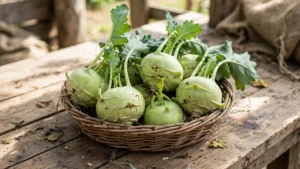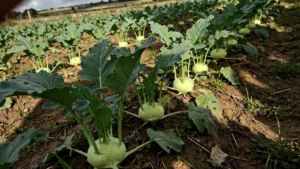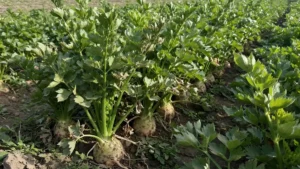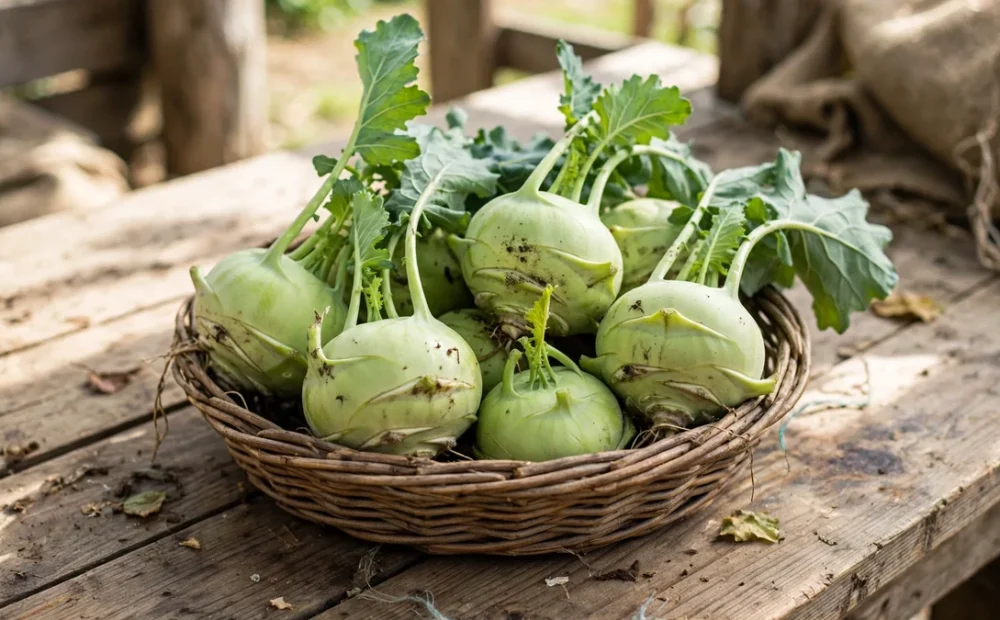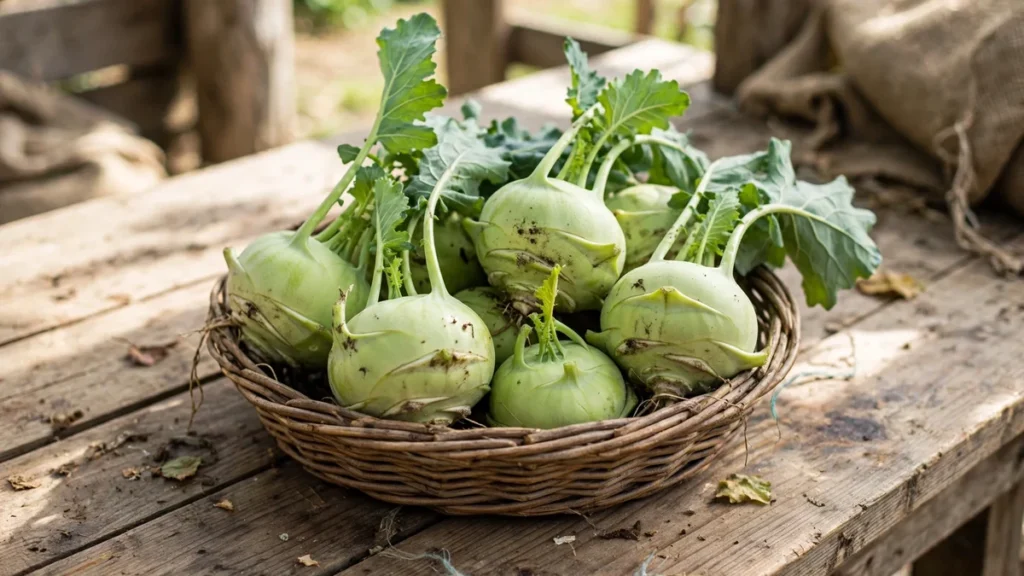
A kohlrabi farm escape is a short, practical trip: two or three nights on a small European market garden, picking bulbs in the morning and cooking them in the afternoon. You do not need to know anything about brassicas before you go. The growers teach you the picking cut on your first morning, and by the second day you will be slicing slaw like you have done it for years.
The planning is the part that matters. Kohlrabi is a cool-season crop with a short picking window, and the best farms have only a handful of guest rooms. Book the picking weeks first, then the room, then the train. Get the order wrong and you will arrive to bare rows or a full house.
This guide walks through the whole trip in nine steps, from choosing your weeks to packing bulbs for the journey home. It covers when to go, what to eat, what to pack, and the questions to ask before you pay.
Key takeaways
- Kohlrabi is a cool-season crop, so the picking window is short and the best weeks sell out first.
- Book the farm before the train: small stays have only a few rooms and no waiting list worth relying on.
- Stay on the farm itself, so the rows, the kitchen and the growers are all within a short walk.
- Confirm what the nightly rate covers, because meals, transfers and cooking sessions are often priced apart.
- Kohlrabi is naturally gluten-free, but farm kitchens bake with flour, so ask about gluten before you eat.
What a kohlrabi farm escape actually involves
You arrive in the afternoon, drop your bag in a farmhouse room, and walk the rows with a grower before dinner. The next morning starts early, with picking while the dew is still on the leaves, then a long lunch built around what you picked. Afternoons are for cooking: slaw, soup, pickles and gratins, taught in a farm kitchen with the windows open. Evenings are quiet, and that is part of the point.
Nothing here is staged. The bulbs you pick go into the pots, the leaves go into the stock pot, and the peels go to the compost heap. The growers keep a kettle on all day, and the kitchen door stays open, so questions get answered while the soup is on. You will get mud on your shoes and juice on your hands, and you will eat better than you do at home. If you enjoy hands-on food trips in general, our jicama farm escape guide runs the same kind of trip in Mexico, with a crisp white root instead of a green bulb.
Most escapes run two or three nights. Two nights gives you one full picking day and one cooking afternoon. Three nights adds a market morning and a slower pace, which suits families and anyone who wants to see more than one farm. Longer stays are possible on the bigger estates, but the work repeats itself after the third day, so three nights is the sweet spot.
Plan it in nine steps
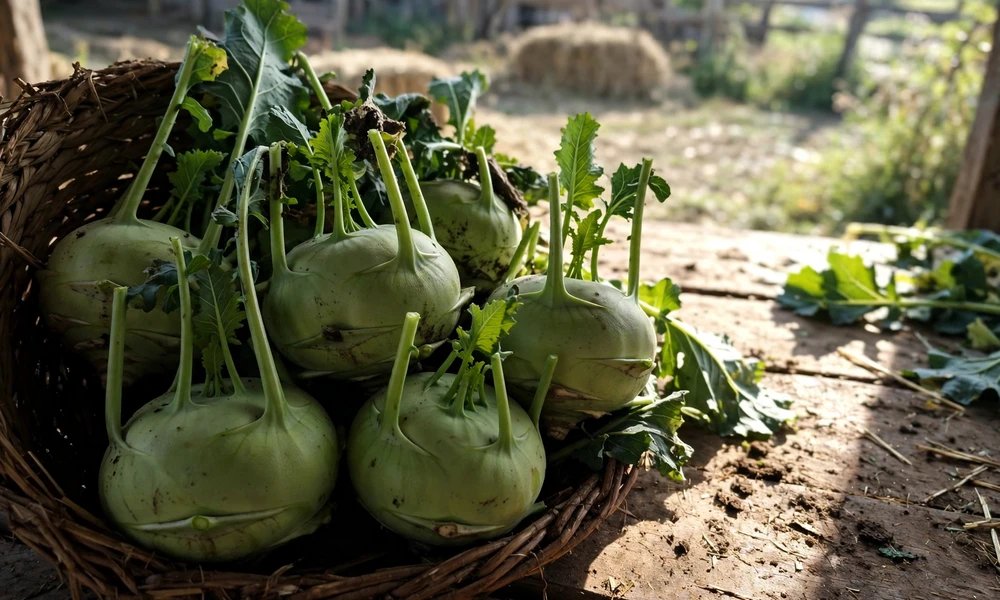
Follow these nine steps in order, and the farm will do the rest. Each one answers a question that trips people up, from the picking dates to the packing at the end.
Pick your weeks by the bulb, not by the calendar
What to do: Ask the farm which weeks the bulbs are ready for picking, and build your dates around that answer. What to avoid: Booking a fixed holiday week and hoping the crop lines up. Best For: Travellers with flexible dates. Time Needed: An evening of messages before you book. Standout Tip: Ask which week the farm picks its best rows, not just when the season opens.
Kohlrabi takes eight to ten weeks from sowing to picking, and the window is narrow. A farm that sows in March picks in May, and a farm that sows in July picks in September. Your dates should follow the plant, not the other way around.
Let the cooking choose the region for you
What to do: Pick the region whose cooking you want to learn: slaw and soup in Belgium, gratins in France, schnitzel in Bohemia. What to avoid: Choosing by the prettiest photograph and finding a kitchen that only serves salads. Best For: Travellers who cook at home. Time Needed: An hour of reading farm menus. Standout Tip: Ask the farm to send a sample menu before you commit.
Every region on this list cooks kohlrabi differently, and the kitchen is where you will spend your afternoons. A region with a strong pickling tradition will teach you more than a region with a good view and a plain menu.
Sleep on the farm so the rows are your morning walk
What to do: Book a room on the farm itself, even if it costs a little more than a hotel in the nearest town. What to avoid: Staying down the road and driving in each morning, which eats the best hour of the day. Best For: Early risers and keen pickers. Time Needed: A week of emails and calls before you book. Standout Tip: Ask for the room nearest the rows, not the one nearest the road.
Picking starts at dawn, when the leaves are cool and the bulbs are firm. If you are already on the farm, you are in the rows at first light. If you are driving in, you arrive after the best of it is done.
Sort the lift from the station before you book the train
What to do: Ask the farm who collects guests, from where, and at what time, before you buy any ticket. What to avoid: Arriving at a rural station with no taxi rank and no bus. Best For: Travellers without a car. Time Needed: One message to the farm. Standout Tip: Share your arrival time as soon as you book, so the farm can plan the pickup.
Most kohlrabi farms sit a few miles from the nearest station, down lanes with no public transport. A farm pickup is usually free or cheap, but only if the farm knows you are coming.
Pack boots and gloves you can hose down
What to do: Bring closed shoes with grip, a pair of garden gloves, and clothes you do not mind staining. What to avoid: White trainers, open sandals, or anything you would wear to dinner. Best For: Anyone planning to pick. Time Needed: An evening of packing. Standout Tip: Pack a spare pair of socks for each picking day.
The rows are muddy after rain and dusty when dry, and kohlrabi juice stains. Boots and gloves keep you comfortable, and a spare pair of socks keeps you cheerful when the first pair is soaked through.
Learn the picking cut from the growers on your first morning
What to do: Let the crew show you where to cut the stem and how to twist the bulb free without tearing the plant. What to avoid: Yanking bulbs out of the ground, which bruises them and damages the roots. Best For: First-time pickers. Time Needed: Ten minutes of watching, then a morning of practice. Standout Tip: Cut low on the stem and keep the leaves attached until you reach the basket.
A clean cut keeps the bulb firm for days, while a torn stem lets it dry out. The growers will show you once, watch you twice, and then leave you to it, which is exactly how you want to learn.
Taste kohlrabi three ways before the sun sets
What to do: Eat the bulb raw in a slaw, cooked in a soup, and pickled with herbs, all on your first full day. What to avoid: Eating it only one way and deciding you do not like it. Best For: Curious eaters. Time Needed: A single afternoon in the kitchen. Standout Tip: Try the raw slice first, when your palate is fresh.
Kohlrabi changes completely with the cooking. Raw it is crisp and mild, in soup it turns gentle and sweet, and pickled it keeps a crunch that no other brassica holds. A farm that pickles its own bulbs will usually send you home with a jar, so leave room in your bag. Three tastes in one day tells you more than a week of reading.
Settle up on your last evening, not your last morning
What to do: Settle the account the night before departure, when the farm office is open and unhurried. What to avoid: Leaving it to the morning, when the crew is in the fields and the office is locked. Best For: Travellers with early departures. Time Needed: A quarter of an hour after dinner. Standout Tip: Ask for an itemised bill, so meals and transfers are clear.
Farm mornings start before the office does. Paying the night before means a clean departure, no waiting around, and no awkward hunt for the owner while your train is leaving.
Wrap the bulbs dry and carry them home yourself
What to do: Let the bulbs dry in the sun, wrap them in paper, and carry them in your hand luggage. What to avoid: Packing wet bulbs in a sealed bag, where they sweat and soften. Best For: Travellers flying home. Time Needed: Thirty minutes on the last morning. Standout Tip: Keep the leaves off for the journey and cook them first when you get home.
Dry bulbs travel well for days, while wet ones turn soft overnight. Paper wrapping lets them breathe, and hand luggage keeps them out of the cold hold, where a frost can ruin them.
When to go: the kohlrabi calendar
Late spring is the classic season. Farms that sow in March pick from May into June, when the days are long and the bulbs are at their crispest. The weather is mild, the rain is light, and the cooking leans towards salads and slaws. Book four to six weeks ahead for these weeks, because they are the first to fill.
Early autumn is the second season, and in some ways the better one. A September stay also catches the apple harvest in several regions, which is why the slaws taste better then. Farms that sow in July pick in September, when the light is softer and the kitchens turn to soups and gratins. The crowds are thinner, the rooms are easier to get, and the bulbs are often sweeter after cool nights. Two weeks ahead is usually enough outside the spring rush.
Winter is the quiet season. Most farms stop picking when the frosts arrive, though a few in the south keep going into November. If you travel in winter, expect a cooking stay rather than a picking one, and ask the farm what is actually in the ground before you book.
What to eat on a kohlrabi farm
Start raw. A kohlrabi slaw with apple, lemon and herbs is the dish that converts most sceptics, and every farm on this list makes its own version. The bulb is peeled, cut into matchsticks and dressed while it is still crisp, and the result is closer to a salad than to a cabbage dish.
Then eat it cooked. Kohlrabi soup with farm bread is the standard lunch, thick and gentle, and a gratin with cheese and cream is the evening favourite. Fritters appear in Kent, schnitzel in Bohemia, and pickled kohlrabi everywhere, usually made with the garden herbs. If you want a similar food-first trip in a warmer climate, our kiwano farm escape guide covers a spiky African fruit with the same hands-on shape.
Do not skip the leaves. They cook like kale, wilted in a pan with garlic and olive oil, and a good farm kitchen serves them with the bulb on the same plate. Ask for them, because some kitchens compost the leaves unless a guest asks.
The caveats that matter
Kohlrabi is a safe, well-loved vegetable, but a few things deserve a straight answer. The bulbs grow close to the soil, so wash and peel them before eating, and wash your hands after picking. Farm kitchens bake with flour, so anyone avoiding gluten should ask about fritters, schnitzel and bread before ordering. The rest is practical: cool weather, rain, mud and the miles to the nearest town.
| Detail | What is known |
|---|---|
| Best seasons | Late spring and early autumn, when bulbs are at their crispest |
| How long to stay | Two nights for one picking day, three for a market morning too |
| What to wear | Closed shoes with grip, garden gloves, clothes you can stain |
| Food to try first | Raw slaw, kohlrabi soup, pickled kohlrabi, gratin |
| Who should ask first | Anyone avoiding gluten, and anyone with a cabbage-family allergy |
| Getting there | Train to the nearest town, then a farm pickup arranged in advance |
| How far ahead to book | Four to six weeks for spring, two weeks outside it |
| What it is not | Not cabbage, not turnip, not broccoli, despite the shared family |
One more practical note: farm stays in this series are small, and picking-season weekends fill first. If your dates are fixed, book the room before the train, not after. A farm with three guest rooms cannot conjure a fourth for you.
Checklist: planning a kohlrabi farm escape
Run through these checks before you pay, and again the week you travel.
- Ask about the picking weeks: which dates the bulbs are ready, not just when the rooms are empty.
- Ask what the nightly rate includes: meals, lifts, cooking sessions and picking are often priced apart.
- Raise the food questions early: flour in fritters and schnitzel, dairy in gratins, and any cabbage-family allergy.
- Think about the ground: sturdy shoes, gloves for picking, and a bag that can take the mud.
- Confirm the pickup: who collects you, from where, and what happens if your train runs late.
- Check the wet-weather plan: rain turns the paths to mud, so keep one day free for indoor cooking.
Frequently asked questions
Do I need to speak French or German to visit a kohlrabi farm?
No. The farms on this list welcome English-speaking guests, and the picking is taught by showing rather than by talking. A few phrases help at the market, but the kitchen sessions run in English.
Can I buy bulbs to take home?
Yes, most farms sell bulbs by the kilo, and some will pack them for travel. Dry them in the sun, wrap them in paper, and carry them in your hand luggage rather than the hold.
Is picking kohlrabi hard on the back?
Not especially. The bulbs sit on the surface of the soil, so you bend rather than dig, and the growers show you a cutting technique that keeps the work light. Pace yourself, take breaks, and stop when your back tells you to.
How long does a kohlrabi farm escape take?
Two nights gives you one full picking day and one cooking afternoon. Three nights adds a market morning and a slower pace. Longer stays are possible on the bigger estates, but the work repeats itself after the third day.
What should I wear in the rows?
Closed shoes with grip, garden gloves, and clothes you do not mind staining. Bring a light rain layer, because the weather turns fast in the hills, and a spare pair of socks for each picking day.
Can I visit a kohlrabi farm in winter?
Most farms stop picking when the frosts arrive, though a few in the south keep going into November. Winter visits are cooking stays rather than picking stays, so ask the farm what is actually in the ground before you book.
The bottom line
The best kohlrabi farm escape in 2027 is the one that follows the picking weeks. Late spring gives you crisp bulbs and long days, early autumn gives you soups, gratins and thinner crowds. Pick your region by its kitchen, sleep on the farm, and sort the pickup before you book the train. Our babaco farm escape guide is the closest alternative if you want a fruit farm stay far from Europe.
Book the picking weeks, confirm what the rate covers, pack boots you can hose down, and go hungry. Bring a notebook, because the recipes are worth writing down while the grower is still talking. A kohlrabi farm escape is at its best when you pick in the morning and eat what you picked by the afternoon, with green on your hands and the smell of pickling in the air.