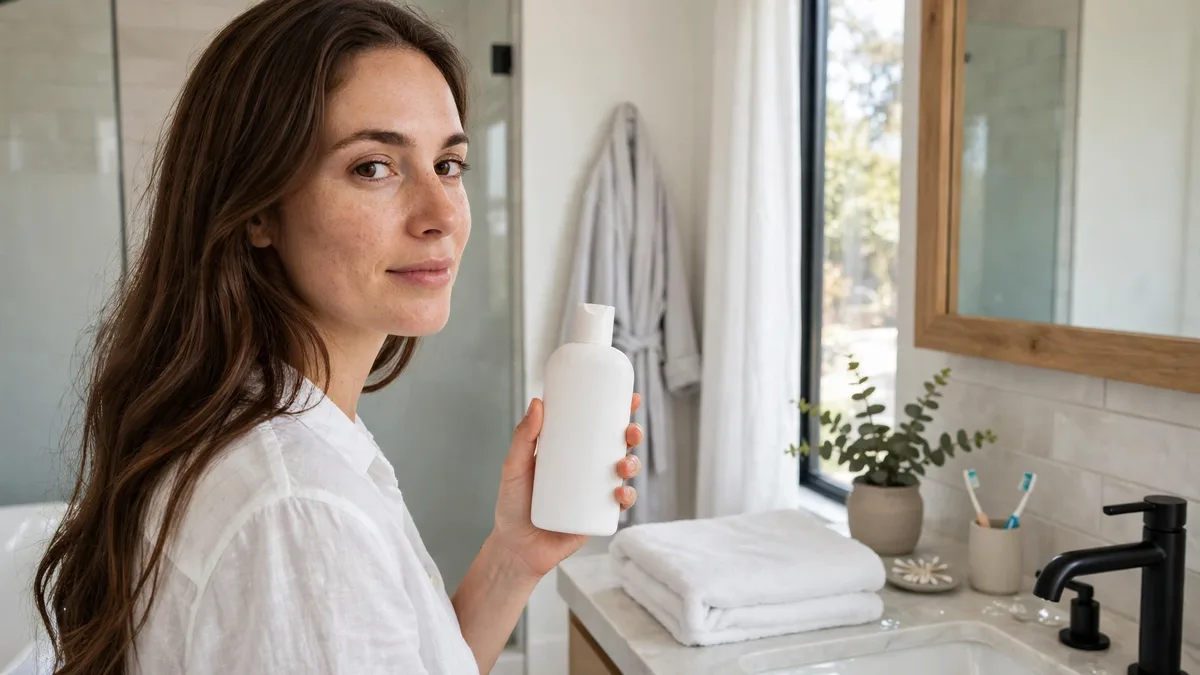
The best dandruff shampoo for women in 2027 is a gentle ketoconazole or zinc pyrithione formula that calms the scalp without stripping colour or drying out long hair. What is the best dandruff shampoo for women in 2027? For most women, it is a ketoconazole shampoo used two or three times a week, with a mild zinc pyrithione shampoo on the other wash days.
Flakes on a dark jumper are embarrassing, but the real frustration for many women is the trade-off. Strong medicated shampoos can leave long hair tangled and dull colour, yet you need not choose between a calm scalp and hair you like.
Key takeaways
- Ketoconazole is the most powerful widely available active for yeast-driven dandruff, used two or three times a week.
- Zinc pyrithione is the gentlest everyday option and works well between medicated washes.
- Colour-treated hair needs medicated shampoo kept on the scalp, with conditioner on the lengths only.
- Long hair needs scalp-first technique: massage shampoo into the roots, then let lather run down the lengths.
- Dandruff needs ongoing care, so a weekly maintenance wash matters once flakes settle.
How to Choose a Dandruff Shampoo for Women’s Hair
Start with your scalp, then think about your hair. Light flakes with mild itching usually settle with a zinc pyrithione or piroctone olamine shampoo, while heavier flaking or constant itching needs ketoconazole or selenium sulfide a few times a week. Our guide to the best anti dandruff shampoo explains each active and when to step up to a stronger one.
Colour is the next question, and it matters more than most labels admit. Medicated shampoos can fade fresh colour, especially reds and coppers, so keep the shampoo on the scalp and rinse quickly through the lengths. For everyday washing between treatments, our guide to the best shampoo for colour treated hair covers gentler options that protect colour while your scalp recovers.
Length changes the routine too. Long hair takes longer to wash and rinse, so a medicated shampoo can sit on the ends far longer than it needs to and dry them out. Section the hair, work the shampoo into the roots with your fingertips, and let the lather glide down the lengths on the rinse.
Texture is worth a thought as well. Fine hair can look flat if a treatment shampoo leaves residue, while thick or curly hair can tangle badly if the formula is too drying.
A light conditioner on the ends after every medicated wash helps both. If build-up is the problem, a monthly reset with a best clarifying shampoo can clear residue without becoming part of the daily routine.
Washing Long Hair Without Stripping Colour
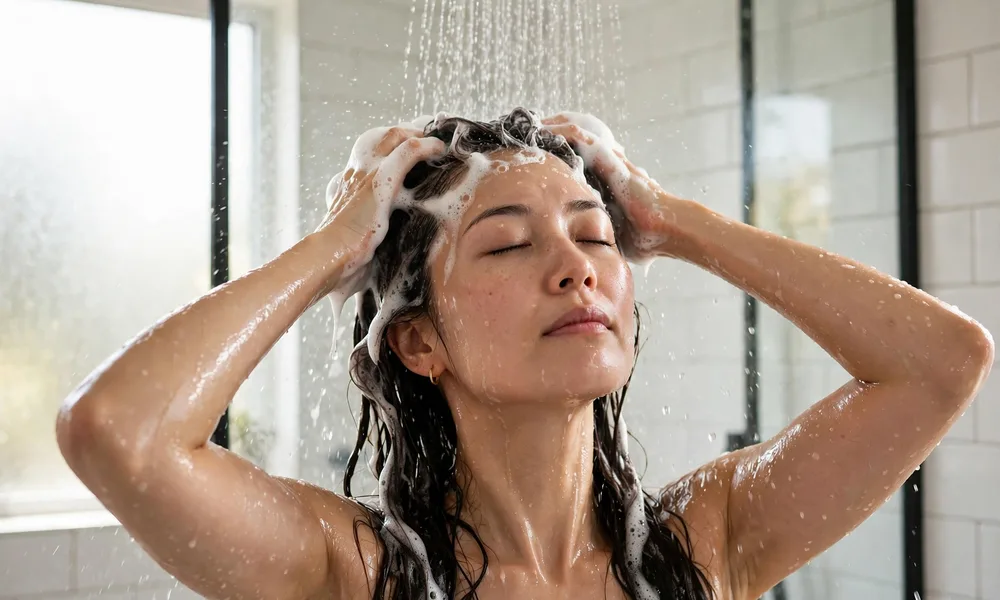
The wash itself is where most women go wrong, and it is rarely about the bottle they chose. Lukewarm water is kinder than hot water, which strips colour and dries the scalp, and a small amount of shampoo worked into the roots is enough. Long hair needs no palmful of product, as the lather will travel on its own.
Work the lather into the roots, then wait a few minutes before rinsing, so the treatment reaches the skin, not the lengths. A hurried rinse wastes a good shampoo, as the active needs contact time to work.
How often you wash matters too. Many women with long hair wash every two or three days, and that rhythm suits a dandruff routine well: a medicated wash, then a gentle wash, then a rest day. If your scalp gets oily between washes, resist the urge to scrub harder, as that only irritates it further.
The 10 Best Dandruff Shampoos for Women in 2027
1. A Gentle Ketoconazole Shampoo for Colour-Treated Hair
Ketoconazole reduces the yeast that drives most flaking, so it is the active most often recommended when dandruff will not shift.
Use it two or three times a week, massaging it well into the roots for a few minutes, then condition the ends. Best for: stubborn dandruff on colour-treated hair.
2. A Zinc Pyrithione Daily Shampoo for Long Hair
Zinc pyrithione keeps yeast in check and soothes the scalp, and it is mild enough for every wash.
Work it into the roots and let the lather run down the lengths. It is the easiest starting point for mild flakes. Best for: mild dandruff and everyday washing of long hair.
3. A Selenium Sulfide Shampoo for Stubborn Flakes
Selenium sulfide slows the scalp’s skin turnover and fights yeast, making it a strong option for thick, stubborn flakes.
Use it twice a week, leaving it on the scalp for a few minutes before rinsing. Condition the lengths well afterwards. Best for: heavy flaking that will not shift.
4. A Salicylic Acid Scalp-Exfoliating Shampoo
Salicylic acid softens the bonds between dead skin cells, so built-up flakes lift away. Use it before your antifungal shampoo.
It will not fight yeast on its own, so pair it with an antifungal shampoo once or twice a week. Best for: thick build-up and flakes caught in long hair.
5. A Piroctone Olamine Shampoo for Sensitive Scalps
Piroctone olamine is an antifungal active similar to zinc pyrithione, but it appears in gentler, salon-style formulas. Use it as your regular shampoo.
It controls yeast without the drying effect of stronger medicated shampoos, so it suits sensitive scalps and frequent washing. Best for: sensitive scalps and frequent washing.
6. A Tea Tree and Mint Shampoo for Itchy Scalps
Tea tree brings a natural antifungal and antibacterial action, and the mint in this formula cools an itchy scalp as you wash.
It is milder than ketoconazole, so keep it for light flaking or gaps between medicated washes. Pick one that lists tea tree as an active, not a scent. Best for: light flaking and itchy scalps.
7. A Coal Tar Shampoo for Thick, Itchy Patches
Coal tar is a long-standing dandruff remedy that slows the fast skin shedding behind flakes and calms itching.
It smells distinctive and can dull lighter hair slightly, so it suits women who care more about results than fragrance. Use it two or three times a week, and condition the lengths afterwards. Best for: intense itching and thick patches.
8. A Soothing Oat and Aloe Shampoo for Dry, Flaky Scalps
Some flakes come with a dry, tight scalp rather than an oily one, and a harsh medicated shampoo only makes that worse.
A soothing oat and aloe formula calms irritation and adds moisture, helping the scalp settle between stronger treatments. Best for: dry, tight scalps and recovery between treatments.
9. A Sulfate-Free Anti-Dandruff Shampoo for Curly and Wavy Hair
Curly and wavy hair dries out faster than straight hair, and sulfates can strip the natural oils that keep curls defined.
A sulfate-free formula cleans the scalp without pulling that moisture away, so curls keep their shape. Best for: curly and wavy hair that dries out easily.
10. A Two-Bottle Rotation for Colour-Treated Long Hair
Think of this pick as a pairing, not one bottle: alternate ketoconazole one wash with a gentler zinc pyrithione wash the next, sparing dyed lengths.
That pairing suits long hair that clears up, then flakes again on one formula. The general guide to best dandruff shampoo and the best dandruff shampoo for men cover the same rotation idea. Best for: colour-treated hair that keeps flaking.
Dandruff Shampoo Comparison for Women
| Shampoo | Key active | How often | Best for |
|---|---|---|---|
| Gentle ketoconazole shampoo | Ketoconazole | 2 to 3 times a week | Colour-treated hair |
| Zinc pyrithione daily shampoo | Zinc pyrithione | Daily | Long hair |
| Selenium sulfide shampoo | Selenium sulfide | Twice a week | Stubborn flakes |
| Salicylic acid shampoo | Salicylic acid | 1 to 2 times a week | Flakes caught in long hair |
| Piroctone olamine shampoo | Piroctone olamine | Daily | Sensitive scalps |
| Tea tree and mint shampoo | Tea tree oil | Daily | Itchy scalps |
| Coal tar shampoo | Coal tar | 2 to 3 times a week | Thick, itchy patches |
| Oat and aloe shampoo | Oat and aloe | Daily | Dry, tight scalps |
| Sulfate-free shampoo | Zinc pyrithione | Daily | Curly and wavy hair |
| Two-bottle rotation pair | Ketoconazole, zinc pyrithione alternating | Every wash | Colour-treated long hair |
Your Dandruff Shampoo Checklist for Women
- Tell dandruff from dry scalp first: dandruff brings bigger, greasier flakes with itching, while a dry scalp sheds tiny, powdery white specks that fall like dust.
- Pick one active first, matched to how bad your flaking is, and give it three to four weeks.
- Work shampoo into the roots with your fingertips, never your nails, and give it a few minutes on the scalp.
- Keep medicated shampoo on the roots and off colour-treated lengths as much as you can.
- Condition the mid-lengths and ends after every medicated wash, keeping conditioner off the scalp.
- Wash in lukewarm water and detangle long hair with a wide-tooth comb while it is still wet.
- Rotate actives, or use a gentle shampoo between medicated washes, if flakes return on one formula.
- Book a pharmacist or GP visit if flakes will not clear, skin is cracked or painful, or shedding increases.
Frequently Asked Questions
What is the best dandruff shampoo for women with colour-treated hair?
A gentle ketoconazole shampoo, used two or three times a week, is usually the strongest starting point, with a mild zinc pyrithione shampoo on the other wash days. Keep the treatment on the scalp, rinse it through the lengths quickly, and condition the ends well. Fresh colour fades fastest in the first two weeks, so be gentle with hot water then.
How often should women use dandruff shampoo?
Use a medicated formula two or three times a week, and save gentler zinc pyrithione or piroctone olamine washes for the wash days in between. Long hair often only gets washed every two or three days, which fits that pattern well. Once flakes settle, drop back to a weekly maintenance wash rather than stopping outright.
Can dandruff shampoo damage long hair?
Medicated shampoos can dry the hair, especially coal tar and selenium sulfide formulas, but they do not damage hair when used as directed. The risk for long hair is tangling and dry ends, not breakage itself. Condition the lengths after washing, keep the shampoo on the scalp, and use a gentler formula between medicated washes if your hair feels dry.
Is dandruff the same as a dry scalp?
No, though they can look alike at first. Dandruff flakes are chunky, yellow-toned and oily, sitting on a scalp that itches and can look pink. A dry scalp sheds fine, powdery white specks instead, often after cold weather or a harsh shampoo. A richer moisturiser and a softer wash routine suit that case better. For scalp care beyond shampoo, see our guide to the best scalp treatments.
Why does my dandruff keep coming back?
The yeast behind dandruff never really leaves, so no wash clears it for good. Treatment only keeps its numbers down, and once you stop washing, flakes usually reappear within a few weeks. Keep a once-a-week maintenance wash going, and switch actives, as in our tenth pick, when one formula stops working.
Choosing Your Shampoo
The shampoo that works for you is the one that settles your scalp while leaving your hair looking like yours. Start with the gentlest option that fits, step up only if you need to, and give each formula a proper trial.
Keep it straightforward: one active that suits your scalp, a few minutes of contact time, and a regular rhythm, with conditioner kept to the lengths. Fewer bottles, used properly, beat a crowded shelf of half-used bottles every time.
Safety note: patch-test any new shampoo on an area first, and keep it away from your eyes. If flakes will not clear, skin is cracked, sore or red, or shedding increases, ask a pharmacist, GP or dermatologist for advice.