The best dandruff shampoo for most people in 2027 is a zinc pyrithione formula used two or three times a week, because it tackles the yeast-like fungus behind most flakes while staying gentle enough for regular use. What is the best dandruff shampoo for in 2027? It depends on your scalp: mild flakes need a daily wash, stubborn build-up needs a stronger formula, and sensitive skin needs something fragrance-free.
Flakes are common and rarely a sign of poor hygiene. Dandruff usually comes from that yeast-like fungus, extra oil and skin that sheds faster than usual. The right shampoo slows the shedding and keeps the fungus in check, which is why the active ingredient matters far more than the brand.
Key takeaways
- Zinc pyrithione suits most people as a regular maintenance wash.
- Stronger actives such as selenium sulfide and ketoconazole suit stubborn flakes.
- Leave a treatment shampoo on the scalp for three to five minutes.
- Rotate formulas if flakes return.
- Persistent redness, sores or hair loss deserve a dermatologist.
How to Choose the Best Dandruff Shampoo for Your Scalp
Start by looking at your flakes honestly. Fine, dry flakes that dust your shoulders usually respond to a mild daily formula, while larger, greasy flakes often need a stronger active such as selenium sulfide or coal tar. Oily hair points towards a salicylic acid formula that clears build-up as well as flakes.
Your hair matters too. Colour-treated or bleached hair needs a gentle, colour-safe wash, because some treatment shampoos can fade colour or dry the lengths out. Curly hair often needs extra moisture, so a hydrating formula makes more sense than a stripping wash.
Check the active ingredient first: zinc pyrithione, selenium sulfide, ketoconazole, coal tar and salicylic acid each work differently. Give any new shampoo two to three weeks, and if nothing has changed after a month, try a different active rather than a different brand of the same one.
The 10 Best Dandruff Shampoos for 2027
1. Zinc Pyrithione Daily Wash
Best for: mild, everyday flakes and regular maintenance.
This is the workhorse of dandruff care and the best starting point for most people. Zinc pyrithione slows the growth of the yeast-like fungus that drives most flaking, while calming the itch that comes with it. It lathers well, smells fresh rather than medicinal, and is gentle enough to use several times a week.
Use it for two to three weeks and see how your scalp responds; many people find flakes settle within that window.
2. Selenium Sulfide Treatment Shampoo
Best for: stubborn, heavy flakes that milder washes have not shifted.
When zinc pyrithione has not done the job, selenium sulfide is the usual next step. It slows skin cell turnover on the scalp as well as tackling the fungus, which helps with thick, greasy flakes that cling to the roots. The effect is often noticeable within a couple of washes.
Use it twice a week for two to four weeks, then switch back to a milder wash once the flakes ease.
3. Ketoconazole Antifungal Shampoo
Best for: fungal-related flaking and itchy scalps that keep coming back.
Ketoconazole is an antifungal active, and it targets the root cause of many recurring cases. If your flakes clear with other shampoos but return within days, this is often the formula that breaks the cycle. It is widely recommended for persistent dandruff and for seborrhoeic dermatitis, which causes red, greasy patches as well as flakes.
Most people use it twice a week for a few weeks, then once a week to keep things under control.
4. Coal Tar Formula
Best for: thick, scaly build-up and very itchy scalps.
Coal tar has been used for scalp problems for decades, and it still earns its place. It slows the rate at which skin cells multiply and shed, which helps with heavy scaling that other actives leave behind. It also calms itching well, making it a good choice when the urge to scratch is the worst part of the problem.
It smells strongly and can stain light hair or pillowcases, so use it a couple of times a week and rinse well.
5. Salicylic Acid Exfoliating Shampoo
Best for: oily scalps and heavy product build-up.
Salicylic acid works differently from the antifungal actives: it dissolves the bonds between dead skin cells so flakes lift away instead of clinging to the scalp. That makes it ideal if your scalp feels coated, your hair goes limp quickly, or styling products pile up between washes.
Use it once or twice a week, alternating with your regular dandruff shampoo; it can dry the scalp if overused.
6. Tea Tree Oil Gentle Wash
Best for: sensitive scalps that react to stronger treatments.
Tea tree oil has natural antifungal properties, and in a well-formulated shampoo it offers a gentler route to a calmer scalp. It suits people who find treatment shampoos too harsh, or who want a plant-based option for light to moderate flakes. The fresh, herbal scent is a bonus for anyone put off by medicinal smells.
Expect slower results than a medicated formula, and give it a full month; it works best on mild cases and as a maintenance wash after a stronger treatment.
7. Moisturising Dandruff Shampoo
Best for: dry, tight scalps and hair that feels straw-like.
Some flakes come from dryness rather than oil, and a stripping treatment only makes them worse. A moisturising dandruff shampoo combines a mild active with hydrating ingredients, so the scalp gets treated without being dried out. It is the right pick if your scalp feels tight after washing, or if winter weather makes your flakes worse.
Look for added moisturisers such as glycerin or shea butter, wash with lukewarm water, and avoid piling conditioner on the roots.
8. Colour-Safe Dandruff Shampoo
Best for: coloured, bleached or chemically treated hair.
Colour-treated hair and dandruff treatment do not always get along, since some actives can fade dye or rough up the cuticle. A colour-safe formula uses a mild active at a level that treats flakes without stripping colour, and it is usually sulfate-light to protect the dye. It is the sensible pick if you pay for your colour and want to keep it.
Wash with lukewarm water and less often if you can, leave the shampoo on the scalp for a few minutes, then rinse and condition the lengths only.
9. Fragrance-Free Sensitive Formula
Best for: reactive, itchy skin and fragrance allergies.
Fragrance is one of the most common irritants in hair care, and for some people it is the reason their scalp never settles. A fragrance-free dandruff shampoo removes that trigger while keeping a proven active, so you get the treatment without the sting. It suits anyone with eczema, contact allergies, or a scalp that flares up easily.
Check the label says fragrance-free rather than unscented: unscented products can still contain masking fragrances.
10. Two-in-One Conditioning Treatment
Best for: busy routines and short hair.
Not everyone wants a two-step routine, and for short hair a two-in-one makes sense. These formulas combine a dandruff active with conditioning agents, so the scalp gets treated and the hair gets softened in a single wash. They are practical for gym bags, travel, and anyone who washes their hair in a hurry.
The trade-off is control: you cannot condition the lengths separately, and it can feel heavy on long or fine hair, but for short styles that barely matters.
Best Dandruff Shampoo for 2027 at a Glance
| Pick | Best for | Key active | Feel |
|---|---|---|---|
| Zinc pyrithione daily wash | Mild everyday flakes | Zinc pyrithione | Fresh, gentle |
| Selenium sulfide treatment | Stubborn heavy flakes | Selenium sulfide | Strong, drying |
| Ketoconazole antifungal | Recurring fungal flakes | Ketoconazole | Medicated |
| Coal tar formula | Thick scaly build-up | Coal tar | Strong smell |
| Salicylic acid exfoliating | Oily scalps, build-up | Salicylic acid | Deep-cleaning |
| Tea tree oil gentle wash | Sensitive scalps | Tea tree oil | Herbal, mild |
| Moisturising dandruff shampoo | Dry, tight scalps | Mild active, moisturisers | Hydrating |
| Colour-safe dandruff shampoo | Coloured or treated hair | Mild active | Gentle |
| Fragrance-free sensitive formula | Reactive, itchy skin | Mild active, no fragrance | Calming |
| Two-in-one conditioning treatment | Busy routines, short hair | Mild active, conditioner | Quick |
Match the active to the problem, not the bottle to the shelf: a daily zinc wash covers most mild cases, stubborn flakes need selenium sulfide or ketoconazole, and dry or coloured hair needs a gentler formula.
Our best anti dandruff shampoo round-up covers ten more picks with a slightly different angle, and the best clarifying shampoo guide explains how a deep-cleaning wash fits into a flake-fighting routine.
How to Use a Dandruff Shampoo Properly
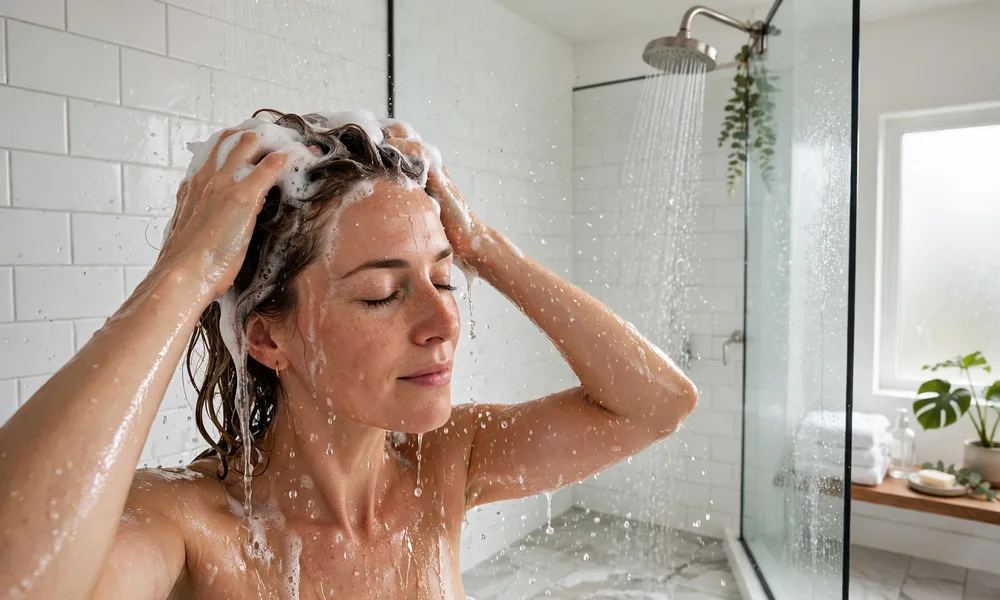
Technique matters as much as the formula, and most people rinse too quickly. Wet your hair, work the shampoo into the scalp with your fingertips, and leave it for three to five minutes: that contact time is when the active does its work.
Massage gently rather than scratching with your nails, which can break the skin. Focus on the scalp, not the lengths, and follow with conditioner on the mid-lengths and ends only.
Men and women often need different advice, so we have separate guides: our best dandruff shampoo for men guide covers short hair, oily scalps and gym routines, while the best dandruff shampoo for women guide covers longer hair, colour care and sensitive scalps.
Your Dandruff Shampoo Checklist
- Match the active ingredient to your flakes: mild, stubborn, oily or dry.
- Leave the shampoo on your scalp for three to five minutes before rinsing.
- Massage with fingertips, never scratch with nails.
- Use lukewarm water, not hot, to avoid drying the scalp further.
- Condition the lengths only and keep conditioner off the scalp.
- Give a new shampoo two to three weeks before judging it.
- Rotate to a different active if flakes return after clearing.
- See a dermatologist if redness, sores or hair loss appear.
Frequently Asked Questions
What is the best dandruff shampoo for everyday use?
A zinc pyrithione formula is the best everyday choice for most people: it controls the fungus behind most flakes while staying gentle enough for regular washing. Use it two or three times a week, and switch to a stronger treatment only if flakes persist after a month.
How long does it take for a dandruff shampoo to work?
Most people see fewer flakes within two to three weeks, though itching often eases sooner. Stronger treatments can work within a week or two, while gentler options like tea tree oil may need a full month.
Can I use dandruff shampoo every day?
Mild formulas such as zinc pyrithione and tea tree oil are generally fine for frequent use, but stronger treatments are best kept to twice a week. If you wash daily, alternate your treatment shampoo with a gentle plain shampoo.
Why do my flakes keep coming back?
The fungus behind dandruff lives on the scalp permanently, so stopping treatment lets it build up again. Keep using a maintenance wash once or twice a week after flakes clear, and rotate to a different active if one stops working.
When should I see a doctor about dandruff?
See a doctor or dermatologist if flakes do not improve after a month of proper treatment, or if you notice redness, swelling, sores, crusting or hair loss. These can signal a condition that needs medical treatment rather than a different shampoo.
Flakes are frustrating, but they are one of the most fixable hair problems there is. Start with a mild formula, give it time, and step up to a stronger active only if you need to.
Note: this article offers general information only, not medical advice. If your scalp is sore, swollen, bleeding, or you notice hair loss, stop using new products and speak to a doctor or dermatologist.