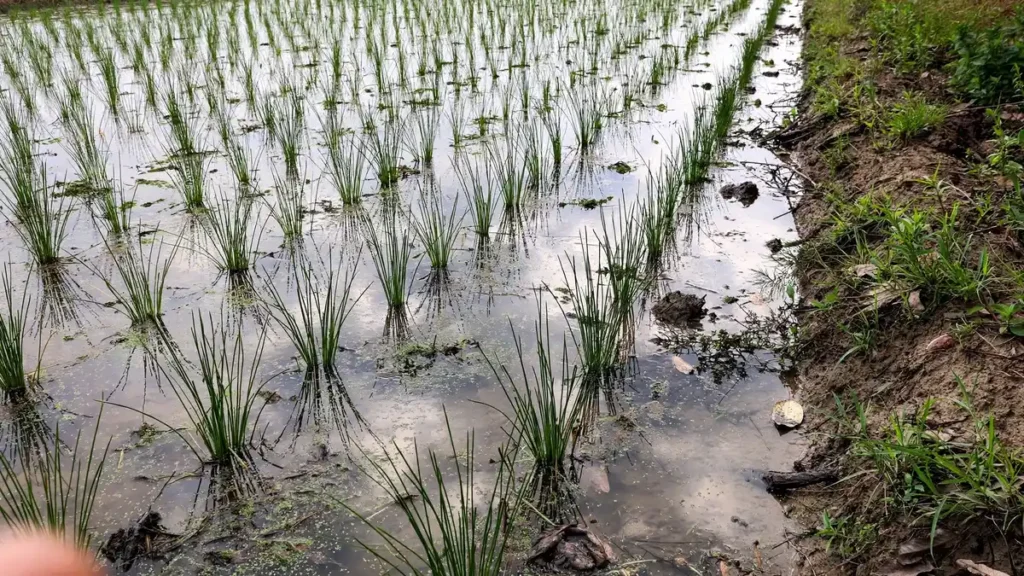
Water chestnut is the crunch you already know from a stir-fry, and the farm behind it is a shallow pond, not an orchard. Eleocharis dulcis is a sedge, a grass-like plant that grows in ankle-deep water, and its treasure is a round brown corm buried in the mud below. Peeled, the corm is white, sweet and crisp, and it stays crisp in the wok, which is why cooks across Asia prize it for stir-fries, dim sum and chop suey.
A farm stay built around the water chestnut is a wet holiday, not a dry one. You sleep in a guesthouse beside the ponds, pull on boots, wade into the shallow water, and dig the corms out of the mud with your hands or a short fork. Then you peel them at a table in the shade and eat them the same day, raw and sweet, or tossed in a hot wok with garlic, ginger and greens.
The nine stays below put the pond first and the bedroom second.
Key takeaways
- Water chestnut, Eleocharis dulcis, is a sedge grown in shallow ponds, and its round brown corm is crisp, sweet and white inside.
- It is not a chestnut and not a nut. The tree chestnut is Castanea, a nut that grows on a tree, while the water chestnut is a corm that grows in mud.
- Corms are dug from the mud in the cooler months, so the harvest calendar, not the weather alone, decides when to go.
- A fresh corm peels clean and tastes sweet and juicy. Canned water chestnuts are a pale copy, softer and blander, and worth skipping.
- The corm holds no gluten on its own, yet farm kitchens cook with soy sauce and wheat noodles, so anyone avoiding gluten should tell the kitchen in writing before arriving.
What a water chestnut farm retreat actually is
A water chestnut farm retreat is a pond farm that takes a small number of guests, usually fewer than a dozen at a time, and feeds them from its own shallow water. The farm plants corms in the mud at the start of the warm season, floods the ponds, and digs the crop when the stems yellow and the corms have swollen, which is usually in the cooler months.
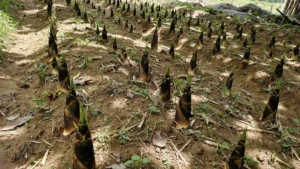
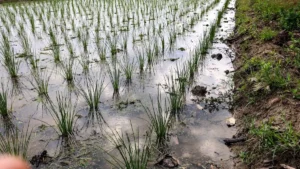
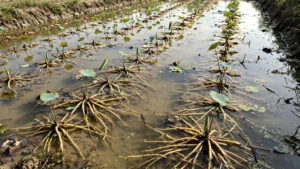
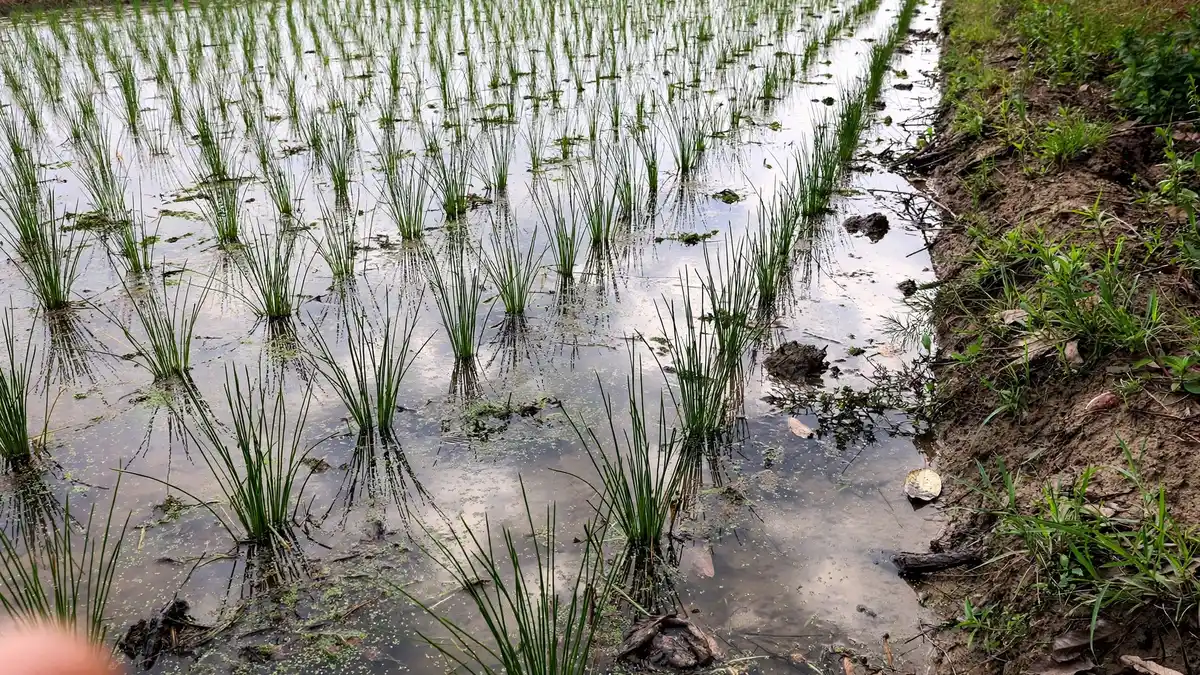
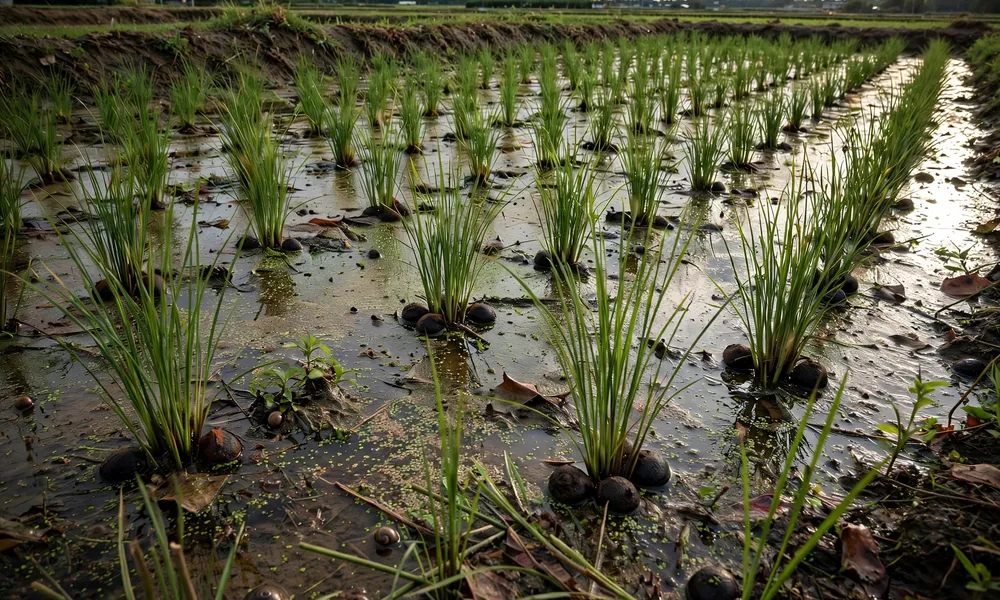
The corms grow underground in soft pond mud, so every guest gets boots and a basket, and the digging is done by hand, feeling through the mud for the round corms. The plant itself is a sedge, with thin green stems and no real leaves, and a healthy pond looks like a field of green spikes standing in still water.
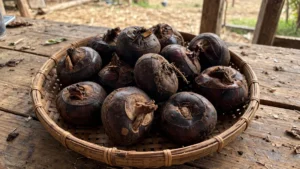
A water chestnut corm is round and a little flattened, with dark brown skin and white flesh inside. Raw, it is sweet, juicy and crunchy, like a cross between an apple and a radish. Cooked, it keeps its crunch, which is rare among vegetables, and it takes on the flavour of the sauce around it.
How we picked these stays, and what to ask first
We looked for farms that grow water chestnut as their main crop, not as a pond kept for show, and that dig and peel it on site rather than buying tins in town.
A good stay has a cool sleeping room, a kitchen that can handle a gluten-free request without confusion, and a host who will say plainly how the ponds are kept clean and how the corms are washed and peeled. Send the farm four questions before you send any money: how the ponds are watered and cleaned, how the corms are dug and washed, how the farm copes with the midday heat, and whether the kitchen can cook your meals without wheat or soy sauce. Our roundup of cassava farm retreats leans on the same four questions, because they suit any farm stay built around a single root or corm.
The 9 best luxury water chestnut farm retreats of 2027
Bangkok — Canal-Side Farm with a Peeling Table
What we like: A canal-side farm outside Bangkok, with long ponds behind a shaded guesthouse and a peeling table where the corms are washed and skinned in the open air. What to consider: The setting feels less cut off than the inland farms, and day visitors come to the canal at weekends. Best for: First-time visitors who want an easy introduction to pond farming. Style: Canal-side guesthouse, peeling table, shaded dining area. Price range: $109–$161 a night, meals included. Standout feature: A morning at the canal market with the farm cook, buying the herbs and greens that go into the evening stir-fry.
Hanoi — Pond Farm with a Wok Kitchen
What we like: A farm on the flat land outside Hanoi, where the ponds stretch in straight lines and the kitchen wok is always hot, with garlic, ginger and water chestnuts tossed in within minutes of the digging. What to consider: The winter air can be damp and grey, and the farm road turns soft after rain. Best for: Travellers who want to learn the cooking as much as the digging. Style: Flatland farmhouse, wok kitchen, shaded veranda. Price range: $82–$128 a night, meals included. Standout feature: A wok lesson at dusk, ending with a plate of water chestnuts, greens and garlic you helped cook.
Guangzhou — River Farm with a Dim Sum Room
What we like: A river farm outside Guangzhou, with a dim sum room where the corms are diced into dumplings, and ponds that run down toward the riverbank. What to consider: Cantonese is the working language of the kitchen, and the farm is a long drive from Guangzhou airport. Best for: Travellers who want the classic Cantonese table, built around the corm. Style: River farmhouse, dim sum room, open dining hall. Price range: $118–$172 a night, meals included. Standout feature: Water chestnut dumplings folded in the farm kitchen and steamed the same afternoon you dug the corms.
Hong Kong — New Territories Farm with a Pond Walk
What we like: A farm in the New Territories, with ponds tucked between low hills and a pond walk that takes you past every bed at dawn, when the water is still and the stems catch the light. What to consider: The rooms are plain and small, and the farm keeps no vehicle of its own, so you will need a driver from the city. Best for: Travellers who want a quiet escape close to a big city. Style: Hillside farmhouse, pond walk, plain rooms. Price range: $128–$185 a night, meals included. Standout feature: A dawn walk along the ponds, followed by peeled corms eaten raw with tea on the terrace.
Taipei — Valley Farm with a Stir-Fry Shed
What we like: A valley farm outside Taipei, where the ponds sit in cool mountain air and the stir-fry shed turns the morning’s corms into lunch before the mud has dried on your boots. What to consider: The valley can be wet in winter, and the farm road winds for a long way uphill. Best for: Travellers who like cool air and a kitchen with a sense of speed. Style: Valley farmhouse, stir-fry shed, outdoor dining terrace. Price range: $116–$171 a night, meals included. Standout feature: A stir-fry cooked in the shed within the hour, with corms you dug that morning and greens from the farm garden.
Manila — Island Farm Roasting Corms at Dusk
What we like: An island farm a ferry ride from Manila, where the kitchen runs on wood fire and the corms are roasted in their skins, then peeled and eaten warm with salt. What to consider: The ferry timetable rules the trip, and one missed boat means a night in town. Best for: Travellers who want the sweet side of the corm and a slower island pace. Style: Island farmhouse, wood-fired kitchen, sea-facing veranda. Price range: $102–$152 a night, meals included. Standout feature: Corms roasted in the wood fire and peeled at the table, eaten warm while the sun sets over the water.
Kuala Lumpur — Highland Farm with a Soup Pot
What we like: A farm in the cooler highlands near Kuala Lumpur, where the ponds are fed by a stream and the kitchen simmers the corms into a clear soup with chicken and ginger. What to consider: The traffic out of Kuala Lumpur is slow, and the farm road is steep in places. Best for: Families and travellers who want a gentler climate and a kitchen with a sense of comfort. Style: Highland farmhouse, soup kitchen, shaded courtyard. Price range: $96–$146 a night, meals included. Standout feature: A pot of water chestnut soup cooked over a slow fire, served with rice and the farm’s own pickled greens.
Singapore — Garden Farm with a Tasting Table
What we like: A garden farm on the edge of Singapore, with small tidy ponds and a tasting table where the corms are served three ways, raw, stir-fried and in a sweet soup, so you can compare them side by side. What to consider: The farm is small and the ponds are shallow, so the stay feels more like a garden visit than a working farm. Best for: Short stays and travellers who want a neat, easy introduction. Style: Garden farmhouse, tasting table, shaded patio. Price range: $135–$195 a night, meals included. Standout feature: A tasting of the same corm raw, stir-fried and sweetened, on one plate, at the farm table.
Jakarta — Lowland Farm Cooking Chop Suey
What we like: A lowland farm outside Jakarta, where the ponds are wide and the kitchen cooks chop suey the old way, with corms, bean sprouts, mushrooms and a light sauce, served over rice. What to consider: The lowland heat is heavy at midday, and the farm has little shade outside the house. Best for: Travellers who like hot, humid country and a kitchen with a generous hand. Style: Lowland farmhouse, chop suey kitchen, shaded terrace. Price range: $88–$132 a night, meals included. Standout feature: A chop suey lunch cooked in the farm kitchen, with corms dug that morning and bean sprouts grown on the farm.
Which water chestnut region fits your trip
The Thai and Vietnamese farms, Bangkok and Hanoi, suit first-time visitors. Bangkok is the easiest to reach, and Hanoi is the best for learning the cooking, with its wok kitchen and its straight-line ponds.
The Chinese farms, Guangzhou, Hong Kong and Taipei, suit travellers who want a different food culture with the same corm. Guangzhou is the practical choice for dim sum, Hong Kong for a quiet pond walk close to the city, and Taipei for cool valley air and a fast stir-fry shed. All three suit a second trip, for anyone who has spent time in Southeast Asia and wants to compare the cooking.
The island and lowland farms, Manila, Kuala Lumpur, Singapore and Jakarta, suit short stays and travellers who want a gentler or warmer climate. Singapore is the easiest of the four, Kuala Lumpur the most relaxed, Manila the sweetest, for its roasted corms, and Jakarta the most generous, for its chop suey table. Our roundup of tigernut farm retreats reaches the same conclusion about fitting the region to the traveller, and the same logic applies on this list.
The caveats that matter
Water chestnut is a safe, long-eaten food when it comes from a clean pond and is washed and peeled properly, but the pond is the whole story. Wild corms from still, dirty water can carry parasites from freshwater snails, so eat only corms from farmed ponds, wash them well, and peel them before eating raw. Heat is the other practical concern. Every farm on this list sits in warm, damp country, and the noon sun deserves respect. Carry water all day, keep a hat on in the ponds, and take the shade after lunch.
| Detail | What is known |
|---|---|
| Botanical name | Eleocharis dulcis, a sedge in the Cyperaceae family, not a chestnut tree |
| Where it grows | Shallow ponds across Asia, mainly China, Vietnam, Thailand and Malaysia |
| Main harvest | Cooler months, when the stems yellow and the corms have swollen in the mud |
| How it is eaten | Peeled and eaten raw, or stir-fried, steamed, roasted or simmered in soup |
| Flavour and texture | Sweet, juicy and crisp raw, and it keeps its crunch when cooked |
| Safety note | Eat only farmed corms, washed and peeled; wild corms can carry parasites |
| Gluten note | The corm has no gluten, but farm kitchens also serve soy sauce and wheat noodles |
| What it is not | Not a chestnut, not a nut, and not the horned water caltrop |
The closest town usually has a cash machine, but the farm itself deals in notes, so bring paper money for tips, stalls and the shop.
Checklist: booking a water chestnut farm stay honestly
Go through this list before you pay, and once more in the week before you leave.
- Get the farm’s pond routine confirmed in writing: how the ponds are watered, cleaned, dug and washed.
- Ask how the corms are washed and peeled, and whether any are ever eaten unpeeled.
- Tell the kitchen in writing about gluten and any allergy before you book, and ask whether soy sauce or flour goes into the sauces.
- Ask who drives you out, how long the trip takes, and what a rainy week does to the road.
- Check what the nightly rate actually includes, since meals, pond walks, cooking lessons and laundry are often priced apart.
- Carry enough cash for tips and the farm shop, because the farm takes no cards at all.
Frequently asked questions
Can I eat water chestnuts raw?
Yes, if they come from a farmed pond and are washed and peeled first. A peeled fresh corm is sweet, juicy and crisp, and eating one raw is among the best moments of the trip. Never eat a corm with its skin on, and never eat one from wild water, where freshwater snails can carry parasites.
How does the water chestnut differ from a chestnut?
The two share a name and little else. A chestnut is Castanea, a nut that grows on a tree and is roasted or boiled in its shell. A water chestnut is Eleocharis dulcis, a sedge corm that grows in pond mud and is peeled and eaten raw or cooked. One is a tree nut, the other is a pond vegetable, and the cooking traditions are entirely separate.
When is the best time to visit a water chestnut farm?
The digging runs in the cooler months, when the stems yellow and the corms have swollen, so the harvest calendar shapes the trip. In southern China and northern Vietnam the main digging runs roughly November to February, in Thailand roughly December to March, and in Malaysia and Indonesia the ponds are worked through much of the year.
What do I tell the kitchen if I cannot eat gluten?
Write to the kitchen before you book and ask if your meals can be cooked without wheat, and whether soy sauce goes into the sauces. The corm itself has no gluten, and a stir-fry of corms and greens is naturally gluten-free, but farm kitchens cook with soy sauce daily and often serve wheat noodles, so a clear written request is the only reliable way to be safe.
Can children come to a water chestnut farm retreat?
Yes, older children usually love it, especially the digging and the peeling, but the ponds and the long days make it hard for very young children. Most farms suggest children over eight, and ask parents to keep the first afternoon gentle.
Can I carry water chestnuts home with me?
Yes, and dried corms and snacks from the farm shop are the best souvenirs on the trip. Fresh corms last a week or two somewhere cool, yet they turn quickly in heat, and border rules on fresh produce are strict, so look up your own country’s rules before you pack anything.
The bottom line
The best water chestnut farm retreat in 2027 is the one that matches your appetite for wet work and your tolerance for heat. Bangkok and Hanoi are the easiest introductions, Guangzhou and Taipei are the best for Cantonese and Taiwanese cooking, Singapore and Kuala Lumpur suit a short trip, and Manila is the most distinctive table on the list.
A few days on a water chestnut farm will change how you see a pond. The corm is humble, the work is honest, and eating a peeled corm an hour after digging it from the mud is a pleasure no city restaurant can copy. Our roundup of sago farm retreats covers another little-known tropical starch the same way, if you want to keep exploring after the ponds.