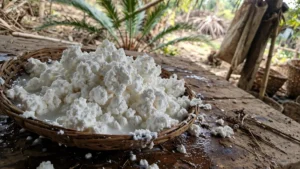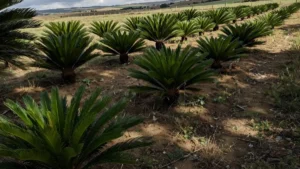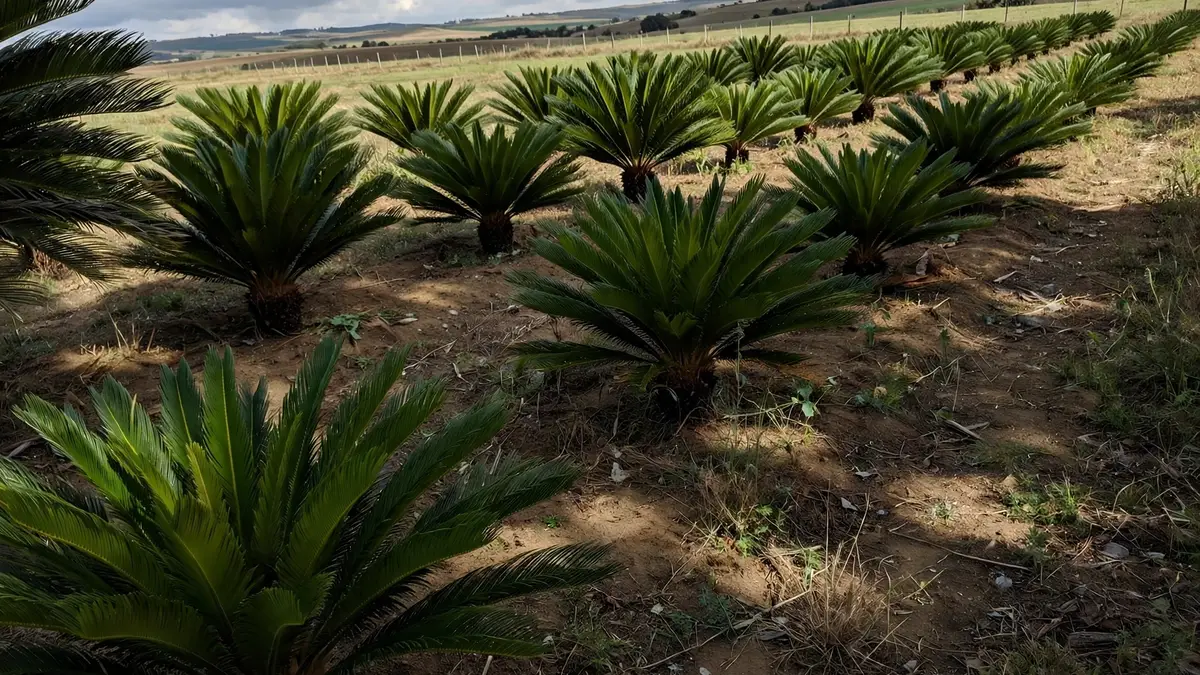
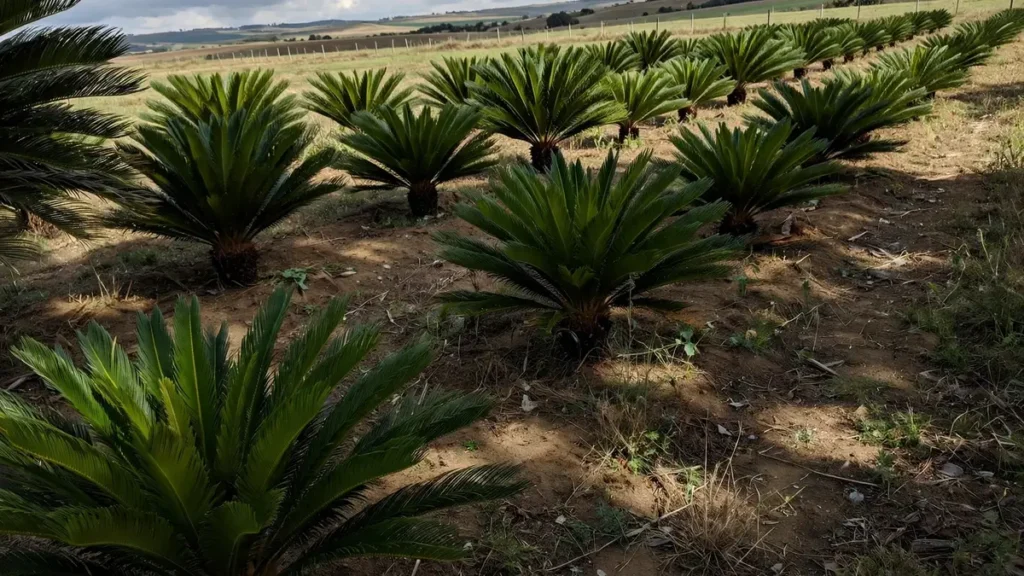
Sago is the starch most travellers through Southeast Asia have already eaten without ever seeing where it comes from. It turns up as soft pearls in a sweet dessert, as a smooth porridge beside a fish soup, as a chewy pancake sold at a morning market. Yet almost nobody who eats it has stood in the swampy grove where it begins, because sago does not grow in a neat field like rice. It comes from the trunk of a palm that has spent eight to fifteen years growing in wet lowland, and the starch is washed out of the pith by hand after the tree is felled.
A retreat built around sago is therefore a lowland, river kind of luxury, the opposite of a mountain farm stay. You sleep in a stilt house or a riverside lodge, walk the palm groves in rubber boots, watch a trunk being rasped and rinsed, and eat papeda with yellow fish soup at a long wooden table while the river moves past. The air is warm and heavy, the work is wet, and the food is unlike anything a city restaurant serves.
The nine stays below were picked because the sago work is genuine, the rooms are comfortable, and the food is honest. Each one harvests sago palms for real, serves the starch at the table in more than one form, and lets guests take part in the washing and cooking rather than simply watching it from a veranda.
Key takeaways
- Sago is the starch of Metroxylon sagu, the sago palm, washed from the pith of a felled trunk. The pearls and the porridge are almost pure starch.
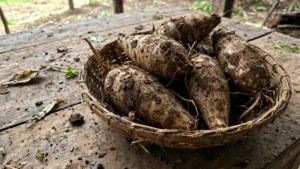
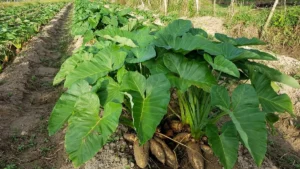
- It is not tapioca. Tapioca is starch from the cassava root; sago is starch from a palm trunk. They can look alike in a bowl and they are not the same crop.
- Palms are cut just before they flower, usually between eight and fifteen years old, so the harvest is a slow cycle and the best stays plan their season around it.
- The dry months, roughly May to October, are the best time to visit, because swamp tracks flood and river crossings get difficult in the wet season.
- Sago itself contains no gluten, but farm kitchens also serve noodles, bread and soy sauce, so guests who avoid gluten should warn the kitchen in writing before they arrive.
What a sago farm retreat actually is
A sago farm retreat is a working lowland farm that takes a small number of guests, usually fewer than twelve at a time, and feeds them from its own groves and river. The farm tends stands of sago palm in freshwater swamp, and the stay is organised around that slow cycle. Mornings are for the groves and the washing troughs, afternoons for cooking and resting in the shade, evenings for papeda and fish soup by the river.
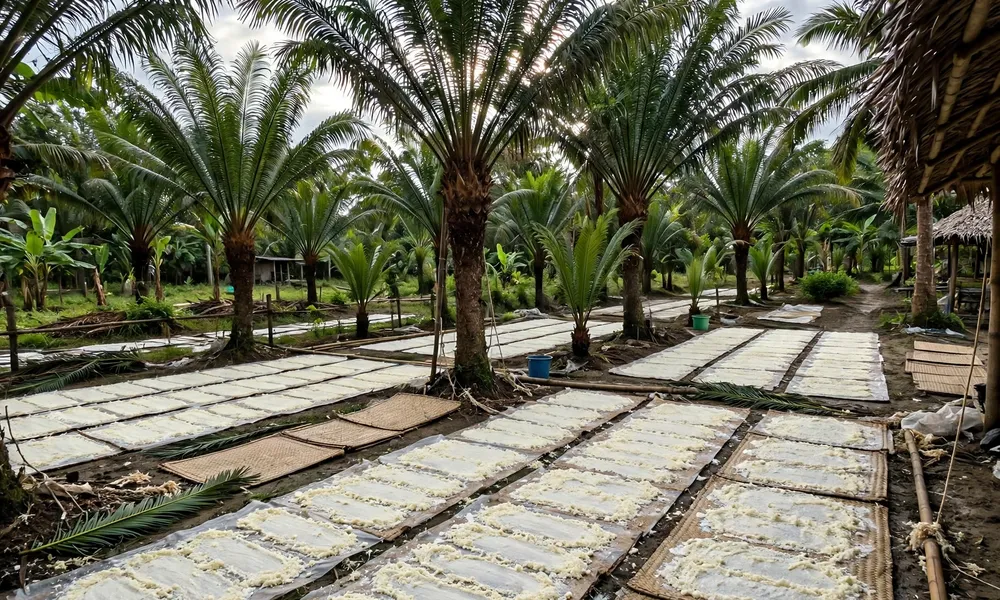
What sets these stays apart from a rural hotel is the wet work. You are not shown the grove from a boardwalk. You are handed rubber boots and a basket and shown how a trunk is split, how the pith is rasped into a trough, and how the milky water is kneaded and left to settle until the starch drops out, white and clean, at the bottom.
The crop itself is worth meeting properly before you arrive. A mature sago palm holds an enormous store of starch in its trunk, often 150 to 300 kilograms from a single tree. Turned into pearls it goes into desserts. Stirred into hot water it becomes papeda, a smooth, glossy porridge that is the daily bread of Maluku and Papua.
How we picked these stays, and what to ask first
We looked for farms that harvest sago palms as a real crop, not as a single demonstration tree kept for visitors.
We also weighed the rooms, the heat, and the food beyond the starch. A good stay has a shaded common room, a kitchen that can handle a gluten-free request without confusion, and a host who will tell you honestly when the groves are flooded and the washing has paused. Before booking, ask three things in writing: which months the harvesting runs, how high the rooms sit above the flood line, and whether the kitchen can cook without wheat for your table. Our guide to oca farm retreats uses the same three questions, because they work for any farm stay built around one crop.
The 9 best luxury sago farm retreats of 2027
Jayapura — Stilt House Stay above the Sentani Groves
What we like: The farm sits on a stilt house above a wide sago grove near Lake Sentani, with washing troughs under the house and a kitchen that serves papeda with yellow fish soup every evening.
What to consider: The last stretch of track is unpaved and floods after heavy rain, and the farm has no vehicle of its own, so you need to arrange a driver from Jayapura. Best for: First-time visitors to Papua who want the classic lake-and-grove setting with a working farm attached. Style: Timber stilt house, open washing area, shared dining table. Price range: $110–$170 a night, meals included. Standout feature: A dawn walk through the groves that ends with the family felling a palm and starting the wash.
Manokwari — Bay-Side Farm with a Big Kitchen
What we like: The largest kitchen of the nine, run by a cook who grew up selling sago pearls at the Manokwari market, with a pantry full of dried fish and a dining room that seats the whole group together.
What to consider: The farm is a long drive from the town, and the heat is relentless at midday. Best for: Food-focused travellers who want to learn Papuan cooking properly. Style: Timber farmhouse, big communal kitchen, grove paths. Price range: $90–$140 a night, with all meals. Standout feature: A cooking lesson that starts in the grove and ends with a full papeda meal made by the guests.
Kuala Lumpur — River Lodge an Hour from the City
What we like: A comfortable river lodge within easy reach of Kuala Lumpur, with a small sago grove, a shaded veranda, and a host who explains the whole washing process properly.
What to consider: The grove is small and the setting feels less remote than the island farms. Best for: Travellers short on time who still want a real sago stay. Style: Modern river lodge, air-conditioned rooms, open kitchen. Price range: $130–$195 a night, meals included. Standout feature: A hands-on washing session where guests knead the pith and watch the starch settle.
Kuching — Sarawak Longhouse Farm on the River
What we like: A longhouse-style farm on a slow Sarawak river, with sago groves on both banks and a kitchen that makes linut, the Sarawak version of papeda, with fish and sago worms for the brave.
What to consider: The river is the road here, so arrivals depend on boat times, and the mobile signal is unreliable. Best for: Travellers who want river life, longhouse culture and a complete break from the city. Style: Longhouse guest rooms, river jetty, communal kitchen. Price range: $85–$130 a night, breakfast and dinner included. Standout feature: A boat trip upriver at dawn to a grove that has never been harvested.
Pontianak — Equator Farm with a Sago Mill
What we like: The only farm of the nine with its own small sago mill, where guests can watch the trunk go from rasped pith to dried pearls in a single afternoon.
What to consider: Pontianak is hot and humid all year, and the mill is noisy when it runs. Best for: Curious travellers who want to understand sago processing, not just see it. Style: Concrete-and-timber farmhouse, working mill, shaded yard. Price range: $80–$125 a night, meals included. Standout feature: A mill tour that follows one trunk from felling to a bag of pearls.
Makassar — South Sulawesi Farm with a Fishing Village
What we like: A farm at the edge of a fishing village, where sago groves meet the sea and the kitchen pairs fresh-caught fish with papeda every night.
What to consider: The sea breeze brings salt and sand into the rooms, and the village is lively late into the evening. Best for: Travellers who like the coast as much as the grove. Style: Coastal farmhouse, open dining area, boat trips. Price range: $95–$145 a night, dinner and breakfast included. Standout feature: A fishing trip at first light, with the catch cooked beside papeda for lunch.
Palembang — Musi River Farm with a Big Garden
What we like: The warmest farm of the nine, on the Musi River with a big vegetable garden, fruit trees and sago groves that produce all year.
What to consider: The river floods in the wet season, so the farm closes its lower rooms from November to March. Best for: Travellers who dislike the cold and want a gentle lowland stay. Style: Garden farmhouse, shaded veranda, river jetty. Price range: $75–$120 a night, meals included. Standout feature: A garden dinner cooked entirely from the farm, with sago in two dishes.
Medan — North Sumatra Farm near the Highland Road
What we like: A farm on the edge of the highland road, reachable in under two hours from Medan, with groves, a warm kitchen and a host who grows sago alongside durian and mangosteen.
What to consider: The road from the city is busy and slow, and the farm’s water supply is rain-fed, so showers are short in the dry season. Best for: Travellers who want a farm stay with a city escape hatch. Style: Timber farmhouse, fruit orchard, open-air dining. Price range: $85–$135 a night, meals included. Standout feature: A fruit tasting in the orchard after the sago washing, with durian in season.
Singapore — Garden Farm on the Island Edge
What we like: A small garden farm on the edge of Singapore, where sago palms are grown as a demonstration grove with a proper washing trough and a kitchen that cooks papeda for guests.
What to consider: The grove is small, the stay is short, and the price is the highest on the list. Best for: Travellers with a single free day who want to learn sago properly. Style: Modern garden lodge, demonstration grove, classroom-style kitchen talks. Price range: $180–$260 a night, meals included. Standout feature: A guided session through the whole sago cycle, from palm to pearl, in one afternoon.
Which sago region fits your trip
The Papuan groves, Jayapura and Manokwari, suit travellers who want the real thing at full scale. The groves are vast, the papeda is a daily food rather than a demonstration, and the farms are used to guests who have never seen a sago palm. The transfers are longer, but the setting is the one that stays with you.
The Malaysian and Borneo stays, Kuala Lumpur, Kuching and Pontianak, suit travellers who want sago with easier logistics. Kuala Lumpur is the simplest arrival, Kuching is the most atmospheric, and Pontianak is the best for understanding how pearls are made.
The Sumatran and Sulawesi farms, Palembang, Medan and Makassar, plus Singapore, suit the committed and the time-poor in equal measure. Palembang and Makassar are the warmest and most generous with food, Medan is the most practical, and Singapore is the quickest introduction of all. Our guide to mashua farm retreats makes the same point about matching the region to the traveller, and it holds here too.
The caveats that matter
Sago is a safe, long-eaten food when properly washed and cooked, but it is not a raw snack. The pith must be rasped, kneaded and rinsed, and the starch must be cooked into pearls or porridge before eating. Heat and flooding are the bigger practical concerns.
| Detail | What is known |
|---|---|
| Botanical name | Metroxylon sagu, a palm of the freshwater swamps, not related to cassava |
| Where it grows | Wet lowlands of New Guinea, Maluku, Borneo, Sumatra and the Malay Peninsula |
| Main harvest | Palms are felled just before flowering, at 8 to 15 years old |
| How it is eaten | Cooked as pearls, porridge or pancakes, never raw from the trunk |
| Flavour and texture | Almost flavourless on its own, soft and glossy as papeda, chewy as pearls |
| Weather risk | Wet season flooding from November to March can close tracks and lower rooms |
| Gluten note | Sago has no gluten, but farm kitchens also serve noodles, bread and soy sauce |
| What it is not | Not tapioca, not rice, and not a root crop of any kind |
Money is simple on these farms. Cards work in the nearest city but seldom on the farm itself, so bring cash for tips and anything you buy from the farm shop.
Checklist: booking a sago farm stay honestly
Use these checks before you pay, and again a week before you travel.
- Confirm the harvest months in writing, and ask what the kitchen serves if you arrive after them.
- Check how high the rooms sit above the flood line and plan around the wet season.
- Send the kitchen a written note about gluten, allergies and anything else you cannot eat.
- Ask how you get there, who drives or boats, and what the track is like after rain.
- Ask what is included: meals, grove walks, cooking lessons, and laundry are not always in the price.
- Carry cash for the farm, because card machines rarely work in the groves.
Frequently asked questions
When is the best time to visit a sago farm?
May to October is the dry season across most of Indonesia and Malaysia, when the tracks are passable and the washing runs every day. The wet months, roughly November to March, bring flooding, and several farms close their lower rooms. The palms themselves can be felled all year, but the trip is far better in the dry months.
How is sago different from tapioca?
The two starches come from entirely different plants. Tapioca is starch from the root of cassava, Manihot esculenta. Sago is starch from the trunk of the sago palm, Metroxylon sagu. They can look alike as pearls in a dessert, but sago pearls are made by washing palm pith, while tapioca pearls are made from a root crop grown in dry fields.
What does sago taste like?
Almost nothing on its own, which is the point. Sago is a neutral starch, so it carries the flavour of whatever it is cooked with: fish soup, coconut milk, palm sugar. As papeda it is smooth and glossy with a mild, clean taste. As pearls in a dessert it is soft and chewy, and the sweetness comes from the syrup, not the pearl.
Do I need to be fit to stay on a sago farm?
You need to be comfortable walking on wet, uneven ground in the heat, but you do not need to be an athlete. The grove work is light, the walks are short, and every farm lets you sit out a session and watch instead. The heat is the real challenge, not the exercise, so drink water and rest in the shade at midday.
What should I tell the farm kitchen if I avoid gluten?
Tell them in writing, before you book, that you cannot eat gluten, and ask whether the kitchen can cook your meals without wheat. Sago itself has no gluten, but lowland farm kitchens serve noodles, bread and soy sauce daily, and soups are often seasoned with soy sauce that contains wheat, so a clear written request is the only reliable way to be safe.
Can children join a sago farm stay?
Yes, older children usually love it, especially the washing troughs and the cooking, but the heat and the wet ground make it hard for very young children. Most farms set eight as the youngest age, and ask parents to take the opening day gently. Check with the individual farm, because the flooding risk varies a lot between stays.
The bottom line
The best sago farm retreat in 2027 is the one that matches your tolerance for heat and your appetite for wet, hands-on work. Jayapura and Manokwari are the most authentic, Kuala Lumpur and Kuching are the easiest introductions, Pontianak is the best for understanding the mill, and Singapore is the quickest taste of all.
Sago will not change your life, but it will change how you think about starch. It is a slow, swampy, stubbornly local crop, grown in groves that have fed families for centuries, and eating it an hour after the washing is a pleasure that no city restaurant can copy. Our roundup of ulluco farm retreats covers another little-known staple crop the same way, if you want to keep exploring after the lowlands.