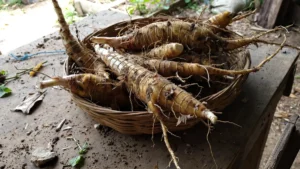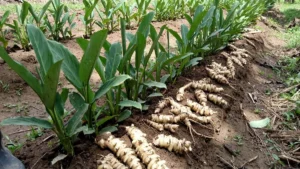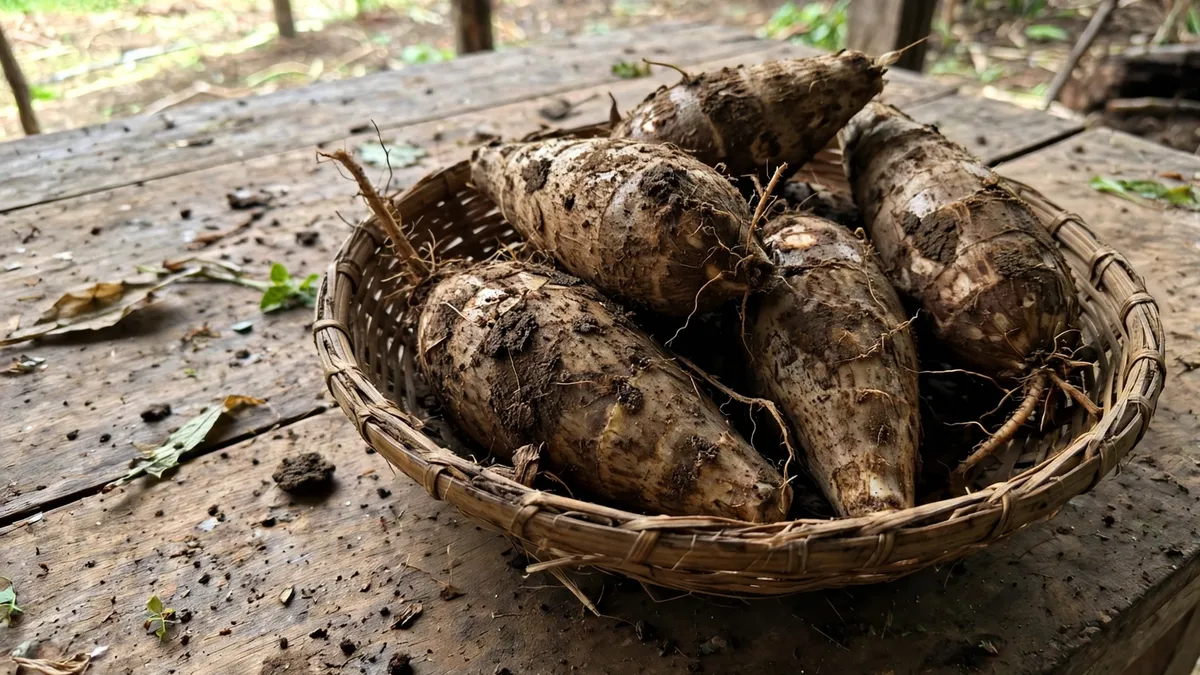

A yautía farm escape is a working holiday built around one root. You arrive at a small farmhouse somewhere in the Caribbean, you spend your days in the rows with a digging fork, and you spend your evenings at a stove, learning how a corm becomes a stew. The plant is Xanthosoma sagittifolium, known as yautía in Puerto Rico and the Dominican Republic and as malanga in Cuba, Jamaica and much of Central America. It is not a crop you admire from a distance. It is a crop you dig, wash, peel and cook, and the pleasure of the trip is in doing all four properly.
The shape of the trip is simple, and that is the point. Mornings belong to the field: the host shows you which leaves to look for, you lift the corms, and you carry them back in a basket. Midday belongs to the kitchen, where the peeling and the cooking happen, and where you learn why yautía must never be eaten raw. Evenings are slow, with a pot on the stove and a porch to sit on.
This guide walks through the nine steps that turn a vague idea into a booked trip, from choosing an island to settling the bill. Follow them in order, and you will arrive knowing what to expect, what to pack, and what to ask. Skip them, and you risk booking a beach week that happens to have a farm in it, which is a different holiday entirely.
Key takeaways
- A yautía farm escape is a working stay: you dig, peel and cook the crop, so expect mud, early mornings and a wood-fired kitchen.
- Pick the island and the digging season first. Late summer into winter is when the corms are full and the farm weeks are at their best.
- Yautía must be cooked thoroughly. Raw corms and leaves sting the mouth and throat, so never taste anything straight from the soil.
- Write to the farm before you pay. Ask what is growing, what is cooking, and what the kitchen can do about gluten or allergies.
- Yautía itself is naturally gluten-free, but flour, sauces, shared fryers and thickeners vary by kitchen, so confirm the details with the host, not with a booking page.
What a yautia farm escape actually involves
Most yautía stays are small. A family farm with two to six guest rooms, a kitchen that cooks what the garden gives, and a host who does the farming as well as the hosting. You are a guest in a working household, and the day is shaped by the crop: if it rains, the digging waits, and if the market is good, the menu changes.
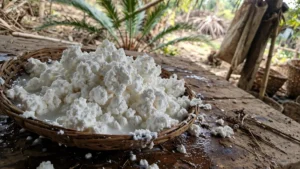
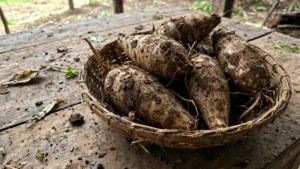
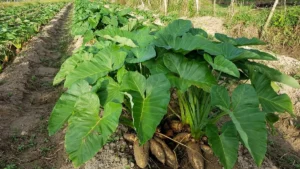
The work itself is straightforward and physical. You learn to read the leaves, which yellow when the corms below are ready, and to lift a corm with a fork without snapping it. Then comes the cleaning, the peeling, and the cooking: boiling for sancocho, grating for pasteles, pounding for cou-cou, or simmering the leaves down for callaloo. Each dish teaches you something different about the same root, and by the third day you will know a good corm when you see one at a market stall.
That is the honest difference between a farm escape and a food tour. A food tour shows you finished dishes. A farm escape shows you where they come from, and it asks you to do some of the work.
How to shape the trip before you book
Start by deciding what kind of week you want, because the Caribbean offers several. A Puerto Rican stay leans on sancocho and pasteles. A Jamaican stay leans on run-down stew and mountain walks. A Trinidadian stay leans on callaloo and cocoa. The root is the same everywhere, but the cooking, the landscape and the pace change from island to island, and choosing the island first makes every later decision easier.
Then decide how long you can give it. Three nights is the minimum for a real farm stay: one day to arrive, one full day in the field and the kitchen, and one morning at the market. Five nights is better, because it leaves room for a day trip and a slow day, and because the best farm weeks are built around a Saturday stew or a market morning that you should not have to rush. A single night is not a farm escape. It is a bed near a farm.
Finally, think about who is coming with you. Children who like mud and cooking will love a yautía farm. Teenagers who want a pool and fast internet will not.
The 9 steps to planning your yautia farm escape
1. Choose the island before the farm
What to do: Choose the island by its cooking and its landscape. Puerto Rico for sancocho and pasteles, the Dominican Republic for market mornings, Jamaica for mountain air, Cuba for ajiaco, Trinidad for callaloo. What to avoid: Picking a farm because its photographs are pretty, then discovering the island’s food is not what you wanted. Best for: Travellers who have never been to the Caribbean and want a clear first choice. Time needed: An evening of reading before you contact any farm. Standout tip: Decide the dish you most want to learn, and let that choose the island.
2. Book the digging season, not the beach season
What to do: Aim for late summer into winter, when the corms are full and the leaves begin to yellow. Ask the farm when its main harvest falls, and book around it. What to avoid: Booking at the height of the dry season, when the corms are small and the farm is busy with other work. Best for: Anyone whose main reason for coming is the harvest itself. Time needed: A week of flexibility around your dates. Standout tip: The best farm weeks sit on either side of the busiest beach months, so you often get better prices too.
3. Ask the farm how the corms are cooked
What to do: Ask for the week’s menu before you pay. A good farm will list the dishes: sancocho, pasteles, cou-cou, callaloo, ajiaco, or a roast. What to avoid: Assuming every farm cooks yautía five different ways. Some boil it once and move on, and you should know that before you arrive. Best for: Cooks who want to learn more than one dish. Time needed: One message, and a day for the farm to reply. Standout tip: If the farm cannot name three dishes, it is not really a yautía farm.
4. Sort the food questions out before money changes hands
What to do: Put your dietary needs in your first message: gluten-free, allergies, or anything else the kitchen should know. Ask specifically about flour in sauces, shared fryers, and thickeners in stews. What to avoid: Mentioning it at the table on your first night, when the pot is already cooked and the host cannot change it. Best for: Guests with coeliac disease or a serious allergy. Time needed: Five minutes to write the message. Standout tip: A farm that answers clearly about gluten is a farm that takes its kitchen seriously.
5. Give the nearest market town one full morning
What to do: Plan one market morning in the nearest town, with the host or on your own. Buy corms, herbs and fruit, compare prices, and learn what a good corm looks like. What to avoid: Treating the market as a photo stop. The point is to buy, to ask questions, and to bring something back for dinner. Best for: Travellers who like to shop where locals shop. Time needed: A full morning, including the drive. Standout tip:
6. Bring boots and gloves for the rows
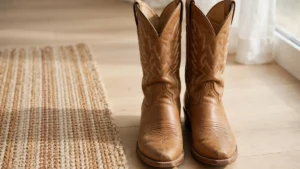
What to do: Pack sturdy boots, work gloves, long sleeves and a hat. The rows are wet, the leaves are scratchy, and the sun is strong even on a cloudy day. What to avoid: Bringing white clothes, sandals, or anything you mind getting muddy. The farm will not wait while you change. Best for: Anyone who plans to dig rather than watch. Time needed: Ten minutes to pack, if you own the gear already. Standout tip: Gloves matter twice over: they protect your hands, and they keep the raw sap off your skin.
7. Leave a day free for the coast or the hills
What to do: Keep one day unplanned for the coast, the hills, or a nearby town. A farm stay is richer when it has a change of scene in the middle. What to avoid: Filling every day with farm work. You will be tired by day three, and a tired cook learns nothing. Best for: Travellers staying five nights or more. Time needed: One whole day, left deliberately empty. Standout tip:
8. Spend a morning digging beside the grower
What to do: Ask to dig beside the grower for a full morning, not just for a photograph. Watch how they read the leaves, how they lift the corm, and how they choose what to leave in the ground. What to avoid: Digging on your own before you have been shown how. A snapped corm is wasted food, and a fork in the wrong place can cut the whole cluster. Best for: Guests who want the farming, not just the cooking. Time needed: One morning, from breakfast to lunch. Standout tip:
9. Get the bill settled the night before you leave
What to do: Ask for the full bill the evening before you leave: the room, the meals, the cooking sessions, the transport, and anything extra. Check it while the host is there to explain it. What to avoid: Discovering an extra charge at the gate, when you are already late for a flight and nobody can explain it. Best for: Anyone paying in cash or in a currency that is not their own. Time needed: Ten minutes over dinner on your last night. Standout tip: A clear bill is a sign of a well-run farm, and it is worth asking for even when you trust the host.
Yautia, malanga and taro: telling them apart
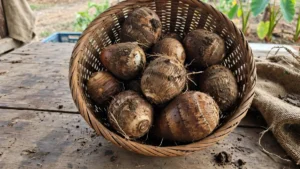
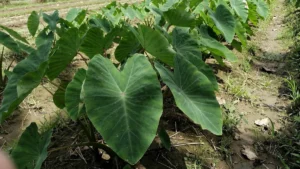
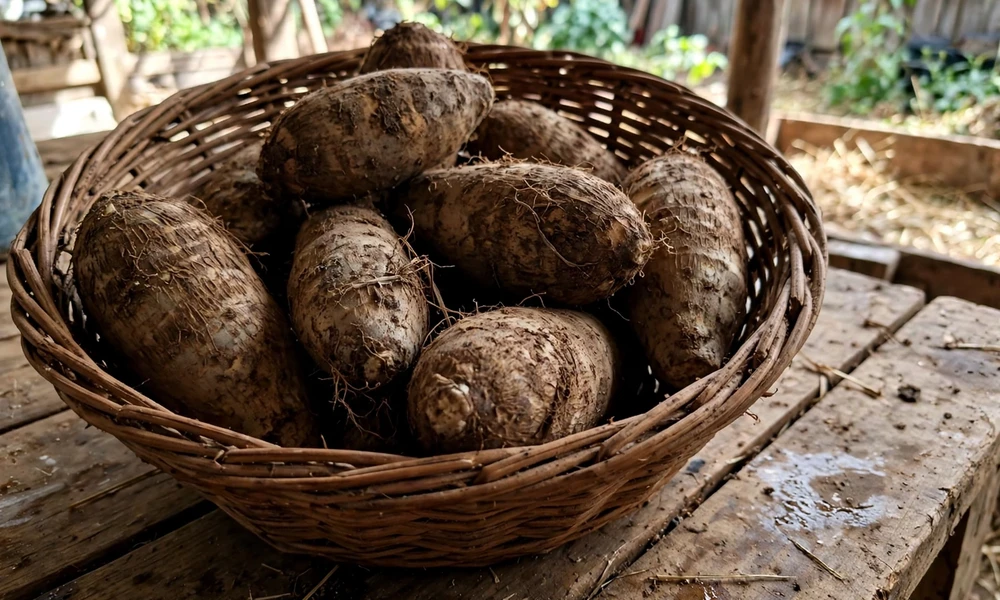
Yautía and malanga are the same plant, and the name depends on where you are. Puerto Rico and the Dominican Republic say yautía. Cuba, Jamaica and Central America say malanga. Either way, the plant is Xanthosoma sagittifolium, and the corms cook the same. Taro is different: Colocasia esculenta, a separate genus in the same family, with round heart-shaped leaves and a corm that turns soft and almost slimy when cooked. Yautía leaves are arrow-shaped, the corm is smoother, and the flesh stays firm and a little crumbly, which is why it pounds so well into cou-cou and grates so well into pasteles.
The practical difference is in the kitchen. Taro suits dishes where softness is the point, like poi. Yautía suits dishes where the root needs to hold its shape, like a stew, or to bind, like a masa. Both must be cooked thoroughly, because both carry the needle-shaped crystals that sting the mouth when raw. Our guide to planning a guarana farm escape makes the same point: learn the plant before you cook it. The same rule holds on a Caribbean farm, where the difference between a good meal and a sore mouth is knowing which root you are holding.
The caveats that matter
A yautía farm escape is a gentle trip, but it is still a working farm in the tropics, and a few honest warnings will make it better. The weather changes the plan, the kitchen has limits, and the road takes longer than the map suggests.
| Detail | What is known |
|---|---|
| Best season to go | Late summer into winter, when corms are full and the harvest is at its best |
| How long to stay | Three nights minimum, five nights for a proper harvest and a day trip |
| What must be cooked | Every corm and every leaf; raw yautía stings the mouth and throat |
| What to pack | Boots, gloves, long sleeves, a hat, and clothes you do not mind getting muddy |
| How to get there | Most farms need a car or an arranged lift; buses rarely reach the gate |
| What to ask first | Gluten, allergies, the week’s menu, and what is included in the price |
| Money | Cash is common; confirm the currency, the deposit, and what is extra before you pay |
| What it does not include | Flights, most dinners and airport transfers are usually extra |
If you are pregnant, breastfeeding, or managing a food allergy, check with your clinician before a stay built around one root. A short message to the farm about what you can and cannot eat will save a difficult conversation at the table, and a good host will tell you honestly what the kitchen can and cannot do. Our guide to planning a macauba farm escape gives the same advice: ask early, ask specifically, and trust the host who answers clearly.
Checklist: before you book a yautia farm escape
Use these checks before you pay, and again the week before you travel.
- Check the island: pick the cooking and the landscape first, then look for farms.
- Check the season: book the digging months, not the beach months, if the harvest matters.
- Check the menu: ask the farm to name the dishes it cooks with yautía during your stay.
- Check the food: put gluten or allergies in your first message to the kitchen.
- Check the room: ask about the bathroom, the bed, the noise and the internet before you pay.
- Check the road: sort out how you reach the farm gate from the airport, and who sets it up.
Frequently asked questions
Do I need to speak Spanish to visit a yautía farm?
It helps, but it is not essential. Most hosts in Puerto Rico and the Dominican Republic speak some English, and a few words of Spanish go a long way in the kitchen and the market. In Haiti, French or Creole is more useful. Learn the names of the dishes and the words for “no gluten” before you go, and carry them written down.
Is yautía safe to eat every day?
Yes, once it is cooked thoroughly. Yautía is a starchy staple, like potato or rice, and Caribbean families eat it daily. The only rule is that it must never be eaten raw, and the leaves must be cooked well too. If you have a latex or aroid allergy, check with your clinician first.
What should I pack for a yautía farm stay?
Boots, gloves, long sleeves, a hat, sunscreen and clothes you do not mind getting muddy. Add a small knife if you like to cook, a notebook for recipes, and a bag for market shopping. Leave the white clothes and the sandals at home.
Can children join a yautía farm stay?
Yes, if they like mud and cooking. Children who enjoy digging and helping in the kitchen will have a wonderful time, and most hosts are happy to teach them. Teenagers who want a pool and fast internet will be bored, so check the farm’s facilities before you book a family trip.
How long does yautía take to grow?
About nine to twelve months from planting to harvest. The corms are ready when the leaves begin to yellow and the plant slows down. Small farms dig as needed through the year, but the main harvest falls in the late-season window, which is why the best farm weeks cluster there.
Why does yautía have two names?
Because the plant travelled with people, and each place named it in its own way. Puerto Rico and the Dominican Republic kept the Taíno-derived name yautía, while Cuba, Jamaica and Central America adopted malanga, from African languages carried across the Atlantic. Both names describe the same plant, Xanthosoma sagittifolium, and a vendor selling malanga is selling yautía. One fruit can carry several names across the Amazon, as our guide to planning a tucumã farm escape shows.
The bottom line
Planning a yautía farm escape is mostly about asking the right questions early. Choose the island by its cooking, book the digging season, ask the farm how the corms are cooked, and tell the kitchen about gluten before you pay.
Give it three nights at least, five if you can. Pack boots and gloves, leave room in your bag for a notebook full of recipes, and go ready to work a little. A week spent digging, peeling and cooking one root will teach you more about Caribbean food than a month of restaurant meals,