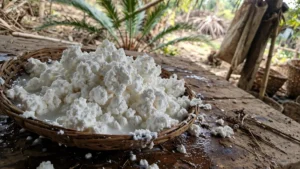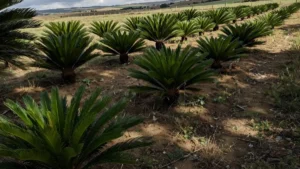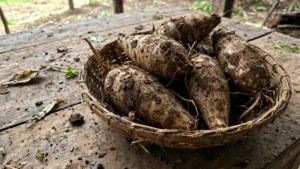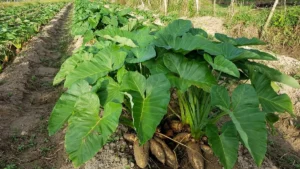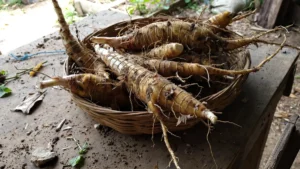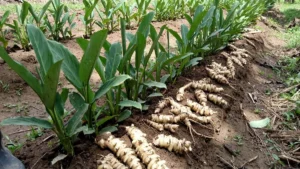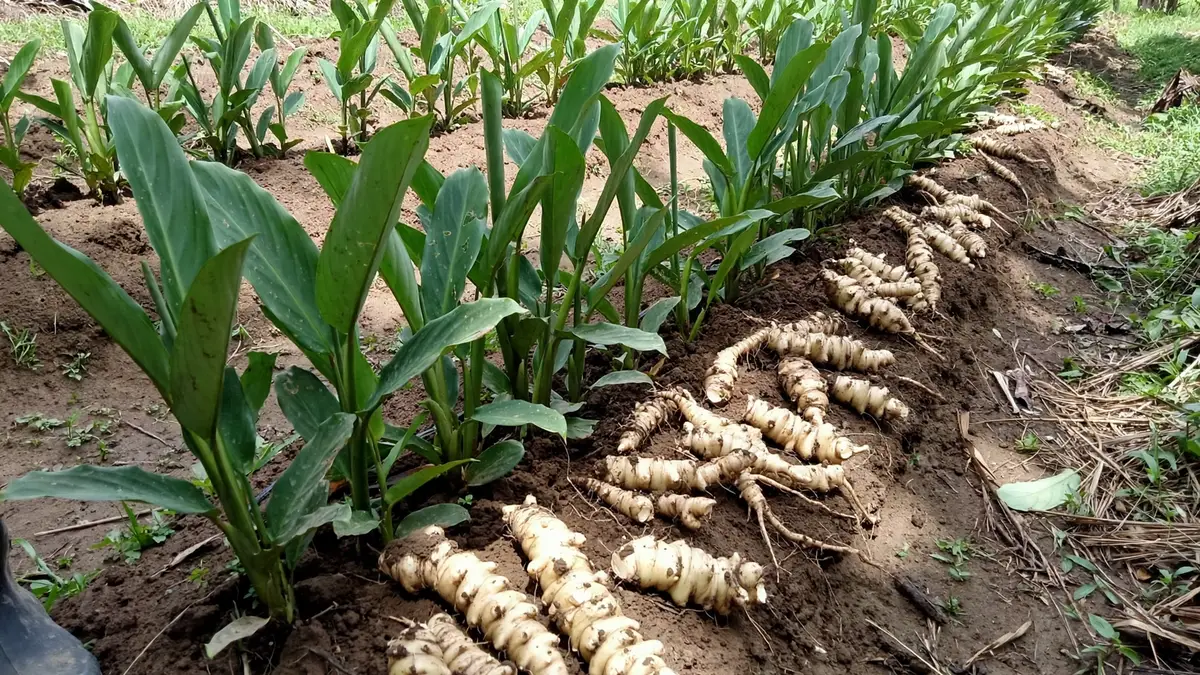

Arrowroot is the quiet starch of the Caribbean, and it has been feeding the islands for far longer than most visitors realise. The plant, Maranta arundinacea, grows in warm, damp soil, and its pale rhizomes are washed, peeled, grated and settled in water until a fine white powder remains. St. Vincent, a small island in the eastern Caribbean, still grows most of the world’s arrowroot, and its farms work the crop much as they did a century ago.
A farm stay built around arrowroot is nothing like a beach holiday, and that is the point. You wake to mist over the fields, you walk the rows with the grower, and by lunch you are eating what you helped to dig. The work is gentle, the kitchens are small, and the starch you take home in a paper bag was settled in a basin you watched. It suits travellers who like slow mornings, honest food, and the company of people who know their soil.
Below are nine arrowroot farm retreats worth considering in 2027, from a working starch estate in St. Vincent to a hillside lodge above Kingston and a river-valley farm in Fiji. Each one is described by what it offers, what to be careful about, and who will enjoy it most, so you can choose a stay that fits your pace rather than a name on a list.
Key takeaways
- Arrowroot is a fine white starch made from the rhizomes of Maranta arundinacea, a plant grown in the Caribbean for centuries.
- St. Vincent grows most of the world’s arrowroot, and its small farms still wash, peel and settle the starch by hand.
- The starch is naturally gluten-free and gentle on the stomach, which is why it turns up in biscuits, sauces and food for young children.
- A good farm stay lets you dig rhizomes in the morning and taste the starch, in cooking and in biscuits, the same day.
- If you avoid gluten, tell the farm before you arrive: arrowroot itself is gluten-free, but a kitchen that also bakes with wheat flour can cross-contaminate.
What arrowroot is, and why it is worth a farm stay
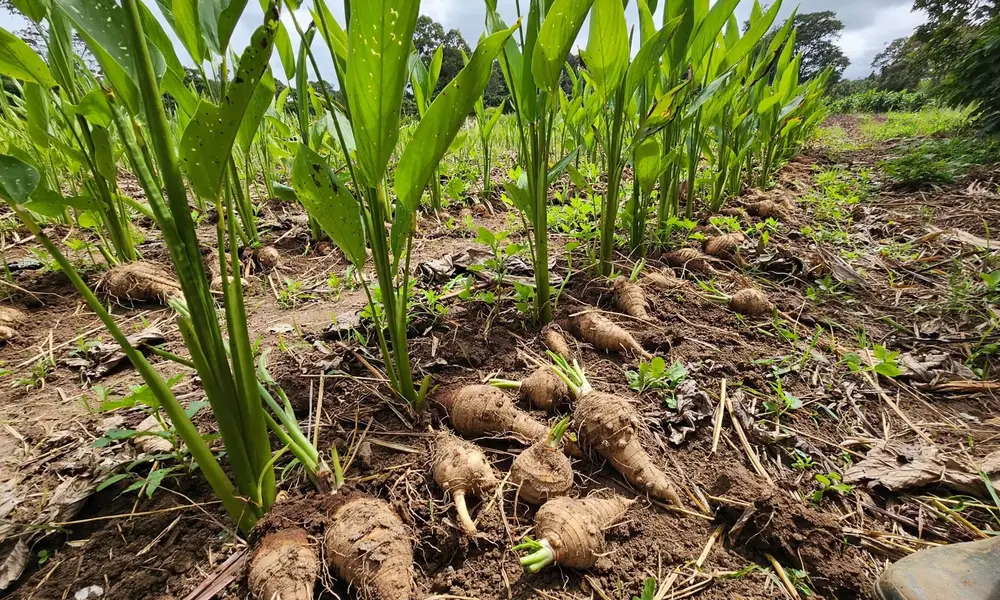
Maranta arundinacea belongs to the Marantaceae family, and it is a leafy, tropical plant that prefers shade, rain and rich, loose soil. Its rhizomes grow underground like pale fingers, and they are ready to dig after ten to twelve months in the ground. Once dug, the rhizomes are washed clean, peeled by hand, grated into a pulp, and rinsed through cloth so the starch settles out of the water. The settled starch is dried in the sun and sieved into a powder so fine it feels like silk between your fingers.
That powder is the whole point of the crop. It thickens a sauce without making it cloudy, it sets a light, crisp biscuit, and it dissolves cleanly in hot liquid, which is why cooks value it for gravies, fruit sauces and puddings. Our roundup of arracacha farm retreats shows a very different root, one that must always be cooked and eaten as a vegetable, while arrowroot is valued for the starch it yields rather than for the root itself.
A farm stay is the best way to understand all of this, because the crop is small-scale and hands-on, and the farms that grow it are small too. You will find a family farm with a few acres, a washing trough, a drying yard, and a cook who knows exactly how much powder a pot of sauce needs. That intimacy is what makes the stay worth the trip.
How we chose these nine retreats
We looked for farms that still grow arrowroot as a working crop, not as a display, and that welcome guests into the real work of the farm. Every retreat on this list lets you walk the fields, watch the starch being settled, and eat food made with the farm’s own powder. We also weighed the rooms, the cooking, the honesty of the prices, and whether the farm is easy to reach without a long, punishing drive on a rough road.
We left out farms that only sell arrowroot powder in a shop and farms that could not say when their rhizomes are dug. A retreat earns its place here when the crop, the kitchen and the stay are all part of the same day, and when the price you are quoted is the price you actually pay.
The 9 best arrowroot farm retreats of 2027
Orange Hill Arrowroot Estate, St. Vincent
What we like: A working starch estate on the windward coast, with fields that run down to the sea, a drying yard full of white powder in the sun, and a cook who bakes arrowroot biscuits every morning. What to consider: The road up from the coast is narrow and steep, the rooms are simple, and the estate books out in the dry season, so reserve early.
Best for: Travellers who want the heart of the arrowroot world, with the crop, the craft and the history in one place. Style: Working estate, whitewashed stone, wide verandas, sea breeze. Price range: $95–$150. Standout feature: A morning session where you wash and peel your own rhizomes and watch the starch settle.
Kingstown Harbour Starch House, Kingstown
What we like: A small guesthouse above the harbour, run by a former starch buyer who knows every grower on the island, with a kitchen that uses arrowroot in almost every dish and a rooftop where you can watch the boats come in. What to consider: The town is busy and noisy in the morning, and the house has only five rooms, so it fills fast.
Best for: First-time visitors to St. Vincent who want a comfortable base and a guide who knows the trade. Style: Harbour guesthouse, bright paint, ceiling fans, rooftop terrace. Price range: $85–$130. Standout feature: A guided day visiting a grower, a settler and a biscuit baker in one trip.
Grand Anse Root Gardens, Grenada
What we like: A hillside garden above Grand Anse beach, where arrowroot grows alongside nutmeg and cocoa, with shaded paths, a small open kitchen, and a host who teaches guests to make arrowroot pudding from scratch. What to consider: The garden is steep in places, the kitchen is outdoors, and rain can change the day’s plans.
Best for: Couples who want a garden stay with a beach nearby and a hands-on cook. Style: Hillside garden rooms, timber and thatch, open-air kitchen. Price range: $110–$165. Standout feature: An evening pudding class using the farm’s own freshly settled starch.
St. George’s Bay Farm Retreat, Grenada
What we like: A quiet farm above the bay, with arrowroot fields, a small herd of goats, and a dining table set under a mango tree, where the host serves stews thickened with the farm’s starch and bread made from its flour. What to consider: You will need a car or a taxi to get anywhere, and the farm keeps early hours.
Best for: Families who want space, animals, and meals cooked slowly from the farm’s own ground. Style: Farmhouse stay, wide lawns, mango shade, home cooking. Price range: $90–$140. Standout feature: A farm breakfast of arrowroot porridge, fresh fruit and warm bread.
Blue Mountains Root Lodge, Kingston
What we like: A cool mountain lodge above Kingston, where arrowroot grows in shaded terraces beside coffee, with mist in the mornings, a wood-fired kitchen, and a host who dries starch on racks in the sun. What to consider: The mountain road is winding, the lodge has no television, and mobile signal is patchy.
Best for: Travellers who want cool air, mountain walks and a slow, quiet stay. Style: Mountain lodge, timber, fireplaces, wide views. Price range: $120–$180. Standout feature: A sunrise walk through the terraces with the grower, ending with hot chocolate thickened with arrowroot.
Bridgetown Coral Coast Farm, Bridgetown
What we like: A small coastal farm on the edge of Bridgetown, where arrowroot is grown in sandy soil behind the beach, with a shaded patio, a kitchen that fries fish in arrowroot batter, and a host who sells powder at the Saturday market. What to consider: The farm is small, so the fields are modest, and the coast road can be busy at weekends.
Best for: Food lovers who want to see how a starch crop fits into a fishing town’s kitchen. Style: Coastal farmhouse, coral stone, shaded patio, sea air. Price range: $80–$125. Standout feature: A fish fry where the batter is made from the farm’s own arrowroot powder.
Northern Range Starch Farm, Port of Spain
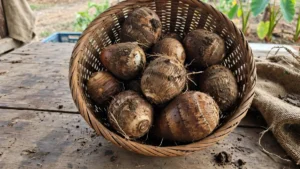
What we like: A farm in the foothills of the Northern Range, with arrowroot, cassava and dasheen growing side by side, so you can compare the crops in the same soil, and a kitchen that cooks all three. What to consider: The farm is a working place, not a resort, and the rooms are plain.
Best for: Curious travellers who want to understand Caribbean root crops, not just taste them. Style: Foothill farm, simple rooms, big kitchen, garden walks. Price range: $70–$110. Standout feature: A side-by-side tasting of arrowroot, cassava and dasheen, cooked three ways.
Suva River Valley Root Retreat, Suva
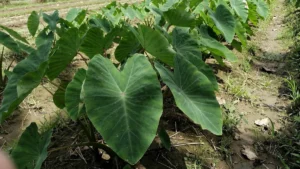
What we like: A river-valley farm outside Suva, where arrowroot grows in damp, rich soil beside taro, with a thatched dining hall, a slow river for swimming, and a host family that sings in the evenings. What to consider: The valley is hot and humid, mosquitoes are present at dusk, and the road floods after heavy rain.
Best for: Travellers who want a warm Pacific farm stay with river swimming and family hospitality. Style: River-valley farm, thatch and timber, open dining hall. Price range: $75–$120. Standout feature: A river swim followed by a dinner of fish and root vegetables thickened with arrowroot.
Laguna Bay Arrowroot Farm, Manila
What we like: A lakeside farm an hour from Manila, where arrowroot is grown for the city’s bakeries, with a shaded nursery, a small mill, and a kitchen that bakes arrowroot cookies for the weekend market. What to consider: Traffic out of Manila can be slow, and the farm is busiest on market weekends.
Best for: A short escape from the city, with a working mill and a bakery to visit. Style: Lakeside farm, shaded nursery, small mill, market kitchen. Price range: $65–$105. Standout feature: A cookie-baking morning in the farm kitchen, with the mill running next door.
Which arrowroot retreat suits you
If this is your first arrowroot trip, start in St. Vincent, where the crop is at the centre of island life and the farms know how to teach a beginner. Orange Hill gives you the full craft in one place, while Kingstown Harbour Starch House gives you a comfortable base and a guide who can open doors you could not open alone. Both are good first steps, and both leave you with powder in your bag and a clear idea of how the starch is made.
If you travel to cook, choose a farm with a kitchen that works hard. Grand Anse, the Northern Range farm and Laguna Bay all put the starch into real dishes, and their hosts enjoy teaching. Our roundup of camu camu farm retreats follows the same idea in the Amazon, where a sour berry rather than a starch is the centre of the kitchen, and it is worth a look if you like farm stays built around a single ingredient.
If you want quiet, look to the mountains and the river valleys. The Blue Mountains lodge is cool and slow, and the Suva valley farm is warm, green and far from any road worth hurrying on.
The caveats that matter
Arrowroot is a gentle crop, but a farm stay still needs honest expectations. The work is outdoors and the weather decides the day, the starch is made by hand and the quantities are small, and the farms on this list are small businesses, not resorts. Read the table below before you book, and ask the farm directly about anything that matters to your health or your plans.
| Detail | What is known |
|---|---|
| What arrowroot is | A fine white starch from the rhizomes of Maranta arundinacea |
| Where it grows best | Warm, damp, shaded ground in the Caribbean and the Pacific |
| When rhizomes are dug | After 10 to 12 months in the ground, usually in the dry season |
| How the starch is made | Rhizomes are washed, peeled, grated, rinsed, settled and sun-dried |
| Gluten | Arrowroot itself is gluten-free, but kitchens may cross-contaminate |
| Arrowroot versus cassava | Different plants, different processing; arrowroot is milder and finer |
| Who should ask first | Anyone with a wheat allergy, a starch intolerance, or a restricted diet |
| What it does not do | It does not replace wheat flour in every recipe, and it has little flavour of its own |
If you take medicine that affects digestion, or you follow a strict medical diet, check with your clinician before you plan meals around a farm kitchen.
Checklist: booking an arrowroot farm stay honestly
Use these checks before you pay, and again a week before you travel.
- Check the digging dates: ask when the rhizomes are being dug, and book inside that window.
- Check the kitchen: ask whether the farm bakes with wheat flour, and say what you cannot eat.
- Check the room: ask for a fan or cool air, a mosquito net, and a bed that suits your back.
- Check the road: ask how you get there, and whether the farm can arrange a lift.
- Check the price: ask what is included, and whether meals, walks and classes cost extra.
- Check the weather: pack light rain gear, even in the dry season, because island showers are quick.
Frequently asked questions
How is arrowroot different from cassava?
They are different plants with different processing. Arrowroot is Maranta arundinacea, a shade-loving plant whose rhizomes are grated and rinsed to settle a fine, mild starch. Cassava is Manihot esculenta, a sun-loving shrub whose roots must be processed carefully to remove bitter compounds.
Is arrowroot gluten-free?
Yes, pure arrowroot starch is naturally gluten-free. The risk on a farm stay is not the starch itself but the kitchen around it. If the farm bakes bread with wheat flour, uses shared bowls, or fries in shared oil, cross-contamination is possible. Tell the farm before you arrive, and ask how they keep gluten-free cooking separate.
When are arrowroot rhizomes dug up?
After ten to twelve months in the ground, usually in the dry season, when the leaves begin to die back. In the eastern Caribbean that is often between December and May.
Do arrowroot farm stays suit children?
Most of them do, and children usually enjoy the digging, the washing and the biscuit baking. The work is light, the animals are friendly, and the food is plain. Ask the farm about steep paths, river swimming and mosquitoes before you book, and bring sun protection and light rain gear for younger children.
What does arrowroot starch taste like?
Almost nothing, which is its strength. The powder is neutral, so it thickens a sauce or sets a biscuit without adding flavour of its own. In biscuits it gives a light, crisp crumb, and in a sauce it gives body without cloudiness.
How many nights does an arrowroot farm stay need?
Three nights is a good minimum: one day to arrive and settle, one day to dig and watch the starch being settled, and one day to cook with it and visit the nearest town. Four or five nights lets you slow down, take a second farm visit, and buy powder at the market. Our roundup of acai farm retreats suggests a similar length for a single-crop stay, because the rhythm of a farm is slow and worth the extra day.
The bottom line
The best arrowroot farm retreat in 2027 is not the grandest or the most expensive. It is the one where the crop is real, the kitchen uses it, and the host has time to show you how it works. St. Vincent is the natural first stop, because the island grows the crop and knows it best.
Choose a farm that is digging when you visit, tell the kitchen what you cannot eat, and give the stay three nights. You will come home with a bag of fine white powder, a recipe or two, and a clearer sense of how much work sits behind a spoonful of starch.