The scalp is skin, yet it is the part of our skin we look after least. We wash it, brush it, heat-style the hair that grows from it, and pile on dry shampoo and styling products, all without much thought for the skin underneath. The result is familiar: dryness and flaking, itchiness, an oily feeling by the end of the day, or a scalp that feels tight under a hat or a tight hairstyle.
A good scalp treatment is not a gimmick or an extra step for people with time to spare. It is a targeted product for the skin on your head, and the difference between a good one and a mediocre one is real. The best treatments soothe irritation, clear away flaking, balance oil, or hydrate a dry scalp, without leaving hair limp, greasy or weighed down.
Below are nine scalp treatments worth considering in 2027, from a purifying scrub for an oily scalp to a gentle overnight serum for a dry, itchy one. Each one is described by what it is good at, what to watch for, and who it suits best.
Key takeaways
- A scalp treatment targets the skin on your head, not the hair, and a healthy scalp is the starting point for hair that looks and feels good.
- Exfoliating scrubs and rinses suit oily scalps and product build-up, while leave-on serums suit dry, itchy or sensitive scalps.
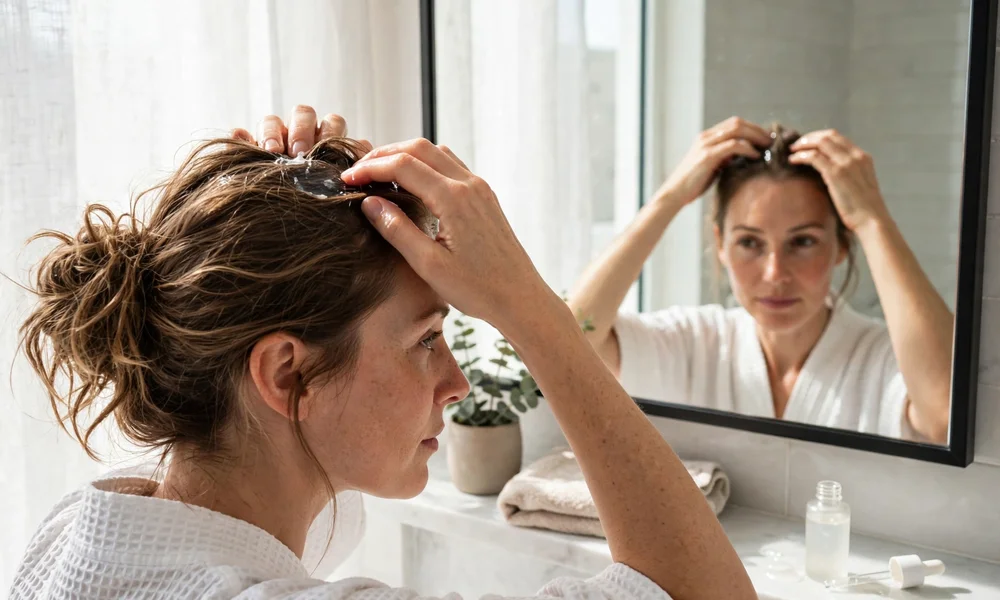
- Apply a scalp treatment to a clean, damp scalp, massage it in gently with your fingertips, and use it consistently for at least four weeks before judging it.
- Salicylic acid, tea tree, niacinamide, hyaluronic acid and squalane are reliable ingredients, and strong fragrance and drying alcohols are the most common irritants.
- No scalp treatment fixes persistent flaking, severe itching, hair loss or painful, broken skin on its own, and if a problem does not improve in a few weeks, see a dermatologist.
What a scalp treatment actually does for your scalp
A scalp treatment works on the skin that hair grows from. Like the skin on your face, the scalp produces oil, sheds dead skin cells, and can become dry, irritated or congested. When that balance is off, the signs show up quickly: flakes on dark clothing, itching, redness, a scalp that feels tight after washing, or roots that look oily within a day. A treatment addresses one of those problems directly.
There are three broad types of scalp treatment. Exfoliating treatments, such as scrubs and acid-based rinses, clear away dead skin, flakes and product build-up. Hydrating and soothing serums, usually left on the scalp, add moisture and calm irritation. Anti-dandruff and balancing treatments use ingredients such as salicylic acid, zinc pyrithione or tea tree to keep flaking and oil under control. Many of the best products combine two of these jobs.
Scalp health also affects how hair looks. When the scalp is irritated or congested, hair at the roots can look flat and dull. When the scalp is comfortable and balanced, hair tends to look fuller at the root and feel cleaner for longer. That is why a scalp treatment is worth trying even if your hair itself seems fine: it is the foundation underneath.
How we chose these scalp treatments and what to look for
Look first at your scalp, not your hair. A dry, flaky scalp needs hydration and gentle exfoliation, while an oily scalp needs a purifying treatment that clears build-up without stripping the skin. An itchy, sensitive scalp needs soothing ingredients and a fragrance-free formula. Start by naming the problem you want to solve, and choose the product that is made for it.
Look next at the ingredients. Salicylic acid is reliable for flakes and build-up, because it helps shed dead skin gently. Niacinamide calms redness and supports the skin barrier, which is why it appears in so many good scalp serums, and our guide to the best niacinamide serums explains how the same ingredient works for the face. Tea tree and zinc pyrithione help with flaking and itching, while hyaluronic acid and squalane hydrate a dry scalp without weighing hair down. Fragrance is the most common cause of irritation in scalp products, so choose fragrance-free if your scalp is sensitive.
Finally, look at the format and how it fits your routine. A scrub used once a week is easy to keep up, while a leave-on serum used two or three times a week needs a little more commitment. The treatment you will actually use, at least twice a week for a month, will always beat the more impressive product that sits unused in the shower.
The 9 best scalp treatments of 2027
Briogeo Scalp Revival Charcoal + Tea Tree Scalp Treatment
What we like: A cooling, charcoal-based treatment with tea tree and peppermint that soothes itching, clears build-up and leaves the scalp feeling clean and refreshed, without drying hair out.
What to consider: The cooling tingle is strong, so very sensitive scalps should patch-test first, and it is best used before shampooing rather than as a leave-on. Key ingredients: Charcoal, tea tree oil, peppermint oil, witch hazel. Scalp concern: Itchy, flaky, oily, build-up. Size: 177 ml. Cruelty-free: Yes.
This is a good first step for a scalp that feels congested, itchy or heavy with product. It rinses clean, and it is one of the most widely loved scalp treatments for a reason.
Kérastase Symbiose Sérum Nuit Anti-Pelliculaire Intense
What we like: An overnight anti-dandruff serum that works while you sleep, with salicylic acid to clear flakes and a lightweight texture that does not leave hair greasy by morning.
What to consider: It is a treatment serum, not a daily styling product, so it suits a routine of two or three nights a week rather than every day. Key ingredients: Salicylic acid, bifidus. Scalp concern: Dandruff, flaking. Size: 90 ml. Cruelty-free: No.
For persistent flaking, an overnight serum is a practical choice. It has time to work, it does not interfere with styling, and it is one of the most effective options for dandruff that keeps coming back.
The Ordinary Multi-Peptide Serum for Hair Density
What we like: A lightweight, water-based scalp serum with peptides and caffeine that is easy to apply, does not leave residue, and is excellent value for a daily leave-on treatment.
What to consider: It is a long-term product, so it needs several weeks of consistent daily use before you can judge it, and it is not designed for dandruff or itching. Key ingredients: Peptides, caffeine, panthenol. Scalp concern: Thinning-looking hair, scalp health. Size: 60 ml. Cruelty-free: Yes.
This is the affordable, everyday scalp serum. It is simple, well-priced and easy to fit into a routine, and a sensible starting point if you want to look after your scalp without spending a lot.
Nécessaire The Scalp Serum
What we like: A fragrance-free serum with niacinamide, hyaluronic acid and peptides that hydrates a dry scalp, calms irritation and feels light enough to use without weighing hair down.
What to consider: The dropper format takes a moment to get used to, and it is a gentle treatment rather than a strong anti-dandruff product. Key ingredients: Niacinamide, hyaluronic acid, peptides. Scalp concern: Dry, sensitive, itchy scalp. Size: 65 ml. Cruelty-free: Yes.
For a dry, tight or reactive scalp, this is a strong choice. It is fragrance-free, it absorbs well, and it is one of the gentlest serums available.
Aveda Scalp Solutions Overnight Scalp Renewal Serum
What we like: An overnight serum with adaptogens and niacinamide that hydrates the scalp, supports the skin barrier, and leaves hair looking fuller at the roots by morning.
What to consider: Premium price, and it works best as part of a regular routine rather than as a one-off treatment. Key ingredients: Niacinamide, adaptogens, hyaluronic acid. Scalp concern: Dry scalp, early thinning-looking hair. Size: 75 ml. Cruelty-free: Yes.
This is the indulgent overnight option. It is easy to use before bed, it does not transfer to the pillow, and it suits a scalp that feels dry or neglected.
Christophe Robin Purifying Scrub with Sea Salt
What we like: A sea salt scrub that exfoliates the scalp, clears away build-up and excess oil, and leaves hair feeling light, clean and full of volume.
What to consider: It is a scrub, so use it gently and no more than once a week, and it is not suitable for a scalp that is sore, broken or very sensitive. Key ingredients: Sea salt, sweet almond oil. Scalp concern: Oily scalp, build-up, flat roots. Size: 250 ml. Cruelty-free: No.
For an oily scalp or heavy product build-up, this scrub is one of the most satisfying treatments available. Use it once a week, massage it in gently, and follow with a hydrating conditioner on the lengths.
Ouai Scalp Serum
What we like: A lightweight, fast-absorbing serum with red clover extract and peptides that hydrates the scalp, supports fuller-looking hair, and does not leave any sticky residue.
What to consider: The bottle is small, so daily use goes through it fairly quickly, and it is a maintenance serum rather than a treatment for severe flaking. Key ingredients: Red clover extract, peptides, hyaluronic acid. Scalp concern: Dry scalp, thinning-looking hair. Size: 60 ml. Cruelty-free: Yes.
A good everyday serum for a scalp that is mostly healthy but could use more hydration. It is light, pleasant to use, and easy to apply with the dropper.
Living Proof Scalp Care Dry Scalp Treatment
What we like: A leave-on treatment with a vitamin B3 complex and hyaluronic acid that relieves dryness and itching, absorbs quickly, and is fragrance-free for sensitive scalps.
What to consider: It is designed for dryness, so it will not do much for an oily scalp or for dandruff, and it needs regular use to keep the benefit. Key ingredients: Vitamin B3 complex, hyaluronic acid. Scalp concern: Dry, itchy scalp. Size: 118 ml. Cruelty-free: Yes.
For a scalp that feels dry and tight, especially in winter or after colouring, this is a reliable, no-fuss treatment. It is fragrance-free, it absorbs well, and it is gentle enough for regular use.
Philip Kingsley Flaky Itchy Scalp Toner
What we like: A lightweight, leave-on toner with piroctone olamine and witch hazel that calms itching, helps control flaking, and can be used daily without weighing hair down.
What to consider: The applicator nozzle takes a little practice, and it is a daily maintenance product rather than a quick fix for a severe flare-up. Key ingredients: Piroctone olamine, witch hazel, camphor. Scalp concern: Flaky, itchy scalp. Size: 250 ml. Cruelty-free: No.
This is the classic for a flaky, itchy scalp. It is light, it can be used every day, and it is one of the best options for keeping a troublesome scalp calm between washes.
Which scalp treatment is right for your scalp
A dry, flaky scalp needs hydration and gentle exfoliation. Look for a leave-on serum with hyaluronic acid, squalane or niacinamide, and use a scrub or an acid-based rinse once a week to clear away flakes. Be patient: a dry scalp takes a few weeks of consistent treatment to feel comfortable again.
An oily scalp needs a purifying treatment that clears build-up without stripping the skin. A scrub once a week, or a salicylic acid treatment used two or three times a week, usually works well. Avoid heavy oils on the scalp, and remember that over-washing can make oiliness worse, because a stripped scalp often produces more oil to compensate. Our guide to the best cleansers for oily skin explains how to cleanse without stripping the skin barrier.
A sensitive or itchy scalp needs fragrance-free formulas with as few ingredients as possible. Avoid treatments with strong fragrance, essential oils or drying alcohol, and patch-test on a small area behind your ear before using a new product all over your scalp. Our guide to the best moisturisers for sensitive skin covers the same barrier-first principles, and they apply to the scalp too.
The caveats that matter
A scalp treatment is helpful, but it is not a cure for everything. Persistent flaking, severe itching, redness, pain, patches of hair loss or broken skin can be seborrhoeic dermatitis, psoriasis, a fungal infection or another condition that needs a dermatologist, not a stronger treatment. If a scalp product makes your skin worse, stop using it and try a simpler formula.
| Detail | What is known |
|---|---|
| Best treatment for most scalps | A leave-on serum with niacinamide or hyaluronic acid, plus a gentle weekly exfoliant |
| When to apply | To a clean, damp scalp, massaged in with your fingertips, two to three times a week |
| How long to judge a product | At least four weeks of consistent use before deciding whether it works |
| Who should choose fragrance-free | Sensitive, itchy, irritated or broken scalps, and anyone prone to flare-ups |
| What to avoid on broken skin | Fragrance, essential oils, drying alcohol and strong exfoliating acids |
| Scrub versus serum | A scrub clears build-up once a week; a serum hydrates and soothes between washes |
| Massage | Gentle fingertip massage helps a treatment spread evenly and feels good, but never scratch with nails |
| When to see a dermatologist | Persistent flaking, severe itching, redness, pain, hair loss or broken skin that does not improve in a few weeks |
If you use a lot of styling products, or dry shampoo most days, build-up is probably part of the problem. A weekly purifying scrub plus a light leave-on serum is usually more effective than switching shampoos again and again. And if you wear tight hairstyles, braids or extensions, give your scalp a break between styles, because constant tension can irritate the skin and the hairline.
Checklist: choosing a scalp treatment honestly
Use these checks before you buy, and again after four weeks of use.
- Check the problem first: dry, oily, flaky or itchy, and choose a treatment made for that problem.
- Check the ingredients: salicylic acid for flakes and build-up, niacinamide for calming, hyaluronic acid and squalane for dryness.
- Check the fragrance: choose fragrance-free if your scalp is sensitive, itchy or irritated.
- Patch-test first: try a new treatment on a small area behind your ear for two to three days before full use.
- Apply to a clean, damp scalp: massage it in gently with your fingertips, and never scratch with your nails.
- Give it four weeks: use it two to three times a week consistently before deciding whether it works.
Frequently asked questions
How often should I use a scalp treatment?
Two to three times a week for a leave-on serum, and once a week for a scrub. A scrub used too often can irritate the scalp, so keep it weekly.
Why is my scalp still flaky after using a treatment?
Either the treatment is not right for your scalp, or you have not used it long enough. Flaking takes at least four weeks of consistent use to improve. If flakes are thick, yellowish or stuck to the scalp, or if the scalp is red and sore, see a dermatologist.
Can a scalp treatment help hair grow?
A scalp treatment cannot make hair grow faster, but a healthy scalp supports hair that looks fuller and feels stronger. Treatments with peptides or caffeine are designed to support the scalp environment, not to regrow hair.
What ingredients should I look for in a scalp treatment?
Salicylic acid for flakes and build-up, niacinamide for calming and barrier support, hyaluronic acid and squalane for dryness, and tea tree or zinc pyrithione for itching and flaking. Avoid strong fragrance and drying alcohol if your scalp is sensitive.
Do I need a scalp scrub as well as a serum?
Not always. A scrub is useful if your scalp is oily or you use a lot of styling products, because it clears build-up that a serum cannot. If your scalp is dry or sensitive, a hydrating serum on its own is usually enough.
Can scalp treatments damage coloured hair?
Most leave-on serums are safe for coloured hair, because they sit on the scalp rather than on the lengths. Scrubs and clarifying treatments can fade colour slightly if used too often, so use them once a week at most, and keep them on the scalp.
The bottom line
The best scalp treatment in 2027 is not the most expensive or the most luxurious. It is the one that suits your scalp, that you will use two or three times a week, and that keeps working over a month. For a dry, itchy scalp, a gentle, fragrance-free serum is the right choice. For an oily scalp or heavy build-up, a weekly scrub plus a light serum is better.
Choose one treatment for your main problem, apply it to a clean, damp scalp, massage it in gently, and use it consistently for four weeks. That is the honest way to get a more comfortable scalp and hair that looks better at the roots.
Note: This guide is general hair and skincare information, not medical advice. Patch-test new products, and speak to a dermatologist if you have persistent flaking, severe itching, redness, pain, hair loss or broken skin, or if your scalp does not improve with regular treatment.