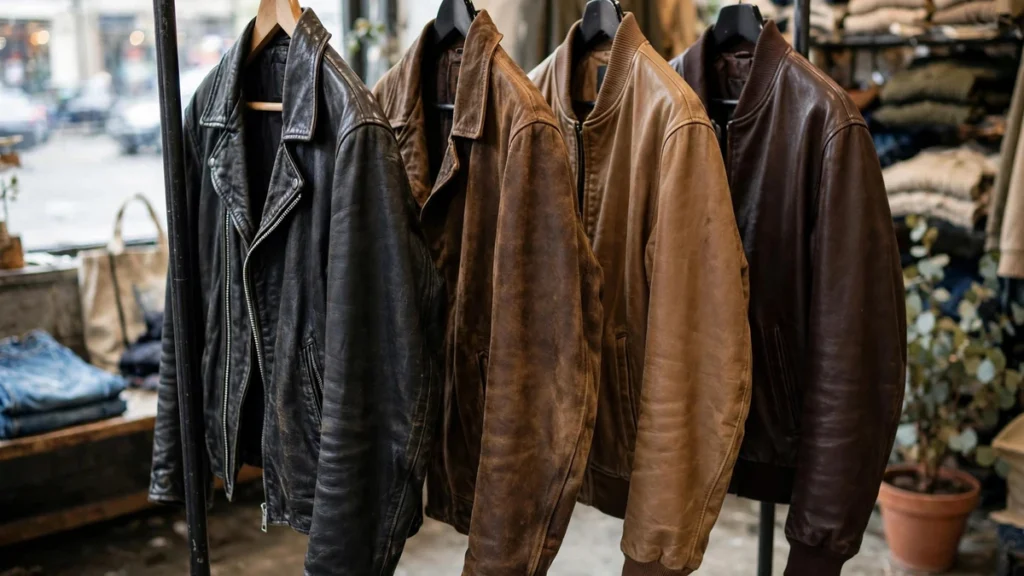
A leather jacket is one of the few purchases that can last twenty years or fall apart in two, and the difference is usually decided before you pay. The jacket that looks perfect in the shop can be the wrong leather, the wrong weight, or the wrong fit for the life you actually live, and by the time you find out, the return window has closed. Buying well is less about finding a famous label and more about knowing what to check while the jacket is still on the hanger.
This guide walks through the nine checks that matter most when you buy a leather jacket in 2027, from the grade of the leather to the stitching, the lining, the price, and the fit. Each tip explains what to look for, what to watch out for, and what it should cost, so you can tell a jacket that will age beautifully from one that will peel, sag, or sit unworn at the back of the wardrobe.
Below are nine practical buying tips, written for first-time buyers and for anyone replacing a jacket that did not last. Use them in the shop, or keep them open while you compare options online, and you will spend your money on leather that earns its price.
Key takeaways
- Full-grain leather is the most durable grade, top-grain is a good everyday compromise, and corrected grain is the grade most likely to look tired within a few years.
- Fit matters more than brand: the shoulders should sit exactly on your shoulders, and the jacket should close without pulling across the chest.
- Check the lining, the zips, and the stitching before you buy, because those are the parts that fail first on a cheap jacket.
- A fair price for a good leather jacket in 2027 is usually between $250 and $900, depending on the leather and where it was made.
- No leather jacket is a financial investment, and a jacket that needs constant repair, smells strongly of chemicals, or cannot be returned is a poor buy at any price.
What buying a leather jacket actually involves
Buying a leather jacket is different from buying most clothes, because leather is a natural material with real variation. Two jackets that look identical can be made from very different hides, and the difference shows up months later in how the leather ages, how it creases, and whether it still looks good after a season of wear. A good jacket softens and develops character. A poor one cracks, peels, or goes shiny in the wrong places.
The buying process has three parts, and skipping any one of them is how people end up disappointed. First, you choose the leather and the style. Second, you check the construction: the lining, the zips, the stitching, and the hardware. Third, you get the fit right, which means trying the jacket on with the clothes you will actually wear under it, not just a thin shirt in a warm shop.
It also helps to know what a leather jacket is before you shop, because the terms on the label are not always plain. Our guide to what a leather jacket actually is explains the grades, the classic styles, and how real leather differs from faux leather, which is worth reading before you spend serious money.
How we chose these tips and what to look for
These tips come from how leather jackets actually fail in real use. The most common complaints are not about style. They are about leather that peels, lining that tears, zips that stick, and a fit that looked fine in the mirror and felt wrong by the end of the first day. Each tip below addresses one of those failures directly, so you can check for it before you buy.
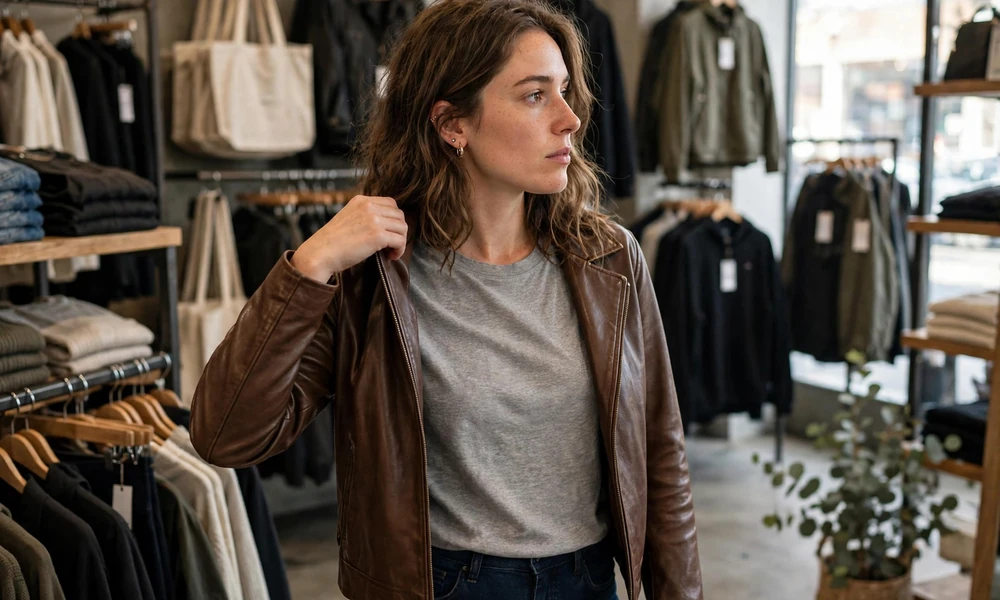
Look first at the label and the leather itself. A trustworthy seller names the leather grade and the animal it came from, and the leather feels supple rather than plasticky. Look next at the construction, because a jacket is only as strong as its weakest seam. Finally, look at the price in context. A very cheap jacket is almost always cheap for a reason, and a very expensive one is not automatically better.
Keep this guide beside you while you shop, and take your time. A leather jacket is a slow purchase, and the shops that pressure you to decide in five minutes are rarely the ones selling jackets worth keeping for twenty years.
The 9 tips for buying a leather jacket in 2027
1. Decide the leather first: full-grain, top-grain, or corrected
What we like: Full-grain leather keeps the natural surface of the hide, so it is the strongest grade, it ages with a rich patina, and it is the most likely to look better in five years than it does today. What to consider: It costs more, it feels stiffer at first, and natural marks in the hide are part of the character, not a flaw. Best for: Buyers who want one jacket to last for decades. Cost: $400 to $900 and above. Time needed: A few weeks of wear to break in.
2. Choose the style that fits your life, not the trend
What we like: A classic biker, bomber, or trucker style suits most wardrobes, works across seasons, and will not look dated in three years. What to consider: A very fashionable cut, an unusual colour, or heavy decoration is harder to wear often and harder to resell. Best for: Anyone buying their first good leather jacket. Cost: No extra cost for a classic style. Time needed: An hour to try the main styles and see which one suits you.
3. Get the fit right in the shoulders and the body
What we like: A jacket that fits in the shoulders looks right from every angle, moves comfortably, and layers well over a jumper without pulling. What to consider: Leather does not stretch much across the shoulders, so a tight shoulder will not loosen, and a dropped shoulder makes the whole jacket look oversized. Best for: Every buyer, because fit is the one thing you cannot fix later. Cost: Free to check, expensive to get wrong. Time needed: Twenty minutes of trying on properly.
Check the shoulder seam, which should sit exactly at the edge of your own shoulder. Raise your arms and sit down in it. The body should close without straining, and the sleeves should reach your wrist bone when your arms hang naturally. If it only fits when you stand still, it does not fit.
4. Check the lining, the zips, and the stitching
What we like: A smooth, well-fitted lining, a sturdy metal zip that runs cleanly, and tight, even stitching are the clearest signs of a well-made jacket. What to consider: A loose lining bunches and tears, a flimsy zip is the most common repair, and skipped or uneven stitches are a warning about the whole jacket. Best for: Buyers who want a jacket that survives daily wear. Cost: No extra cost to check, and it saves repair bills later. Time needed: Five minutes in the shop.
Run the zip up and down twice. Pull gently at a seam to see whether the stitching holds. Look inside at the lining, which should be neatly attached with no loose threads. These small checks tell you more about quality than the brand label does.
5. Know what a fair price looks like
What we like: A clear price range helps you spot both bargains and rip-offs, and it stops a high price tag from doing the thinking for you. What to consider: A jacket under $150 is very unlikely to be full-grain leather, and a jacket over $1,500 is often paying for a name rather than better leather. Best for: Anyone setting a budget before they shop. Cost: $250 to $900 for a good jacket in 2027. Time needed: Half an hour of comparing prices online first.
6. Try it on with what you actually wear
What we like: Trying the jacket over your usual jumper, shirt, or hoodie shows you the real fit, not the shop-mirror fit. What to consider: A jacket that fits over a T-shirt can be too tight over a knit, and a jacket that feels right in a warm shop can feel stiff in cold weather. Best for: Anyone who will wear the jacket in more than one season. Cost: Free. Time needed: Ten extra minutes in the fitting room.
7. Buy the right weight for your climate
What we like: A jacket in the right weight gets worn for months of the year, while the wrong weight sits in the wardrobe waiting for weather that rarely comes. What to consider: A heavy, lined jacket is too warm for mild winters and spring, and a thin, unlined jacket is no use in real cold. Best for: Buyers in changeable climates who want one jacket to do most of the work. Cost: A removable lining costs a little more and adds a season of wear. Time needed: A few minutes thinking about your coldest and warmest jacket days.
8. Ask about care before you pay
What we like: Knowing how to care for the leather before you buy it means the jacket stays good for years instead of drying out or staining in the first season. What to consider: Real leather needs occasional conditioning, it should not be soaked, and it should not be dried on a radiator. Best for: First-time leather buyers. Cost: A tin of conditioner costs around $15 to $25 and lasts a year or more. Time needed: An hour a year, roughly.
Ask the seller what conditioner suits this leather, how often to apply it, and what to do if the jacket gets wet. A seller who cannot answer is telling you something about the shop. Keep the answer with the receipt, and condition the jacket before the first winter, not after it starts to look dry.
9. Buy from a seller you can return to
What we like: A reputable seller with a clear returns policy and a repair service stands behind the jacket, which matters far more than a discount. What to consider: A no-returns sale, a market stall with no receipt, or an online listing with no reviews leaves you with no way back if the jacket fails. Best for: Anyone spending more than $300. Cost: A fair price from a good seller, rather than the cheapest price anywhere. Time needed: Ten minutes checking reviews and the returns policy.
Which leather jacket is right for you
If you want one jacket for everything, choose a classic biker or bomber in top-grain cowhide or goatskin, in black or dark brown, with a simple lining and a sturdy zip. It will work with jeans, with a dress, with tailoring, and across three seasons, and it will age well. That is the safest first buy, and for most people it is the only leather jacket they ever need.
If you already own a classic, then a second jacket can be more personal: a suede trucker, a shearling-lined bomber, or a softer lambskin style in a lighter colour. The second jacket is where taste comes in, because the practical questions are already answered. Our guide to styling a leather jacket shows how to wear each style with what you already own, from a simple T-shirt and jeans to a smarter evening look.
If you are buying for a specific purpose, let the purpose decide. Riding needs protection and a longer back. Cold weather needs a lining and a heavier hide. Travel needs a jacket that packs without creasing badly. A jacket bought for a real use gets worn. A jacket bought for an imagined life does not.
The caveats that matter
The most important caveat is that leather varies, and even a good brand can produce a poor batch. Check the actual jacket in your hands, not the one in the photograph. Online, that means buying from a seller with free returns, and checking the jacket the day it arrives, not the day you first want to wear it.
| Detail | What is known |
|---|---|
| Best leather grade | Full-grain is strongest and ages best; top-grain is the best everyday compromise |
| Fair price in 2027 | Usually $250 to $900 for a good jacket, depending on leather and construction |
| Most important fit check | Shoulder seam sits on your shoulder; jacket closes without pulling |
| First things to inspect | Lining, zips, stitching, and hardware before the label |
| Best first style | A classic biker, bomber, or trucker in black or dark brown |
| Care basics | Condition occasionally, keep it dry, never dry it on a radiator |
| When to walk away | No returns, no receipt, “genuine leather” with no grade named, or a strong chemical smell |
| What it is not | Not a financial investment, and not a jacket that fixes a bad fit with wear |
Be careful with vintage and second-hand jackets, too. A good vintage jacket can be a bargain, but check the lining, the zips, and the armpits, where wear shows first, and smell it before you buy. A jacket that smells strongly of damp or chemicals has usually been stored badly, and that smell is hard to remove.
Checklist: buying a leather jacket honestly
Use these checks before you pay, and again when the jacket arrives at home.
- Check the leather grade on the label: full-grain or top-grain, with the animal named.
- Check the fit in the shoulders first, then the body, then the sleeve length.
- Check the lining, the zips, and the stitching, and run every zip twice.
- Check the price against similar jackets, not against the discount on the tag.
- Check the returns policy and keep the receipt and tags until you have worn it outside.
- Check the care advice before you pay, and buy conditioner with the jacket.
Frequently asked questions
How much should I spend on a leather jacket?
For a good jacket in 2027, expect $250 to $900. Below that, the leather is usually thin or heavily coated. Above that, you are often paying for a designer name rather than better leather, unless the jacket is handmade or uses exceptional hides.
Is full-grain leather always the best choice?
It is the most durable and the best at ageing, but it is stiffer at first and costs more. Top-grain is often the better choice for a first jacket, because it is softer from day one and still lasts for years with basic care.
Should a leather jacket feel tight when I first try it on?
It should feel snug but not tight. The body softens a little with wear, but the shoulders do not stretch, so never buy a jacket that is tight across the shoulders in the hope that it will loosen.
Can I wear a leather jacket in spring?
Yes, and spring is one of the best seasons for it. A light, unlined jacket works well over a shirt or a thin knit, and it is easier to wear than a heavy winter coat on a mild day. Our guide to wearing a leather jacket in spring covers the combinations that work best.
What is the difference between real and faux leather?
Real leather is made from animal hide and develops a patina with age, while faux leather is plastic, usually polyurethane, and tends to crack and peel after a few years. Real leather also smells like leather, not chemicals, and it feels warm and supple rather than cold and plasticky.
How do I know if a leather jacket is good quality?
Check the grade of the leather, the lining, the zips, and the stitching, and look at how the jacket is finished inside. Even stitching, a smooth lining, and a sturdy zip are the clearest signs, and they take about five minutes to check.
The bottom line
The best leather jacket to buy in 2027 is not the most expensive or the most fashionable. It is the one in the right leather, in a classic style, that fits your shoulders, passes the lining and zip checks, and comes from a seller you can return to. Spend a little time on those checks, and you will own a jacket that looks better in five years than it does today.
Buy slowly, try it on properly, keep the receipt, and condition it before the first winter. A leather jacket rewards patience twice: once when you choose well, and again every year it still looks good.